Unoki Hachiman Shrine (Ota Ward, Tokyo) Complete Guide | History, Goshuin (Shrine Seal), and Access Information
Located in a quiet residential area of Minami-Kugahara, Ota Ward, Tokyo, Unoki Hachiman Shrine is a historic shrine dating back to the Muromachi period. It is also known as a candidate for the Engishiki-listed shrine “Hieda Shrine” and is affectionately known as “Unoki no Hachiman-sama” by the local people. This article provides a detailed guide to Unoki Hachiman Shrine, including its history, enshrined deities, highlights of the grounds, goshuin information, and access methods.
Basic Information about Unoki Hachiman Shrine
Location: 2-18-8 Minami-Kugahara, Ota-ku, Tokyo
Deity Enshrined: Hondawake-no-mikoto (Emperor Ojin)
Former Shrine Rank: Unranked
Founded: Entoku 1 (1489)
Annual Festival: Second Saturday and Sunday of September
Unoki Hachiman Shrine is located almost midway between Unoki Station on the Tokyu Tamagawa Line and Kugahara Station on the Tokyu Ikegami Line. It is about a 7-8 minute walk from each station, and sits quietly amidst a densely populated residential area with some ups and downs.
History and Origins of Unoki Hachiman Shrine
Founded in the Muromachi Period
According to shrine tradition, Unoki Hachiman Shrine was founded in Entoku 1 (1489). This year corresponds to the late Muromachi period, during the reign of Shogun Ashikaga Yoshihisa.
The shrine’s founding is said to have begun when Tenmei Gorouemon Mitsutora, son of Tenmei Iga-no-kami Mitsunobu, moved from Sano in Shimotsuke Province (present-day Tochigi Prefecture) to the former Unoki Village in this area and enshrined Hachiman Daishin as the guardian deity of his family.
The Tenmei family served as the headman of Unoki Village, and this shrine was initially founded as the Tenmei family’s tutelary shrine. However, it gradually came to be revered as the guardian shrine of the entire region.
Records from the Edo Period
The Unoki Hachiman Shrine is also mentioned in the “Shinpen Musashi Fudoki-ko,” a local history compiled in the late Edo period. This document confirms that it was already recognized as an important local shrine during the Edo period.
Theories Regarding the “Hieda Shrine” in the Engishiki
Unoki Hachiman Shrine is considered one of the candidate shrines for the “Hieda Shrine” listed in the Engishiki Jinmyocho (a list of shrines compiled in the Heian period).
The Engishiki Jinmyocho is a list of official shrines throughout Japan compiled in 927 AD, and “Hieda Shrine” is listed in Ebara District, Musashi Province. There are various theories regarding the location of this Hieda Shrine, and in addition to Unoki Hachiman Shrine, Mita Hachiman Shrine in Minato Ward and Rokugo Shrine in Ota Ward are also considered candidate shrines.
However, since Unoki Hachiman Shrine is said to have been founded in 1489 AD, it is possible that it was a different shrine during the Engishiki era (Heian period), and the connection to Hieda Shrine remains a subject of ongoing debate.
Modern and Contemporary History
Although it was classified as an unranked shrine under the Meiji era’s shrine ranking system, it has continued to be revered as the local tutelary deity.
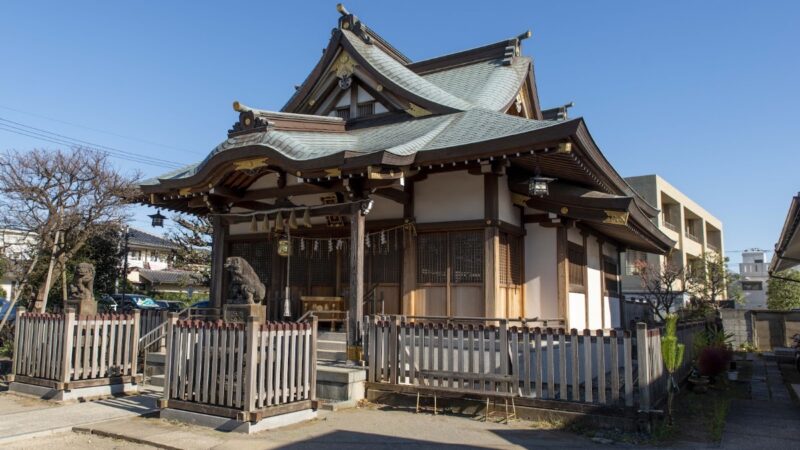
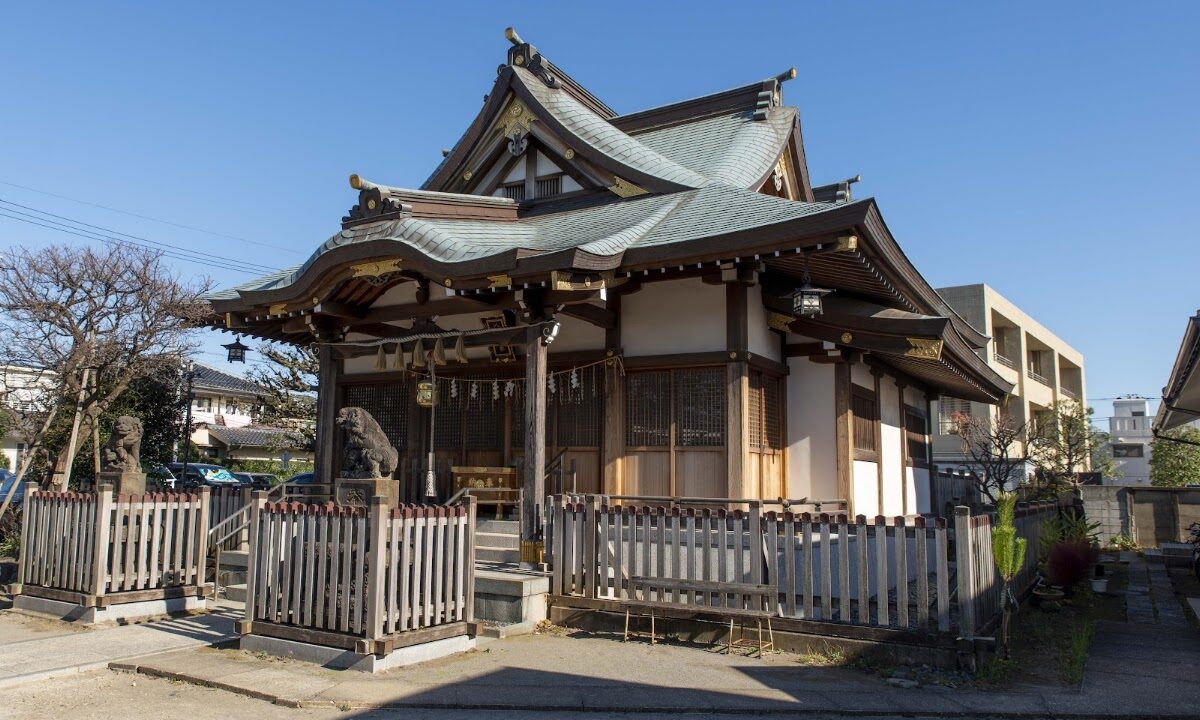
The current shrine building was rebuilt in 2000, and while maintaining the style of traditional shrine architecture, it is a beautiful building constructed with modern technology.
About the Deity
The deity enshrined at Unoki Hachiman Shrine is Honda-wake no Mikoto. Honda-wake no Mikoto is the divine name of Emperor Ojin, the 15th emperor, and is worshipped as Hachiman-sama at Hachiman shrines throughout Japan.
Divine Virtues of Hachiman-sama
Hachiman-sama is believed to possess the following divine virtues:
- Long-lasting Military Fortune and Good Luck in Competitions: Due to his nature as a god of war, he is believed to bestow strength to face competitions and difficulties.
- National Protection: He has been revered as a god who protects the country.
- Industrial Development and Business Prosperity: He protects the development of industry and commerce.
- Protection from Misfortune and Good Fortune: He is believed to ward off disasters and lead to good fortune.
- Prosperity of Descendants and Safe Childbirth: He is also worshipped as a guardian deity of prosperity of descendants and safe childbirth.
Highlights of the Shrine Grounds
Approach and Torii Gate
The entrance to the shrine grounds faces west. After climbing a few steps from the residential area, you will find a stone torii gate. To the right of the torii gate is a shrine name marker inscribed with “Unoki Hachiman Shrine,” welcoming visitors.
Because the shrine grounds are located on a slight hill, the approach to the shrine offers a surprisingly good view overlooking the surrounding residential area.
Shrine Building
Rebuilt in 2000, the shrine building is a traditional wooden structure consisting of a worship hall and a main sanctuary. Despite being a new building, it features a beautiful appearance that follows traditional styles.
A donation box is placed in front of the worship hall, and worshippers visit daily. The carvings and decorations of the shrine building are meticulously crafted down to the smallest detail, showcasing the skill of the craftsmen.
Komainu (Guardian Dogs)
The shrine grounds are known for a rare nursing komainu. Komainu depicting a dog nursing a puppy are rare nationwide and attract the attention of worshippers as a symbol of blessings for child-rearing and safe childbirth.
This komainu is thought to visually represent the divine virtues of Hachiman-sama, the god of prosperity and safe childbirth, and is a popular spot for photography.
Atmosphere of the Shrine Grounds
Despite being located in a densely populated residential area, the shrine grounds are enveloped in a tranquil atmosphere. Though small, the grounds are meticulously maintained, conveying the deep care and affection the local community has for the place.
Origin of the Place Name Unoki and the Mystery of Unomori Myojin Shrine
Origin of the Place Name Unoki
There are several theories regarding the origin of the place name “Unoki.” The most plausible theory is that it derives from the fact that many cormorants once inhabited this area. Given its proximity to the Tama River, it is speculated that cormorants could be seen catching fish in the river.
Another theory suggests that it derives from a plant called “unoki” (卯木), and the origin of the place name remains largely unknown.
Relationship with Unomori Myojin Shrine
According to old records, there was once a shrine called “Unomori Myojin Shrine” in Unoki Village. There are many unclear points regarding the relationship between this shrine and the current Unoki Hachiman Shrine, and there is debate as to whether they were the same shrine or separate shrines.
One theory suggests that Unomori Myojin Shrine existed first, and was later reorganized as Hachiman Shrine, but there is no conclusive evidence. This mystery is one of the intriguing themes when considering the history of Unoki.
Goshuin and Goshuincho Information
About Goshuin
Goshuin (shrine stamps) can be obtained at Unoki Hachiman Shrine. Goshuin serve as proof of visitation to the shrine, and many people receive them as a memento of their visit.
Features of the Goshuin:
- The words “Unoki Hachiman Shrine” are written in ink in the center.
- The shrine’s seal is stamped.
- It features a simple yet powerful calligraphy style.
Goshuin Reception
Regarding Goshuin reception, it is recommended to check in advance, as there may not always be a permanently staffed shrine office. They are definitely available during festivals such as the annual grand festival.
Offering Fee: Generally around 300-500 yen (subject to change)
Goshuincho (Stamp Book)
We recommend checking the availability of original goshuincho upon your visit.
Annual Events/Grand Festival
Grand Festival
The Grand Festival of Unoki Hachiman Shrine is held annually on the second Saturday and Sunday of September.
The festival features a portable shrine procession and devotional performances, making it a lively event that attracts local people. While usually a quiet shrine, it becomes bustling with many worshippers during this time.
Other Annual Events
- Hatsumode (January 1st-3rd): The shrine is bustling with New Year’s visitors.
- Setsubun Festival (around February 3rd): Events such as bean-throwing are held.
- Natsukoshi no Harae (June 30th): A Shinto ritual to purify oneself of the impurities accumulated over the past six months.
Access and Parking Information
Access by Train
Unoki Hachiman Shrine can be accessed from the following two stations:
From Unoki Station on the Tokyu Tamagawa Line:
- Approximately 7-8 minutes on foot
- Exit the station and head east, passing through the residential area to arrive.
From Kugahara Station on the Tokyu Ikegami Line:
- Approximately 7-8 minutes on foot
- Exit the station and head south, arriving in approximately 500m.
The shrine is located almost midway between the two stations, making it accessible from either. Located in a densely populated residential area with some inclines and declines, we recommend wearing comfortable walking shoes.
Access by Car
From the Metropolitan Expressway:
- Approximately 15 minutes from the Suzugamori Interchange on the Metropolitan Expressway Route 1 Haneda Line
- Accessible via Loop Route 8
Parking
Since parking at the shrine is limited, we recommend using public transportation. If you are visiting by car, please use nearby coin-operated parking lots.
Address and Map
Address: 2-18-8 Minami-Kugahara, Ota-ku, Tokyo 146-0085
Nearby Tourist Attractions
Showa Life Museum
Located very close to Unoki Hachiman Shrine, the “Showa Life Museum” recreates the daily life of ordinary people in the Showa era. Exhibits utilize actual private homes, allowing visitors to experience life in the 1950s.
Location: 2-26-19 Minami-Kugahara, Ota-ku
Opening Hours: 10:00 AM – 5:00 PM (Please confirm)
Closed: Mondays and Tuesdays (Please confirm)
Tamagawadai Park
Located along the Tamagawa River, Tamagawadai Park is a vast park featuring ancient burial mounds, natural forests, and observation decks. It’s also known as a famous cherry blossom viewing spot, attracting many visitors in spring.
Location: 1-63-1 Denenchofu, Ota-ku
Access: Approximately 1 minute walk from Tamagawa Station on the Tokyu Toyoko Line and Tamagawa Line
Ikegami Honmonji Temple
Ikegami Honmonji Temple, the head temple of the Nichiren sect, is approximately 10 minutes by train from Unoki Hachiman Shrine. Its vast grounds include a five-story pagoda and main hall, both designated as important cultural properties, offering a glimpse into history and culture.
Manners and Etiquette for Visiting a Shrine
Basic Etiquette for Visiting a Shrine
Here’s a guide to basic etiquette for visiting a shrine:
- Bow before passing through the torii gate: This is a courtesy before entering the sacred area.
- Walk along the edge of the path: The center is considered the path for the gods.
- Purify yourself at the water basin:
- Take the ladle with your right hand and purify your left hand.
- Switch the ladle to your left hand and purify your right hand.
- Switch the ladle back to your right hand, receive water in your left hand, and rinse your mouth.
- Finally, stand the ladle upright and purify the handle.
- Worship at the main hall:
- Place your offering.
- Ring the bell if there is one.
- Bow twice, clap twice, and bow once.
- Bow again when leaving: After leaving the torii gate, turn around and bow once.
Attire for Visiting the Shrine
Everyday clothing is fine, but please note the following:
- Avoid revealing clothing
- Remove hats and sunglasses within the shrine grounds
- Dress neatly and cleanly
The Charm of Unoki Hachiman Shrine
A Local Guardian Deity
The greatest charm of Unoki Hachiman Shrine is its deep-rooted presence as a local guardian deity. For over 500 years, since the Muromachi period, it has watched over the lives of the local people.
While located in a residential area, stepping onto the shrine grounds reveals a tranquil space that makes you forget the hustle and bustle of the city.
A Shrine with a Sense of Historical Romance
The fact that it is considered a candidate for the Engishiki-listed shrine “Hieda Shrine” is also an attractive point for history buffs. The mystery surrounding the location of the ancient shrine listed in the Engishiki from the Heian period evokes a sense of historical romance.
Easy Access
Its easy accessibility, being within walking distance of two Tokyu Line stations, is another attractive feature. It’s easy to visit while taking a stroll, and you can also combine your visit with a trip to the nearby Showa-era Lifestyle Museum.
Rare Nursing Komainu
One of the highlights is the rare cultural artifact of a nursing komainu (guardian lion-dog). It holds special significance for worshippers seeking blessings for safe childbirth and successful child-rearing.
Visitor Feedback and Reviews
Visitors who have actually visited Unoki Hachiman Shrine have shared the following comments:
- “It’s a quiet shrine located in a residential area, and I was able to pray in peace.”
- “The nursing guardian lion statues were impressive, and I visited to pray for a safe delivery.”
- “The shrine building, rebuilt in the Heisei era, was beautiful and well-maintained.”
- “It had the atmosphere of a local guardian shrine, and I felt a sense of warmth.”
- “I visited it in conjunction with the Showa Life Museum, and had a fulfilling time.”
Summary
Unoki Hachiman Shrine is a historical shrine located in Minami-Kugahara, Ota-ku, Tokyo, with a history dating back to the Muromachi period. It was founded in 1489 (Entoku 1) when Tenmei Gorouemon Mitsutora moved from Shimotsuke Province, and has been revered as the local guardian shrine for over 500 years.
Unoki Hachiman Shrine boasts numerous attractions, including its historical significance as a candidate for the Engishiki-listed shrine “Hieda Shrine,” its rare nursing-feeding guardian lion statues, and its beautifully rebuilt shrine building from the Heisei era. It’s easily accessible, just a 7-8 minute walk from either Unoki Station on the Tokyu Tamagawa Line or Kugahara Station on the Tokyu Ikegami Line, making it a convenient stop in conjunction with nearby attractions such as the Showa Life Museum.
Escape the hustle and bustle of the city and visit Unoki Hachiman Shrine in peace. Why not experience a quiet and peaceful visit in its warm, community-rooted atmosphere?
Frequently Asked Questions (FAQ)
Q1: Can I get a Goshuin (shrine stamp) at Unoki Hachiman Shrine?
A1: Yes, you can get a Goshuin at Unoki Hachiman Shrine. However, since there may not always be a permanent shrine office, it’s recommended to visit during festivals such as the annual grand festival or check in advance if you want to be sure to get one. The offering fee is generally around 300 to 500 yen.
Q2: How do I get to Unoki Hachiman Shrine?
A2: It’s about a 7-8 minute walk from Unoki Station on the Tokyu Tamagawa Line or Kugahara Station on the Tokyu Ikegami Line. It’s located almost midway between the two stations. Because it’s in a densely populated residential area with some inclines and declines, we recommend wearing comfortable shoes. Parking is limited, so using public transportation is recommended.
Q3: When was Unoki Hachiman Shrine founded?
A3: According to shrine tradition, it was founded in Entoku 1 (1489), during the late Muromachi period. It is said to have begun when Tenmei Gorouemon Mitsutora moved from Sano in Shimotsuke Province (present-day Tochigi Prefecture) to Unoki Village and enshrined Hachiman Daishin as the guardian deity of his family.
Q4: What does it mean for a shrine to be a candidate for the Engishiki-listed shrine “Hieda Shrine”?
A4: The Engishiki Jinmyocho is a list of official shrines throughout Japan compiled during the Heian period (927 AD), and “Hieda Shrine” is listed in Ebara District, Musashi Province. However, because its exact location is unclear, several shrines are considered candidates (candidate shrines). Unoki Hachiman Shrine is one of them, but since its founding is said to be in 1489, it may be different from the time of the Engishiki, and the debate continues.
Q5: What is a nursing guardian lion-dog?
A5: Within the grounds of Unoki Hachiman Shrine, there is a guardian lion-dog depicted nursing a puppy. This is rare nationwide and is thought to symbolize the divine virtues of Hachiman, the god of prosperity of descendants and safe childbirth. It is popular with worshippers seeking blessings for safe childbirth and child-rearing, and is also attracting attention as a photo spot.
Q6: When is the annual festival held?
A6: The annual festival of Unoki Hachiman Shrine is held every year on the second Saturday and Sunday of September. It’s a lively festival where local people gather, featuring a portable shrine procession and devotional performances. It’s also a great opportunity to receive a Goshuin (shrine stamp), so visiting during this time is recommended.
Q7: Are there any other tourist spots nearby?
A7: Yes, the “Showa Life Museum” is very close by, where you can experience the daily life of ordinary people in the 1950s. Tamagawadai Park (famous for its ancient burial mounds and cherry blossoms) and Ikegami Honmonji Temple (a major temple of the Nichiren sect) are also relatively close and can be visited together.
Q8: Is there a suitable time to visit?
A8: While the shrine is generally open 24 hours a day, we recommend visiting during daylight hours (from sunrise to sunset). Visiting in the morning, in particular, allows you to pray in refreshing air. If you wish to receive a Goshuin (temple/shrine stamp), we recommend checking the opening hours of the shrine office in advance.