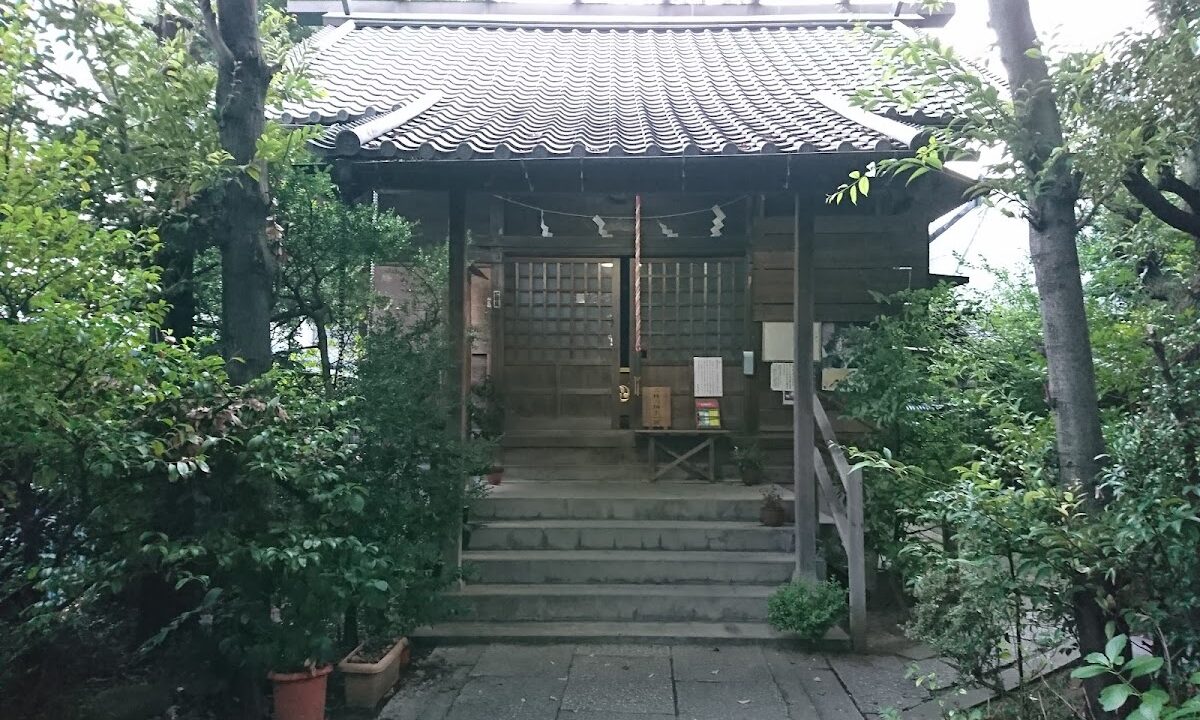
Umeda Shinmei-gu Shrine (Adachi Ward, Tokyo) Complete Guide | History, Goshuin (Shrine Seal), and Access Information for the Origin of the Misogi Sect
Umeda Shinmei-gu Shrine, located in Umeda, Adachi Ward, Tokyo, is a historic shrine known as the birthplace of the Misogi sect. With a history dating back to the Edo period and a unique form of worship, this shrine is beloved by the local community while also holding an important position in the history of Shinto. This article provides detailed information you should know before visiting Umeda Shinmei-gu Shrine, including its history, enshrined deities, goshuin information, and access methods.
Basic Information about Umeda Shinmei-gu Shrine
Official Name: Umeda Shinmei-gu Shrine
Location: 6-19-4 Umeda, Adachi-ku, Tokyo
Main Deity: Amaterasu Omikami
Enshrined Deity: Inoue Masakane Reishin
Founded: Keicho era (1596-1615)
Telephone: 03-3886-7668
Nearest Station: Approximately 9 minutes on foot (approx. 640m) from Umejima Station on the Tobu Isesaki Line (Tobu Skytree Line)
Umeda Shinmei-gu Shrine is a quiet shrine nestled in a residential area of Adachi-ku, Tokyo. While not flashy, its historical background and religious significance have attracted attention from Shinto researchers and believers.
History and Origins of Umeda Shinmei Shrine
Founding and Early History
The founding of Umeda Shinmei Shrine dates back to the early Edo period, specifically the Keicho era (1596-1615). It is believed to have started as a small shrine dedicated to the local guardian deity. This period coincided with the time immediately following Tokugawa Ieyasu’s establishment of the Edo Shogunate and the ongoing development of Edo.
The name Umeda is said to originate from the many plum trees planted in the area, or from “Umeda,” meaning “reclaimed land.” At that time, the Umeda area was a rural area located on the outskirts of Edo.
Turning Point in 1762
A significant turning point in the history of Umeda Shinmei Shrine occurred in 1762. In that year, a large-scale fire broke out in Edo, and the Shinmei Shrine in Shiba (Shiba Shinmei Shrine) was destroyed. It is believed that immediately after the Great Fire of Edo, Amaterasu Omikami was enshrined in Umeda.
Amaterasu Omikami is the supreme deity in Japanese mythology and a sun goddess revered as the ancestral deity of the Imperial family. She is enshrined at the Inner Shrine of Ise Grand Shrine and is widely worshipped as the principal deity of Shinmei Shrines throughout Japan. The enshrinement of Amaterasu Omikami at Umeda Shinmei Shrine strengthened its character as a center of local faith.
Masakane Inoue and the Birth of Misogi-kyo
The main reason Umeda Shinmei Shrine became nationally known is that it became the sacred site where Misogi-kyo (a religious sect) originated.
In Tenpo 11 (1840), a man named Masakane Inoue began serving at Umeda Shinmei Shrine. Masatetsu Inoue, as a Shinto practitioner, practiced a unique breathing method called “Iki no Gyōhō” (breath practice), aiming to transmit the essence of Shinto through this method.
Iki no Gyōhō is a practice that aims to purify the mind and body by regulating breathing, and to achieve oneness with the divine. Inoue’s teachings, centered on this practice, eventually established a religious organization called “Misogi-kyō.” Misogi-kyō is counted as one of the thirteen Shinto sects and was recognized as an officially sanctioned Shinto sect during the Meiji era.
Amidst the turmoil of the late Edo period, Masatetsu Inoue nurtured many disciples, and his teachings spread throughout Japan. Umeda Shinmei-gū became a sacred site for Misogi-kyō and a pilgrimage site for believers. Even today, Masatetsu Inoue is enshrined as “Inoue Masatetsu Reijin” (Inoue Masatetsu Spirit) as a co-deity at Umeda Shinmei-gū, and his achievements are celebrated.
Developments Since the Meiji Era
With the arrival of the Meiji era, the wave of modernization and the separation of Shinto and Buddhism also swept over Shinto shrines. Umeda Shinmei-gu Shrine, as a local shrine, underwent improvements to its parishioner system and the maintenance of its grounds.
Misogi-kyo was officially recognized as a Shinto sect by the Meiji government and developed its own church organization, but Umeda Shinmei-gu Shrine continued to occupy an important position as its birthplace. Following the enactment of the Religious Corporations Law after the war, it remains an independent shrine, not belonging to the Association of Shinto Shrines, to this day.
About the Deity
Amaterasu Omikami
Amaterasu Omikami, the principal deity of Umeda Shinmei-gu Shrine, is the sun goddess appearing in Japanese mythology and the supreme deity who rules Takamagahara. According to the Kojiki and Nihon Shoki, she is one of the three noble children born when Izanagi-no-Mikoto performed a purification ritual upon returning from the underworld.
Amaterasu Omikami is worshipped as the guardian deity of agriculture and the goddess of national peace and security, and is especially enshrined as the principal deity in shrines named “Shinmei-gu” or “Shinmei-sha.” Umeda Shinmei-gu Shrine has also attracted the faith of people praying for the peace and prosperity of the region.
Inoue Masakane Reishin (Inoue Masakane Spirit)
Inoue Masakane Reishin, enshrined as a co-deity, is a deified representation of Inoue Masakane himself, the founder of the Misogi-kyo sect.
Inoue Masakane was a Shinto scholar who was active from the late Edo period to the end of the Edo shogunate, establishing his own unique methods of training and doctrine. His teachings emphasized inner spiritual cultivation over formal rituals, and advocated the purification of mind and body through breathing exercises. This practical and experiential approach to faith resonated with many people and formed the foundation of the Misogi-kyo sect.
After the death of Masatetsu Inoue, his achievements were honored by his enshrinement at Umeda Shinmei Shrine, further strengthening the shrine’s character as a sacred site for followers of the Misogi sect.
Highlights and Cultural Assets of the Shrine Grounds
Atmosphere of the Shrine Grounds
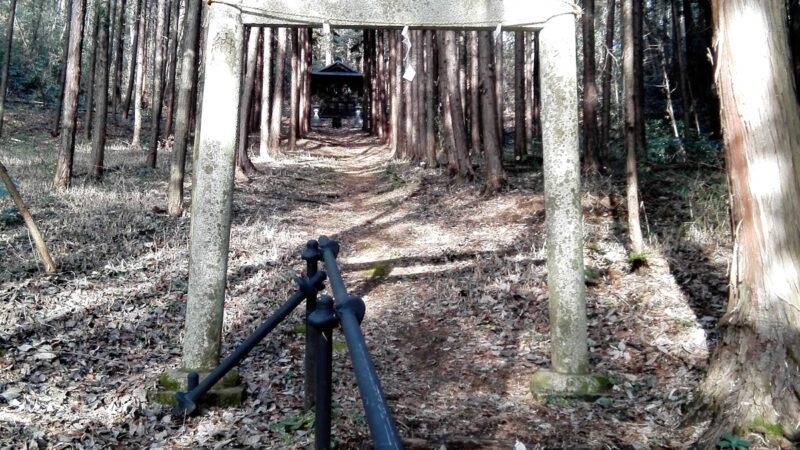
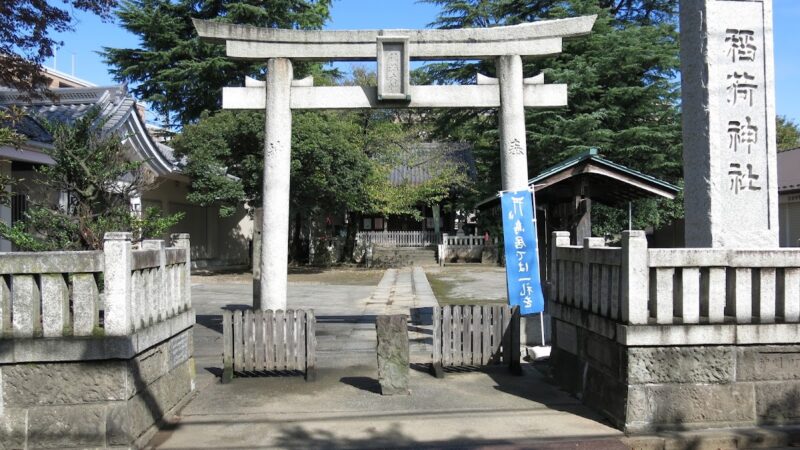
Despite being located in a residential area, Umeda Shinmei Shrine maintains a tranquil atmosphere. Passing through the torii gate, a well-maintained path leads to the shrine building. While the grounds are not particularly large, their meticulous upkeep reflects the deep faith of the local people and parishioners.
Shrine Building
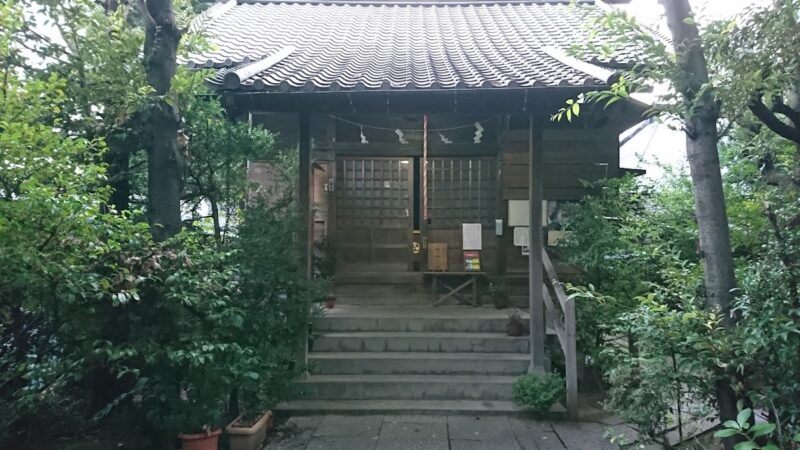
The current shrine building is believed to have been rebuilt after the war, but it follows the traditional Shinmei-zukuri architectural style. Shinmei-zukuri is an architectural style exemplified by Ise Grand Shrine, and is a fitting style for a shrine dedicated to Amaterasu Omikami.
In front of the shrine building is the worship hall, where worshippers perform the ritual of two bows, two claps, and one bow. Around the shrine building, donated stone lanterns and guardian lion-dogs are placed, telling the story of the faith’s history.
Stone Monuments and Memorials Related to Misogi-kyo
Within the shrine grounds, there are stone monuments indicating that this is the birthplace of Misogi-kyo, as well as a memorial commemorating Masatetsu Inoue. The inscriptions on these monuments provide insights into Masatetsu Inoue’s teachings and the history of Misogi-kyo, making them valuable resources for those interested in Shinto history.
Photography Tips
When visiting Umeda Shinmei Shrine, the following locations are recommended for photography:
- Torii Gate and Approach: The sight of the torii gate standing in a residential area evokes a sense of coexistence between urban life and faith.
- Front of the Shrine: You can capture the beauty of traditional Shinmei-zukuri architecture.
- Stone Monuments on the Grounds: These are valuable cultural assets that tell the history of the Misogi-kyo sect.
- Panoramic View of the Grounds: You can capture the orderly atmosphere of the small but well-organized grounds.
When taking photographs, please be considerate of worshippers and religious ceremonies, and be mindful of areas where photography is prohibited, such as inside the shrine.
Goshuin (Shrine Seal) and Goshuincho (Shrine Seal Book) Information
About Goshuin
Umeda Shinmei Shrine offers goshuin to worshippers. Goshuin are popular among worshippers as proof of their visit and as a memento of their connection with the shrine.
The goshuin (seal) of Umeda Shinmei-gu Shrine sometimes includes phrases such as “Sacred site where Misogi-kyo originated” along with the shrine’s name, indicating the shrine’s historical characteristics. The goshuin is in a traditional style, harmoniously combining the powerful brushstrokes of the ink with the vibrant colors of the vermilion seal.
Goshuin Issuance Hours and Location
Goshuin are available at the shrine office. However, since Umeda Shinmei-gu Shrine may not always have a resident priest, it is recommended to confirm in advance by phone (03-3886-7668) if you wish to be sure to receive a goshuin.
General issuance hours are from 9:00 AM to around 4:00 PM, but this may not be possible during Shinto rituals or events.
About Goshuincho (Seal Books)
Please check with the shrine office upon your visit to see if Umeda Shinmei-gu Shrine has its own original goshuincho. Many shrines offer goshuincho with their own unique designs, but smaller shrines may not.
If you don’t have a goshuincho (stamp book), it’s a good idea to obtain one in advance from another shrine or stationery store.
Manners for Receiving Goshuin
When receiving a goshuin, please observe the following manners:
- Complete your prayers first: The goshuin is proof of your prayers, so pray at the shrine first before receiving your goshuin.
- Open and hand over your goshuincho: Open the page to be stamped and hand it over carefully with both hands.
- Prepare the offering: Generally, it’s around 300 to 500 yen. Please prepare small change so that no change is needed.
- Wait quietly: Please wait quietly while they are writing your inscription, and refrain from looking at your smartphone or other devices.
- Express your gratitude: When receiving your inscription, express your gratitude by saying “Thank you.”
Access Methods
Access by Train
The nearest station to Umeda Shinmei Shrine is Umejima Station on the Tobu Isesaki Line (Tobu Skytree Line).
Access from Umejima Station:
- Approximately 9 minutes on foot (approximately 640m)
- Exit the west exit of the station and head towards Kan-nana-dori.
- Proceed through the residential area, and you will find the shrine in Umeda 6-chome.
Umejima Station is an express stop on the Tobu Skytree Line and is easily accessible from Asakusa via Kita-Senju. It takes about 10 minutes from Kita-Senju Station.
Access by Car
If you are visiting by car, the nearest major road is Kanjo-Nana-dori (Ring Road No. 7). However, the shrine may not have its own parking lot, so we recommend using nearby coin-operated parking lots or public transportation.
Travel time from major locations:
- Approximately 15 minutes from the Adachi-Iriya Interchange on the Shuto Expressway Central Circular Route
- Approximately 15 minutes from the Adachi-Iriya Exit on the Shuto Expressway Kawaguchi Line
Landmarks in the surrounding area
Umeda Shinmei Shrine is located in a residential area, so it may be a little difficult to find for first-time visitors. Please refer to the following landmarks:
- In a residential area west of Kan-nana Street
- Near Umeda Elementary School
- A quiet residential area in Umeda 6-chome, Adachi Ward
Using a smartphone map app will help you arrive without getting lost.
Annual Events and Festivals
Main Annual Events
Umeda Shinmei Shrine holds various Shinto rituals and festivals throughout the year. Main events include:
New Year’s Day Festival (January 1st): A festival to celebrate the New Year and pray for peace throughout the year.
Setsubun Festival (around February 3rd): A festival to ward off evil spirits and invite good fortune through bean-throwing and other rituals.
Annual Grand Festival (Autumn): The most important festival of the shrine. Local people gather, and a portable shrine procession may take place.
Great Purification Ceremony (June and December): A Shinto ritual to purify and cleanse away the impurities accumulated over the past six months.
Specific dates and details may change from year to year, so please contact the shrine directly.
Misogi-kyo Related Events
As the birthplace of Misogi-kyo, special events and training sessions are sometimes held by Misogi-kyo followers. Training sessions practicing breathwork may be held, offering a valuable opportunity for those interested in Misogi-kyo.
Nearby Attractions and Shrines/Temples
Shrines and Temples in Adachi Ward
When visiting Umeda Shinmei-gu Shrine, if you have time, we recommend visiting the surrounding shrines and temples.
Nishiarai Daishi (Soji-ji Temple): Approximately 2km from Umeda Shinmei-gu Shrine. A Shingon-shu Buzan-ha temple, famous for warding off evil. The nearest station is Daishimae Station on the Tobu Daishi Line.
Hikawa Shrine: There are several Hikawa Shrines in Adachi Ward, and they are worshipped as local guardian deities.
Enten-ji Temple: A Nichiren-shu temple located in Umeda, Adachi Ward, within walking distance of Umeda Shinmei-gu Shrine.
Tourist Spots in Adachi Ward
Urban Agricultural Park: A park themed around nature and agriculture, where you can enjoy cultivating seasonal flowers and vegetables.
Toneri Park: A vast metropolitan park with excellent facilities such as a barbecue area and a dog run.
Kita-Senju: Approximately 10 minutes by train from Umejima Station. Enjoy the charming, old-town atmosphere of the shopping streets and the increasingly popular, stylish cafes.
Benefits and Faith of Worship
Benefits of Amaterasu Omikami
Amaterasu Omikami, the principal deity, is believed to bestow the following benefits as the sun goddess:
- National Peace and Safety/Family Safety: As the supreme deity, she protects against all calamities.
- Good Fortune and Prosperity: She brings bright good fortune like the light of the sun.
- Abundant Harvest: As the guardian deity of agriculture, she brings abundant harvests.
- Protection from Evil: Just as the light of the sun dispels darkness, she purifies and wards off evil.
Faith of Misogi-kyo
Faith based on the teachings of Misogi-kyo includes:
- Purification of Mind and Body: Purification of mind and body through breathing exercises.
- Spiritual Cultivation: The pursuit of inner growth and enlightenment.
- Healing from Illness: Health Improvement Through Breathing Techniques
Even if you are not a follower of the Misogi sect, you can visit as a general worshipper and find peace of mind through faith in Amaterasu Omikami.
Points to Note When Visiting Umeda Shinmei Shrine
Worship Manners
When visiting a shrine, please observe the following basic manners:
- When passing through the torii gate: Bow before entering the grounds.
- How to walk on the approach: The center of the approach is considered the path of the gods, so walk along the sides.
- How to purify with water: If there is a water basin, purify in the following order: left hand → right hand → mouth → handle of the ladle.
- How to bow: Two bows, two claps, and one bow are the basics.
- Be quiet: Do not speak loudly on the shrine grounds and remain quiet.
Attire
Everyday clothes are fine, but it is best to avoid overly casual clothing (such as tank tops and flip-flops). Especially when receiving prayers, proper attire is recommended.
Regarding Photography
Photography is generally permitted on the shrine grounds, but please note the following:
- Photography may be prohibited inside the shrine buildings.
- Please refrain from taking photos during Shinto rituals.
- Please be considerate and avoid including other worshippers in your photos.
- Please check in advance before using a tripod.
Best Time to Visit
Umeda Shinmei Shrine is open for worship throughout the year, but the best times are:
- Hatsumode (January 1st-3rd): Many worshippers visit to offer prayers for the new year.
- During the Annual Grand Festival: The shrine is at its most lively, allowing visitors to experience the local culture.
- During pleasant spring and autumn weather: Ideal for a visit combined with a stroll.
Summary of Umeda Shinmei Shrine’s Charms and Characteristics
Umeda Shinmei Shrine, located in the urban area of Adachi Ward, Tokyo, is a valuable shrine with a long history dating back to the Edo period and a unique religious background as the birthplace of the Misogi-kyo sect. Historical Value: With a history spanning over 400 years since its founding during the Keicho era, it has witnessed significant historical turning points, including the enshrinement of Amaterasu Omikami in the 12th year of the Horeki era and the founding of the Misogi-kyo sect by Masatetsu Inoue in the 11th year of the Tenpo era.
Religious Significance: As the birthplace of the Misogi-kyo sect, it holds a special place in the history of Shinto. It is also noteworthy by religious researchers as the birthplace of the unique ascetic practice known as “breath meditation.”
Community Connection: As the local guardian deity, it has gathered the faith of the people of Umeda, Adachi Ward, and has functioned as a central presence in the local community.
Accessibility: Located within walking distance of Umejima Station on the Tobu Skytree Line, it is relatively easy to access from central Tokyo.
Tranquil Atmosphere: Despite being located in a residential area, the temple grounds maintain a quiet and peaceful atmosphere, making it an ideal place to escape the hustle and bustle of the city and find peace of mind.
Learning More About Misogi-kyo
Understanding Misogi-kyo will deepen your understanding of the historical and religious significance of Umeda Shinmei-gu Shrine before visiting.
The Origins and Doctrines of Misogi-kyo
Misogi-kyo originated in 1840 (Tenpo 11) when Masatetsu Inoue began practicing breath meditation at Umeda Shinmei-gu Shrine. It was officially recognized as one of the sectarian Shinto groups during the Meiji era and was counted among the thirteen Shinto sects.
The central doctrine of Misogi-kyo is “misogi,” that is, the purification of mind and body. This is not merely a ritualistic purification, but emphasizes practical and experiential purification through breathing techniques (breath meditation).
Breath meditation is a practice that aims to calm the mind and achieve a sense of oneness with the divine by regulating breathing. This shares similarities with Eastern meditation and breathing techniques, and is characterized by its emphasis on practice over form.
The Life and Achievements of Masatetsu Inoue
Masatetsu Inoue (1790-1849) was a Shinto scholar of the late Edo period. From a young age, he devoted himself to Shinto training, attaining his own unique enlightenment and establishing a breathing technique.
His teachings offered a more practical and introspective approach to faith, contrasting with the often formalistic Shinto of the time. Many disciples gathered, and his teachings spread throughout Japan.
After Masatetsu Inoue’s death, his disciples organized a religious group, which developed into a recognized sect of Shinto during the Meiji era. Umeda Shinmei Shrine remains important today as its birthplace.
Misogi-kyo in Modern Times
Misogi-kyo continues to exist as a religious corporation today, with churches and followers throughout Japan. However, its scale is relatively small compared to the thirteen Shinto sects, and its general recognition is not high.
However, in today’s world, where interest in practical spiritual practices such as breathing exercises and meditation is growing, the teachings of Misogi-kyo have the potential to attract new attention.
History and Culture of Umeda and Adachi Ward
Understanding the history and culture of the Umeda area of Adachi Ward, where Umeda Shinmei Shrine is located, deepens one’s understanding of the shrine.
History of Adachi Ward
Adachi Ward is located in the northeastern part of Tokyo’s 23 wards, bordered by the Arakawa and Sumida Rivers. During the Edo period, it was an agricultural area, playing an important role as a supplier of vegetables to Edo (present-day Tokyo).
After the Meiji era, urbanization gradually progressed with the opening of railways, and in 1932 (Showa 7), it was incorporated into Tokyo City, creating Adachi Ward. After the war, the population increased rapidly, and it is now a residential area with approximately 680,000 residents.
Characteristics of the Umeda Area
The Umeda area is a relatively older developed area within Adachi Ward, with scattered shrines, temples, and old houses that retain traces of its agricultural past. Umeda Shinmei Shrine is one such example, a valuable site that preserves the history of the region.
With the opening of the Tobu Isesaki Line (Tobu Skytree Line), transportation has improved, and the area has developed into a residential area with good access to central Tokyo.
Downtown Culture and Faith
The eastern Tokyo area, including Adachi Ward, is a region where so-called “downtown” culture remains strong. Community ties are strong, and traditional events such as shrine festivals are cherished.
Umeda Shinmei Shrine is a shrine that has been cherished and supported by the local people within this downtown culture. Even in today’s increasingly urbanized world, the maintenance of such a community-based place of worship holds significant cultural and social importance.
Summary: A Recommendation to Visit Umeda Shinmei Shrine
Umeda Shinmei Shrine is not a flashy tourist destination, but it is a shrine worth visiting, possessing a deep history and unique religious background.
For History Enthusiasts: This is a place full of learning opportunities, from its history dating back to the Edo period to its religious historical significance as the birthplace of the Misogi-kyo sect.
For Shrine Stamp Collectors: You can receive a special Goshuin (shrine stamp) as this is a sacred site marking the birthplace of the Misogi-kyo sect.
For Those Seeking Inner Peace: You can find peace of mind through prayer to Amaterasu Omikami in the tranquil grounds.
For Those Interested in Local Culture: This is a valuable spot for understanding the relationship between the downtown culture of Adachi Ward and faith.
While there are many shrines in Tokyo, shrines like Umeda Shinmei-gu, which are the birthplace of a specific religious group, are rare, making it worth visiting for that reason alone. It’s easily accessible from Umejima Station, so please consider visiting it during your Tokyo sightseeing or shrine pilgrimage.
Although it’s a small shrine nestled in a quiet residential area, its historical weight and the depth of its faith will leave a lasting impression on visitors. In this sacred place, protected by Amaterasu Omikami and the spirit of Masatetsu Inoue, the time spent offering quiet prayers will surely be a precious moment away from the hustle and bustle of modern life.