Koyano Shrine (Katsushika Ward, Tokyo) Complete Guide | History, Goshuin (Shrine Seal), and Access Information
Koyano Shrine, located in Horikiri, Katsushika Ward, Tokyo, is a historic shrine founded during the Genroku era. Formerly known as “Inari Shrine” and beloved by locals, the name “Koyano” disappeared due to the implementation of the Showa-era address system. Therefore, the shrine was renamed to its current name to preserve the place name for future generations. This article provides a detailed overview of Koyano Shrine, including its history, enshrined deities, highlights within the grounds, goshuin information, and access methods.
Basic Information about Koyano Shrine
Location: 4-33-17 Horikiri, Katsushika-ku, Tokyo
Nearest Station: Approximately 8 minutes on foot from Horikiri-Shobu-en Station on the Keisei Main Line
Deity Enshrined: Ukanomitama-no-kami
Former Shrine Rank: Village Shrine
Annual Festival Day: September
Koyano Shrine is a quiet shrine located in a residential area of Horikiri, Katsushika-ku. It is surrounded by Horikiri Iris Garden and the Arakawa River embankment, enjoying a rich natural environment. Although the shrine grounds are small, it remains an important place of worship for the local community and continues to be preserved.
History and Origins of Koyano Shrine
Founded during the Genroku Era
Koyano Shrine is believed to have been founded during the Genroku Era (1688-1704). The existence of our shrine is already recorded in the “Musashi Province Nishikasai-ryo Koyano Village Land Survey Register” of Genroku 10 (1697), indicating that it was definitely established at that time.
During the Genroku era, the area around present-day Horikiri in Katsushika Ward was an agricultural area called Koyano Village. Originally called “Koyano Yanagihara Village,” it separated from Yanagihara Village during the land survey of Genroku 10 and became an independent village. Koyano Shrine was founded as the guardian shrine of this newly formed Koyano Village.
History as an Inari Shrine
For a long period, from its founding until Showa 43 (1968), our shrine was known as “Inari Shrine”. It enshrines Ukanomitama-no-kami as its main deity and has attracted the faith of villagers praying for abundant harvests and business prosperity. Throughout the Edo period, it functioned as the spiritual center of Koyano Village and played a central role in the local community.
The temple in charge was Hōshōji, and during the era of syncretism of Shinto and Buddhism, the temple and shrine worked together to support the region’s religious activities. Even after the Meiji-era separation of Shinto and Buddhism, the two have maintained a close relationship to this day.
The Disappearance of the Place Name “Koyano” and the Renaming of the Shrine
Between 1963 and 1964, Katsushika Ward implemented a residential address system. This system resulted in the disappearance of the historical place name “Koyano-cho,” which was integrated into the current “Horikiri 4-chome and 5-chome.”
The local people and parishioners, regretting the loss of the place name “Koyano,” which symbolized the region’s history, decided to preserve it in the shrine’s name. Thus, in 1968 (Showa 43), the shrine was renamed from “Inari Shrine” to “Koyano Shrine”. This renaming was a strong expression of the people’s desire to pass on the history and traditions of the region to future generations.
Origin of the Place Name Koyano Village
Unfortunately, there are no definitive records regarding the origin of the place name “Koyano.” One theory suggests that the area’s topography was like a small valley, hence the name “Kotani,” and that “no” was added to it to become “Koyano.” Another theory suggests it’s a corruption of “Koyano,” but neither theory has conclusive evidence.
During the Edo period, Koyano Village was located in a low-lying area between the Ayase River and the Arakawa River (present-day Sumida River), and was a quiet village centered on agriculture. Although it sometimes suffered from floods, rice cultivation, utilizing its abundant water resources, flourished.
Deity and Divine Virtues
Ukanomitama-no-kami
The deity enshrined at Koyano Shrine is Ukanomitama-no-kami. This deity is a god of food and grains appearing in Japanese mythology, and is widely revered throughout Japan, especially as a central deity in Inari worship.
According to the Kojiki, Ukanomitama-no-kami is a god born between Susanoo-no-Mikoto and Kamu-Oichihime. “Uka” is an archaic word meaning grain or food, and “Mitama” represents a divine spirit. In other words, this deity is the personification of the spiritual power of grain itself.
Divine Virtues
By visiting Koyano Shrine, you are said to receive the following divine virtues:
- Abundant Harvest: Praying for a bountiful harvest of crops
- Business Prosperity: Praying for success in business and ventures
- Family Safety: Praying for the health and peaceful lives of family members
- Industrial Development: Praying for the prosperity of all industries
- Good Fortune and Happiness: Praying for improved luck and happiness
Due to its long history as an Inari shrine, many people visit seeking blessings for business prosperity and family safety.
Highlights of the Shrine Grounds
Shrine Building
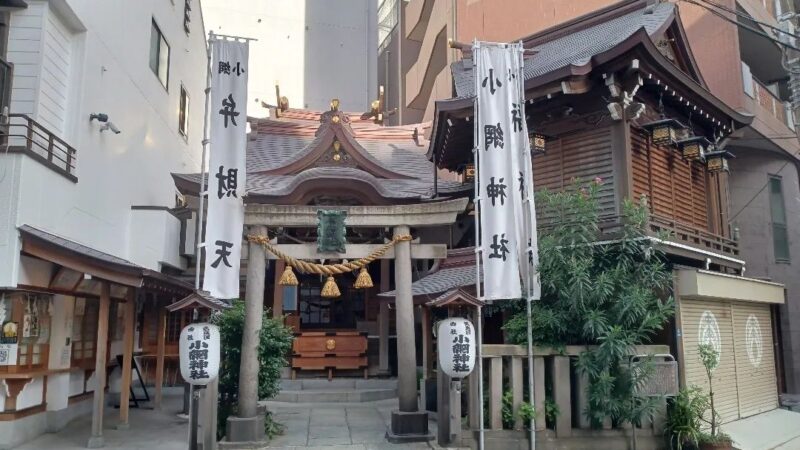
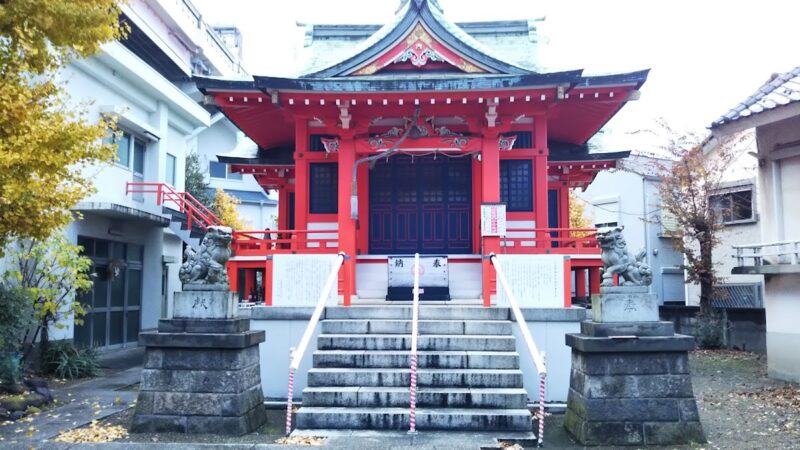
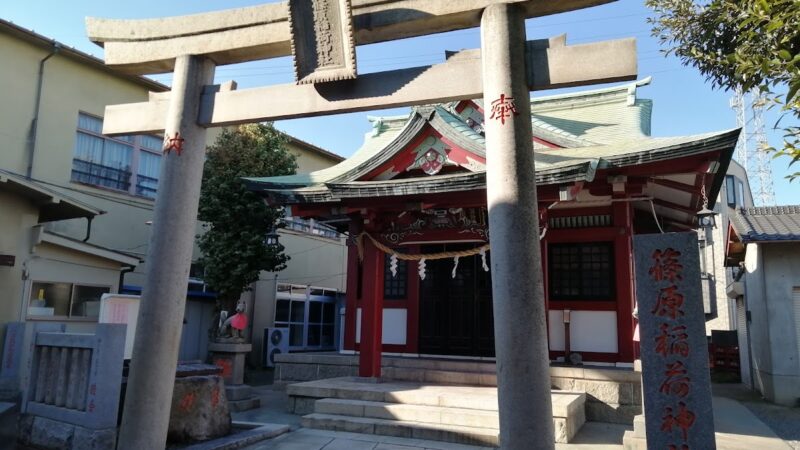
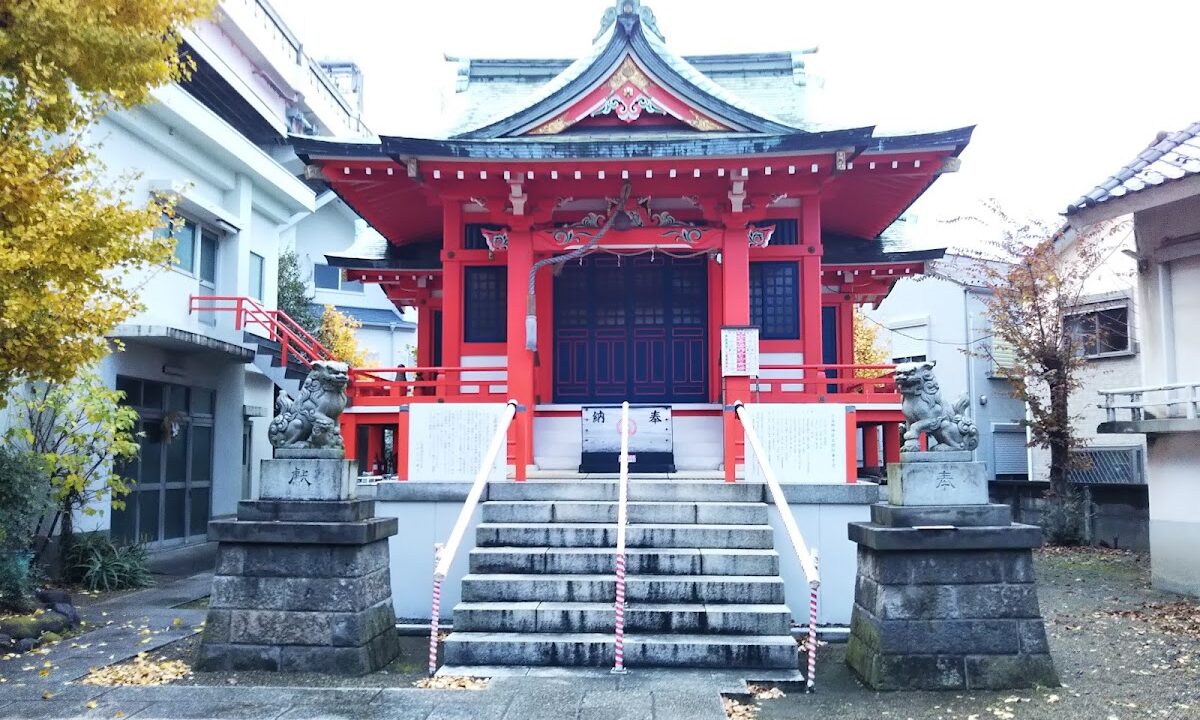
The shrine building of Koyano Shrine is small but meticulously maintained. The wooden main hall is built in the traditional shrine architectural style, creating a simple yet solemn atmosphere. A donation box is placed in front of the worship hall, and worshippers visit daily.
The shrine building has survived war damage and disasters, and has been protected by the deep faith of the local people. Regular repairs are carried out, maintaining its beautiful condition. ### Shrine Precincts
Several shrine precincts are enshrined within the grounds of Koyano Shrine. Representative examples include:
- Mitsumine Shrine: This shrine was established by inviting a deity from Mitsumine Shrine, located on Mount Mitsumine in Chichibu, Saitama Prefecture, and is known for its belief in wolves as divine messengers.
- Suiten-gu: A branch shrine of Suiten-gu, worshipped as the god of safe childbirth and child-rearing.
These shrine precincts were established to meet the diverse religious needs of the local people, and people can be seen visiting each of them.
Komainu and Stone Monuments
A pair of komainu (guardian lion-dogs) that show their age are enshrined within the grounds. Although weathered, their appearance conveys the weight of a long history. Several donated stone monuments and memorials can also be seen within the grounds, preserving the history of the region.
A Quiet Place of Worship
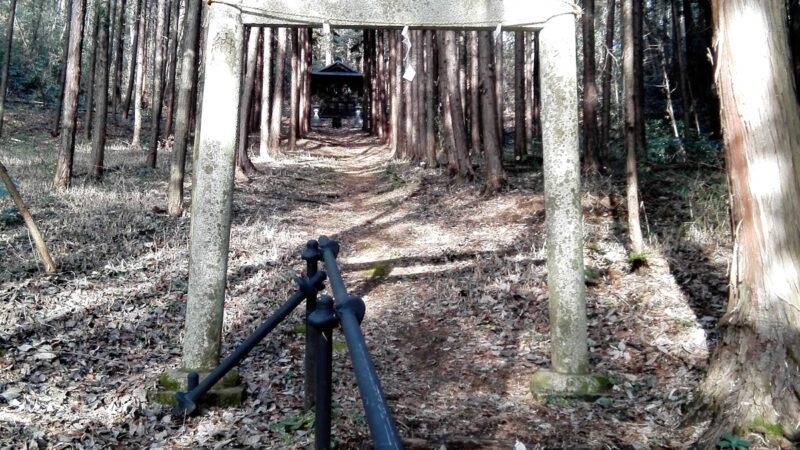
The greatest charm of Koyano Shrine is its serene atmosphere. Despite being located in a residential area, stepping onto the shrine grounds reveals a tranquil space far removed from the hustle and bustle of the city. Surrounded by large trees, the grounds display different expressions with each season, offering a sense of peace and tranquility to visitors.
Goshuin (Shrine Seal) Information
Regarding the Issuance of Goshuin
Koyano Shrine offers Goshuin (shrine seals). However, as there is no resident priest, the days and times when Goshuin can be issued may be limited. To ensure you receive a Goshuin, it is recommended to inquire by phone in advance or check with a nearby shrine, as the priest may also be responsible for Goshuin at other shrines within Katsushika Ward.
Goshuin Design
The Goshuin at Koyano Shrine features the shrine’s name, “Koyano Shrine,” written in ink, and stamped with the shrine’s seal. It is characterized by a simple yet powerful calligraphy style and can be inscribed in your Goshuincho (stamp book). The offering fee is generally around 300 to 500 yen.
Etiquette for Collecting Goshuin (Shrine/Temple Stamps)
When receiving a Goshuin, please observe the following etiquette:
- Complete your prayers before receiving the Goshuin.
- Prepare your Goshuincho (stamp book) in advance.
- Prepare exact change to avoid needing change.
- Don’t forget to express your gratitude to the shrine priest.
Goshuin are not merely stamps; they are given as proof of your visit. Visit with reverence and receive your Goshuin.
Annual Events and Festivals
Annual Festival (September)
The Annual Festival of Koyano Shrine is held every September. The Annual Festival is the most important festival for the shrine, a Shinto ritual to express gratitude for the past year and pray for future peace. Local parishioners and devotees gather, and the festival is held in a solemn atmosphere.
During the Annual Festival, lanterns are displayed on the shrine grounds, creating a vibrant atmosphere different from usual. Local children also participate, providing a valuable opportunity to experience traditional culture. ### Other Festivals
In addition to the annual festival, Koyano Shrine holds the following festivals:
- Hatsumode (January 1st-3rd): Praying for happiness in the new year
- Setsubun Festival (around February 3rd): Exorcising evil spirits through bean-throwing
- Natsukoshi no Oharae (June 30th): Purifying oneself of impurities accumulated over the past six months
- Toshikoshi no Oharae (December 31st): Purifying oneself of impurities accumulated over the past year
These festivals are attended by local residents, who deepen their bonds through traditional Shinto rituals.
Access Information
Access by Train
Nearest Station: Keisei Main Line “Horikiri-Shobu-en Station”
Travel Time: Approximately 8 minutes on foot
The route from Horikiri-Shobu-en Station to Koyano Shrine is as follows:
- Exit the ticket gate at Horikiri-Shobu-en Station and head towards the South Exit.
- Walk straight down the road in front of the station and through the shopping street.
- Follow the signs for Horikiri-Shobu-en.
- Enter the residential area and follow the signs to arrive at Koyano Shrine.
Along the way, you’ll find shops and houses, allowing you to enjoy a stroll through a charming, old-town atmosphere.
Access by Bus
While you can use regular buses such as Keisei Town Bus, walking from Horikiri-Shobu-en Station is the most convenient option. If using the bus, the nearest bus stop is “Horikiri 4-chome.”
Access by Car and Parking
Koyano Shrine does not have a dedicated parking lot. If you are visiting by car, you will need to use a nearby coin-operated parking lot. However, since it is located in a residential area, we recommend using public transportation whenever possible.
Please drive carefully as some of the surrounding roads are narrow.
Nearby Tourist Attractions
Horikiri Iris Garden
Located about a 10-minute walk from Koyano Shrine, Horikiri Iris Garden is a famous spot for irises dating back to the Edo period. Every June, the “Katsushika Iris Festival” is held, featuring approximately 200 varieties and 6,000 irises in full bloom. Enjoying the seasonal flowers in conjunction with a visit to Koyano Shrine is highly recommended.
Arakawa Riverbank
A short walk from the shrine leads to the vast Arakawa Riverbank. Here, you can enjoy cycling, jogging, and picnics. On clear days, you can even see Mount Tsukuba in the distance in this open space.
Gokuraku-ji Temple
In addition to Hōshō-ji Temple, which was the head temple of Koyano Shrine, there are several other historical temples in the vicinity, including Gokuraku-ji Temple. Visiting temples in conjunction with shrine visits will allow you to gain a deeper understanding of the history of the Horikiri area of Katsushika Ward.
Traditional Downtown Culture of the Horikiri Area
The Horikiri area is a place where traditional downtown culture remains strong. The shopping street is lined with long-established Japanese confectionery shops and delicatessens, and you can experience the warm hospitality of the local people. After visiting the shrine, be sure to enjoy exploring the area.
Koyano Shrine and the Local Community
Parishioner Organization and Community Activities
Koyano Shrine is still supported by the local parishioner organization. The parishioners voluntarily clean the shrine, prepare for festivals, and maintain the grounds, continuing to protect the shrine.
In recent years, the number of parishioners has been declining due to aging and population decrease, but the traditions are still being passed down by people who have a deep attachment to the community.
Passing on Traditions to Children
Koyano Shrine also conducts activities to teach the history and traditions of the shrine to local children. Children participate in the annual festival, and opportunities are provided to learn the meaning and etiquette of the Shinto rituals. Through these efforts, the transmission of culture to the next generation is being pursued. ### A Place to Deepen Community Bonds
In today’s increasingly urbanized world, shrines serve as valuable places for local residents to gather and strengthen their bonds. Koyano Shrine, too, attracts many visitors during New Year’s and annual festivals, providing opportunities for people to meet and connect. Such interactions contribute to the revitalization of the local community.
The Present and Future of Koyano Shrine
Challenges of Preservation and Inheritance
Koyano Shrine is a historic shrine dating back to the Genroku era, but it faces various challenges in modern society. It shares many of the problems faced by small shrines, such as a decline in parishioners due to the declining birthrate and aging population, aging buildings, and securing maintenance funds.
However, as evidenced by the fact that the shrine’s name was changed to preserve the place name “Koyano” for future generations, this shrine is imbued with the history of the region and the feelings of its people. It is important to reaffirm this value and preserve and pass it on.
Attracting New Visitors
In recent years, with the rise of the Goshuin (shrine stamp) boom and the popularity of shrine pilgrimages, Koyano Shrine has seen an increase in new visitors. Information is being shared on social media, and the number of people interested in history and origins is increasing.
Interaction between these new visitors and local parishioners has the potential to revitalize the shrine. While preserving tradition, there is a need to create spaces for information dissemination and interaction that are relevant to the times.
Utilization as a Local Resource
Koyano Shrine is a valuable historical and cultural resource of Katsushika Ward. It is expected to play a role as a hub for promoting the region’s attractions, in conjunction with tourist resources such as Horikiri Iris Garden. Further development of community revitalization efforts centered around the shrine is desired.
Etiquette and Manners for Visiting a Shrine
Basic Etiquette for Visiting a Shrine
When visiting Koyano Shrine, please observe the following etiquette.
- Bow before passing through the torii gate: Show respect before entering the sacred area.
- Walk along the edge of the approach: The center is considered the path for the gods.
- Purify yourself at the water basin: If there is a water basin, purify your hands and mouth.
- Worship in front of the main hall: The basic method is “two bows, two claps, one bow.”
- Bow deeply twice.
- Clap your hands twice.
- Finally, bow deeply once.
- Bow again when leaving the torii gate: Express gratitude when leaving the sacred area.
Attire for Visiting
No special formal attire is required, but clean and subdued clothing is desirable. Avoid revealing clothing or overly casual attire. It is important to choose clothing that reflects the sacred nature of the place.
Photography Etiquette
Photography is generally permitted on the shrine grounds, but please note the following points.
- Do not take photos in areas where photography is prohibited, such as inside the main shrine.
- Be considerate of other worshippers.
- Refrain from using flash.
- When posting on social media, remember to show respect to the shrine.
Summary
Koyano Shrine, located in Horikiri, Katsushika Ward, Tokyo, is a historical shrine founded during the Genroku era. It was formerly known as “Inari Shrine,” but due to the implementation of the Showa-era address system, the place name “Koyano” disappeared. Therefore, the shrine was renamed to its current name to preserve the place name for future generations.
The enshrined deity is Ukanomitama-no-kami, and it is believed to bring blessings of abundant harvests and business prosperity. Within the shrine grounds are smaller shrines such as Mitsumine Shrine and Suiten-gu, accommodating the diverse beliefs of the local people.
It is easily accessible, about an 8-minute walk from Horikiri-Shobu-en Station on the Keisei Main Line, and there are many attractive tourist spots nearby, such as Horikiri-Shobu-en Garden and the Arakawa River embankment. The shrine also offers Goshuin (stamped seals), making it popular with people who enjoy visiting shrines.
Koyano Shrine is a valuable cultural asset, filled with the history and sentiments of the local people. Why not take some time to relax in its tranquil grounds and reflect on its history while offering your prayers? When you visit Katsushika Ward, be sure to stop by Koyano Shrine.