Tsukimigaoka Hachiman Shrine (Shinjuku Ward, Tokyo) Complete Guide | History, Goshuin (Shrine Seal), Fujizuka (Mt. Fuji Mound), and Access Information
Tsukimigaoka Hachiman Shrine is a historic shrine located in Kami-Ochiai, Shinjuku Ward, Tokyo. It has a legend associated with Minamoto no Yoshiie and has been cherished by the local people as the guardian shrine of Kami-Ochiai Village. Nestled quietly within a residential area, the shrine grounds contain a Fujizuka (Mt. Fuji mound) and other valuable cultural artifacts, making it known as a shrine where visitors can worship in a peaceful atmosphere despite being in the heart of the city.
Basic Information about Tsukimioka Hachiman Shrine
Location: 1-26-19 Kami-Ochiai, Shinjuku-ku, Tokyo
Main Deities:
- Hondawake-no-Mikoto
- Okinagatarashihime-no-Mikoto
- Osazaki-no-Mikoto
Former Shrine Rank: Village Shrine
Founding Date: Unknown (believed to be before Minamoto no Yoshiie’s conquest of Oshu)
Annual Festival Day: September 15th
Shrine Office: Yes (Offers Goshuin stamps)
History and Origins of Tsukimioka Hachiman Shrine
Founding and Origin of Tsukimioka
The founding date of Tsukimioka Hachiman Shrine is unclear, but according to shrine tradition, it existed even before Minamoto no Yoshiie’s conquest of Oshu. There are several theories regarding the origin of our shrine’s name, but the most plausible is a legend that states it began when the moon reflected on the surface of a spring well that once stood on this site was so beautiful that the villagers revered it as the spirit of the moon.
It is also said that in ancient times, Tsukuyomi-no-Mikoto was enshrined here, and the shrine has developed as a place deeply connected to the moon. This area is located on a plateau along the Kanda River and is believed to have once been known as a famous spot for moon viewing.
The Legend of Minamoto no Yoshiie and the Planting of Pine Trees
The most famous legend in the history of Tsukimioka Hachiman Shrine concerns its connection to Minamoto no Yoshiie (Hachiman Taro Yoshiie). It is said that in the late Heian period, when Yoshiie was heading to conquer Oshu (the Later Three Years’ War, 1083-1087), he visited this shrine and prayed for victory.
It is said that Yoshiie planted a pine tree on the shrine grounds as proof of the fulfillment of his prayers, and this pine tree has long been revered as “Yoshiie’s Hand-Planted Pine.” According to shrine tradition, this pine tree lived until the Tokugawa era, but eventually withered and died, and its trunk was preserved behind the shrine building. Although the trunk of the pine tree no longer exists, this legend is an important element in telling the history of our shrine.
As the Guardian Shrine of Kami-Ochiai Village
Throughout the Edo period, Tsukimioka Hachiman Shrine was the guardian shrine of Kami-Ochiai Village, attracting the faith of the villagers. Kami-Ochiai was a village centered on agriculture, located in an area between the Kanda River and the Myoshoji River. As the village’s tutelary deity, prayers for abundant harvests, family safety, and protection from evil were offered, and it played a central role in the local community.
During the Meiji era’s shrine system reforms, it was designated a village shrine and officially recognized as an important shrine in the region. Since then, it has grown alongside the development of the region and continues to exist as a spiritual pillar of the Kami-Ochiai area to this day.
Changes Since the Modern Era
From the Meiji to the Taisho and Showa periods, the Kami-Ochiai area underwent significant changes along with the urbanization of Tokyo. While the former rural landscape transformed into a residential area, Tsukimioka Hachiman Shrine remained unchanged, preserving its central role in the community.
During the Showa era, surrounding religious facilities were integrated, including the enshrinement of Ochiai Fuji (a miniature Mount Fuji) within the shrine grounds. Although affected by war damage, the shrine buildings were rebuilt after the war, resulting in its current form.
Highlights and Cultural Assets within the Shrine Grounds
Main Hall and Worship Hall
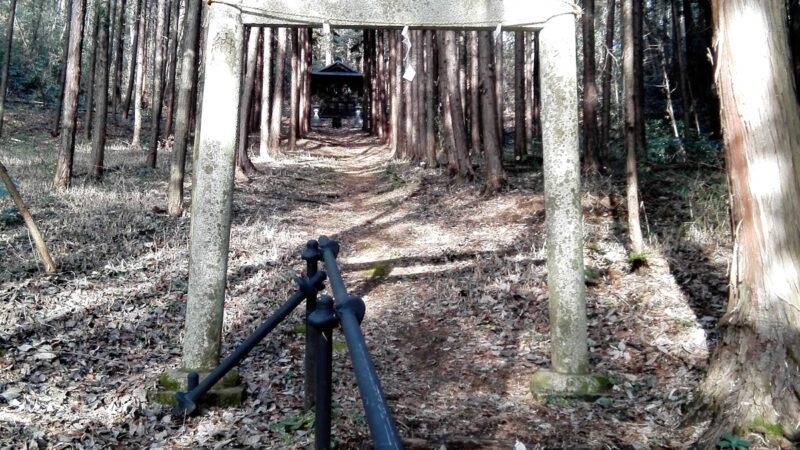
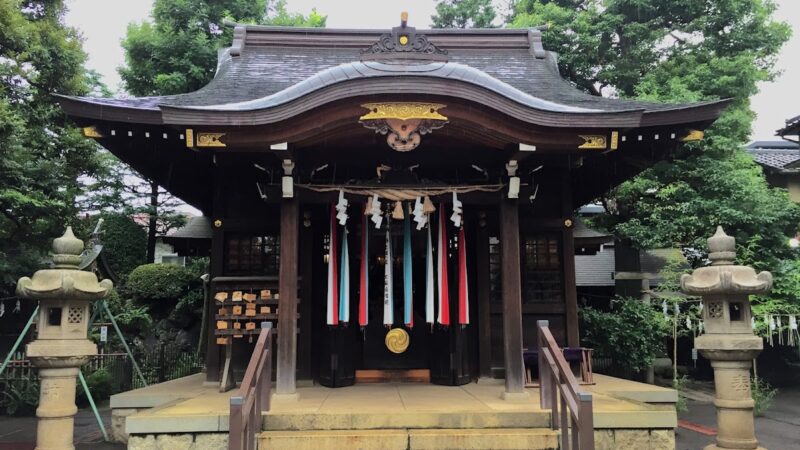
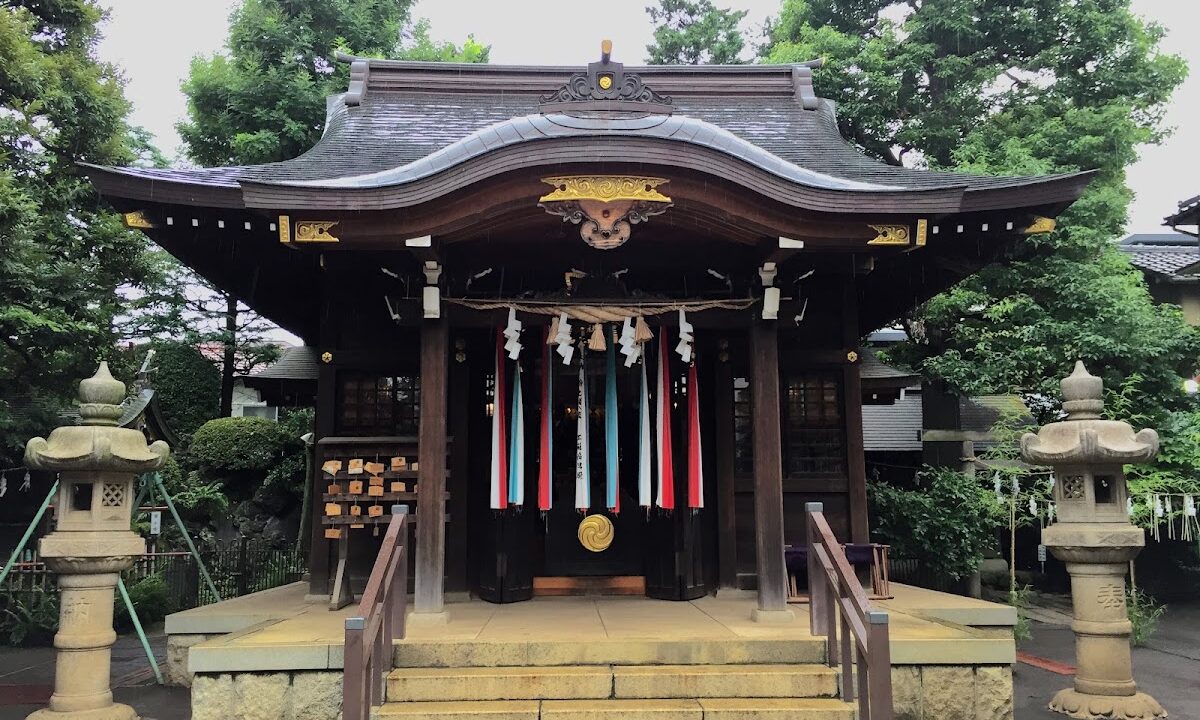
The main hall of Tsukimioka Hachiman Shrine stands quietly amidst a residential area. The worship hall is a traditional wooden shrine building, small yet exuding a sense of dignity. The grounds are meticulously clean, maintaining a tranquil atmosphere despite being a shrine in the heart of the city.
Trees surround the shrine, allowing visitors to experience the beauty of nature throughout the seasons. The grounds are particularly vibrant during the fresh green season and the autumn foliage season.
Ochiai Fuji (Fujizuka)
A particularly noteworthy feature within the grounds of Tsukimioka Hachiman Shrine is the Fujizuka known as Ochiai Fuji. Fujizuka are artificial mounds built based on the worship of Mount Fuji, and many were constructed in the Kanto region from the Edo period to the Meiji period. They were created for ordinary people who found it difficult to actually climb Mount Fuji, allowing them to experience a simulated climb in a familiar location and deepen their faith.
Ochiai Fuji was enshrined within the grounds of Tsukimioka Hachiman Shrine during the Showa era and remains in a corner of the shrine grounds today. Although small in scale, it showcases the characteristic arrangement of lava rocks and the structure of the climbing path, making it a valuable legacy of the popular faith of Edo/Tokyo.
At the top of the miniature Mount Fuji is the Asama Shrine, where the worship of Konohanasakuya-hime no Mikoto, the goddess of Mount Fuji, continues to this day.
Koshin Towers and Stone Sculptures
Within the grounds of Tsukimioka Hachiman Shrine, several valuable stone sculptures are preserved, including the oldest Koshin Tower in Shinjuku Ward. These are designated as tangible cultural properties of Shinjuku Ward and serve as important historical materials that convey the history of the region.
Koshin Towers are stone monuments built based on Koshin belief and are valuable historical materials for understanding the popular beliefs of the Edo period. The Koshin Towers on the shrine grounds are in good condition, and the inscribed characters and images offer insights into the beliefs of the time.
In addition, historical stone sculptures such as the water basin at the purification fountain and stone lanterns are placed throughout the grounds, making them points of interest for visitors.
Shofuku Inari Shrine (Subsidiary Shrine)
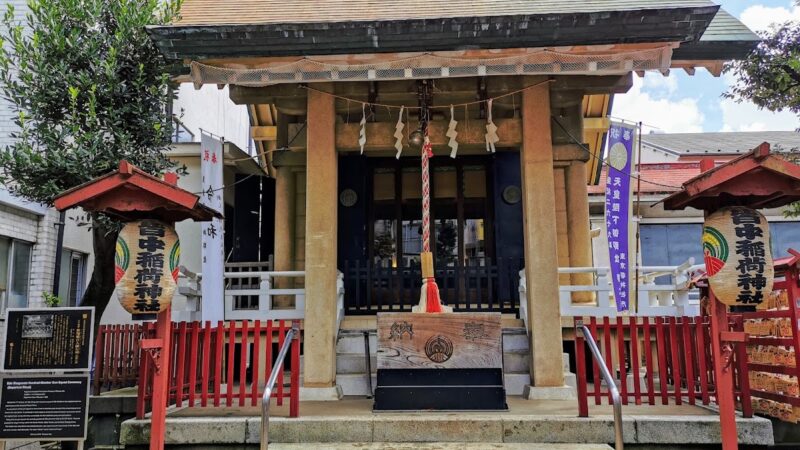
Within the shrine grounds is the Shofuku Inari Shrine, a subsidiary shrine. Inari worship is widely practiced as a deity of business prosperity and abundant harvests, and it is an important object of worship at Tsukimioka Hachiman Shrine.
The name Shofuku Inari Shrine means “to invite good fortune with a smile,” and it is a beloved shrine believed to bring happiness to visitors. Although small, it is carefully maintained and is a popular spot for visitors who come to pray at the main shrine.
Relationship with Hachiman Park
Hachiman Park is located near Tsukimioka Hachiman Shrine, and the shrine and park are closely related. Hachiman Park is a place of relaxation for local residents, and many people stroll through the park in conjunction with visiting the shrine. The park has playground equipment and open spaces, making it a popular play area for children.
The proximity of the shrine and park strengthens its role as a center of the local community, and the entire area, including the park, becomes lively during festivals.
Information on Goshuin (Shrine Seals) and Goshuincho (Shrine Seal Books)
About Goshuin
Tsukimioka Hachiman Shrine offers Goshuin. Goshuin are cherished by many visitors as proof of their visit and as an important symbol of their connection to the shrine.
Features of Goshuin:
- Written in ink with “Tsukimioka Hachiman Shrine”
- Stamped with the shrine’s seal
- Date included
- Carefully handwritten
Offering Fee: Usually around 300-500 yen (subject to change)
Location of Issuance: Shrine office
Hours of Issuance: During shrine office hours (priests may be absent, so prior confirmation is recommended if you wish to receive a Goshuin)
Goshuin are carefully written one by one by shrine priests and shrine maidens. The correct etiquette is to receive the Goshuin after completing your prayers. Waiting times may occur during busy periods, so it is recommended to visit with ample time.
About Goshuincho (Stamp Books)
The availability and design of the original Goshuincho at Tsukimioka Hachiman Shrine may change. We recommend checking the latest information before your visit.
Even if the original Goshuincho is unavailable, you can have your stamped in a Goshuincho obtained from another shrine. Those who enjoy collecting Goshuin stamps should bring their favorite Goshuincho with them.
Annual Events and Festivals
Grand Festival (Around September 15th)
The most important festival at Tsukimioka Hachiman Shrine is the Grand Festival, held around September 15th. The Grand Festival is the most prestigious festival for the shrine, an important event for expressing gratitude for the year and praying for peace in the community.
During the Grand Festival, there may be a portable shrine procession and devotional performances, with local residents participating to enliven the festival. Stalls line the shrine grounds, and it is bustling with many worshippers. It is also positioned as an important opportunity to pass on local traditions to the next generation. ### Hatsuumasai Festival (Mid-February)
The Hatsuumasai Festival is held at Tsukimioka Hachiman Shrine around mid-February. The Hatsuumasai Festival is a festival based on Inari worship and is related to the Shofuku Inari Shrine within the shrine grounds.
A distinctive feature of the Hatsuumasai Festival is the mochi-making ceremony, which takes place while singing the Kami-Ochiai Mochi-making Song. This song is preserved as a local intangible cultural asset and is an important element of the festival. Freshly made mochi is sometimes offered to worshippers, providing a valuable opportunity to experience local traditional culture.
Other Annual Events
In addition to the annual festival and the Hatsuumasai Festival, Tsukimioka Hachiman Shrine holds various other events throughout the year.
- New Year’s Day Festival (January 1st): Celebrating the New Year and praying for peace throughout the year
- Setsubun Festival (around February 3rd): A ritual to ward off evil spirits, including bean-throwing
- Summer Purification Ceremony (June 30th): A Shinto ritual to cleanse away the sins and impurities accumulated over the past six months
- Shichi-Go-San Festival (November): A visit to celebrate the growth of children
- Year-End Purification Ceremony (December 31st): A Shinto ritual to cleanse away the sins and impurities accumulated over the past year
These events are deeply rooted in the lives of the local people and serve as important occasions to mark the changing seasons.
Access Information
Access by Train
Tsukimioka Hachiman Shrine is accessible from multiple train lines.
Nearest Stations:
- Tokyo Metro Tozai Line “Ochiai Station”
- Approximately 6 minutes on foot northeast
- The closest station, easily accessible
- Seibu Shinjuku Line “Nakai Station”
- Approximately 8 minutes on foot
- Same from Toei Oedo Line “Nakai Station”
- JR Chuo Line/Sobu Line “Higashi-Nakano Station”
- Approximately 15 minutes on foot
- A bit of a distance, but possible to walk while enjoying a stroll
- Seibu Shinjuku Line “Shimo-Ochiai Station”
- Approximately 10 minutes on foot
- Route via Hachiman-dori
Walking Route
Route from Ochiai Station:
- Exit Ochiai Station and head northeast
- Walk through the residential area for approximately 6 minutes
- Arrive near Hachiman Park
- Enter the road next to the park and you will immediately find the shrine
Route from Nakai Station:
- 1. Exit Nakai Station and head north.
- Walk along Hachiman-dori Street.
- Head towards Hachiman Park.
- Enter the alley near the park to reach the shrine.
Route from Shimo-Ochiai Station:
- Exit Shimo-Ochiai Station and head to Hachiman-dori Street.
- Walk along Hachiman-dori Street for about 6 minutes.
- Enter the road next to Hachiman Park.
- Walk for another 2 minutes to reach the shrine.
Access by Car and Parking
Tsukimioka Hachiman Shrine does not have its own parking lot. If you are visiting by car, you will need to use a nearby coin-operated parking lot.
The area is located in a residential area, so the roads are narrow and there are many one-way streets. If you are visiting for the first time, we recommend using a car navigation system or a smartphone map app.
On days when congestion is expected, such as during festivals, using public transportation is recommended.
Landmarks in the vicinity
- Hachiman Park (very close)
- Kami-Ochiai Kindergarten (nearby)
- Kanda River (south side)
- Myoshoji River (north side)
Since it is located in a residential area, first-time visitors will find it easier to use Hachiman Park as a landmark. Once you get close to the park, you can look for signs to the shrine or ask local residents for directions.
Manners and Etiquette for Visiting a Shrine
Basic Etiquette for Visiting a Shrine
There are basic manners to observe when visiting a shrine. When visiting Tsukimioka Hachiman Shrine, please observe the following etiquette.
How to Pass Through the Torii Gate:
- Bow before passing through the torii gate.
- Walk along the edge of the path, as the center is considered the path of the gods.
How to Wash Your Hands:
- Take the ladle in your right hand and wash your left hand.
- Switch the ladle to your left hand and wash your right hand.
- Switch the ladle back to your right hand, receive water in your left hand, and rinse your mouth.
- Wash your left hand again.
- Hold the ladle upright, wash the handle, and return it to its original position.
Worship at the Shrine Hall:
- Stand in front of the offering box.
- Bow slightly.
- Gently place your offering in the box.
- Ring the bell if there is one.
- Bow twice, clap twice, and bow once.
- Bow deeply twice.
- Clap twice.
- Offer your prayer.
- Bow deeply once.
Regarding Photography
Photography is generally permitted on the shrine grounds, but please note the following points.
- Do not take photos in areas where photography is prohibited, such as inside the main hall.
- Be considerate of other worshippers.
- Do not photograph Shinto priests or worshippers without permission.
- Avoid using tripods during crowded times.
- Post on social media with moderation.
Regarding Attire
For everyday visits, no special attire is required, but please dress in clean clothing that is respectful to the deities. For prayers or formal visits, slightly more formal attire, such as a jacket, is recommended.
Nearby Attractions and Walking Spots
Nearby Shrines and Temples
There are other shrines and temples worth visiting around Tsukimioka Hachiman Shrine.
Yakuoin:
A temple located in the Kami-Ochiai area, within walking distance of Tsukimioka Hachiman Shrine. The temple grounds have a tranquil atmosphere, allowing you to feel the history of the area.
Kuzuya Goryo Shrine:
A shrine located near the border with Nakano Ward, this is also a historical shrine. You can also enjoy a “shrine pilgrimage” visiting multiple shrines.
A Stroll in Hachiman Park
Hachiman Park, located very close to Tsukimioka Hachiman Shrine, is a place of relaxation for local residents. With playground equipment and open spaces, it’s an ideal place to rest before or after visiting the shrine. During cherry blossom season, you can enjoy cherry blossom viewing, experiencing the beauty of nature throughout the seasons.
Walking Paths along the Kanda River and Myoshoji River
The Kami-Ochiai area, where Tsukimioka Hachiman Shrine is located, is situated between the Kanda River and the Myoshoji River. Promenades are maintained along both rivers, making it a popular walking route. Especially during cherry blossom season, the rows of cherry trees along the rivers are beautiful, attracting many visitors.
Surrounding Shopping Streets
Shopping streets exist around Nakai Station and Ochiai Station, lined with traditional shops and restaurants. After visiting the shrine, you can enjoy a meal or shopping while soaking up the local atmosphere.
Benefits of Tsukimioka Hachiman Shrine
Main Benefits
Tsukimioka Hachiman Shrine is said to offer the following benefits:
Benefits as Hachiman-sama:
- Long-lasting military fortune and victory
- Protection from evil and disaster
- National peace and protection of the land
Benefits as a local guardian shrine:
- Family safety
- Business prosperity
- Abundant harvest
- Prosperity of descendants
Benefits of Shofuku Inari Shrine:
- Business prosperity
- Good fortune and happiness
- Abundant harvest
- Family safety
Benefits of Fujizuka (Asama Shrine):
- Safe childbirth and child-rearing
- Protection from fire
- Matchmaking
Due to the legend that Minamoto no Yoshiie prayed for victory here, it is particularly popular among those facing competitions or new challenges. Also, because it has long been worshipped as a local guardian shrine, many visitors come to pray for family safety and peace in the community.
The Charm of Tsukimioka Hachiman Shrine
A Tranquil Space in the Heart of the City
The greatest charm of Tsukimioka Hachiman Shrine is its quiet and peaceful atmosphere, despite being located in the heart of Shinjuku Ward. Situated within a residential area, it offers a tranquil space for worship, far removed from the hustle and bustle.
Richness of History and Legends
The shrine is rich in historical romance, with elements such as the legend of Minamoto no Yoshiie and the origin of the beautiful name Tsukimioka (Moon-Viewing Hill). Cultural assets within the grounds, including the Fujizuka (miniature Mount Fuji), are valuable legacies that convey the history of Edo/Tokyo to the present day.
A Shrine Rooted in the Community
This shrine has long been cherished by the community as the guardian shrine of Kami-Ochiai Village, and continues to function as a central hub for the local community. It plays a role in deepening community bonds through festivals and annual events.
Easy Access
It is easily accessible from multiple train lines, making it convenient to visit from the city center. It can also be visited as part of a shrine pilgrimage, along with other shrines in Shinjuku and Nakano Wards.
Points to Note When Visiting
Shrine Office Hours
Tsukimioka Hachiman Shrine may not always have a resident priest. If you wish to receive a Goshuin (shrine stamp) or prayers, it is recommended to call in advance to confirm or visit during the office hours.
Consideration for the Residential Area
As the shrine is located in a residential area, consideration for nearby residents is necessary when visiting. Please refrain from loud conversations and nighttime visits.
Crowds During Festivals
During festivals such as the annual grand festival and the Hatsuumasai (first horse festival), the usually quiet shrine grounds become crowded with many worshippers. If you wish to avoid crowds, it is recommended to visit on weekdays or days other than festival days.
Weather Preparations
Since the shrine grounds are outdoors, an umbrella is necessary in case of rain. Also, as there is little shade in the summer, it is advisable to bring a hat, parasol, and water.
Summary
Tsukimioka Hachiman Shrine is a historical shrine located in Kami-Ochiai, Shinjuku-ku, Tokyo. Tsukimioka Hachiman Shrine, with its legends associated with Minamoto no Yoshiie, has long been cherished by the local community as the guardian shrine of Kami-Ochiai Village.
The shrine grounds contain cultural assets such as a valuable miniature Mount Fuji and the oldest Koshin Tower in Shinjuku Ward, creating a space where one can feel history and tradition despite being in the heart of the city. Subsidiary shrines, such as Shofuku Inari Shrine, are also enshrined, making it an object of diverse worship.
With easy access—approximately a 6-minute walk from Ochiai Station on the Tokyo Metro Tozai Line—and offering Goshuin (shrine stamps), it’s a popular destination for those visiting as part of a shrine pilgrimage. Annual events such as the Grand Festival and Hatsuumasai (first horse festival) offer opportunities to experience traditional culture, including the Kami-Ochiai Mochi-tsuki Uta (rice cake pounding song).
Nestled in a quiet residential area, Tsukimioka Hachiman Shrine offers a peaceful place to worship. It’s a precious shrine where you can feel the history and culture of Shinjuku Ward while offering a serene prayer. Be sure to visit when sightseeing in Tokyo or on a shrine pilgrimage.