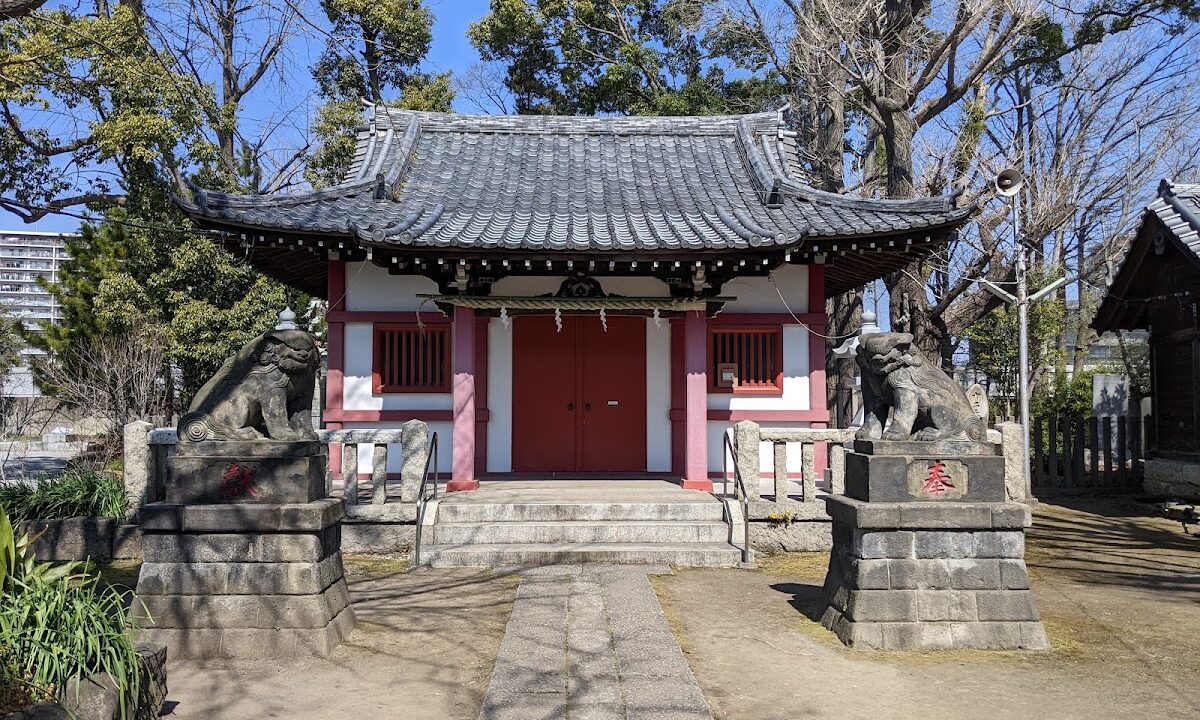
Funagata Shrine (Kita Ward, Tokyo) Complete Guide | History, Deities, Legend of the Twelve Deities Mound, and Visitor Information
Nearby nestled quietly in Horifune, Kita Ward, Tokyo, Funagata Shrine is a historic shrine said to have been founded in 725 AD during the Nara period. Formerly known as “Juniten-sha,” it had deep ties to the Kumano Gongen faith of Kishu. This article provides a thorough explanation of Funagata Shrine’s detailed history, enshrined deities, highlights within the grounds, and the Twelve Deities Mound, which holds a tragic legend.
Table of Contents
- Overview of Funakata Shrine
- Deities and Divine Virtues
- History of Funakata Shrine
- Renaming from Jūniten-sha to Funakata Shrine
- The Sad Legend of the Jūniten-zuka (Twelve Deities Mound)
- Relationship with the Six Amida Buddhas of Edo
- Highlights of the Shrine Grounds
- Access
- Points to Note When Visiting
Overview of Funakata Shrine
Location: 4-13-28 Horifune, Kita-ku, Tokyo 114-0004
Funakata Shrine is a shrine located on the right bank of the Sumida River in Horifune, Kita-ku, and has been cherished by the local people as their guardian shrine. It is said to have been founded in 725 AD (Shinki 2), making it one of the oldest shrines in Tokyo. During the Edo period, it was located in a dense forest and was called “Jūniten no Mori” (Forest of the Twelve Deities) or “Jūniten-sha” (Twelve Deities Shrine).
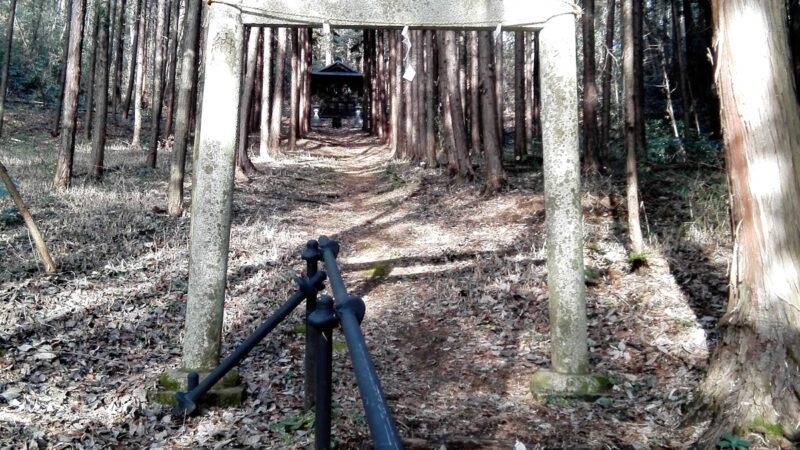
Although the shrine grounds are currently located within a residential area, they maintain a tranquil atmosphere, offering a space that allows one to forget the hustle and bustle of the city. In addition to the main hall and worship hall, the shrine also houses subsidiary shrines such as the Ontake Shrine and the Suijin Shrine, and remains a cherished center of local faith.
Deities and Divine Virtues
The following four deities are enshrined at Funagata Shrine:
Yamato Takeru no Mikoto
A heroic deity in Japanese mythology, a symbol of courage and martial prowess. He played an active role in the eastern and western expeditions and is believed to bestow the strength to overcome difficulties. His divine virtues include good fortune, protection from evil, victory, and safe travel.
Okuninushi no Mikoto
A god of nation-building, also known as the principal deity of Izumo Taisha Shrine. He is worshipped as a god with a wide range of divine virtues, including matchmaking, business prosperity, family safety, and healing from illness.
Sukunahikona-no-Mikoto
A small god who worked alongside Okuninushi-no-Mikoto in nation-building. Known as the god of medicine, hot springs, and sake brewing, he bestows blessings of healing illnesses and longevity.
Sarutahiko-no-Mikoto
A god who guided the descent of the heavenly grandchild, he is worshipped as a god of guidance. He bestows blessings of traffic safety, protection from misfortune, good fortune, and business success.
With these gods enshrined, Funakata Shrine is a shrine with diverse divine blessings, welcoming worshippers with a variety of wishes.
History of Funakata Shrine
Legend of its Founding
Funakata Shrine is said to have been founded in 725 AD (Shinki 2). This was during the Nara period, under the reign of Emperor Shomu. At that time, this area belonged to Toshima District of Musashi Province and was a key transportation hub utilizing the Sumida River.
Details about the shrine’s founding are unclear due to the loss of records in a fire in 1853. However, it is certain that it had a deep connection with Kumano faith from ancient times, and this form of faith can be inferred from the shrine’s name, “Juni-ten-sha” (Twelve Deities Shrine).
Juni-ten Faith and Kumano Gongen
Throughout the Edo period, Funagata Shrine was known as “Juni-ten-sha.” The Twelve Deities refer to the celestial beings in Buddhism who guard the twelve cardinal directions. This faith is closely linked to Kumano faith, and a deep connection with Kumano Gongen in Kishu has been pointed out.
Kumano faith spread throughout Japan from the medieval to the early modern period, and many Kumano-related shrines were established, particularly in the Kanto region. It is believed that Funagata Shrine also developed within this context as a shrine dedicated to the gods of Kumano.
Funagata Shrine in the Edo Period
During the Edo period, Funagata Shrine served as the guardian shrine of Funagata Village (present-day Horifune, Kita Ward), attracting the faith of the villagers. The shrine grounds at the time were surrounded by a lush forest and were known as the “Forest of the Twelve Heavenly Generals.” This forest was apparently a familiar part of the landscape along the Sumida River, cherished by many.
During the Edo period, when water transport on the Sumida River was thriving, this area flourished as a hub for transporting goods by boat. The place name Funagata is thought to originate from the fact that many people involved with boats lived there. The shrine likely also functioned as a place to pray for the safety of water transport.
The Fire of Kaei and the Loss of Records
In 1853 (Kaei 6), Funagata Shrine was struck by fire, and all records and historical documents were lost. This year, coincidentally, was also the year of Commodore Perry’s arrival, a period of great transformation in Japan.
This fire resulted in the loss of clues to the detailed history since its founding and the changes in its rituals, representing a significant loss for historical research. Even the currently available information, such as the founding date, is based on oral tradition and other sources.
Renaming of Jūniten-sha to Funakata-jinja
Meiji’s Policy of Separation of Shinto and Buddhism
In 1868 (Meiji 1), the Meiji government issued the Shinto-Buddhism Separation Order. This policy clearly distinguished Shinto and Buddhism and aimed to eliminate Buddhist elements from shrines. This policy forced significant changes on shrines throughout the country.
The name Jūniten-sha was strongly associated with Buddhism. The Twelve Devas are Buddhist guardian deities, and while they were often enshrined in shrines during the era of Shinto-Buddhist syncretism, maintaining this name became difficult under the Shinto-Buddhism Separation Policy.
Timing and Circumstances of the Renaming
There are two theories regarding the timing of the renaming to Funakata-jinja: one suggests it occurred in 1871 (Meiji 4) and the other in 1879 (Meiji 12). Because different sources provide conflicting information, the exact date is uncertain, but in any case, it is certain that the renaming took place within the context of the Shinto-Buddhism Separation Policy in the early Meiji period.
The new shrine name, “Funakata,” originates from Funakata Village, the name of the area where the shrine is located. It is believed that the intention was to clearly define the connection with the parishioners by adopting a name rooted in the local community. Furthermore, it reflects a respect for local history and tradition while excluding Buddhist influences.
Development After the Name Change
Since the Meiji era, Funakata Shrine has established its position as the guardian shrine of the region and one of Tokyo’s historic shrines. Even as times have changed through the Taisho, Showa, Heisei, and Reiwa eras, it has continued to attract the faith of the local people.
Even today, Shinto rituals such as annual festivals are held, and it plays a central role in the local community. Its commitment to preserving tradition even amidst increasing urbanization has impressed many worshippers.
The Sad Legend of the Twelve Heavenly Deities’ Mound
What is the Twelve Heavenly Deities’ Mound?
To the right of the main hall of Funakata Shrine, in a fenced-off area, stands a stone monument inscribed with “Twelve Heavenly Deities’ Mound.” This monument is not merely a memorial, but was erected based on a sad legend. The Twelve Heavenly Generals Mound preserves the memory of the time when it was known as the Twelve Heavenly Generals Shrine, and plays a role in passing on the tragic story of this land to future generations.
Content of the Legend
There are several versions of the legend surrounding the Twelve Heavenly Generals Mound, but what they have in common is that it embodies the meaning of appeasing the souls of those who lost their lives in this area.
According to one theory, it was built to mourn the sailors who died in a drowning accident on the Sumida River, while another theory says it was built to comfort the spirits of villagers who died from disease or disaster.
During the Edo period, the Sumida River frequently flooded, resulting in the loss of many lives. Furthermore, while the transport of goods by boat was thriving, drowning accidents were also frequent. This historical background is thought to form the basis of the legend of the Twelve Heavenly Generals Mound.
Significance in Modern Times
Currently, the Twelve Heavenly Generals Mound is preserved as an important historical site of the Funakata Shrine. Enclosed by a fence and carefully maintained, this stone monument teaches us the importance of not forgetting past tragedies and continuing to comfort the souls of the victims.
Many visitors offer prayers at this Twelve Deities Mound, praying for the repose of the souls of those who perished in drowning accidents and disasters. As a place to preserve the memory of history and a place to pray for peace and safety, the Twelve Deities Mound continues to hold significant meaning.
Relationship with the Six Amida of Edo
What are the Six Amida of Edo?
The Six Amida of Edo are six sacred sites dedicated to Amida Buddha that attracted worshippers during the Edo period. These were scattered throughout Edo and its surrounding areas, and were objects of pilgrimage. The Twelve Deities Shrine, the predecessor of Funakata Shrine, is believed to have had a deep connection to the tradition of these Six Amida of Edo.
Funakata Shrine and Amida Faith
During the era of syncretism of Shinto and Buddhism, shrines and temples had a close relationship. The Twelve Deities Shrine was no exception, containing many Buddhist elements. Its connection to a temple considered one of the Six Amida Temples of Edo, and its link to Amida worship, have been pointed out.
Specifically, it is thought that there may have been a hall dedicated to Amida Buddha within or near the grounds of the Twelve Deities Shrine. In Edo period popular belief, the unified worship of Shinto and Buddhism was common, and it is presumed that the area around Funakata Shrine formed part of such a religious sphere.
Changes After the Separation of Shinto and Buddhism
The Meiji-era policy of separating Shinto and Buddhism clearly separated shrines and temples. In this process, it is thought that the Buddhist facilities attached to the Twelve Deities Shrine were either abolished or moved to another location. However, the historical fact of its connection to the Six Amida Temples of Edo remains an important element in illustrating the multi-layered history of faith at Funakata Shrine, and continues to attract the interest of researchers.
Highlights of the Shrine Grounds
Main Hall and Worship Hall
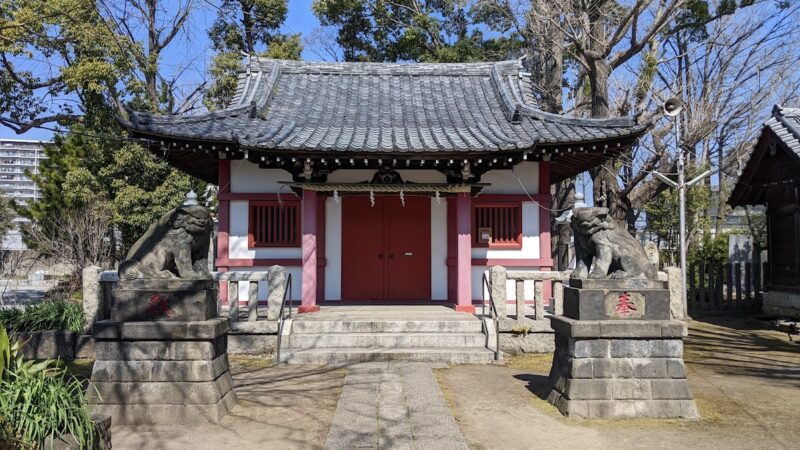
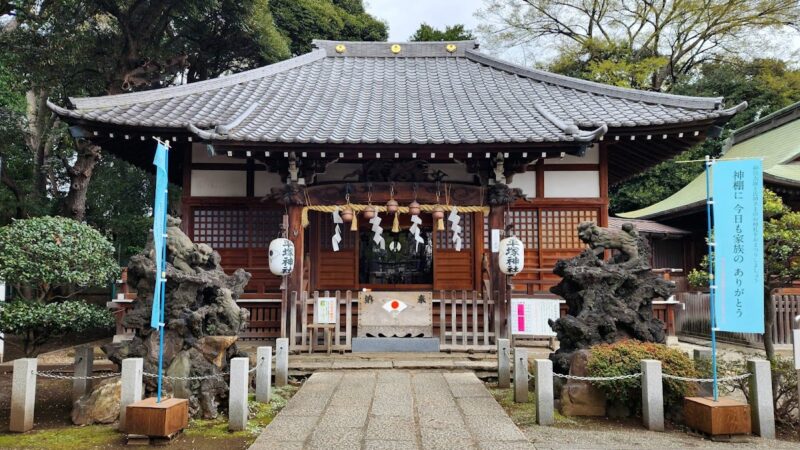
The main hall and worship hall of Funakata Shrine maintain the traditional style of shrine architecture. Although not large in scale, it is meticulously maintained, reflecting the deep faith of the local people.
At the worship hall, worshippers visit daily, offering prayers with various wishes. The time spent praying in the quiet grounds will be a precious moment away from the hustle and bustle of everyday life.
Twelve Deities Mound
As mentioned above, the Twelve Deities Mound, located to the right of the main hall, is an important historical site symbolizing the history of Funakata Shrine. The stone monument inscribed with “Twelve Deities Mound” preserves the former name of the shrine and serves to pass on a sad legend to future generations.
Protected as a sacred space surrounded by a fence, it is a point of interest that you should definitely pay attention to when visiting.
Ontake Shrine (Subsidiary Shrine)
Within the grounds, the Ontake Shrine is enshrined as a subsidiary shrine. Ontake worship is a form of mountain worship, and has been widely practiced, especially in the Kanto region. The Ontake Shrine at Funakata Shrine also attracts the faith of the local people.
The deities enshrined at Ontake Shrine are typically multiple gods, including Kunitokotachi-no-Mikoto and Ōnamuchi-no-Mikoto. They are believed to bestow blessings such as good fortune, business prosperity, and family safety.
Suijin-gu Shrine
To the left and rear of the main hall is the Suijin-gu Shrine. For Funakata Shrine, located along the Sumida River, enshrining the water god is of great significance.
The Suijin-gu Shrine has been worshipped as a place to pray for protection from water-related disasters, abundant catches of fish, and bountiful harvests. It is thought to have been particularly revered by sailors, fishermen, and farmers.
Even today, worshippers visit to express gratitude for the blessings of water and pray for safety related to water.
Atmosphere of the Shrine Grounds
Despite being located in a residential area, Funakata Shrine grounds maintain a tranquil atmosphere. While the remnants of the former “Forest of the Twelve Heavenly Generals” have faded, it remains a tranquil space far removed from the hustle and bustle of the city.
The shrine grounds are meticulously clean, reflecting the care and affection the local community cherishes. Seasonal flowers are planted throughout, allowing visitors to enjoy the changing scenery of each season.
Access
Nearest Station/Line
Toden Arakawa Line “Arakawa Amusement Park Station”: Approximately 5-6 minute walk
The easiest way to access Funagata Shrine is via the Toden Arakawa Line. Get off at Arakawa Amusement Park Station and it’s about a 5-6 minute walk. The Toden Arakawa Line is a valuable remaining streetcar line in Tokyo, and enjoying the retro atmosphere while traveling is one of the highlights of the trip.
The path from the station to the shrine is a quiet route through a residential area. Since there are few signs, it is recommended to check the route in advance using a map app.
Other Access Methods
JR Keihin-Tohoku Line “Oji Station”: Approximately 20 minutes on foot, or by bus.
While it’s possible to walk from Oji Station, it’s a bit of a distance. If using the bus, you can take the Kita Ward Community Bus from Oji Station.
Tokyo Metro Namboku Line “Oji-Kamiya Station”: Approximately 15 minutes on foot.
It’s also within walking distance from Oji-Kamiya Station. This route also passes through a quiet residential area.
Nearest Bus Stop/Route
The nearest bus stop is the “Horifune” stop on the Kita Ward Community Bus. However, due to limited service, using the Toden Arakawa Line is a more reliable option.
Access by Car
Funakata Shrine does not have its own parking lot. Since the surrounding area is residential and parking spaces are limited, we strongly recommend using public transportation.
If you absolutely must visit by car, you will need to use a nearby coin-operated parking lot and walk to the shrine. However, many of the surrounding roads are narrow, so caution is required when driving.
Map Information
Nowadays, you can easily check the route to Funakata Shrine using a smartphone map app. Searching for “Funakata Shrine” on Google Maps or Yahoo! Maps will display route directions from your current location.
Especially for first-time visitors, checking the surrounding area on a map beforehand will ensure a smooth visit.
Points to Note When Visiting
Visiting Hours
Funakata Shrine is open at all times and can generally be visited at any time. However, since the shrine office is not always staffed, those wishing to receive a Goshuin (shrine stamp) should check in advance.
Early morning and evening visits are possible, but please be considerate of the surrounding residential area and avoid disturbing neighbors with noise.
Shrine Visiting Manners
Please observe basic shrine visiting manners.
- Bow before passing through the torii gate.
- Walk on the approach to the shrine, avoiding the center.
- Cleanse your hands and mouth at the water basin.
- Perform “two bows, two claps, one bow” in front of the main hall.
- Maintain silence within the shrine grounds.
Photography
Photography is generally permitted within the shrine grounds, but consideration should be given to avoid disturbing other worshippers. Also, there may be areas where photography is prohibited, such as inside the main hall, so please follow any signs.
It is important to photograph historical sites such as the Twelve Heavenly Mounds with respect.
Consideration for the Surrounding Environment
Funakata Shrine is located in a residential area. When visiting, please be considerate of the lives of the surrounding residents and avoid loud conversations and illegal parking. Remember that this shrine has been loved and protected by the local community, and please be mindful of proper etiquette during your visit.
Annual Events at Funakata Shrine
Annual Festival
Funakata Shrine holds an annual festival every year. The annual festival is the most important festival for the shrine, an opportunity for local people to gather and offer thanks to the gods.
Specific dates may change from year to year, so it is recommended that those wishing to participate check in advance.
Other Events
It is believed that general shrine events such as New Year’s visits, Setsubun festivals, and Shichi-Go-San (children’s festival) are also held. Although it is a small shrine, it continues to hold various festivals as a place of faith deeply rooted in the community.
Attractions around Funakata Shrine
Arakawa Amusement Park
Arakawa Amusement Park, which is also the name of a station on the Toden Arakawa Line, is an amusement park operated by the Tokyo Metropolitan Government. It is within walking distance of Funakata Shrine and can be visited in conjunction with a visit to the shrine. It is a popular spot for families with small children.
Stroll along the Sumida River
The area along the Sumida River, which flows near Funakata Shrine, is suitable for strolling. Walking along the riverside promenade allows you to enjoy the waterfront scenery of Tokyo. It is especially beautiful during cherry blossom season, and many people visit.
Historical Walks in Kita Ward
Besides Funakata Shrine, Kita Ward boasts numerous historical temples, shrines, and sites. A stroll through historical and cultural spots such as Oji Inari Shrine, Oji Shrine, and Asukayama Park is highly recommended.
The Charm and Significance of Visiting Funakata Shrine
Funakata Shrine is not a large-scale tourist shrine. However, with nearly 1300 years of history and a long history of attracting the faith of local people, it possesses a unique charm.
With its multi-layered history—from the renaming of Jūniten-sha to Funakata Shrine, the tragic legend embedded in the Jūniten-zuka mound, and its connection to the Edo Roku Amida—this shrine is invaluable for understanding Tokyo’s history.
Taking time to reflect on history in the quiet grounds, away from the hustle and bustle of the city, will be a precious experience unlike anything you’d find in everyday life. If you have the opportunity to visit Kita Ward, be sure to stop by Funakata Shrine.
Summary
Funakata Shrine (Kita Ward, Tokyo) is a historic shrine said to have been founded in 725 AD. Formerly known as the Twelve Deities Shrine, it had deep ties to Kumano faith. Although its name was changed to its current form due to the Meiji-era separation of Shinto and Buddhism, the Twelve Deities Mound on the shrine grounds still carries the weight of its past history and tragic legends.
Funakata Shrine, with its four enshrined deities—Yamato Takeru, Okuninushi, Sukunahikona, and Sarutahiko—possesses diverse divine virtues and remains a beloved local shrine, a valuable site that conveys the history of Tokyo.
Despite its convenient location, approximately a 5-minute walk from Arakawa Amusement Park Station on the Toden Arakawa Line, Funakata Shrine maintains a tranquil atmosphere. When visiting Kita Ward in Tokyo, be sure to pay your respects at this historic shrine and experience its deep history and traditions.