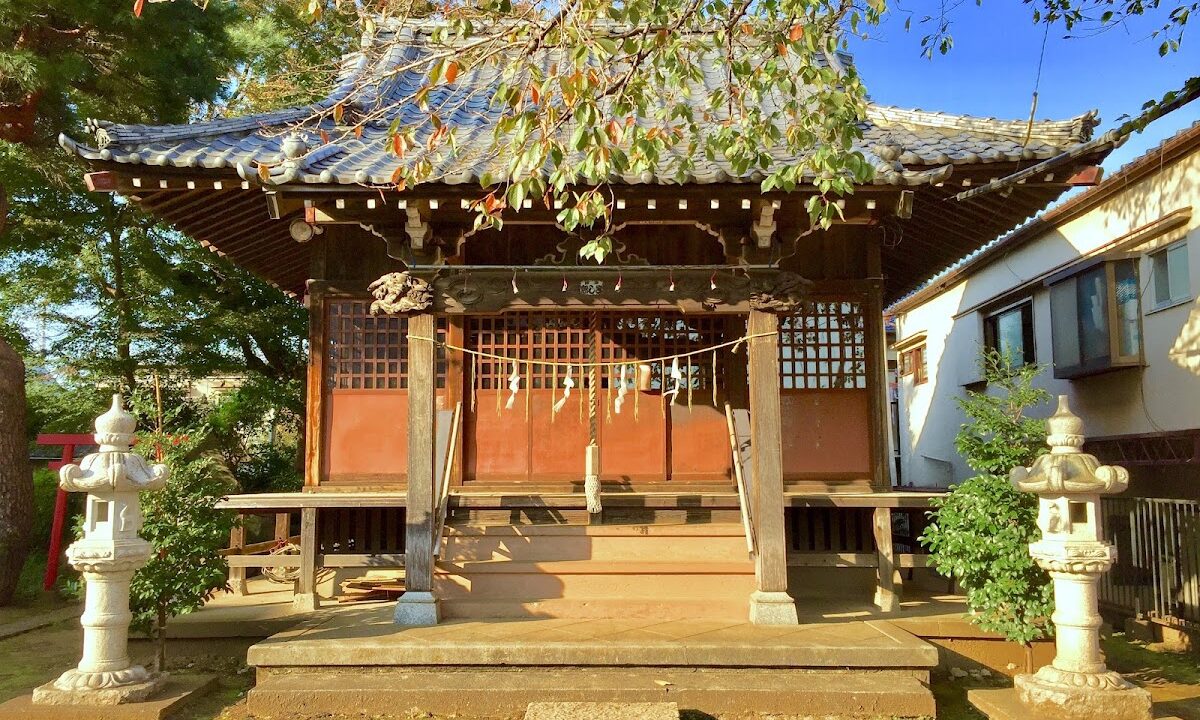
Miharadai Inari Shrine (Nerima Ward, Tokyo) Complete Guide | History, Access, and Shrine Highlights
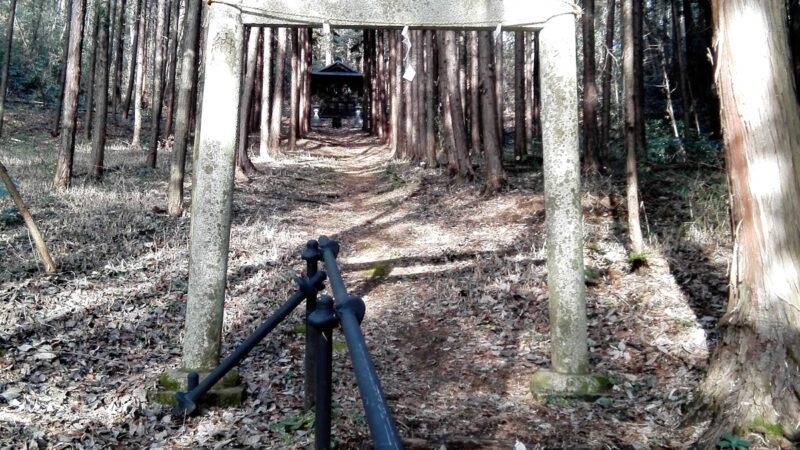
Located in Miharadai, Nerima Ward, Miharadai Inari Shrine is a historical shrine founded during the mid-Edo period alongside the development of new rice fields. Despite being situated in a residential area, it is known as a beloved local shrine, preserving valuable religious heritage such as a miniature Mount Fuji and a sacred shrine dedicated to Mount Ontake.
Basic Information on Miharadai Inari Shrine
Miharadai Inari Shrine is an Inari shrine located at 1-32-4 Miharadai, Nerima Ward, Tokyo. The nearest station is Shakujii-koen Station on the Seibu Ikebukuro Line, approximately a 12-15 minute walk from the station.
Address: 1-32-4 Miharadai, Nerima-ku, Tokyo 177-0031
Deities Enshrined: Ukanomitama-no-kami / Ukanomitama-no-mikoto
Head Shrine: Fushimi Inari Taisha (Kyoto Prefecture)
Annual Festival Day: February 1st (Sunday)
This shrine is affectionately known locally as “Tanaka Shinden’s Inari” and has been revered for many years, primarily by descendants of those involved in the land reclamation. The shrine grounds are located in a quiet residential area, and visitors are mainly local residents.
History and Origins of Miharadai Inari Shrine
Land Reclamation and Founding in the Edo Period
Miharadai Inari Shrine is said to have been founded around the Kyoho-Genbun era (1716-1741). During this period, as the Edo Shogunate promoted its land reclamation policy, people from Tanaka Village (present-day Nerima Ward area) migrated to this area and cultivated new farmland.
This new land was called “Tanaka Village Kitahara Shinden” or simply “Tanaka Shinden,” and it is believed that the Miharadai Inari Shrine originated when the people involved in the reclamation invited Inari, the god of abundant harvests, to pray for a bountiful harvest and peace in the region.
Land Reclamation and Inari Worship
In the mid-Edo period, as the Musashino Plateau was developed, many new land settlements were formed. It was common for the settlers to worship Inari, the god of abundant harvests, to pray for agricultural success. Miharadai Inari Shrine is one of the shrines founded within this historical context.
Rooted in the community as “Tanaka Shinden’s Inari,” our shrine has been protected for generations by the descendants of the settlers and has been revered as the guardian shrine of the region. It also possesses value as a precious cultural asset that conveys the history of the region’s land reclamation.
Changes Since the Modern Era
Miharadai Inari Shrine continued to attract the faith of local residents even after the Meiji era, but the shrine building was renovated in 1959 (Showa 34). This renovation resulted in the current appearance of the shrine building.
Although the surrounding area transformed into a residential area due to post-war urbanization, the shrine continues to play a central role in the local community. Every year in February, local residents gather for the annual festival, continuing the tradition.
Deities and Blessings
Ukanomitama-no-kami
The deity enshrined at Miharadai Inari Shrine is Ukanomitama-no-kami (also known as Kura-Inadama-no-Mikoto). This deity is the god of grain and food appearing in Japanese mythology, and is the central figure of the Inari deities worshipped at Inari shrines throughout Japan.
According to the Kojiki, Ukanomitama-no-kami is the child of Susanoo-no-Mikoto and Kamu-Oichihime. “Uka” is an archaic word meaning grain or food, making this deity the god of abundant harvests.
Expected Benefits
The main benefits you can expect from visiting Miharadai Inari Shrine are as follows:
- Abundant Harvest: Success in agriculture, bountiful harvests
- Business Prosperity: Development of businesses, success in trade
- Family Safety: Health and peace of the family
- Industrial Development: Prosperity in all industries
- Good Fortune and Prosperity: Increased luck, attracting good fortune
Since the Edo period, Inari has been widely worshipped not only as a god of agriculture but also as a god of commerce. Today, many visitors come to pray for improved career and financial luck.
Highlights and Facilities within the Shrine Grounds
Main Hall and Worship Hall
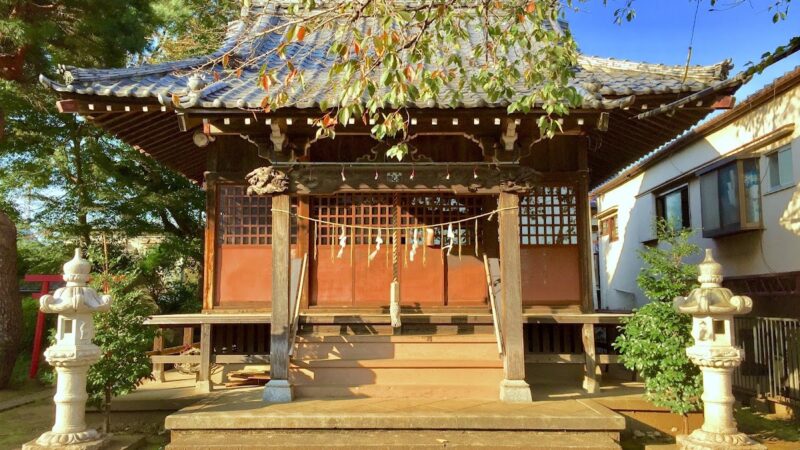
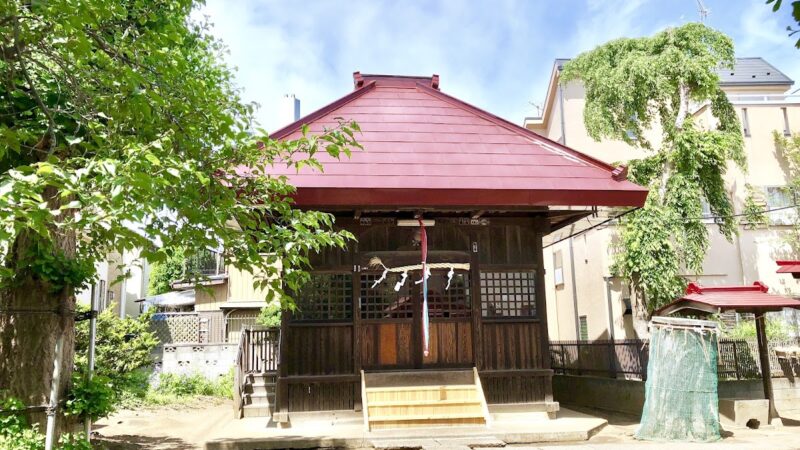
The shrine building, rebuilt in 1959 (Showa 34), is a beautifully maintained, albeit compact, structure. Numerous votive ema (votive tablets) are displayed inside the worship hall, testifying to the deep faith of the local residents over many years.
Many of the ema express wishes for abundant harvests and family safety, reflecting the area’s history as an agricultural region dating back to the Edo period. Instead of guardian lions (komainu), statues of foxes, characteristic of Inari shrines, are placed in front of the shrine.
Fujizuka (Asama Shrine)
A particularly noteworthy feature within the grounds of Miharadai Inari Shrine is the Fujizuka. Within the grounds is a mound constructed of lava rock, on which the Asama Shrine is enshrined.
The Fujizuka is a legacy of the Fuji worship that was popular during the Edo period. It is an artificial mountain created for people who could not climb Mount Fuji to experience a simulated climb in a more accessible location. Several miniature Mount Fuji mounds remain within Nerima Ward, and the one at Miharadai Inari Shrine is a valuable cultural asset.
The Asama Shrine enshrines Konohanasakuya-hime no Mikoto, the goddess of Mount Fuji, and is believed to offer blessings for safe childbirth and fire prevention.
Ontake Shrine
Near the miniature Mount Fuji mound on the shrine grounds is the Ontake Shrine, dedicated to Ontake Okami. Ontake worship is a mountain worship practice that reveres Mount Ontake in Kiso as a sacred mountain, and it spread throughout the Kanto region during the Edo period.
Numerous stone monuments bearing the names of deities stand around the Ontake Shrine, conveying the atmosphere of mountain worship that once flourished in this area. These stone monuments are estimated to have been erected from the late Edo period to the Meiji period.
Cherry Blossoms on the Shrine Grounds
There are magnificent large cherry trees on the shrine grounds, which bloom beautifully in spring. As a hidden gem for cherry blossom viewing in the area, it attracts local residents during the cherry blossom season. It’s known as a secluded spot where you can enjoy the blossoms in a quiet setting.
The cherry trees are estimated to be several decades old, and they reach their peak bloom from late March to early April each year. It’s also a popular spot for photography.
Relationship with Kiyoto Road
The approach to Miharadai Inari Shrine is located along the historic Kiyoto Road. The Kiyoto Road was an ancient road connecting Edo (present-day Tokyo) and Kiyoto (present-day Higashikurume City) during the Edo period, and was an important highway running east-west through Nerima Ward.
The entrance to the approach is to the left of a public bathhouse called “Fuji no Yu,” and the shrine is located a short distance from the Kiyoto Road. This location well reflects the shrine’s character as the guardian shrine of the Nitta settlement along the highway.
Access and Surrounding Information
Access by Train
Nearest Station: Seibu Ikebukuro Line “Shakujii-koen Station”
Travel Time: Approximately 12-15 minutes on foot
Route Guide:
- Exit the west exit of Shakujii-koen Station
- Proceed northwest through the shopping street in front of the station
- Head west along Kiyoto-michi (Tokyo Metropolitan Road 233)
- The entrance to the shrine is to the left of Fuji-no-yu (public bathhouse)
Shakujii-koen Station is an express stop on the Seibu Ikebukuro Line, offering convenient access approximately 15 minutes from Ikebukuro Station and 7 minutes from Nerima Station. There is also Shakujii Park, a metropolitan park, near the station, allowing visitors to enjoy a stroll in conjunction with their shrine visit.
Access by Car
The shrine does not have its own parking lot. If visiting by car, you will need to use a nearby coin-operated parking lot. Since it is located in a residential area, some roads are narrow, so please drive carefully. We recommend using public transportation.
Nearby Shrines and Temples
Near Miharadai Inari Shrine, there are several other historical shrines and temples:
Shakujii Hikawa Shrine: Approximately a 7-minute walk from Shakujii-koen Station. One of Nerima Ward’s representative ancient shrines, its annual festival in September is held with great fanfare.
Shakujii Shrine: A shrine adjacent to the Shakujii Castle ruins, associated with the Shakujii clan, a powerful family of the medieval period.
Sanboji Temple: An ancient Shingon Buddhist temple, the origin of the name of Sanboji Pond in Shakujii Park.
A “Nerima Ward Shrine Pilgrimage” visiting these shrines and temples is also popular.
Attractions in the Surrounding Area
Shakujii Park: A metropolitan park centered around two ponds, Shakujii Pond and Sanboji Pond. A relaxing place where you can enjoy nature throughout the seasons.
Shakujii Park Local History and Culture Center: A facility where you can learn about the history and culture of Nerima Ward. It features exhibits on the Shakujii Castle ruins and local history.
Fuji no Yu: A traditional public bathhouse located at the entrance to the shrine’s approach. Enjoy a bath after visiting the shrine.
Manners and Precautions for Visiting a Shrine
Basic Shrine Visiting Etiquette
When visiting Miharadai Inari Shrine, please observe the following basic shrine visiting etiquette:
- Bow before the Torii Gate: Bow slightly before the torii gate before entering the approach to the shrine.
- Walking along the Approach: The center of the approach is considered the path of the gods, so walk along the sides.
- Watering Procedure: If there is a watering basin, cleanse in the order of left hand → right hand → mouth → left hand.
- Etiquette at the Worship Hall: The basic procedure is two bows, two claps, and one bow.
Photography
Photography is generally permitted on the shrine grounds, but please note the following:
- Refrain from taking photos inside the main hall.
- Be considerate of the privacy of other worshippers.
- Avoid using tripods during crowded times.
- When posting on social media, please be mindful of location information.
While the cherry blossoms and miniature Mount Fuji within the shrine grounds are popular photo spots, remember that the shrine is located in a quiet residential area, and be considerate of the surrounding residents.
Suitable Time for Visiting
Miharadai Inari Shrine is open 24 hours a day, but because it is located in a residential area, it is recommended to avoid early morning and late-night visits and instead visit during the daytime. Visiting in the morning, in particular, offers a refreshing atmosphere.
On February 1st, the day of the annual festival, a festival is held by local parishioners, offering a lively atmosphere different from the usual.
Annual Events at Miharadai Inari Shrine
Annual Festival (February 1st)
The most important festival at Miharadai Inari Shrine is the annual festival held on February 1st (Sunday) every year. On this day, parishioners and local residents gather for Shinto rituals.
Early February marks the beginning of spring in the old lunar calendar, and is also the time to begin preparations for agricultural work. For our shrine, which has a history of land reclamation, this annual festival is positioned as an important event to pray for a bountiful harvest.
Hatsuuma (First Horse Day)
Hatsuuma is an important event at Inari shrines. Hatsuuma is the first Horse Day of February, and festivals are held at Inari shrines throughout Japan. It originates from the legend that the Inari deity descended to Fushimi Inari Taisha on the first Horse Day of Wado 4 (711 AD).
Miharadai Inari Shrine also sometimes holds special worship services on Hatsuuma Day.
Shrine Culture of Nerima Ward and Miharadai Inari Shrine
Characteristics of Shrines in Nerima Ward
Nerima Ward is a relatively new ward among Tokyo’s 23 wards (separated from Itabashi Ward in 1947), but it has a long history, with many shrines and temples scattered throughout. There are approximately 60 shrines within the ward, each conveying the history of the region.
Many shrines in Nerima Ward were founded in conjunction with land reclamation during the Edo period. Miharadai Inari Shrine is one such example, a valuable cultural heritage site that conveys the history of land development on the Musashino Plateau.
Land Reclamation and Shrines
During the Edo period, the shogunate encouraged land reclamation to increase food production. Many new rice fields were developed in the Nerima area, and a guardian shrine was built for each.
Miharadai Inari Shrine, founded as “Inari of Tanaka Shinden,” is an important site for local history research as it tells the history of this land reclamation. The remaining religious artifacts within the shrine grounds, such as the Fujizuka (miniature Mount Fuji) and Ontake Shrine, are valuable resources for understanding the realities of popular belief during the Edo period.
As a Center of the Local Community
Even today, Miharadai Inari Shrine plays a central role in the local community. Through festivals and cleaning activities, it serves as a place for local residents to interact, and remains an important presence in maintaining community bonds even amidst increasing urbanization.
The shrine’s maintenance and management activities by the parishioners’ organization are attracting attention as an initiative to pass on the region’s traditional culture to future generations.
Summary: The Charm of Miharadai Inari Shrine
Miharadai Inari Shrine is a valuable shrine that conveys the region’s history of land reclamation during the Edo period. Despite being located in a residential area, it preserves religious heritage such as a miniature Mount Fuji and a shrine dedicated to Mount Ontake, making it a hidden gem where visitors can worship in a quiet and peaceful atmosphere.
Its convenient access, within walking distance of Shakujii-koen Station, is also a major attraction. Visiting Shakujii-koen and the surrounding shrines and temples allows for a deeper understanding of Nerima Ward’s history and culture.
Although it is a small shrine rooted in the community, it is imbued with the faith of the people that has continued since the Edo period and a history of protecting the region. It is one of the shrines you should definitely visit when you come to Nerima Ward.
The time spent praying in the quiet grounds, away from the hustle and bustle of the city, will be a precious moment for modern people. We hope that Miharadai Inari Shrine will become a place that brings peace of mind and happiness to everyone.