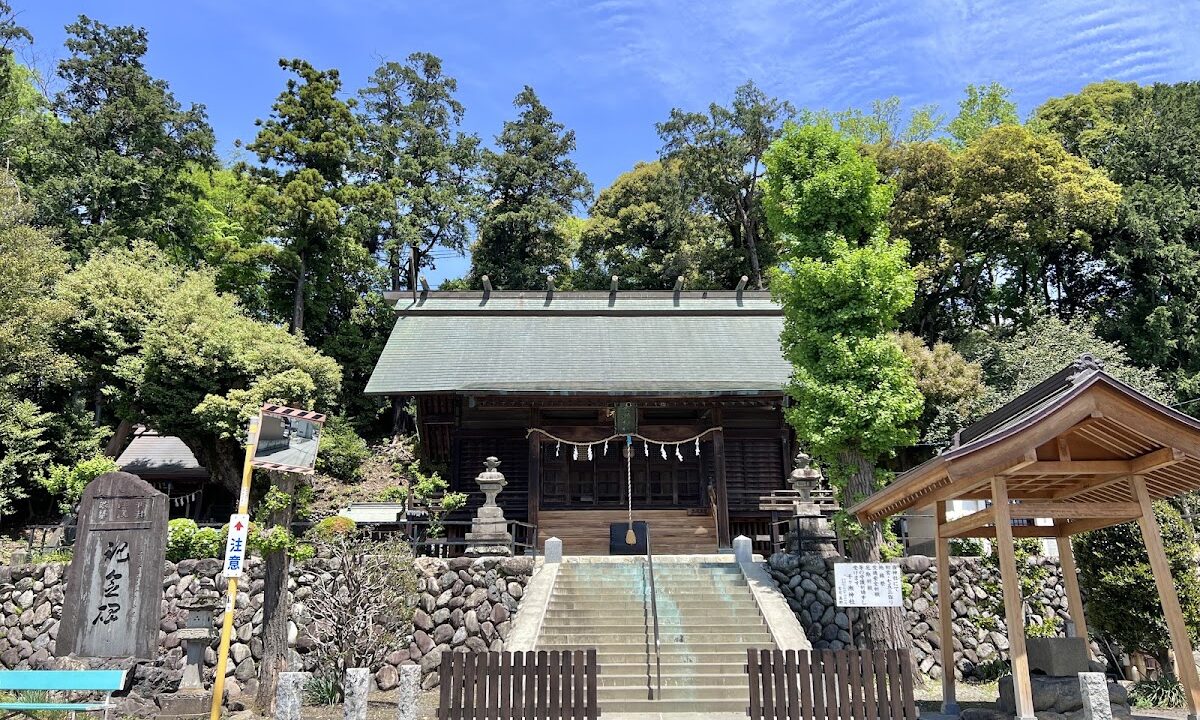
Complete Guide to Chigase Shrine (Ome City, Tokyo) | History, Goshuin (Shrine Seals), Access, and Highlights
Chigase Shrine, located in Chigase-cho, Ome City, Tokyo, is a historical shrine with a history dating back to the Heian period. As the guardian shrine of the former Chigase Village, it has garnered local faith, and within its grounds stands an ancient chinquapin tree designated as a natural monument by Ome City. This article provides a detailed explanation of Chigase Shrine’s history, enshrined deities, highlights of its grounds, goshuin information, and access methods.
Basic Information on Chigase Shrine
Chigase Shrine is located at 2-117 Chigase-cho, Ome City, Tokyo, approximately a 10-12 minute walk from Higashi-Ome Station on the JR Ome Line. Under the modern shrine ranking system, it was classified as a village shrine and continues to be revered as the local guardian deity.
Location: 2-117 Chigase-cho, Ome City, Tokyo 198-0043
Nearest Station: Approximately 10-12 minutes on foot from the South Exit of Higashi-Ome Station on the JR Ome Line
Shrine Rank: Former Village Shrine
Annual Festival: Sunday closest to September 15th
Deities Enshrined at Chigase Shrine
Chigase Shrine enshrines multiple deities. The following deities, including the main deity and other enshrined deities, are enshrined here.
Main Deities
- Toyouke-hime no Mikoto – Goddess of food and grains
- Okuninushi no Mikoto – Main deity of Izumo Taisha Shrine, god of nation-building
- Izanami no Mikoto – Goddess of creation of the land and gods
Other Enshrined Deities
In addition to these main deities, two more deities are enshrined, bringing the total to five or more gods. This reflects the history of the consolidation of surrounding smaller shrines due to the Meiji-era shrine consolidation policy.
History of Chigase Shrine
Chigase Shrine has a long history, having undergone complex transformations to reach its current form.
Origin of Founding
According to shrine tradition, the origin of Chigase Shrine dates back to the Heian period, specifically Shohei 3 (933). It is said that the shrine’s origins lie in the construction of a shrine in this location by a man named Yoshimasa Fujihashi, who enshrined his ancestral deity, Okuninushi-no-Mikoto.
Another legend states that Izumo Taro, an ancestor of the shrine’s family, traveled to the eastern provinces for some reason and established Izumo Shrine by inviting a divided spirit from Kitsuki Grand Shrine (present-day Izumo Grand Shrine) from his homeland of Izumo Province. This legend reveals a deep connection between Chigase Shrine and Izumo Grand Shrine.
Changes up to the Edo Period
Initially, it was called Taisha Gongen or Daigongen-sha. During the Edo period, it came to be called Inari-sha and attracted the faith of the villagers as the guardian shrine of Chigase Village. During this time, the shrine functioned as a central presence in the local community.
Major Changes in the Meiji Era
With the arrival of the Meiji era, Chigase Shrine underwent significant changes.
1874 (Meiji 7) – The Shinmei-sha (Shinmei Shrine), located in the Hirabayashi district of Ome City, was relocated and enshrined within the grounds of Chigase Shrine. The Shinmei-sha was a shrine dedicated to Amaterasu Omikami, and this merger increased the number of deities enshrined at Chigase Shrine.
1882 (Meiji 15) or 1883 (Meiji 16) – The Inari Shrine and Shinmei Shrine were merged, and the shrine was renamed Chigase Shrine, after the local place name. This period coincided with the Meiji government’s policy of reorganizing shrines, resulting in the consolidation of many small shrines.
This renaming marked the beginning of a new history for the shrine, bearing the name of the village.
Development in the Modern Era
During the Meiji era, it was ranked as a village shrine, establishing its position as the official guardian shrine of the region. Even as the eras of Showa, Heisei, and Reiwa have changed, Chigase Shrine has been carefully preserved as a spiritual center for local residents and as a historical and cultural asset of Ome City.
Highlights of the Shrine Grounds
The grounds of Chigase Shrine offer various points of interest that evoke a sense of history.
Ancient Japanese Chestnut Tree, a Natural Monument
The most noteworthy feature of the shrine grounds is the giant Japanese chestnut tree known as Asahi no Mikage (Shadow of the Morning Sun). This ancient tree is designated as a Natural Monument of Ome City and is known as the oldest Japanese chestnut tree in Ome City.
According to legend, there were once two Japanese chestnut trees on the grounds, called Asahi (Morning Sun) and Yuhi (Evening Sun). Asahi no Mikage, which still remains today, is estimated to be several hundred years old, and its majestic appearance tells the story of Chigase Shrine’s long history. Its trunk circumference is several meters, and its widely spreading branches are truly impressive.
When you visit, be sure to stand before this giant tree and feel the life force that has endured through the ages.
Shrine Buildings and Grounds
The grounds of Chigase Shrine are neatly maintained, allowing for a peaceful and tranquil atmosphere during your visit.
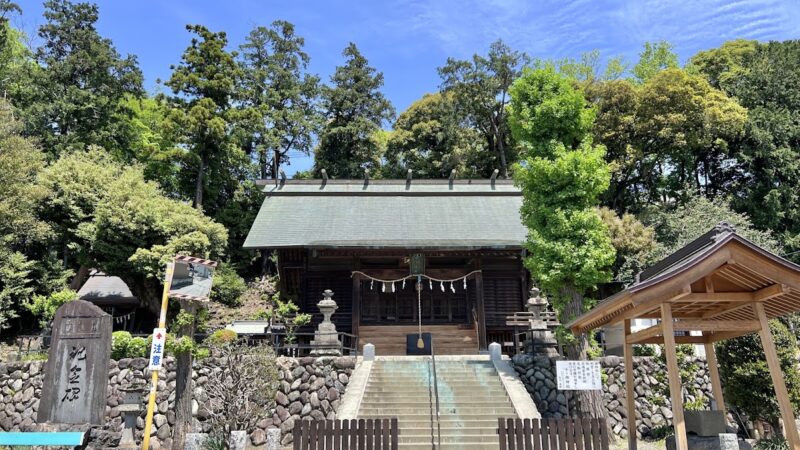
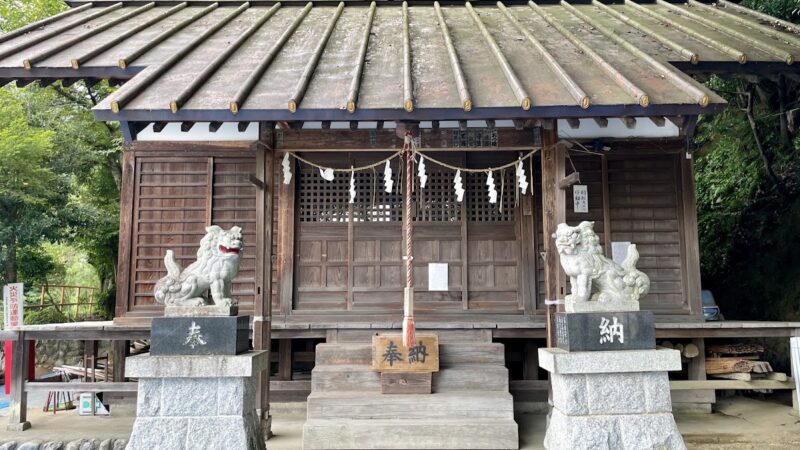
Haiden – This building is where worshippers offer their prayers and features traditional shrine architecture.
Honden – This is the most sacred place where the enshrined deity resides, located behind the Haiden.
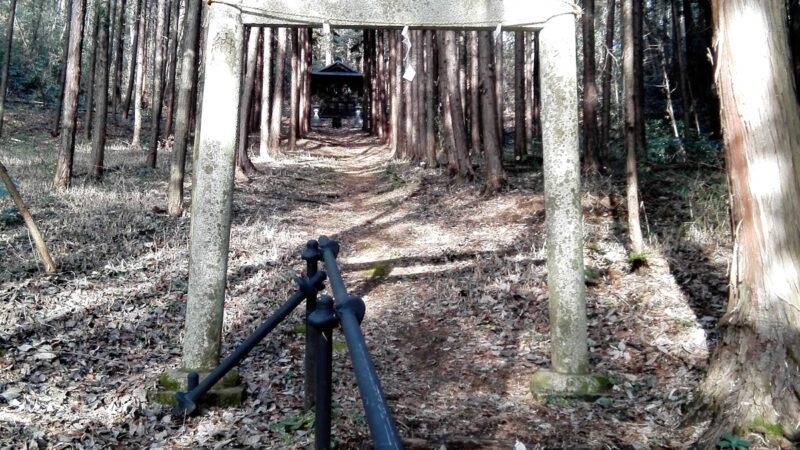
Torii – A torii gate marks the entrance to the sacred area and stands along the approach to the shrine.
Temizuya – This facility is for purifying the mind and body before worship.
Although located in a residential area, the shrine grounds exude a serene atmosphere, offering a space that allows you to forget the hustle and bustle of the city.
Stone Monuments and Memorials
Within the shrine grounds, there are stone monuments and memorials that convey the history of the shrine and the memories of the region. These inscriptions reveal the history of Chigase Shrine as it has walked hand in hand with the community. ## Goshuin Information
Goshuin (temple/shrine stamps) are available at Chigase Shrine.
Features of the Goshuin
The goshuin at Chigase Shrine features the shrine’s name, “Chigase Shrine,” written in ink, and stamped with the shrine’s seal. It is characterized by a simple yet powerful calligraphy style and is popular as a memento of the visit.
Regarding the Issuance of Goshuin
For detailed information regarding the issuance of goshuin (issuance hours, offering fee, etc.), we recommend contacting the shrine directly before your visit or checking through the Tokyo Metropolitan Shrine Association.
Since goshuin are given as proof of your visit, please be sure to complete your prayers before receiving your goshuin.
Access Information
Here’s how to access Chigase Shrine.
Access by Train
JR Ome Line “Higashi-Ome Station” is the nearest station.
- Approximately 10-12 minutes on foot from the south exit of Higashi-Ome Station
- Head southeast from the station
- The route goes through a residential area
Higashi-Ome Station can be accessed by transferring to the Ome Line from Tachikawa Station on the JR Chuo Line. From Shinjuku, the most common route is to take the Chuo Line Rapid to Tachikawa Station and then transfer to the Ome Line.
Walking Route Guide
The route from Higashi-Ome Station to Chigase Shrine goes through a residential area. Since some parts of the route are complex, we recommend using a smartphone map app.
The route goes through a quiet residential area, so please be considerate of the residents and move quietly.
Access by Car
If accessing by car, the nearest interchange is the Ken-O Expressway “Ome IC”. However, since the area around the shrine is a residential area, we recommend checking the availability of parking in advance.
Manners and Etiquette for Visiting a Shrine
This section outlines the basic manners and etiquette for visiting Chigase Shrine.
Basic Procedure for Visiting a Shrine
- Bow before passing through the torii gate – This is a courtesy before entering the sacred area.
- Walk along the edge of the path – The center is considered the path of the gods.
- Purify yourself at the water basin – Purify your left hand, then your right hand, then your mouth.
- Pray in front of the main hall – Two bows, two claps, and one bow is the basic procedure.
- Quietly observe the shrine grounds – View the natural monument, the chinquapin tree, and other sights.
- Bow again at the torii gate when leaving – This is a courtesy when leaving the sacred area.
Photography Manners
Photography is generally permitted on the shrine grounds, but please note the following points.
- Please refrain from taking photographs in sacred areas such as the interior of the main shrine.
- Please be considerate of other worshippers.
- Please use flash sparingly.
- Please maintain silence.
Nearby Attractions
There are many sightseeing spots unique to Ome City around Chigase Shrine.
Other Shrines and Temples in Ome City
Ome City is home to many historical temples and shrines. Visiting other shrines and temples before or after your visit to Chigase Shrine is also recommended as part of an “Ome Shrine Pilgrimage.”
Nature and Culture of Ome
Ome City is a naturally rich area in the Tama region, with numerous hiking trails and historical sites. There are also many spots to enjoy nature nearby, such as Mount Mitake and the Ome Hills.
Annual Festival and Events
Chigase Shrine holds various festivals throughout the year.
Annual Festival
The annual festival of Chigase Shrine is held on the Sunday closest to September 15th. The annual grand festival is the most important festival at the shrine, where local people gather and events such as a portable shrine procession and offering ceremonies are held.
Other Annual Events
- Hatsumode (January 1st-3rd) – New Year’s visit to the shrine
- Setsubun Festival (around February 3rd) – Events such as bean-throwing
- Natsukoshi no Oharae (June 30th) – A Shinto ritual to purify oneself of the impurities accumulated over the past six months
- Toshikoshi no Oharae (December 31st) – A Shinto ritual to purify oneself of the impurities accumulated over the past year
For specific event dates and details, please contact the shrine directly.
History of the Chigase Area
To understand Chigase Shrine, it is important to know the history of the Chigase area.
Origins of Chigase Village
The place name Chigase has existed since ancient times, and during the Edo period, it was an independent village known as Chigase Village. It has developed as an agricultural area surrounded by the abundant waters of the Tama River system and the natural beauty of the Ome Hills.
Changes Since the Meiji Era
With the implementation of the town and village system during the Meiji era, Chigase Village repeatedly merged with surrounding villages and eventually became part of Ome City. Currently, it forms a residential area within Ome City as Chigase Town.
Chigase Shrine is a witness to this history, having watched over these changes in the region.
Chigase Shrine and Izumo Faith
One of the characteristics of Chigase Shrine is its deep connection to Izumo Taisha Shrine.
Invitation from Izumo
According to shrine tradition, Chigase Shrine was founded when a man named Izumo Taro traveled east from Izumo Province and invited a divided spirit from Izumo Taisha Shrine. Therefore, Okuninushi-no-Mikoto is enshrined as one of the main deities.
Izumo Faith in the Kanto Region
Izumo-related shrines are scattered throughout the Kanto region. This indicates that people migrated from the Izumo region to the Kanto region from ancient to medieval times, and that Izumo faith spread. Chigase Shrine is one such example, preserving the history of faith connecting Izumo and Kanto.
Visitor Voices and Experiences
Visitors to Chigase Shrine have shared various impressions.
“It’s a quiet shrine located in a residential area, allowing for a peaceful visit.”
“The natural monument, the chinquapin tree, is magnificent; I was overwhelmed by its vitality.”
“I received a goshuin (shrine stamp), and I appreciate the courteous service.”
“It’s a warm, community-oriented shrine.”
These comments convey how Chigase Shrine is loved by the local people and provides peace and tranquility to visitors.
How to Enjoy Your Visit to Chigase Shrine
Here are some suggestions to make your visit to Chigase Shrine more fulfilling.
Enjoying the Changing Seasons
The shrine grounds feature various trees, including the ancient chinquapin tree. The shrine displays different expressions in each of the four seasons: the fresh green of spring, the deep green of summer, the vibrant autumn foliage, and the tranquility of winter.
As a Historical Exploration
The history of Chigase Shrine serves as excellent learning material for studying Japanese shrine history and local history. You can learn about its history from multiple perspectives, including its history from 933 AD, the Meiji-era shrine consolidation policy, and the changes in the local community.
As part of a Goshuin (Shrine Stamp) Pilgrimage
Visiting Chigase Shrine is recommended as part of a Goshuin pilgrimage, which involves visiting shrines and temples in Ome City and the Tama region. There are several other temples and shrines around Higashi-Ome Station, so you can visit them all together.
Cultural Value of Chigase Shrine
Chigase Shrine is not merely a place of worship, but also possesses cultural value.
Value as a Natural Monument
The ancient chinquapin tree on the shrine grounds is protected as a designated natural monument of Ome City. This giant tree is invaluable for understanding the natural history and vegetation history of Ome City. ### Value as Historical Documents
The shrine’s records, documents, and stone monuments within its grounds are important resources for understanding the history of Ome City and the changes in the Chigase area. They also hold value in religious history research as an example of the spread of Izumo faith to the Kanto region.
Preservation of Local Culture
Annual events, including the Grand Festival, play a crucial role in passing on the region’s traditional culture to future generations. These intangible cultural assets are also an important aspect of Chigase Shrine’s value.
Summary
Located in Ome City, Tokyo, Chigase Shrine is a venerable shrine with a history of over 1000 years since its founding in 933 AD. Beginning with the enshrinement of a deity from Izumo Taisha, it underwent mergers with Inari Shrine during the Edo period and Shinmei Shrine during the Meiji era, eventually becoming the present-day Chigase Shrine.
Within the shrine grounds stands the ancient chinquapin tree “Asahi no Mikage,” a designated natural monument of Ome City, its majestic presence telling a story of its long history. This shrine enshrines deities including Toyouke-hime no Mikoto, Okuninushi no Mikoto, and Izanami no Mikoto, and continues to be revered as the guardian shrine of the region.
Its convenient location, just a 10-12 minute walk from Higashi-Ome Station on the JR Ome Line, is also a major draw, and visitors can receive a Goshuin (shrine stamp). Despite being nestled in a quiet residential area, the shrine grounds maintain a sacred atmosphere, offering peace and tranquility to visitors.
When visiting Ome City, be sure to stop by Chigase Shrine and experience its long history and the power of nature. This shrine, which has watched over this land for over a thousand years, is sure to provide visitors with a special experience.