Complete Guide to Minami Hachimangu Shrine (Hachioji City, Tokyo) | History, Goshuin (Shrine Seals), Access, and Annual Festival
Minami Hachimangu Shrine, located in Horinouchi, Hachioji City, Tokyo, boasts a convenient location just a 3-minute walk from Keio Horinouchi Station. Despite its excellent location, it is a historic shrine dating back to the early Edo period (Kanei era). This article provides detailed information useful for visitors, including the history of Minami Hachimangu Shrine, its enshrined deities, highlights of the grounds, goshuin information, access methods, and annual festival.
Basic Information on Minami Hachimangu Shrine
Minami Hachimangu Shrine is located at 3-29-11 Horinouchi, Hachioji City, Tokyo, and enshrines Emperor Ojin as its main deity. Due to its convenient location, just a 3-minute walk from the nearest station, Keio Horinouchi Station, it is known as a shrine visited by many worshippers, not just local residents.
Location and Contact Information
- Address: 3-29-11 Horinouchi, Hachioji City, Tokyo
- Nearest Station: Approximately 3 minutes on foot from Keio Horinouchi Station on the Keio Sagamihara Line
- Parking: Free parking available (several spaces)
History and Origins of Minami Hachimangu Shrine
Founding History
Minami Hachimangu Shrine was founded in 1629 (Kanei 6). This shrine was founded by Oda Higo-no-kami Sadahisa, a former retainer of the Hojo clan. Oda Higo-no-kami was a warrior who served the Later Hojo clan, and even after the fall of the Hojo clan, he remained in this area and contributed to the development of the region.
At the time of its founding, Oda Gentaemon served as the main patron, and with the cooperation of Yokokura Iyo-no-kami and Igusa Oda Higo-no-kami, who were also vassals of the Hojo clan, the shrine was built. It is believed that these warriors, after the fall of the Hojo clan, began new lives in this region and enshrined Hachiman-gu as the guardian deity of the area.
Origin of the Name “Minami” Hachiman-gu
The name Minami Hachiman-gu (South Hachiman Shrine) comes from its location “south” of the Kita Hachiman Shrine, which was enshrined in the Terazawa district of the same Horinouchi Village (at the time). In this region, the two Hachiman shrines, Kita Hachiman Shrine and Minami Hachiman-gu, have historically been revered as guardian deities of the village.
Minami Hachiman-gu as Seen in the Shinpen Musashi Fudoki-ko (New Compilation of the Topography of Musashi Province)
The Shinpen Musashi Fudoki-ko, compiled in the late Edo period, contains a description of Minami Hachiman-gu. According to the book, it is recorded that the shrine already held an important position as the village’s guardian deity at that time, and was revered by the local residents.
Deity and Divine Virtues
Emperor Ōjin
The deity enshrined at Minami Hachiman Shrine is Emperor Ōjin. Emperor Ōjin was the 15th Emperor of Japan and is worshipped as Hachiman-sama at Hachiman shrines throughout Japan. His mother was Empress Jingū, and he is widely worshipped as a god of martial prowess and culture.
Divine Virtues
Hachiman Shrine, dedicated to Emperor Ōjin, is believed to possess the following divine virtues:
- Long-lasting Military Fortune and Victory: It has been worshipped since ancient times as the guardian deity of military commanders.
- Protection from Misfortune and Bringing Good Fortune: It is believed to have the power to ward off disasters and bring good fortune.
- Family Safety: It protects the safety and prosperity of families.
- Business Prosperity: It brings success and development to businesses.
- Prosperity of Descendants: It is believed to bring blessings for fertility and child-rearing.
Highlights of the Shrine Grounds
Torii Gate
The torii gate of Minami Hachiman Shrine is relatively new, having been erected in 1991 (Heisei 3). It is a magnificent stone torii gate in the Myōjin-style, welcoming visitors.
Characteristics of the Approach
The approach to Minami Hachiman Shrine has a unique characteristic. After passing through the torii gate, the approach makes a right-angle turn to the right. This layout is thought to be the result of urban redevelopment, and it’s an interesting element that tells the story of how shrines have changed amidst urbanization.
Shrine Buildings
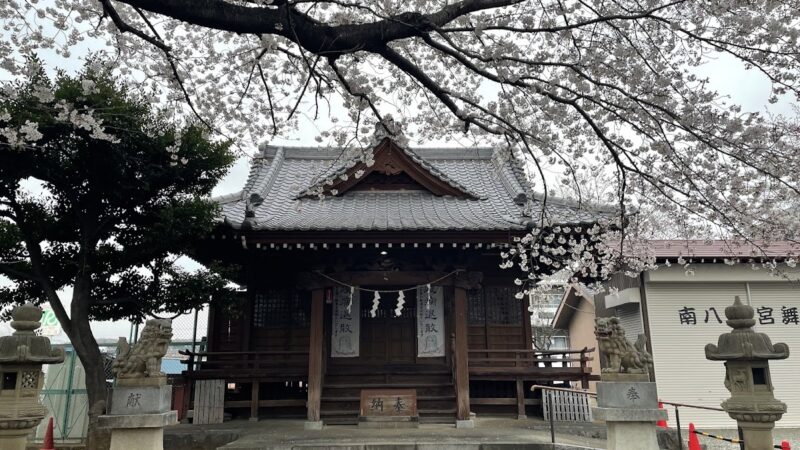
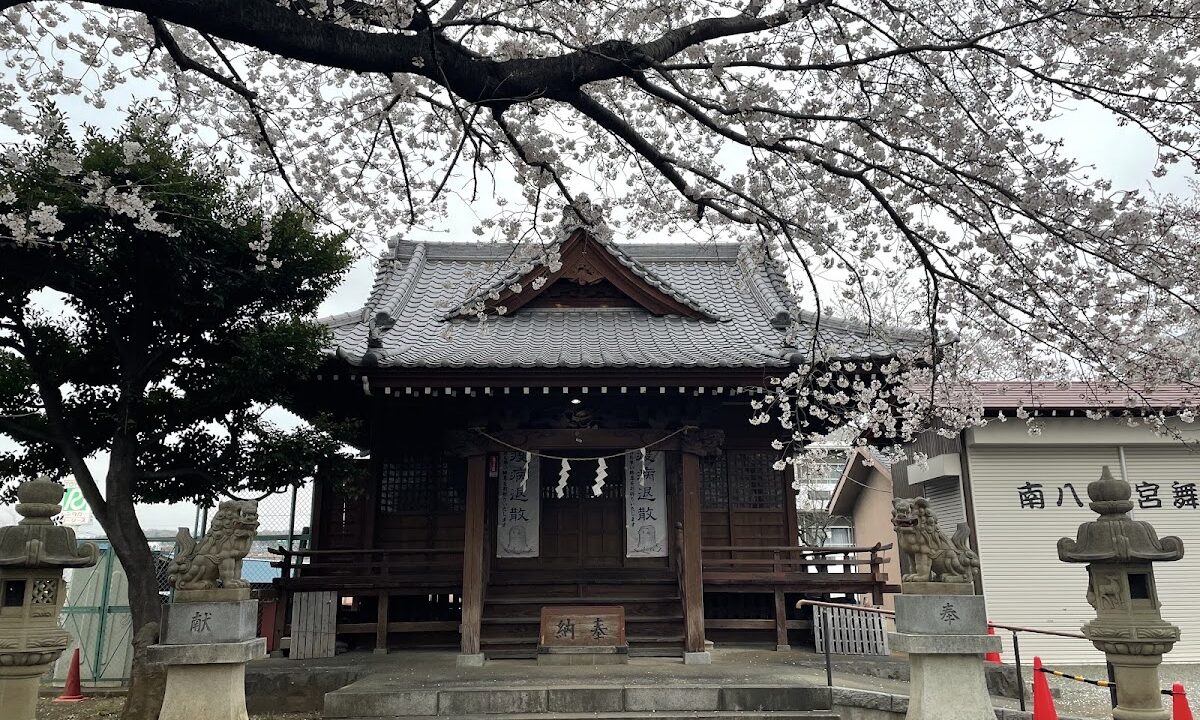
The current shrine buildings were constructed in 1939 (Showa 14). The worship hall is in the traditional style of wooden construction with a tiled roof, while the main shrine building is wooden construction with a corrugated iron roof. Compact yet possessing a solemn atmosphere, the shrine buildings are valuable structures that convey the history of the region to the present day.
Atmosphere of the Shrine Grounds
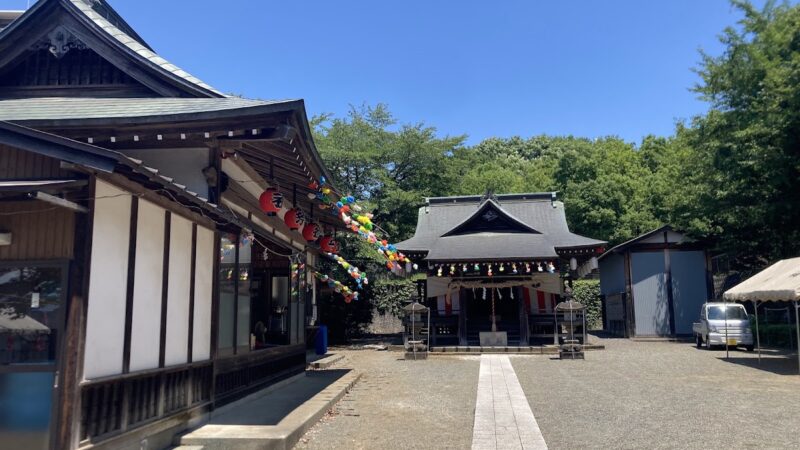
Despite being located in the urban area of Keio Horinouchi Station, the shrine grounds are enveloped in a tranquil atmosphere. Even though it’s in a residential area, stepping onto the grounds reveals a sacred space far removed from the hustle and bustle of everyday life.
Goshuin (Shrine Seal) and Goshuincho (Shrine Seal Book) Information
About Goshuin
Minami Hachimangu Shrine offers Goshuin. Many visitors receive them as a memento of their visit and as proof of their connection to the shrine.
Those wishing to receive a Goshuin (temple/shrine stamp) should speak to the shrine office staff after their visit. However, depending on the size of the shrine and the time of year, the chief priest may be absent. Therefore, if you wish to be sure to receive a Goshuin, it is recommended to check the visiting hours in advance.
Goshuincho (Stamp Book)
Regarding the availability of Minami Hachimangu’s original Goshuincho, it is recommended to inquire directly with the shrine. While many shrines now offer original Goshuincho designs, smaller shrines may not.
Annual Festival and Events
Minami Hachimangu Annual Festival
The most important annual event at Minami Hachimangu is the Annual Festival, held at the end of August each year. In 2024, it was held on August 31st (Sunday).
The Annual Festival is an important local festival, with many parishioners and local residents participating. Various Shinto rituals and events, such as the procession of the portable shrine and musical performances, are held, making it a characteristic event that colors the end of summer in the Horinouchi area.
Characteristics of the Annual Festival
In recent years, the Minami Hachimangu Shrine Annual Festival has seen increased participation from younger generations, developing into a new form of festival while preserving tradition. Taking advantage of its location within a residential area, it plays an important role in strengthening community bonds.
At the end of August, when the strong sun still hints at the coming of autumn, the shrine grounds are filled with the smiles and energy of local residents. The sounds of drums and flutes resonate, and the festival, where youth and tradition harmonize, possesses a unique charm only found in urban shrines.
Other Annual Events
In addition to the annual festival, Minami Hachimangu Shrine holds the following annual events:
- Hatsumode: The shrine is bustling with worshippers praying for happiness in the new year.
- Setsubun Festival: Events such as bean-throwing are held.
- Shichi-Go-San: Worship services are held to celebrate the growth of children.
Access and Parking Information
Access by Train
The most convenient way to access Minami Hachimangu Shrine is to use Keio Horinouchi Station on the Keio Sagamihara Line.
Walking Route from Keio Horinouchi Station:
- Exit the ticket gate at Keio Horinouchi Station.
- Proceed through the rotary in front of the station towards the residential area.
- You will arrive at Minami Hachimangu Shrine in about 3 minutes on foot.
The shrine is very close to the station, and the route is easy to follow, so even first-time visitors can arrive without getting lost.
Access by Car
For those visiting by car, free parking is available at the shrine. However, parking is limited, so it may be full during events such as the annual festival. In that case, please consider using nearby coin-operated parking lots.
Access from major roads:
- Approximately 15 minutes from the Hachioji IC on the Chuo Expressway
- Approximately 20 minutes from the Akiruno IC on the Ken-O Expressway
Landmarks in the vicinity
The area around Keio Horinouchi Station has been developed as a residential area, with commercial facilities and apartment buildings lining the area in front of the station. Minami Hachimangu Shrine is located south of the station, in a corner of the residential area.
Nearby attractions and sightseeing spots
History of the Horinouchi area
The Horinouchi area was once a rural area, but it developed into a residential area with the opening of the Keio Sagamihara Line. However, historical shrines like Minami Hachimangu Shrine remain, preserving the history of the area to this day.
Nearby Shrines and Temples
Near Minami Hachimangu Shrine, there are several other historical temples and shrines:
- Kita Hachimangu Shrine: This shrine is a counterpart to Minami Hachimangu Shrine and is located in the same Horinouchi area.
- Other Shrines in Hachioji City: Hachioji City has many historical shrines, making it a great place to enjoy a shrine tour.
Attractions of the Surrounding Area
The area around Keio Horinouchi Station offers excellent access to the city center while maintaining a lush green environment. You can enjoy a relaxing time while experiencing the nature of the Tama Hills.
Manners and Etiquette for Visiting a Shrine
Basic Etiquette for Visiting a Shrine
Here are some basic etiquette rules for visiting a shrine:
- Bow before passing through the torii gate: Bow to show respect before entering the sacred area.
- Walk along the edge of the approach: The center of the approach is considered the path for the gods.
- Purify yourself at the water basin: Cleanse your hands and mouth to purify your mind and body.
- Worship at the main hall: Worship using the two bows, two claps, and one bow ritual.
- Bow upon leaving: Turn around and bow when leaving the torii gate.
Regarding Photography
Photography is generally permitted on the shrine grounds, but please note the following:
- Refrain from taking photos in areas where photography is prohibited, such as inside the main hall.
- Be considerate of other worshippers.
- Remember that this is a sacred place and take photos with respect.
Cultural Properties and Collections of Minami Hachimangu Shrine
Minami Hachimangu Shrine possesses valuable cultural properties and collections dating back to the Edo period. These are carefully preserved as important historical materials that tell the story of the region.
For detailed information on specific cultural properties, please inquire at the shrine office during your visit or contact the Hachioji City Cultural Properties Department.
Connections with the Community
Connections with Parishioners and Worshippers
Minami Hachimangu Shrine has long been revered by local residents as the guardian deity of the Horinouchi area. Annual events, including the Grand Festival, are important opportunities to deepen the bonds of the local community.
The Role of Shrines in Urbanization
The area around Keio Horinouchi Station has undergone rapid urbanization in recent years. Within this context, Minami Hachimangu Shrine is a valuable presence that conveys the history of the region and serves as a sanctuary for people seeking peace of mind amidst urban life.
Despite being located in a residential area, stepping onto the shrine grounds evokes a sense of tranquility and sacredness that makes one forget the hustle and bustle of the city. This is the power of the shrine, cultivated over a long history, and it continues to hold unchanging value even in modern times.
Visitor Voices and Reviews
Visitors who have come to Minami Hachimangu Shrine have shared the following comments:
- “It’s close to the station, making it an easy shrine to visit.”
- “Despite being in a residential area, the shrine grounds have a quiet and peaceful atmosphere.”
- “The lively atmosphere of the annual festival was wonderful, and I felt a sense of community.”
- “Although it’s a small shrine, it’s meticulously maintained, and you can feel the love of the local people.”
These comments show that Minami Hachimangu Shrine is a friendly shrine deeply rooted in the community.
Minami Hachimangu Shrine in the Seasons
Minami Hachimangu Shrine in Spring
In spring, the trees on the shrine grounds are enveloped in fresh greenery, ushering in a season full of vitality. During cherry blossom season, you can feel the arrival of spring along with the cherry blossoms in the surrounding area.
Minami Hachimangu Shrine in Summer
Summer is the season for the annual festival. Under the strong sun of late August, the festival’s energy and vibrancy envelop the shrine grounds. Visiting amidst the sound of cicadas offers a unique summer atmosphere.
Autumn at Minami Hachimangu Shrine
In autumn, the beautiful autumn foliage creates a tranquil atmosphere for worship. Many also visit to express gratitude as the harvest season approaches.
Winter at Minami Hachimangu Shrine
In the crisp winter air, the shrine is bustling with worshippers making their first shrine visit of the year. Many people visit to offer their New Year’s wishes.
Summary: The Charms of Minami Hachimangu Shrine
Located in Horinouchi, Hachioji City, Tokyo, Minami Hachimangu Shrine boasts a long history, having been founded in 1629 (Kanei 6), yet it is conveniently located just a 3-minute walk from Keio Horinouchi Station.
It enshrines Emperor Ojin and is known for its divine blessings of military success, protection from evil, and family safety. Founded by former retainers of the Hojo clan, including Oda Higo-no-kami Sadahisa, the shrine’s history preserves the remnants of the samurai culture of this region.
Even amidst increasing urbanization, it remains cherished as the local guardian shrine. The annual festival, held at the end of August, attracts many local residents, including younger generations, showcasing a harmonious blend of tradition and modernity.
Despite being located in a residential area, the shrine grounds are enveloped in a tranquil atmosphere, making it a popular oasis for visitors seeking peace and solace. Visitors can also receive a Goshuin (shrine stamp), making it a recommended destination for those who enjoy visiting shrines.
Its accessibility, rich history, strong ties to the community, and role as an oasis in the city—all these factors contribute to the charm of Minami Hachimangu Shrine. If you visit Hachioji City or use Keio Horinouchi Station, be sure to stop by Minami Hachimangu Shrine. You’re sure to have a heartwarming experience.