Complete Guide to Majima Shrine (Fuchu City, Tokyo) | History, Deities, and Access Information
Majima Shrine, located in Sumiyoshi-cho, Fuchu City, Tokyo, is a local guardian shrine deeply intertwined with the history of the Tama River. It was established by people who lost their homes in a great flood during the Edo period, and has since been revered by local residents. This article comprehensively introduces information useful for visiting Majima Shrine, including its detailed history, enshrined deities, annual festivals, and access methods.
Overview of Majima Shrine
Majima Shrine is located at 3-71-2 Sumiyoshi-cho, Fuchu City, Tokyo. It quietly stands in a residential area about a 10-minute walk from Nakagawara Station on the Keio Line and is cherished as the local guardian deity.
Basic Information
- Shrine Name: Majima Shrine
- Deity Enshrined: Majima Okami
- Location: 3-71-2 Sumiyoshi-cho, Fuchu City, Tokyo 183-0034
- Former Shrine Rank: Unranked Shrine
- Annual Festival Date: September 15th
- Nearest Station: Approximately 10 minutes on foot from Nakagawara Station on the Keio Line
- Management: Yaho Tenmangu Shrine (Tel: 042-576-5123)
The name “Majima” in Majima Shrine originates from Aoyagi Island (also called Majima), which once existed in the Tama River basin. This island was washed away by a great flood in 1671 (Kanbun 11) during the Edo period, and the islanders relocated to the area around present-day Sumiyoshi-cho, Fuchu City, and started a new life.
The Deity of Majima Shrine
The deity enshrined at Majima Shrine is Majima Okami. It is believed that this deity was worshipped by people who migrated from Aoyagi Island as the guardian deity of their homeland.
While there are various theories regarding the specific characteristics of Majima Okami, it is generally believed to be a local deity watching over the development and cultivation of the region, or a water deity protecting people from floods. For the migrants, this shrine served as a spiritual anchor, a place to pray for peace and prosperity in their new lives.
Some records suggest a tradition of inviting the deity Ne no Gongen from Chichibu, suggesting the possibility of a complex form of worship. Ne no Gongen is known as a deity protecting the health of the legs and lower back, and was an important object of worship for those engaged in pioneering work.
The History of Majima Shrine
Migration from Aoyagi Island and the Founding of the Shrine
To understand the history of Majima Shrine, it is necessary to know the historical changes in the Tama River basin. In the past, there was a sandbar in the Tama River called Aoyagi Island (or Majima), where people lived. This island was known for its fertile land suitable for agriculture, but it was constantly at risk of flooding from the Tama River.
The Great Flood of 1671 completely washed away Aoyagi Island. The islanders, having lost their homeland in this disaster, migrated to the area around present-day Sumiyoshi-cho in Fuchu City, forming a new settlement. It is believed that these migrants founded Majima Shrine in their new home to preserve memories of their homeland and their faith in their guardian deity.
Similarly, there is another shrine in Fuchu City, Aoyagi-ni Shrine. Aoyagi-ni Shrine was also established by migrants after the loss of Aoyagi Island, sharing a common historical background with Majima Shrine.
Majima Shrine in the Edo Period
During the Edo period, Majima Shrine was a private shrine managed by the Morita clan, a powerful local family. Mr. Morita is said to have invited the deity of Chichibu’s Kogongen shrine and was called “Obettō” because he was in charge of maintaining and managing the shrine.
“Bettō” refers to a temple attached to a shrine during the era of Shinto-Buddhist syncretism, or to a monk or temple that managed the shrine. The fact that Mr. Morita was called “Obettō” suggests that the Majima Shrine at that time had elements of Shinto-Buddhist syncretism.
Records from this period also indicate that the Majima Shrine was “owned by the villagers,” suggesting that while Mr. Morita was central, it was supported by the entire local community. Despite its small size, it was a spiritual pillar for the settlers of Sumiyoshi-cho.
Changes after the Meiji Era
With the arrival of the Meiji era, the separation of Shinto and Buddhism led to significant changes at shrines throughout the country. The Majima Shrine also officially adopted the name “Majima Shrine” during this period, adopting the appearance of a modern shrine.
Under the Meiji government’s shrine ranking system, the Majima Shrine was classified as an “unranked shrine.” A “Mugakusha” refers to a small shrine that does not possess the rank of a prefectural shrine, local shrine, or village shrine. However, regardless of its rank, it has always been revered as an important tutelary deity by the local residents.
From the Showa and Heisei eras to the present day, Majima Shrine has remained deeply rooted in the community as the guardian shrine of Sumiyoshi-cho. Although currently under the management of Yaho Tenmangu Shrine, its ties to the community remain strong, with local residents participating in cleaning and maintaining the annual festival.
The History of Majima Shrine According to the Shinpen Musashi Fudoki-ko
The Shinpen Musashi Fudoki-ko, a geographical record compiled in the late Edo period, contains records of shrines around Fuchu. While direct mentions of Majima Shrine are limited, the records of the loss of Aoyagi Island and the relocation to Sumiyoshi-cho provide insight into the shrine’s origins.
According to the Shinpen Musashi Fudoki-ko, large-scale floods frequently occurred in the Tama River basin, causing extensive damage to settlements and farmland. The flood damage during the Kanbun era (1661-1673) was particularly widespread, and the loss of Aoyagi Island is considered one of the disasters of this period.
The history also touches upon the development of Sumiyoshi-cho after the relocation, recording the agricultural development and settlement formation in the new land. Within this historical context, it can be understood that Majima Shrine functioned as the spiritual center of the relocated community.
History of Majima Shrine according to the Tokyo Shrine Directory
The “Tokyo Shrine Directory,” compiled by the Tokyo Shrine Association, systematically summarizes the history, enshrined deities, and festival dates of various shrines in Tokyo. Basic information about Majima Shrine is also included, making it an important source of official shrine information.
According to the directory, the enshrined deity of Majima Shrine is Majima-no-Okami, and the festival date is September 15th. Access information such as the location and nearest station is also included, making it a useful source of information for visitors.
It is under the jurisdiction of the Kita-Tama Branch of the Tokyo Shrine Association and is positioned as a member of the regional shrine network. Currently, Yaho Tenmangu Shrine handles administrative management, and inquiries should be directed through Yaho Tenmangu Shrine.
History of Majima Shrine as Recorded on Stone Monuments
Within the grounds of Majima Shrine, there are stone monuments that tell the history and origins of the shrine. These monuments are valuable historical documents that convey local traditions and the history of the parishioners’ faith, which cannot be understood from written records alone.
The stone monuments on the grounds are said to be inscribed with details such as the circumstances of the migration from Aoyagi Island, the history of the shrine’s maintenance and management by the Morita family, and the changes the shrine has undergone since the Meiji era. They also record information about the annual festival and other ceremonies, as well as the names of donors, illustrating the deep connection between the local residents and the shrine.
These monuments demonstrate that Majima Shrine is not merely a religious facility, but also a place that preserves the history and memories of the region. When visiting the shrine, please be sure to pay attention to these monuments.
Annual Festival and Events of Majima Shrine
The annual festival of Majima Shrine is held every year on September 15th. The annual festival is the most important ritual for the shrine, a ceremony to express gratitude to the enshrined deity and pray for the peace and prosperity of the community.
On the day of the annual festival, Shinto priests perform rituals, and parishioners and local residents attend. Although not large in scale, it continues to be an important annual event for the local community.
The date, September 15th, was once a national holiday (Respect for the Aged Day), making it a convenient date for many people to participate. While it is no longer a national holiday, the traditional date is still observed.
Besides the annual festival, the shrine also quietly holds New Year’s visits and seasonal festivals by the local people, making Majima Shrine a spiritual center for Sumiyoshi-cho throughout the year.
How to Access Majima Shrine
Access by Train
The nearest station to Majima Shrine is Nakagawara Station on the Keio Line. The shrine is approximately a 10-minute walk from the station.
Directions from Nakagawara Station:
- Exit the ticket gate at Nakagawara Station and head towards the South Exit.
- Walk straight south along the road in front of the station.
- After walking for about 10 minutes through the residential area, you will see the torii gate of Majima Shrine on your left.
Nakagawara Station is a station where Keio Line local trains stop. From Shinjuku, it’s easiest to transfer to a local train at Chofu Station. It’s also two stops from Fuchu Station.
Access by Car and Parking
Majima Shrine is located in a residential area and does not have its own parking lot. If you are visiting by car, we recommend using a nearby coin parking lot or public transportation.
Due to the many narrow roads in the residential area, walking is the most suitable way to access the shrine.
Nearby Attractions
Around Majima Shrine, there are several spots where you can experience the history and culture of Fuchu City:
- Okunitama Shrine: A representative ancient shrine of Fuchu City, known as the principal shrine of Musashi Province.
- Fuchu Local History Museum: A museum where you can learn about the history and nature of Fuchu.
- Tama River Riverbed: Enjoy the nature of the Tama River, which is deeply connected to the history of Majima Shrine.
By visiting these spots in conjunction with a visit to Majima Shrine, you will be able to understand the history of Fuchu more deeply.
Majima Shrine Grounds
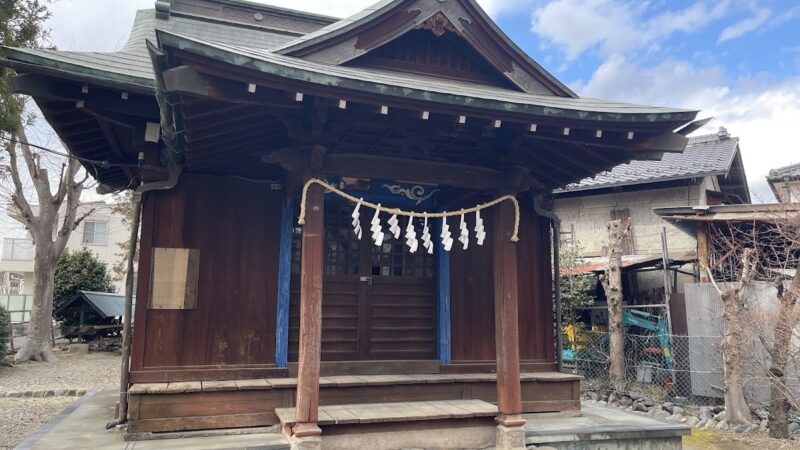
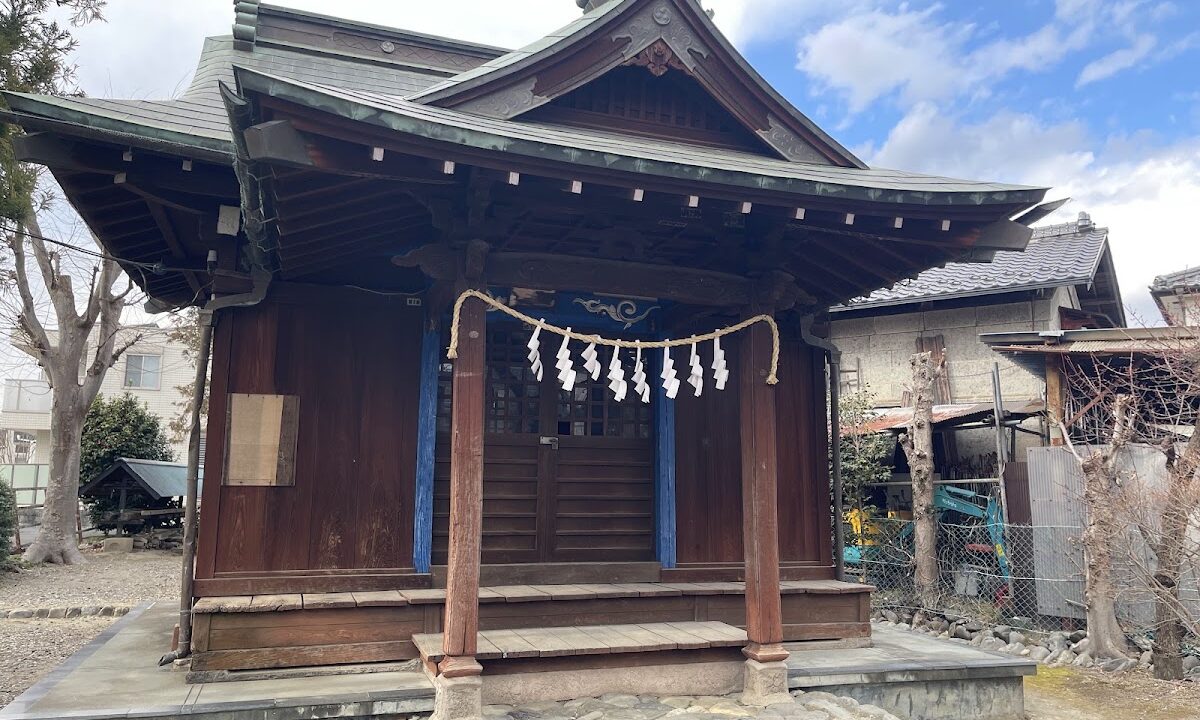
The grounds of Majima Shrine have a small, tranquil atmosphere, as you would expect from a small shrine located in a residential area. While not flashy, the carefully maintained and clean grounds reflect the faith of the local people.
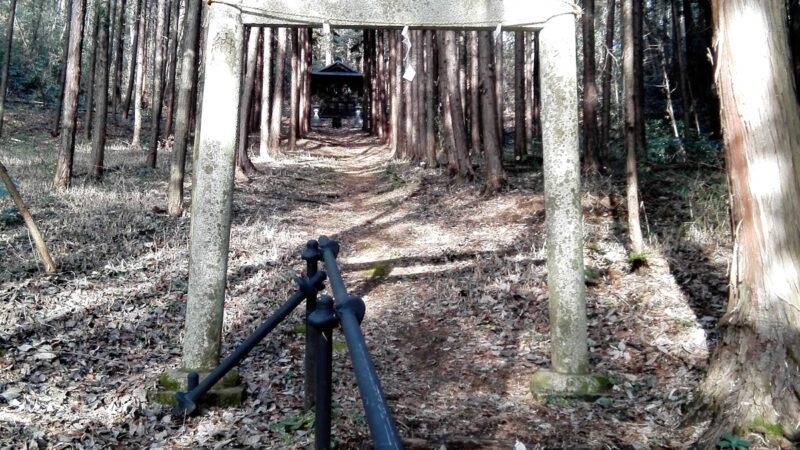
After passing through the torii gate, the shrine building is located directly in front. The building is a simple wooden structure, but it maintains the style of traditional shrine architecture. The shrine grounds are planted with trees that appear to be sacred, creating a small green oasis in the middle of the city.
Stone monuments and stone lanterns are also placed throughout the grounds, allowing visitors to feel the accumulation of the shrine’s history. While not many people visit, a peaceful environment for worship is maintained.
Historical Relationship Between Majima Shrine and the Tama River
An essential aspect of discussing Majima Shrine is its historical relationship with the Tama River. The Tama River is a first-class river flowing through the Musashino Plateau, and has supported the lives of people in its basin since ancient times. However, it has also caused significant damage to people through repeated floods.
The flood of 1671 (Kanbun 11), which washed away Aoyagi Island, is one of the largest disasters recorded in the Tama River basin. This disaster submerged the entire island, forcing residents to evacuate.
The area around present-day Sumiyoshi-cho, chosen as the relocation site, was located on relatively safe high ground, somewhat away from the Tama River. The settlers, never forgetting the memory of the floods, founded the Majima Shrine to pray for safety and prosperity in their new land.
Thus, the Majima Shrine is an important cultural heritage site that conveys the history of people who experienced both the blessings and threats of the Tama River.
Etiquette and Manners for Visiting Majima Shrine
When visiting Majima Shrine, please follow the general etiquette for visiting shrines:
Basic Worship Procedure
- Bow before the Torii Gate: Before entering the shrine grounds, bow slightly before the torii gate.
- Purify at the Water Basin: If there is a water basin, purify your hands and mouth.
- Worship in Front of the Main Hall:
- Place your offering in the offering box.
- Bow twice, clap twice, bow once.
- Bow again upon leaving: When leaving the shrine grounds, turn back and bow before the torii gate.
Points to Note When Visiting
- As the shrine is located in a residential area, please refrain from making loud noises.
- The shrine grounds are kept clean, so please be sure to take your trash with you.
- Photography is permitted, but please be considerate of other visitors.
- Please refrain from touching the shrine buildings or grounds without permission.
Regarding the Goshuin (Shrine Seal) of Majima Shrine
Regarding the issuance of Goshuin at Majima Shrine, on-site assistance may be difficult. Since the shrine is under the management of Yaho Tenmangu Shrine, it is recommended that those wishing to receive a Goshuin contact Yaho Tenmangu Shrine (042-576-5123) in advance.
Due to its small size, there is a high possibility that there are no resident priests, and the issuance of Goshuin may be limited to special days such as festival days.
Summary
Majima Shrine is a small, historic shrine located in Sumiyoshi-cho, Fuchu City, Tokyo. For over 350 years, it has been a place of local faith, established by the people of Aoyagi Island, who lost their homeland in a great flood of the Tama River, as their guardian deity in their new home.
While not flashy, Majima Shrine, a place where the history and lives of the people of the region are condensed, is a hidden cultural heritage of Fuchu and a worthwhile spot to visit. Located within walking distance of Nakagawara Station on the Keio Line, this place is a must-visit when exploring Fuchu.
Spending time reflecting on the history of the Tama River and the faith of its people amidst a quiet residential area will be a precious experience that allows you to forget the hustle and bustle of the city.