Musashino Shrine (Kodaira City, Tokyo) Complete Guide | Thorough Explanation of Goshuin (Shrine Seals), Access, History, and Blessings
Musashino Shrine, located in Hanakoganei, Kodaira City, Tokyo, is a shrine with a history of approximately 300 years, founded in 1724 (Kyoho 9). Situated along the Ome Kaido road, it enshrines Sarutahiko-no-Okami, known as the god of opening roads. This article provides detailed information you should know before visiting Musashino Shrine, including its history, blessings, goshuin (shrine seals), access methods, and highlights within the shrine grounds.
Basic Information about Musashino Shrine
Location and Contact Information
Address: 8-26-18 Hanakoganei, Kodaira City, Tokyo 187-0002 (Some sources list 5-461)
Shrine Rank: Former Village Shrine
Deity Enshrined: Sarutahiko-no-Okami
Annual Festival Date: October 3rd
Musashino Shrine is located in the Hanakoganei district of Kodaira City. While situated in a quiet residential area, it boasts easy access from the main road, Ome Kaido. It is a beloved shrine among local residents, with regular visitors.
Visiting Hours
Musashino Shrine is generally open for worship throughout the day, however, the hours for the shrine office and the issuance of Goshuin (shrine stamps) are limited. Generally, the hours are from 9:00 AM to around 5:00 PM, but it is recommended to confirm before visiting.
How to Access Musashino Shrine
Access by Train and Bus
Nearest Station: Hanakoganei Station, Seibu Shinjuku Line
From Hanakoganei Station, you can access the shrine in the following ways:
- By Bus: Approximately 10 minutes by bus from Hanakoganei Station
- Take a Seibu Bus and get off at the nearest bus stop
- A few minutes’ walk from the bus stop
- On Foot: Approximately 15-20 minutes’ walk from Hanakoganei Station
- The route along Ome Kaido is easy to follow
- There is also a route through a residential area
Access by Car
Located along Ome Kaido, it is also easily accessible by car. However, parking space is limited, so during peak seasons and festival days, we recommend using public transportation.
Landmarks in the Surrounding Area
Using Ome Kaido as a landmark makes it easy to find, and the shrine blends seamlessly into the residential area of Hanakoganei. Searching for “Musashino Shrine, Kodaira City” on a map app will show the exact location.
History and Origins of Musashino Shrine
Circumstances of Founding
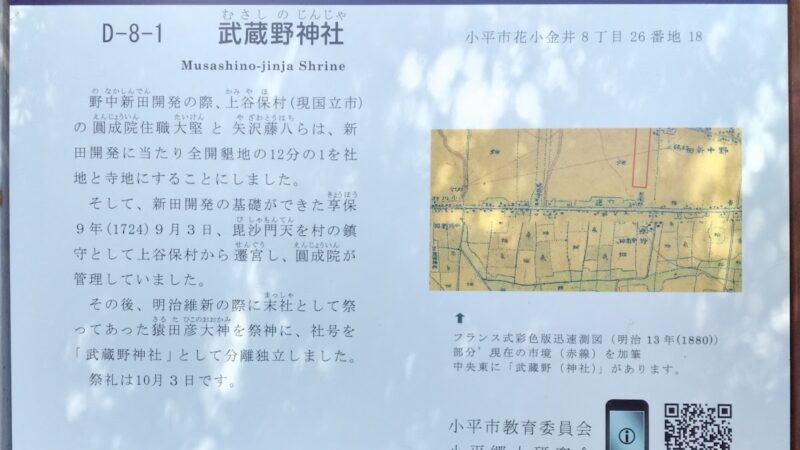
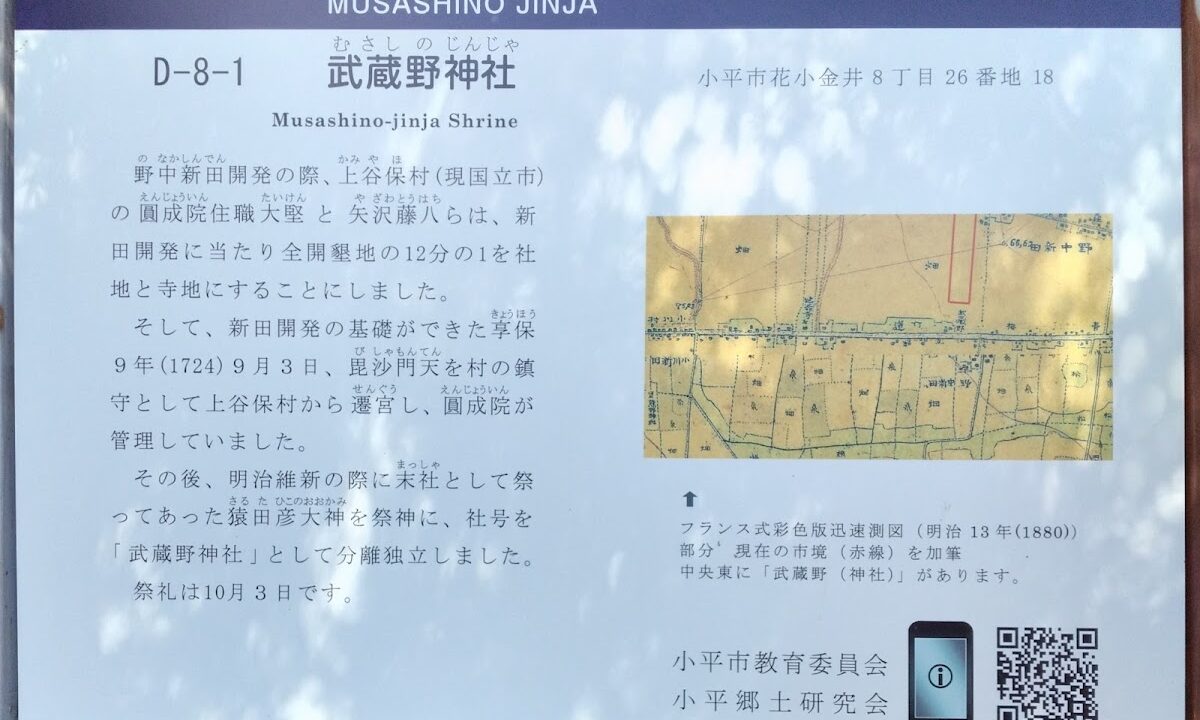
The history of Musashino Shrine dates back to 1724 (Kyoho 9). During this period, following the completion of development in Kitano Nakashinden (present-day Hanakoganei area), the shrine is said to have begun with the relocation of Bishamonten from the nearby Kamiyaho Village to serve as the village’s guardian deity.
At that time, the Musashino Plateau was undergoing extensive land reclamation, and the worship of guardian deities was considered important in the newly established villages. Musashino Shrine is one of the shrines that emerged during this period.
Changes in the Meiji Era
Initially, Bishamonten was the main deity enshrined, but the Meiji era’s separation of Shinto and Buddhism brought about a major transformation. The policy of separating Shinto and Buddhism necessitated a shift from the strongly Buddhist Bishamonten worship to a Shinto deity.
At this time, Sarutahiko-no-Okami, who had previously been enshrined in a subordinate shrine, was re-enshrined as the main deity, and the shrine’s name was changed to “Musashino Shrine.” This change was not merely a name change, but was influenced by the Meiji-era religious policy of aligning the shrine’s character with Shinto principles.
History as a Former Village Shrine
Musashino Shrine has long been a community-based shrine, attracting deep faith from the area. A village shrine is a shrine that, under the former shrine ranking system, was positioned as the guardian deity of the village and played a central role in the local community.
For approximately 300 years, Musashino Shrine has watched over the development of the Hanakoganei area and continues to be cherished as a spiritual anchor for local residents.
About the Enshrined Deity, Sarutahiko-no-Okami
About Sarutahiko-no-Okami
Sarutahiko-no-Okami is known in Japanese mythology as a god of guidance and a god who opens paths. According to the Kojiki and Nihon Shoki, Sarutahiko-no-Okami is the deity who guided Ninigi-no-Mikoto, the grandson of Amaterasu-Omikami, from Takamagahara to Earth during the descent of the heavenly grandchild.
He is often depicted with a distinctive appearance: a long nose, tall stature, and shining eyes. A statue of Sarutahiko-no-Okami based on this image is enshrined on the grounds of Musashino Shrine.
Benefits of Sarutahiko-no-Okami
By visiting Sarutahiko-no-Okami at Musashino Shrine, the following benefits are believed to be received:
Traffic Safety: As the god of roads, he protects safe journeys and traffic safety.
Protection from Misfortune: He guides you to good directions and wards off misfortune from bad directions.
Good Fortune: He opens up paths in life and leads you to new possibilities.
Business Prosperity: He opens up paths in business and ventures.
Protection from Evil: He guides you to the right path at crossroads in life.
Many people visit the shrine, especially when starting something new, before moving or traveling, or during life’s turning points. Due to his nature as a god who opens paths, it is considered beneficial to visit when you are feeling lost or need to make a decision.
Highlights of the Shrine Grounds
Shrine Building
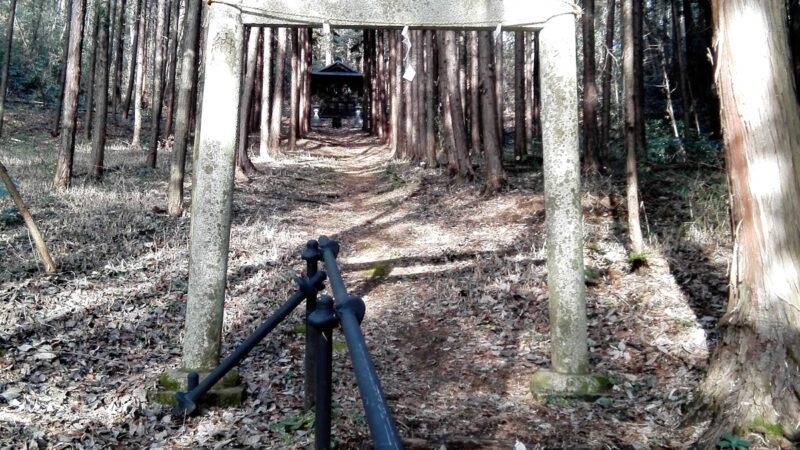
The shrine building at Musashino Shrine is small in scale, but it is carefully maintained, creating a clean and tranquil atmosphere. A well-maintained approach leads to the shrine, quietly welcoming visitors.
Statue of Sarutahiko-no-Okami
A distinctive feature of the shrine grounds is a statue believed to be modeled after Sarutahiko-no-Okami. This statue, enshrined in a small shrine, is a striking sight for visitors. It depicts the characteristic appearance of Sarutahiko-no-Okami as portrayed in mythology, and is a point of interest to behold when visiting Musashino Shrine.
Nature within the Shrine Grounds
Trees are planted throughout the shrine grounds, displaying different appearances with the seasons. In particular, the ginkgo trees within the grounds turn yellow in autumn, creating a vibrant landscape. In this quiet space, far removed from the hustle and bustle of the city, one can feel the changing seasons.
Approach and Torii Gate
The approach leading from Ome Kaido Road welcomes visitors from the everyday world into the sacred realm. Passing through the torii gate and proceeding along the approach naturally calms the mind and prepares one for worship.
Goshuin (Shrine Seal) Information
Issuance of Goshuin
Musashino Shrine offers goshuin. Goshuin are popular among many visitors as proof of their visit and as a tangible memento of their connection to the shrine.
If you wish to receive a goshuin, please inquire at the shrine office. However, availability is not always guaranteed, so it is recommended to inquire in advance if you wish to be sure to receive one.
About Goshuincho (Shrine Seal Books)
While it is generally recommended to bring your own goshuincho, some shrines may provide them. It is best to check with Musashino Shrine regarding their availability upon your visit.
Goshuin Etiquette
When receiving a Goshuin (temple/shrine stamp), please keep the following etiquette in mind:
- Complete your prayers before receiving the Goshuin.
- Open your Goshuincho (stamp book) and have it ready.
- Prepare the offering (Goshuin fee).
- Request the Goshuin using polite language.
- Remember that a Goshuin is not something to be collected, but rather “proof of worship.”
Annual Festivals and Events
Annual Festival (October 3rd)
Musashino Shrine’s annual festival is held every year on October 3rd. The annual festival is the most important festival for the shrine, a Shinto ritual to express gratitude for the past year and pray for peace and prosperity in the community.
On the day of the annual festival, more worshippers than usual visit, making it a valuable opportunity for local residents to gather and share the history and traditions of the shrine.
Other Annual Events
In addition to the annual festival, it is believed that various Shinto rituals are held throughout the year at Musashino Shrine. There’s a possibility that common shrine events such as New Year’s visits, Setsubun festivals, and summer purification ceremonies are being held. Please contact the shrine directly for details.
Manners and Etiquette for Visiting a Shrine
Basic Etiquette for Visiting a Shrine
When visiting Musashino Shrine, please observe the following basic etiquette:
- Bow before the Torii Gate: Before entering the sacred area, bow before the torii gate.
- Walking along the Path: The center of the path is considered the path of the gods, so walk along the sides.
- Purify at the Water Basin: If there is a water basin, purify your hands and mouth.
- Etiquette at the Main Hall: The basic etiquette is two bows, two claps, one bow (two bows, two claps, one bow).
Water Basin Etiquette
- Take the ladle with your right hand and purify your left hand.
- Switch the ladle to your left hand and purify your right hand.
- Switch the ladle back to your right hand, receive water in your left hand, and rinse your mouth.
- Purify your left hand once more.
- Stand the ladle upright, purify the handle, and return it to its original position.
About Offerings
Offerings are a way of expressing gratitude to the gods. There are no set amounts, but please place them carefully in the offering box. It is considered best to gently place them rather than throwing them in.
Nearby Attractions and Spots
The Charm of the Hanakoganei Area
Hanakoganei, where Musashino Shrine is located, is an area that has developed as a residential area along the Seibu Shinjuku Line. There is a shopping street around the station, supporting the lives of local residents.
Other Shrines and Temples in Kodaira City
Besides Musashino Shrine, there are several other shrines and temples scattered throughout Kodaira City. Those interested in the history and culture of Kodaira City may enjoy visiting several of these temples and shrines.
The History of the Ome Kaido Road
The Ome Kaido Road, which Musashino Shrine faces, is a historic road that has existed since the Edo period. It developed as an important route connecting Edo (Tokyo) and Ome (Ome), and still functions as a major arterial road in western Tokyo today.
Musashino Shrine Reviews and Reputation
Visitor Feedback
Visitors to Musashino Shrine have shared the following impressions:
Quiet and Peaceful Atmosphere: Despite being located in a residential area, many visitors describe the shrine grounds as tranquil and peaceful.
Impressive Statue of Sarutahiko-no-Okami: Many visitors mention the statue of Sarutahiko-no-Okami within the shrine grounds. It is highly regarded as a valuable presence that allows visitors to feel closer to the world of mythology.
A Shrine Rooted in the Community: Some comments convey the sense that the shrine is cherished by the local community.
Beautiful Autumn Scenery: Many reviews specifically mention the beautiful yellowing of the ginkgo leaves in autumn, indicating that it is worth visiting during certain seasons.
Accessibility
While it is within walking distance from Hanakoganei Station, some suggest that taking the bus is more convenient. First-time visitors should check the location on a map beforehand for a smoother experience.
Prayers and Sorrows at Musashino Shrine
About Various Prayers
Musashino Shrine may accept various prayers, drawing on the divine virtues of Sarutahiko-no-Okami:
- Traffic Safety Prayer: Blessing of cars, safe travel, etc.
- Protection from Misfortune: Protection from misfortune related to direction during moving or travel
- Good Fortune Prayer: For new businesses or life transitions
- Exorcism: Exorcism during unlucky years, etc.
If you wish to have a prayer performed, it is recommended that you contact the shrine in advance to confirm the reception hours and offering fees.
Musashino Shrine’s Connection to the Community
As a Center of the Local Community
Musashino Shrine, with a history of approximately 300 years, has grown alongside the development of the Hanakoganei area. Since its founding as the village’s guardian shrine, it has served as a spiritual support for local residents and functioned as a place to strengthen community bonds.
Conveying the History of Land Reclamation
The founding of Musashino Shrine is closely linked to the historical context of land reclamation during the Kyoho era. As a valuable site that conveys the history of the Musashino Plateau’s development, it plays an important role in local history education.
Role in Modern Times
Even today, Musashino Shrine remains a beloved place for local residents to visit at significant life events such as New Year’s visits, Shichi-Go-San (a traditional rite of passage for children), and exorcisms. It also serves as a place for intergenerational exchange through events such as annual festivals.
The History of Kodaira City and Musashino Shrine
The Origins of Kodaira City
Kodaira City is a region that developed through land reclamation during the Edo period. The opening of the Tamagawa Aqueduct secured water resources, making agriculture possible on the Musashino Plateau and leading to the development of many new rice fields.
Origin of the Place Name Hanakoganei
The place name Hanakoganei is said to originate from the fact that it was a new rice field separated from the Koganei area. The character “花” (hana, meaning flower) is thought to have been used as an honorific, possibly reflecting hopes for the development of new rice fields.
Shrine Culture of the Musashino Plateau
The Musashino Plateau has numerous shrines that were established in conjunction with the development of new rice fields. Musashino Shrine is one such example, and can be considered an important cultural asset that tells the story of the region’s history of development and faith.
Points to Note and Advice When Visiting
Best Time to Visit
Musashino Shrine is open for visits throughout the year, but the following times are especially recommended:
Autumn (October-November): This is the time of the annual festival, and the ginkgo leaves are beautifully colored.
New Year’s Visit (January): Pray for a safe and prosperous year at the shrine.
Spring (March-April): Visit the god of opening paths at the start of a new life.
Regarding Photography
Photography is generally permitted on the shrine grounds, but please keep the following points in mind:
- Be considerate of other visitors.
- Obey any restrictions on photography, such as inside the shrine buildings.
- When posting on social media, be mindful of the sacred nature of the place and post with moderation.
Regarding Attire
While casual attire is acceptable, it is advisable to avoid overly casual or revealing clothing. Especially if you are receiving a prayer, it is recommended to wear appropriate attire.
Summary: The Charm of Musashino Shrine
Musashino Shrine, founded in 1724 (Kyoho 9), boasts a history of approximately 300 years and is the guardian shrine of Hanakoganei, Kodaira City, dedicated to Sarutahiko-no-Okami, the god of opening paths. It preserves the history of land reclamation and maintains a deeply rooted local faith.
Many worshippers visit seeking blessings for traffic safety, protection from misfortune, and good fortune. It is especially recommended to visit during life transitions or when starting something new. Within the shrine grounds is a statue of Sarutahiko-no-Okami, and in autumn, the ginkgo trees turn a beautiful yellow, allowing visitors to enjoy the changing seasons.
It is easily accessible from Hanakoganei Station on the Seibu Shinjuku Line and conveniently located along the Ome Kaido road. Goshuin (shrine stamps) are available, and the annual festival is held on October 3rd.
Despite being close to the city center, Musashino Shrine offers a quiet and peaceful atmosphere for worship. When you’re lost on your life’s path, when you’re about to take a new step, or when you want to express your gratitude for everyday life, why not visit this place? Sarutahiko-no-Okami will illuminate your life’s path and guide you in the right direction.