Musashino Hachimangu Shrine (Musashino City, Tokyo) Complete Guide | History, Goshuin (Shrine Seals), Blessings, and Highlights of the Grounds
Musashino Hachimangu Shrine, located in Kichijoji, Musashino City, Tokyo, is a historic shrine said to have been founded in 789 AD. As the guardian shrine of Kichijoji, it is revered as the local tutelary deity and is known for its blessings of victory, protection from evil, and family safety. This article provides a thorough explanation of everything you need to know before visiting Musashino Hachimangu Shrine, including its history, enshrined deities, highlights of the grounds, goshuin information, and access methods.
Basic Information on Musashino Hachimangu Shrine
Location: 1-1-23 Kichijoji Higashi-cho, Musashino City, Tokyo
Main Deities:
- Hondawake-no-mikoto
- Hime-no-okami
- Ootarashihime-no-mikoto
Founded: Enryaku 8 (789)
Shrine Rank: Former Village Shrine
Annual Grand Festival: Second Saturday and Sunday of September
Visiting Hours: Grounds are freely accessible (Shrine office is generally open from 9:00 to 17:00)
Parking: Available (several spaces)
History and Origins of Musashino Hachimangu Shrine
Founding Legend: Sakanoue no Tamuramaro and Usa Shrine
The founding of Musashino Hachimangu Shrine dates back to 789 AD, during the reign of Emperor Kanmu. It is said to have begun when Sakanoue no Tamuramaro, known as the Seii Taishogun (Commander-in-Chief of the Expeditionary Force Against the Barbarians), invited a divided spirit from Usa Shrine (Oita Prefecture), the head shrine of Hachimangu shrines, to the area near present-day Suidobashi Station in Chiyoda Ward, Tokyo.
Sakanoue no Tamuramaro was a warrior of the early Heian period who played an active role in the subjugation of the Emishi people. His invitation of Hachiman, the god of military fortune, demonstrates the widespread Hachiman worship in the samurai society of that time.
The Great Fire of Meireki and the Establishment of Kichijoji Village
The relocation of Musashino Hachimangu Shrine to its current location is due to a major fire during the Edo period. The Great Fire of Meireki in 1657 destroyed Suwayama Kichijoji Temple and its surrounding town, located near the present-day Suidobashi Station.
Kichijoji Temple relocated to Komagome, but the people of the temple town were ordered by the shogunate to move to Musashino, where they established a new village, Kichijoji. At this time, in 1661, the Hachiman Shrine was also moved to its current location and became the guardian shrine of the new village.
The Development of Kichijoji and Musashino Hachiman Shrine
Throughout the Edo period, Musashino Hachiman Shrine was revered as the tutelary deity of Kichijoji village. With the modernization of Kichijoji after the Meiji Restoration and the subsequent period of rapid economic growth after World War II, it became a popular urban shrine attracting many worshippers.
Today, as the guardian shrine of Kichijoji, one of Tokyo’s most popular towns, it is beloved not only by local residents but also by worshippers from all over Japan.
Deities and Benefits
Main Deity: Hondawake-no-Mikoto (Emperor Ojin)
The main deity of Musashino Hachimangu Shrine is Hondawake-no-Mikoto, also known as Emperor Ojin, the 15th emperor of Japan. Emperor Ojin is worshipped as Hachiman-sama at Hachimangu shrines throughout Japan and is widely revered as the god of military fortune and victory.
He is also known as the god of archery, and many worshippers visit to pray for victory in martial arts, sports, and examinations.
Hime-no-Okami and Ootarihime-no-Mikoto
Hime-no-Okami is considered one of the three Munakata goddesses and is revered for maritime safety and traffic safety. Ootarihime-no-Mikoto is Empress Jingu, the mother of Emperor Ojin, and is worshipped as the goddess of safe childbirth, child-rearing, and family safety.
Benefits of Musashino Hachimangu Shrine
Musashino Hachimangu Shrine is believed to offer the following benefits:
- Good Fortune and Victory: Success in sports, exams, business, etc.
- Protection from Evil and Directional Misfortune: Protection from evil during unlucky years and misfortune related to directions
- Family Safety: Health and peace for the family
- Traffic Safety: Safety in cars and travel
- Safe Childbirth and Child-rearing: Safe pregnancy and childbirth, and the healthy growth of children
- Business Prosperity: Development and prosperity of businesses
- Matchmaking: Blessing with a good partner
Highlights of the Shrine Grounds
The Grand Torii Gate and Approach
The grand torii gate, facing the “Hachimangu-mae” intersection where Itsukaichi Kaido and Kichijoji-dori intersect, marks the entrance to Musashino Hachimangu Shrine. Despite being in an urban area, passing through the torii gate leads to a lush, green approach, creating a tranquil atmosphere.
The shrine grounds boast a vast area of approximately 1,300 tsubo (about 4,300 square meters), lined with large trees such as zelkova, camphor, and ginkgo, creating a solemn space unlike anything you’d expect to find in an urban area.
Worship Hall and Main Sanctuary
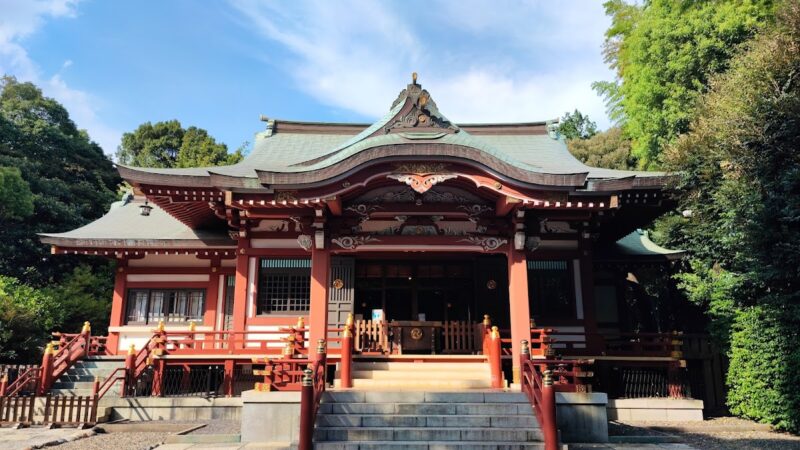
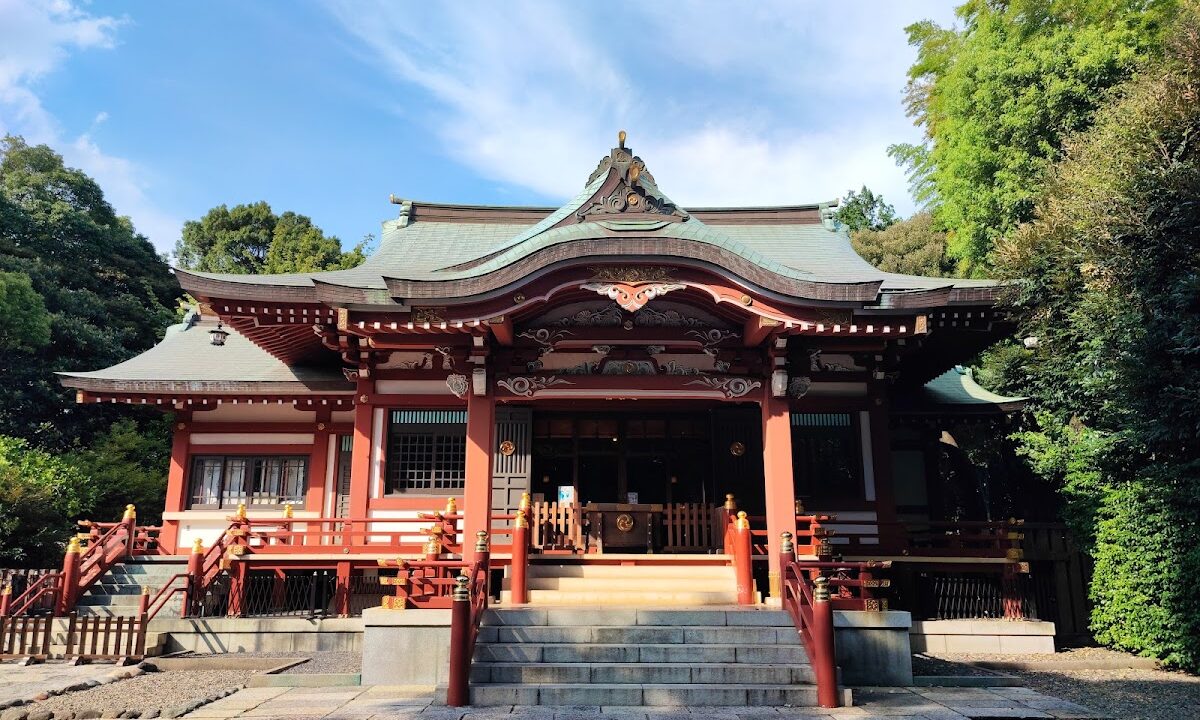
As you proceed along the approach to the shrine, you will see a magnificent worship hall. Built in the traditional shrine architectural style, it maintains a beautifully maintained appearance.
Behind the worship hall is the main sanctuary, where the enshrined deity is worshipped. When praying, please follow the proper etiquette of two bows, two claps, and one bow.
Shrines within the Precincts (Seven Shrines)
To the right and slightly in front of the main hall are shrines within the precincts, where seven deities are enshrined together:
- Mishima Shrine: Dedicated to Kotoshironushi-no-kami
- Izumo Shrine: Dedicated to Okuninushi-no-mikoto
- Oshima Shrine: Dedicated to Oyamatsumi-no-kami
- Itsukushima Shrine: Dedicated to Ichikishimahime-no-mikoto
- Inari Shrine: Dedicated to Ukanomitama-no-kami
- Suga Shrine: Dedicated to Susanoo-no-mikoto
- Hoso Shrine: Dedicated to the god of protection against smallpox
By visiting these shrines within the precincts, you can receive a wider variety of blessings.
Sacred Trees and Trees on the Precincts
There are several large trees on the precincts estimated to be several hundred years old, and among them, the sacred zelkova and ginkgo trees exude an overwhelming presence. Amidst the hustle and bustle of the city, the vitality emanating from these ancient trees provides healing and power to visitors.
The golden foliage of the ginkgo trees in autumn is particularly magnificent, and the sight of the temple grounds bathed in golden light is well worth seeing.
Water Basin
At the water basin located beside the approach to the shrine, purify your mind and body before praying. Follow the proper etiquette for water basin rituals, carefully cleansing your hands and mouth before proceeding to the main hall.
Goshuin (Shrine Seal) and Goshuincho (Shrine Seal Book)
Goshuin Information
You can receive a Goshuin at Musashino Hachimangu Shrine.
Reception Location: Shrine Office
Reception Hours: Generally 9:00 AM to 5:00 PM (May be closed during festivals, etc.)
Offering Fee: Usually around 500 yen
The Goshuin will have the calligraphy of “Musashino Hachimangu” and the shrine’s red seal. The date will also be added, making it a cherished memento of your visit. ### Original Goshuincho (Stamp Book)
Musashino Hachimangu Shrine offers its own original goshuincho. With a design that reflects the local character of Kichijoji and the history of the Hachimangu Shrine, it’s recommended for those just starting to collect goshuin stamps.
Please check with the shrine office during your visit regarding the offering fee and availability of the goshuincho.
Amulets and Souvenirs
Musashino Hachimangu Shrine offers a variety of amulets and souvenirs:
Main Amulets
- Victory Amulet: An amulet for good fortune and victory.
- Exorcism Amulet: An amulet for warding off evil.
- Traffic Safety Amulet: An amulet for safe travel and safe driving.
- Family Safety Amulet: An amulet for the health and peace of the family.
- Safe Childbirth Amulet: An amulet for safe childbirth.
- Academic Success Amulet: An amulet for success in studies and exams.
- Matchmaking Amulet: An amulet for finding a good partner.
Other Souvenirs
- Ema (votive tablet): A place to write your wish and dedicate it.
- Omikuji (fortune slip): A way to tell your fortune.
- Hama-ya (demon-repelling arrow): A charm for warding off evil and a lucky charm for the New Year.
- Kumade (rake): A lucky charm for business prosperity.
Please note that the types of items offered and the offering fees may change. For details, please inquire at the shrine office during your visit.
Annual Events and Grand Festival
Main Annual Events
Musashino Hachimangu Shrine holds various Shinto rituals and events throughout the year:
January
- New Year’s Day Festival (January 1st)
- New Year’s Day Festival
February
- Setsubun Festival (around February 3rd): Events such as bean-throwing
May
- Spring Festival
September
- Grand Festival (2nd Saturday and Sunday of September): Mikoshi procession, dedication performances, etc.
November
- Shichi-Go-San Festival (around November 15th)
December
- Great Purification Ceremony (December 31st)
Highlights of the Grand Festival
The Grand Festival in September is the most important festival at Musashino Hachimangu Shrine, a grand celebration involving the entire community. The procession of portable shrines, devotional performances, and stalls fill the entire town of Kichijoji with a festive atmosphere.
Many local parishioners and devotees participate, preserving the traditional festival’s form to this day.
Musashino Kichijoji Seven Lucky Gods Pilgrimage
Musashino Hachimangu Shrine enshrines Bishamonten, one of the “Musashino Kichijoji Seven Lucky Gods.”
The Musashino Kichijoji Seven Lucky Gods Pilgrimage is a popular tour of temples and shrines around Kichijoji, offering good fortune. Many visitors come, especially during the New Year period, and it is believed that visiting all seven gods brings abundant good fortune and prosperity.
Temples and Shrines of the Musashino Kichijoji Seven Lucky Gods
- Musashino Hachimangu Shrine (Bishamonten)
- Daihozenji Temple (Ebisu)
- Enmeiji Temple (Hotei)
- Anyoji Temple (Jurojin)
- Renjoji Temple (Benzaiten)
- Musashino Kannon Temple (Daikokuten)
- Kichijoji Temple (Fukurokuju)
Each temple and shrine offers special commemorative paper or stamps featuring the Seven Lucky Gods. Visiting all of them is believed to bring good fortune and prosperity.
Access Methods
Access by Train
Nearest Station: JR Chuo Line/Keio Inokashira Line “Kichijoji Station”
Walking Route from Kichijoji Station:
- Exit Kichijoji Station North Exit (Central Exit)
- Walk straight west along Itsukaichi Kaido (Tokyo Metropolitan Road No. 7)
- Approximately 8-10 minutes on foot
- Arrive at the “Hachimangu-mae” intersection; you will see the large torii gate.
Kichijoji Station is a stop for the Chuo Line rapid train, offering excellent access: approximately 15 minutes from Shinjuku Station and approximately 30 minutes from Tokyo Station. Using the Keio Inokashira Line, it’s also approximately 20 minutes from Shibuya.
Access by Bus
From Kichijoji Station North Exit, take a Kanto Bus or Odakyu Bus and get off at the “Hachimangu-mae” bus stop. However, since it’s within walking distance from the station, walking is recommended if the weather is nice.
Access by Car
Chuo Expressway:
- Approximately 20 minutes from Chofu IC
Parking: Several parking spaces available on the temple grounds (free)
However, Kichijoji is a popular area and surrounding roads tend to be congested. Parking is limited, so we recommend using public transportation.
Nearby Tourist Attractions
Around Kichijoji Station
Musashino Hachimangu Shrine is within walking distance of Kichijoji Station, allowing you to enjoy the town of Kichijoji before or after your visit:
- Inokashira Park: A metropolitan park located a 5-minute walk from the south exit of Kichijoji Station. Beautiful nature throughout the seasons and Inokashira Pond
- Harmonica Alley: A restaurant district retaining the remnants of the post-war black market
- Kichijoji Sun Road: An arcade shopping street
- Coppice Kichijoji: A shopping center directly connected to the station
Nearby Temples and Shrines
- Daihozenji Temple: One of the Musashino Kichijoji Seven Lucky Gods
- Enmeiji Temple: Another temple on the Seven Lucky Gods pilgrimage
- An’yoji Temple: A historic Jodo sect temple
Manners and Precautions for Visiting Temples and Shrines
Basic Manners for Visiting Temples and Shrines
- How to Pass Through a Torii Gate: Bow before passing through the torii gate. Walk along the edge of the path leading to the shrine, as the center is the path for the gods.
- Procedure for Washing Hands: Hold the ladle in your right hand and wash your left hand, then switch to your left hand and wash your right hand, switch back to your right hand, receive water in your left hand, rinse your mouth, and finally stand the ladle upright to wash the handle.
- Procedure for Worship: Two bows, two claps, one bow (two deep bows, two claps, one deep bow)
Regarding Photography
Photography is generally permitted on the shrine grounds, but please note the following:
- Do not take photos in areas where photography is prohibited, such as inside the main hall.
- Be considerate of other worshippers.
- Remember that this is a sacred place and take photos with respect.
Regarding Attire
Everyday clothing is acceptable for worship, but please avoid extremely revealing or flashy clothing. Especially if you are receiving a prayer, somewhat formal attire is desirable.
About Prayers
Musashino Hachimangu Shrine accepts prayers from individuals and groups.
Types of Prayers
- Family Safety
- Protection from Evil
- Protection from Unfavorable Directions
- Traffic Safety
- Business Prosperity
- Prayer for Success in Exams
- Prayer for Safe Childbirth
- First Shrine Visit for a Newborn
- Shichi-Go-San (7-5-3) Ceremony
- Other Various Prayers
How to Apply for Prayers
If you wish to have prayers performed, please apply at the shrine office. Advance reservations may be required, so especially during busy periods such as Shichi-Go-San and New Year’s, it is recommended to inquire by phone beforehand.
The offering fee varies depending on the prayer content, so please confirm when applying.
The Charm of Musashino Hachimangu Shrine
An Oasis in the City
Despite being located in the heart of Kichijoji, one of Tokyo’s most popular towns, the grounds of Musashino Hachimangu Shrine are surprisingly quiet and lush with greenery. Surrounded by large trees, the shrine grounds offer a tranquil oasis in the city, providing visitors with a peaceful and healing experience.
Over 1200 Years of History
Founded in 789 AD (Enryaku 8), Musashino Hachimangu Shrine boasts a history of over 1200 years. It has a fascinating history, including connections to the historically significant figure Sakanoue no Tamuramaro and its relocation after the Great Fire of Meireki, a major event during the Edo period.
A Local Guardian Deity
As the guardian shrine of Kichijoji, Musashino Hachimangu Shrine is deeply cherished by the local community. Many people visit for life’s milestones and local events such as the annual festival and Shichi-Go-San (a traditional Japanese rite of passage for children), playing a central role in the local community.
Excellent Accessibility
Located just a 10-minute walk from Kichijoji Station, it offers easy access from the city center. Its convenient location, allowing visitors to easily combine a visit with shopping or dining, is another attractive feature.
Summary
Musashino Hachimangu Shrine is a historic shrine located in Kichijoji, Musashino City, Tokyo, founded in 789 AD. It boasts an interesting history, including its founding by Sakanoue no Tamuramaro and its relocation after the Great Fire of Meireki. Currently, it is cherished by the local community as the guardian shrine of Kichijoji.
Known for its blessings of good fortune, protection from evil, and family safety, its lush and tranquil grounds, despite being in the heart of the city, offer visitors healing and rejuvenation. Conveniently located about a 10-minute walk from Kichijoji Station, it’s an easily accessible shrine, offering goshuin (shrine stamps) and amulets.
When visiting Kichijoji, be sure to visit Musashino Hachimangu Shrine and experience its history and sacred atmosphere. Away from the hustle and bustle of the city, the time spent in quiet prayer will surely be a memorable experience.