Complete Guide to Kokuryo Shrine (Chofu City, Tokyo) | The Sacred Wisteria Tree, Goshuin (Shrine Seal), and Access Information
Kokuryo Shrine, located in Kokuryo-cho, Chofu City, Tokyo, is a shrine beloved by locals as the “Shrine of the Thousand-Year-Old Wisteria.” Its sacred wisteria tree, one of the Eight Scenic Views of Chofu, blooms magnificently every spring, captivating many visitors. This article comprehensively introduces all the information you need to know before visiting Kokuryo Shrine, including its history, enshrined deities, goshuin (shrine seal), highlights of the grounds, and access methods.
Basic Information about Kokuryo Shrine
Location: 1-7-1 Kokuryo-cho, Chofu City, Tokyo 182-0022
Phone Number: 042-482-5207
Official Website: http://kokuryo-jinja.jp/
Nearest Station: Approximately 5 minutes on foot from Fuda Station on the Keio Line, approximately 8 minutes on foot from Kokuryo Station
Shrine Rank: Former Village Shrine
Parish Area: Kokuryo-cho, Yakumodai, Somechi
Kokuryo Shrine uses the modern kanji “国領神社” as its registered religious corporation name, but is generally known as the old kanji “國領神社”.
Deities and Divine Virtues of Kokuryo Shrine
Three deities are enshrined at Kokuryo Shrine.
Main Deities
Kamimusubi-no-Kami
One of the three creation gods who appeared in Takamagahara at the time of the creation of heaven and earth, and is considered the god of creation and development. Possesses the miraculous power to create all things, and is revered for industrial development, good fortune, and prosperity.
Amaterasu-Omikami
The supreme deity in Japanese mythology, revered as the sun goddess. Revered for national peace and security, family safety, good fortune, and protection from evil, and is also known as the main deity of Ise Grand Shrine.
Takehayasusano-no-Mikoto
The younger brother of Amaterasu-Omikami, known as the brave god who slayed the Yamata no Orochi (eight-headed serpent). Revered for protection from evil, healing from illness, and matchmaking.
Due to these enshrined deities, Kokuryo Shrine is believed to offer a wide range of blessings, including good fortune, protection from evil, family safety, and business prosperity.
History and Origins of Kokuryo Shrine
The history of Kokuryo Shrine is based on the merger of two ancient shrines.
History of Rokuten-sha Shrine
During the Kamakura period, Rokuten-sha Shrine was founded on the banks of the Tama River. Rokuten-sha Shrine, dedicated to Kami-musubi-no-kami, was revered by the local people as the guardian shrine of Kokuryo-juku. During the Edo period, it served as the general guardian shrine of Kokuryo-juku, watching over the prosperity of the post town.
History of Yakumo Shinmei-sha Shrine (Sugimori Shinmei-sha Shrine)
Meanwhile, in the Sugimori area of Yakumodai, there was a Shinmei-sha Shrine (commonly known as Yakumo Shinmei-sha or Sugimori Shinmei-sha). This shrine enshrined Amaterasu-Omikami and Takehaya Susanoo-no-Mikoto.
Merger of the Two Shrines and the Present Day
Due to the Meiji-era policy of consolidating shrines, the two shrines were merged. In 1909 (Meiji 42), the Rokuten-sha and Shinmei-sha shrines were merged and relocated to their current location at 1-7-1 Kokuryo-cho. At this time, the shrine’s name was changed to “Kokuryo Shrine,” and it took its current form, enshrining three deities.
Kokuryo Shrine, with its history as the guardian shrine of the former Kokuryo-juku, is a valuable presence that conveys the history and culture of the region to the present day, and is protected by the people of Kokuryo-cho, Yakumo-dai, and Somechi, its parish area.
The Millennium Wisteria | Sacred Tree of Chofu’s Eight Scenic Views
The most distinctive feature of Kokuryo Shrine is the sacred tree, the “Millennium Wisteria,” located within the shrine grounds.
Characteristics of the Millennium Wisteria
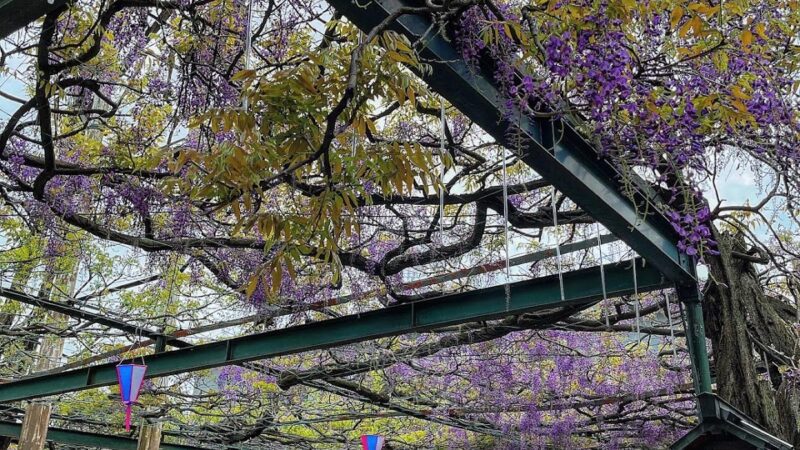
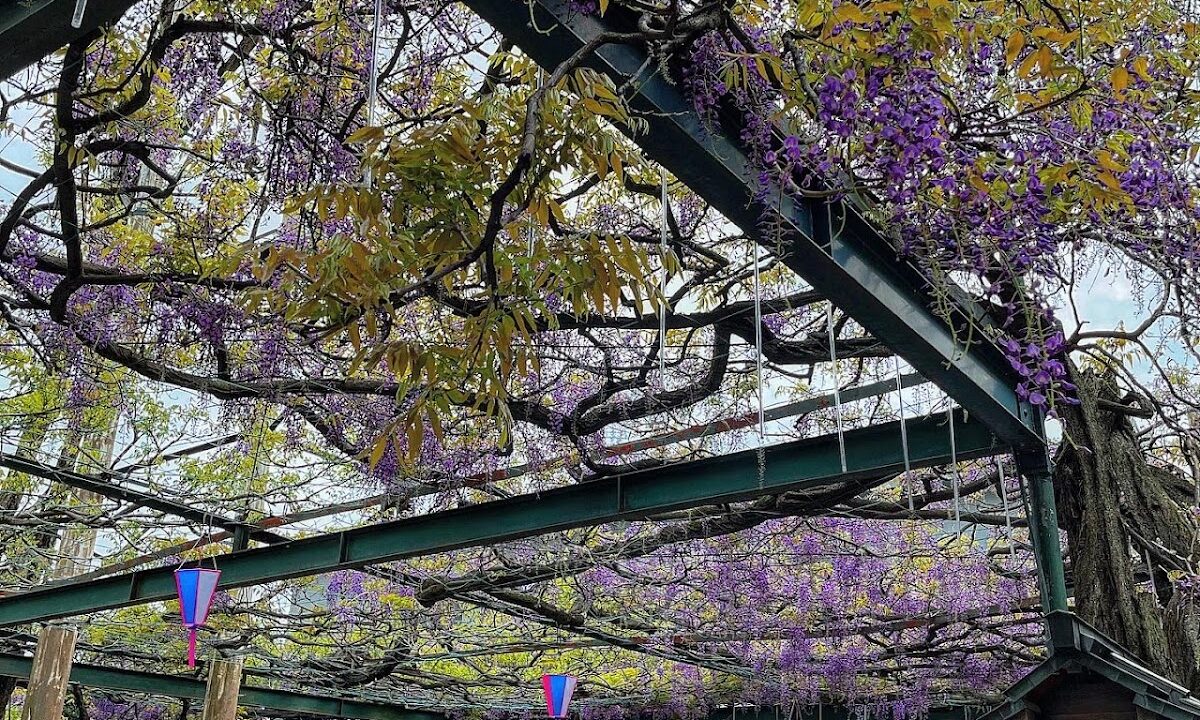
This wisteria tree, estimated to be approximately 400 to 500 years old, is affectionately known as the “Millennium Wisteria.” Although its actual age is not quite a thousand years, its majestic appearance earned it the name “Thousand-Year Wisteria.” This wisteria is one of the “Eight Scenic Views of Chofu” and is recognized as a representative natural landscape of Chofu City.
Best Viewing Period
The best time to see the Thousand-Year Wisteria is usually from late April to early May. When in full bloom, purple flower clusters hang from the trellis, enveloping the temple grounds in a fantastical atmosphere. A “Wisteria Festival” is held during this period, attracting many worshippers and tourists.
Reverence as a Sacred Tree
The Thousand-Year Wisteria is not merely an ornamental tree; it is revered as a sacred tree that protects against disaster. Combined with the meanings of the wisteria’s flower language—”welcome,” “gentleness,” and “never parting”—many worshippers visit to pray for matchmaking and family safety.
Highlights and Cultural Assets within the Shrine Grounds
Shrine Buildings
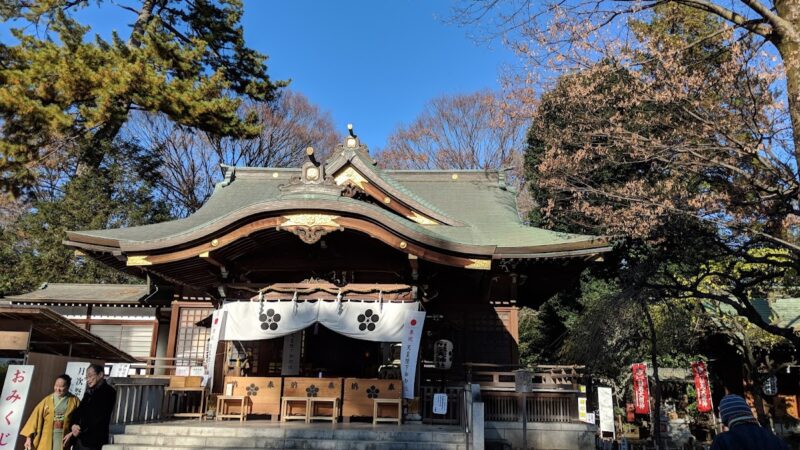
The current shrine buildings are constructed in the traditional style of Shinto shrine architecture. Both the main hall and the worship hall are made of wood, creating a solemn atmosphere. Worshippers perform the ritual of two bows, two claps, and one bow in front of the worship hall.
Water Basin
A water basin is located beside the approach to the shrine, where visitors can purify themselves before worship. A ladle is provided, and it is considered polite to purify one’s hands and mouth using the proper ritual before worship.
Shrine Office
The shrine office, where you can obtain Goshuin (shrine stamps) and other offerings, is located in a corner of the shrine grounds. Shinto priests are always present and will kindly answer any questions regarding worship.
Subsidiary Shrines
Several subsidiary shrines (Auxiliary Shrines and Minor Shrines) are located around the main hall. Each enshrines a different deity, attracting worshippers seeking diverse blessings.
Goshuin (Shrine Seal) and Goshuincho (Shrine Seal Book) Information
Kokuryo Shrine is a popular shrine among visitors who collect Goshuin.
Regular Goshuin
You can receive a regular Goshuin at the shrine office. It’s a traditional style, with “Kokuryo Shrine” written in ink and stamped with the shrine’s seal. The offering fee is usually around 300 to 500 yen.
Monthly and Limited Edition Goshuin
Kokuryo Shrine also offers monthly and seasonal limited edition Goshuin. Especially during wisteria season, special Goshuin featuring wisteria flowers are very popular. Some even feature a three-dimensional design of wisteria flowers, making them a hot topic among collectors.
Original Goshuincho (Shrine Seal Book)
Kokuryo Shrine also offers a beautiful original Goshuincho featuring a design of the “Thousand-Year Wisteria.” With its elegant purple-based design, it’s a popular souvenir of your visit.
Goshuin (Shrine Stamp) Reception Hours
The reception hours for Goshuin are usually from 9:00 to 17:00, but these may change during Shinto rituals and festivals. If you want to be sure to receive a Goshuin, we recommend calling ahead to confirm.
Items and Amulets
Kokuryo Shrine offers a variety of items and amulets.
Various Amulets
- Exorcism Amulet: For those in their unlucky year or those wishing for protection from misfortune
- Health Amulet: For those wishing for recovery from illness and longevity
- Traffic Safety Amulet: For those wishing for safe driving or cycling
- Academic Success Amulet: For students taking exams or those wishing for academic improvement
- Matchmaking Amulet: For those wishing for a good match
- Safe Childbirth Amulet: For pregnant women or those wishing for a safe childbirth
Items Related to Wisteria
Special items related to the thousand-year-old wisteria are also popular. Charms and votive tablets featuring wisteria blossoms are popular items unique to Kokuryo Shrine and are chosen by many visitors.
Votive Tablets
Votive tablets on which you can write your wishes and dedicate them are also available. These tablets, adorned with wisteria blossoms, can be dedicated at the votive tablet rack within the shrine grounds.
Annual Events and Festivals
Kokuryo Shrine holds various Shinto rituals and festivals throughout the year.
Main Annual Events
January: New Year’s Day Festival, Dondo-yaki (bonfire festival)
February: Setsubun Festival (bean-throwing)
April-May: Wisteria Festival
July: Summer Purification Ceremony
September: Annual Grand Festival
November: Shichi-Go-San Festival
December: Year-End Purification Ceremony
Annual Grand Festival
The Annual Grand Festival, held every September, is the most important festival at Kokuryo Shrine. The festival includes a procession of portable shrines and devotional performances, enveloping the entire parish area in a festive atmosphere.
Wisteria Festival
Held to coincide with the blooming season of the thousand-year-old wisteria, the Wisteria Festival is a spring tradition at Kokuryo Shrine. Various events are held on the shrine grounds, attracting many worshippers and tourists.
Access
Access by Train
Using the Keio Line
- Approximately 5 minutes on foot from Fuda Station (nearest station)
- Approximately 8 minutes on foot from Kokuryo Station
- Approximately 10 minutes on foot from Chofu Station
Access from Fuda Station is the most convenient. Exit the north exit and head towards Koshu Kaido. After passing through the residential area, you will arrive at Kokuryo Shrine.
Access by Bus
Take an Odakyu Bus or Keio Bus from Chofu Station or Mitaka Station and get off at the “Kokuryo-cho” bus stop. The shrine is approximately a 3-minute walk from there.
Access by Car
It’s about a 10-minute drive from the Chofu Interchange on the Chuo Expressway. However, there is no dedicated parking lot on the temple grounds, so we recommend using nearby coin-operated parking lots or public transportation.
Landmarks in the Area
It’s located in a residential area a short distance from Koshu Kaido (National Route 20). It’s near Chofu Municipal Kokuryo Elementary School, and locals will easily give you directions.
Manners and Points for Visiting the Shrine
Proper Way to Visit the Shrine
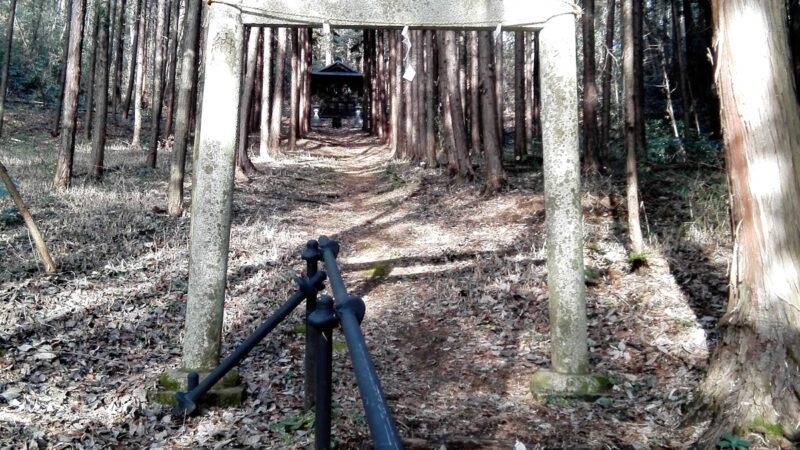
- Bow before passing through the torii gate
- Walk away from the center of the path
- Cleanse your hands and mouth at the water basin
- Offer your donation in front of the main hall
- Pray with two bows, two claps, and one bow
- Bow again at the torii gate when leaving
Regarding Photography
Photography is generally permitted on the temple grounds, but consideration should be given to avoid disturbing religious ceremonies or other visitors. Especially during the blooming season of the thousand-year-old wisteria, many people visit, so please be considerate of others when taking photos.
Regarding Attire
While casual attire is acceptable for visiting, it is considered polite to avoid revealing or overly flashy clothing. For formal visits or prayers, slightly more formal attire is recommended.
Nearby Tourist Attractions
Famous Places in Chofu City
Jindaiji Temple
A representative ancient temple of Chofu City, famous for its exorcism rituals and soba noodles. It is approximately a 15-minute drive from Kokuryo Shrine.
Jindai Botanical Garden
A metropolitan park where you can enjoy plants of all seasons. Adjacent to Jindaiji Temple, it is ideal for nature walks.
Chofu City Local History Museum
A museum where you can learn about the history and culture of Chofu. There are also exhibits on the history of Kokuryo Shrine.
Nearby Shrines and Temples
Visiting shrines in Chofu City, including Kokuryo Shrine, is also popular. Numerous shrines, each with its own unique characteristics, are scattered throughout the area, including Futa Tenjin Shrine and Aoi Shrine.
Prayers and Sacred Rites at Kokuryo Shrine
Various Prayers and Sacred Rites
By reservation, you can receive the following prayers and sacred rituals:
- Prayers for Protection from Misfortune
- Prayers for Family Safety
- Prayers for Business Prosperity
- Prayers for Traffic Safety (Car Blessing)
- Prayers for Success in Exams
- Prayers for Safe Childbirth
- First Shrine Visit for a Newborn
- Shichi-Go-San Ceremony
How to Apply for Prayers
If you wish to receive prayers, we recommend making a reservation in advance by phone (042-482-5207). Same-day registration is possible, but there may be a waiting time due to the schedule of Shinto rituals.
Offering Fee
The offering fee for prayers varies depending on the content of the prayer, but generally starts from 5,000 yen. Please inquire at the shrine office for details.
Summary of the Charms of Kokuryo Shrine
Kokuryo Shrine is a representative shrine of Chofu City, boasting a long and distinguished history and a beautiful thousand-year-old wisteria tree. Easily accessible from central Tokyo, it’s a precious space where you can experience the beauty of nature throughout the seasons, despite being located in a quiet residential area.
Especially during the spring wisteria season, many people visit to witness its beauty, but in other seasons as well, you can visit with peace of mind in a tranquil atmosphere. The shrine also offers a wide selection of goshuin (shrine stamps) and other items, making it a great choice for those who enjoy visiting shrines.
When visiting Chofu City, be sure to stop by Kokuryo Shrine. You’ll be able to refresh your mind and body in this sacred space protected by the thousand-year-old wisteria tree.
Frequently Asked Questions (FAQ)
Q1: What are the reception hours for goshuin at Kokuryo Shrine?
A1: The reception hours for goshuin are usually from 9:00 AM to around 5:00 PM. However, please note that this may change during Shinto rituals and festivals. If you wish to be sure to receive a Goshuin (temple/shrine stamp), we recommend checking in advance by phone (042-482-5207). Especially during the wisteria blooming season and the annual festival, crowds are expected, so it’s best to visit with plenty of time to spare.
Q2: When is the best time to see the Millennium Wisteria?
A2: The best time to see the Millennium Wisteria is usually from late April to early May. While this may vary depending on the year’s weather, the period around Golden Week is typically the most beautiful. The “Wisteria Festival” is also held during this time, attracting many visitors. For the latest blooming information, please check the Kokuryo Shrine official website or call them.
Q3: Is there parking at Kokuryo Shrine?
A3: Kokuryo Shrine does not have its own parking lot. If you are visiting by car, you will need to use a nearby coin-operated parking lot. However, during peak seasons such as the wisteria blooming season and the annual festival, the parking lot is likely to be full, so we recommend using public transportation. It’s easily accessible, about a 5-minute walk from the nearest Fuda Station.
Q4: Can I have a wedding ceremony at Kokuryo Shrine?
A4: Yes, you can have a Shinto wedding ceremony at Kokuryo Shrine. A traditional Shinto ceremony allows you to exchange vows in a solemn atmosphere. For details about weddings and reservations, please contact the shrine directly (042-482-5207). They will carefully explain the schedule, costs, and flow of the day.
Q5: When is the best time to visit for Shichi-Go-San (7-5-3)?
A5: Traditionally, Shichi-Go-San visits are on November 15th, but Kokuryo Shrine accepts Shichi-Go-San visits from mid-October to late November. Weekends and holidays are expected to be crowded, so visiting on a weekday is recommended. Advance reservations are recommended if you wish to have a prayer ceremony. For details regarding costumes and commemorative photos, the shrine may collaborate with nearby photo studios, so please contact the shrine.
Q6: Can I bring my pet to the shrine?
A6: Regarding bringing pets to the shrine, in most cases, you can enter the grounds if you are carrying them or keeping them in a carrier, out of consideration for other visitors. However, the specific rules vary from shrine to shrine, so it is recommended to check by phone in advance. Please keep your pet on a leash at all times within the shrine grounds and observe proper etiquette, such as cleaning up after them.
Q7: Who are the deities enshrined at Kokuryo Shrine?
A7: Three deities are enshrined at Kokuryo Shrine: Kamimusubi-no-kami, Amaterasu-Omikami, and Takehayasusano-no-Mikoto. These deities are believed to bring a wide range of blessings, including good fortune, protection from evil, family safety, and business prosperity. Originally, two shrines, Rokuten-sha and Yakumo Shinmei-sha (Sugimori Shinmei-sha), were merged during the Meiji era to form the current shrine. ### Q8: When is the annual festival of Kokuryo Shrine held?
A8: The annual festival of Kokuryo Shrine is held every September. The specific date may vary from year to year, so please check the shrine’s official website or call for details. The festival includes a procession of portable shrines and devotional performances, and the entire parish area is enveloped in a festive atmosphere. It is an important festival, a traditional local event, with many worshippers and local residents participating.