Complete Guide to Oshaku Shrine (Miyakejima, Tokyo) | History, Rituals, and Visiting Information for this Shikinaisha Shrine
About Oshaku Shrine
Oshaku Shrine is a historic shrine located in Kamitsuki, Miyake Village, Miyakejima, Tokyo. Situated in the northern part of Miyakejima, approximately 180km south of Tokyo in the Pacific Ocean, it has long been revered by the islanders as a candidate for the Shikinaisha “Sakitamahime-no-Mikoto Shrine” listed in the Engishiki Jinmyocho (a list of shrines compiled in the Heian period).
Formerly a village shrine, it holds a central role in preserving the history and culture of Miyakejima, serving as the island’s guardian shrine. The shrine grounds contain numerous other shrines and subsidiary shrines, functioning as a central center of faith on Miyakejima.
Deities Enshrined and the History of the Shrine
Main Deity: Sakitamahime-no-Mikoto
The main deity enshrined at Mikoto Shrine is Sakitamahime-no-Mikoto. Sakitamahime-no-Mikoto is revered as the consort of Kotoshironushi-no-Mikoto, who is considered the creator of the Izu Islands, and is known as one of the three consorts of the Mishima Okami.
In the mythology of the Izu Islands, Kotoshironushi-no-Mikoto and his consorts are considered deities deeply involved in the formation and development of the islands, and Sakitamahime-no-Mikoto holds a particularly important position as the guardian deity of Miyakejima Island.
Status as an Engishiki Shrine
Mikoto Shrine is a candidate for the Engishiki shrine listed in the “Engishiki Jinmyocho” (a list of shrines compiled during the Heian period), specifically the “Sakitamahime-no-Mikoto Shrine in Kamo District, Izu Province.” The Engishiki Jinmyocho is a historical document that records important shrines throughout Japan, and being listed there indicates the age and high status of a shrine.
Its history as a Shikinaisha (shrine listed in the Engishiki) suggests that Mikoto Shrine existed at least before the Heian period and was an important shrine recognized by the imperial court.
History of Founding and Relocation
The founding date of Mikoto Shrine is unclear, but it is said to have been originally located in the Togo district of Miyakejima.
In February of Eisho 13 (1516), following a divine oracle, the shrine was relocated from its old site on a mountain in Togo to its current location on the two mountains of Kamitsuki (also known as Nieyama, Kubiyama, and Atamayama). This relocation was considered to be by divine will, and for over 500 years since then, it has been revered by the islanders at its current location.
Later, in Meiji 7 (1874), a large-scale volcanic eruption occurred on Miyakejima, resulting in the tragedy of the Togo village, where the old shrine site was located, being completely destroyed. This historical fact is passed down among the islanders as a legend that the relocation of the shrine, guided by a divine oracle, ultimately protected the shrine.
History of the Priests and the Mibu Family
The priestly position at Mikoto Shrine has been passed down through generations by the Mibu clan. The Mibu family was not merely a lineage of priests, but played a crucial role in documenting the history and culture of the Izu Islands.
The Mibu family is known for compiling the valuable document *Miyakeki*, which records the origins and history of the Izu Islands. *Miyakeki* is an important historical document recording the history, mythology, and customs of Miyakejima and other Izu Islands, and is highly valued as a cultural heritage of the islands.
The existence of the Mibu family as priests indicates that Mikoto Shrine was not merely a place of worship, but also a center for preserving and passing on the history and culture of Miyakejima.
Ritual and Cultural Heritage of Mikoto Shrine
Tokyo Metropolitan Government Designated Intangible Folk Cultural Property
The rituals of Mikoto Shrine are designated as a Tokyo Metropolitan Government Designated Intangible Folk Cultural Property. This designation means that the traditional rituals performed at Mikoto Shrine are recognized as valuable intangible cultural assets that convey the history and culture of Miyakejima Island.
The rituals preserve ancient customs and ceremonies, playing an important role in passing on the island’s traditional culture to the present day. These rituals have been carefully preserved and passed down for many years by the priests, centered around the Mibu family, and local residents.
Annual Festival and Annual Events
The Annual Festival of Mikoto Shrine is held every year on October 10th. The Annual Festival is the most important festival for the shrine, and many worshippers come from both within and outside the island.
During the Annual Festival, traditional rituals are solemnly performed, and various events embodying the island’s culture are held, such as a portable shrine procession and devotional performances. On this day, the entire Kamitsuki district is enveloped in a festive atmosphere, making it one of the most important days of the year for the islanders.
Gozu Tenno Shrine and Gozu Tenno Festival
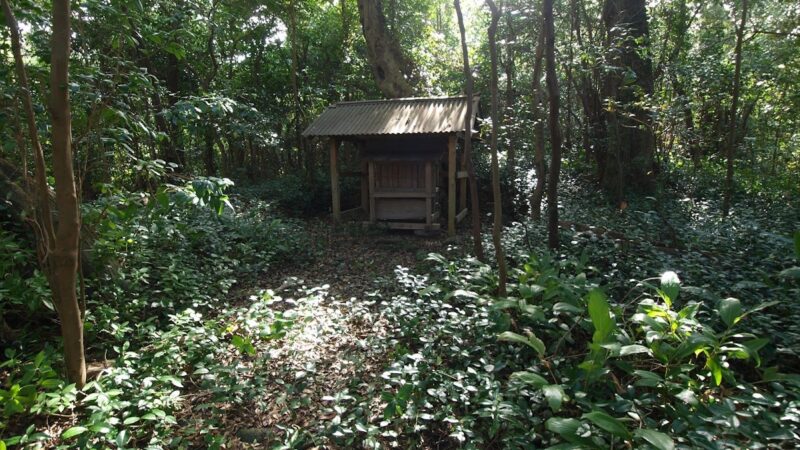
Within the grounds of Mikoto Shrine, numerous smaller shrines and subsidiary shrines are enshrined. Among them, the most important is the Gozu Tenno Shrine.
Every year, the Gozu Tenno Festival is held grandly at the Gozu Tenno Shrine. This festival, a ritual praying for the eradication of disease and good health, is deeply revered by the islanders and attracts many worshippers. While Gozu Tenno worship is found throughout Japan, the Gozu Tenno Festival on Miyakejima Island has its own unique traditions and characteristics.
The fact that the Gozu Tenno Festival is held within the grounds of Mikoto Shrine indicates that Mikoto Shrine is the center of the complex religious practices on Miyakejima Island.
Highlights of the Shrine Grounds
The Approach and Torii Gate
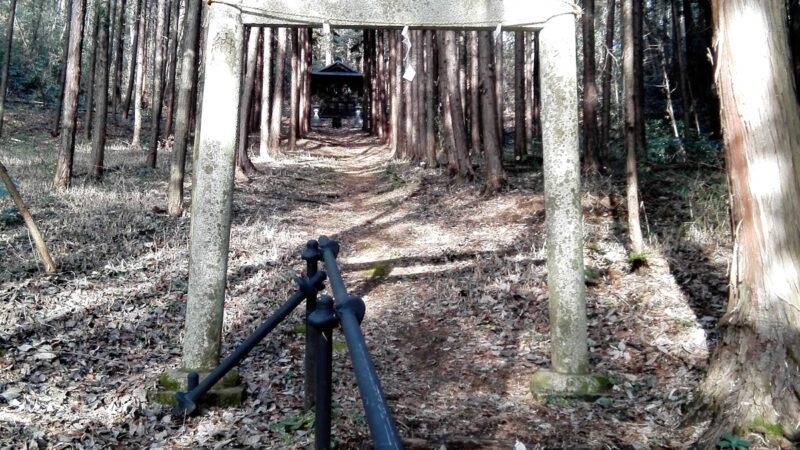
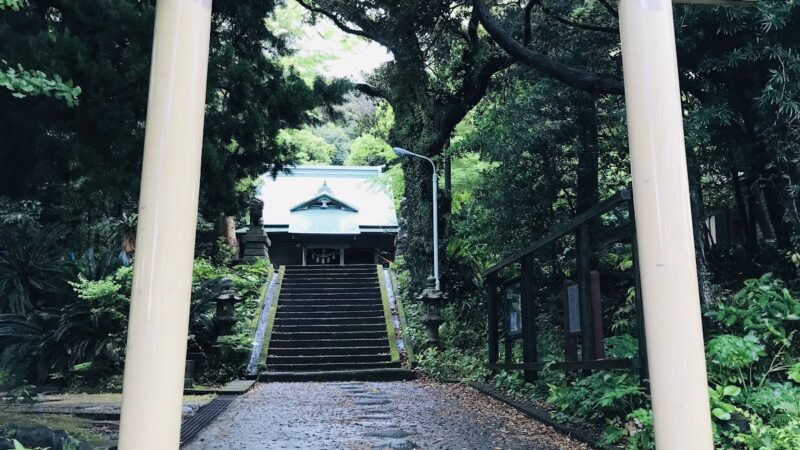
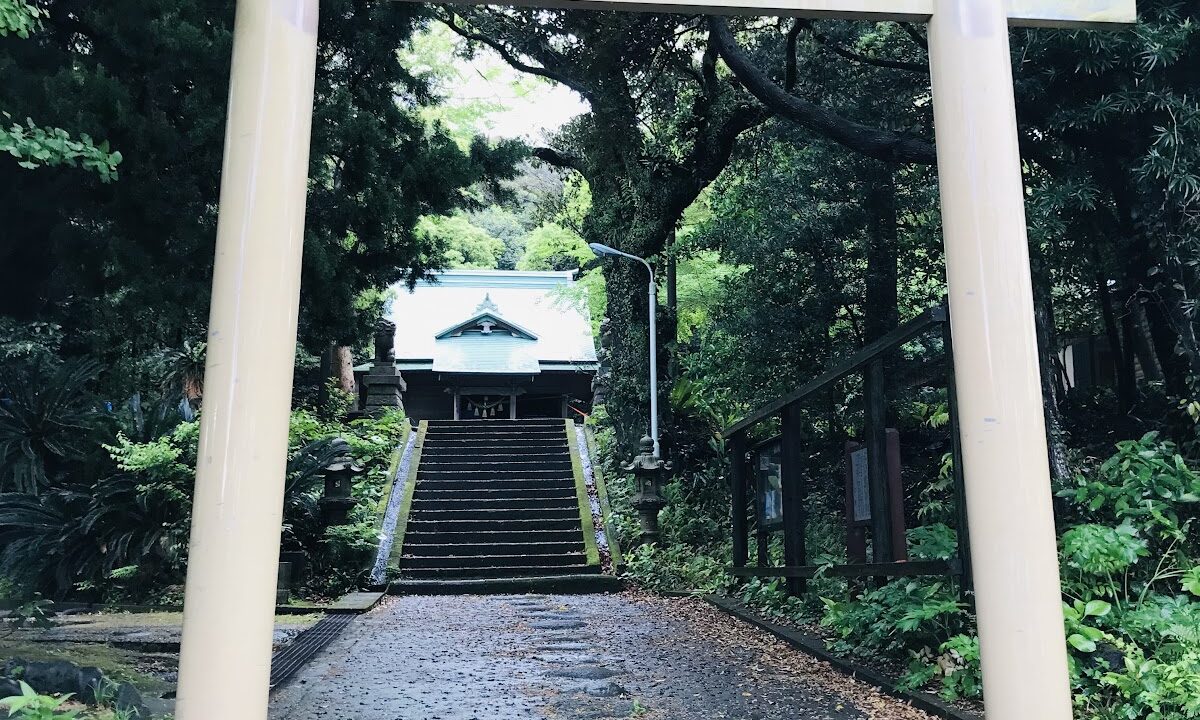
The entrance to the approach to Mikoto Shrine is located in the village of Kamitsuki, slightly off Tokyo Metropolitan Road 212 (Miyake Island Ring Road). A cream-colored torii gate marks the entrance, and from there the mountain path begins.
The approach leads through the narrow streets of Kamitsuki and into the mountains, offering a tranquil atmosphere surrounded by the island’s nature. Walking along the approach gives you the feeling of stepping into a sacred space, far removed from everyday life.
Ruins of the Island Government Office and the Juniper Tree
Along the approach is the historically significant ruins of the Island Government Office. The remains of the former administrative center of Miyake Island are a valuable historical site demonstrating the deep connection between Mikoto Shrine and the island’s politics and administration.
Furthermore, along the approach is a giant juniper tree of natural monument quality. The juniper tree is a representative tree of the Izu Islands’ vegetation, and these ancient trees, having stood for centuries, can be considered living witnesses to the long history of the shrine. Estimated to be several hundred years old, these junipers leave a profound impression on visitors.
Layout and Atmosphere of the Shrine Grounds
The grounds of Mikotsu Shrine face north, along Tokyo Metropolitan Road 212. Located on two mountains (Nieyama, Kubiyama, and Atamayama) in the Kanzaki district of northern Miyakejima, the shrine grounds form a sacred space in harmony with the island’s natural environment.
Besides the main hall and worship hall, numerous smaller shrines and combined shrines are scattered throughout the grounds, allowing visitors to experience the diversity and layered nature of Miyakejima’s faith. The tranquil grounds offer a place of prayer, far removed from the hustle and bustle of the island, providing solace to visitors.
Access and Visiting Information
Basic Information
- Address: 100-1101 Kamitsuki, Miyake Village, Miyakejima, Tokyo
- Telephone: Information can be confirmed through the Miyakejima Tourism Association, etc.
- Shrine Rank: Former Village Shrine, Shikinaisha (Shrine listed in the Engishiki) candidate
- Annual Festival: October 10th
Access to Miyakejima
Miyakejima can be accessed from Tokyo using the following methods:
Ship:
- Tokai Kisen’s large passenger ship departs from Takeshiba Pier (overnight service, approximately 6 hours 30 minutes).
- Arrives at Miike Port or Sabigahama Port.
Aircraft:
- Shin Chuo Aviation’s small aircraft operates from Chofu Airport (approximately 50 minutes).
- Arrives at Miyakejima Airport.
Access to Mikoto Shrine
From Miike Port to Mikoto Shrine, it’s approximately 8.5 km north along Tokyo Metropolitan Road 212 (Miyake Island Loop Road), about a 15-minute drive.
Nearest Bus Stop:
- Approximately 1 minute walk from Kamitsuki Bus Stop
- Miyake Village buses circulate around the island, and Kamitsuki Bus Stop is one of the main stops.
Rental cars, rental bicycles, and taxis are available on the island. Since walking around the island involves considerable distance, it is recommended to secure some form of transportation.
Points to Note When Visiting the Shrine
- The shrine grounds are located on a mountainside surrounded by lush nature, so we recommend wearing comfortable shoes.
- Miyakejima is a volcanic island, and ferry and air services may be canceled due to weather conditions. Please allow ample time in your travel itinerary.
- We recommend checking the schedule of religious ceremonies and festivals in advance with the Miyakejima Tourism Association or other relevant organizations.
- Accommodation is limited on the island, so advance reservations are necessary.
History of Miyakejima and Mikoto Shrine
Beliefs of the Izu Islands and Miyakejima
The Izu Islands have cultivated their own unique beliefs and culture since ancient times. The Mishima faith, centered on Kotoshironushi-no-Mikoto, is widespread throughout the Izu Islands, and each island has a shrine dedicated to Kotoshironushi-no-Mikoto and his consort.
Sakitamahime-no-Mikoto, enshrined at Mikoto Shrine, is one of the three consorts of the Mishima deities and has played a role as the guardian deity of Miyakejima. This belief is deeply intertwined with the islanders’ identity and is an essential element in understanding the island’s history.
Miyakejima as a Volcanic Island and Shrines
Miyakejima is a volcanic island centered around the active volcano, Mt. Oyama. Historically, it has experienced numerous eruptions, most recently in 2000, which forced all islanders to evacuate the island for approximately four and a half years.
The history of the 1874 eruption, which completely destroyed the former shrine site in Togo, demonstrates that for islanders living on a volcanic island, shrines were not merely objects of worship but also a spiritual pillar in facing natural disasters.
Mikoto Shrine has continued to function as a spiritual anchor for the islanders amidst this harsh natural environment.
Nearby Attractions and Tourist Spots
The Charm of the Kamitsuki District
The Kamitsuki district, where Mikoto Shrine is located, is one of Miyakejima’s main settlements. Its charm lies in its historical remains, such as the site of the island’s government office, and the atmosphere of a settlement where one can experience traditional island life.
The Kamitsuki area has shops and restaurants, offering a glimpse into daily life on Miyakejima Island. You can enjoy dishes made with local ingredients and unique island specialties.
Nature and Tourism of Miyakejima Island
Besides the Mikoshi Shrine, Miyakejima Island has many other attractions.
- Mt. Oyama: An active volcano with an elevation of 775m, offering spectacular views of the Izu Islands from its summit.
- Oji Pond: A crater lake known as a popular birdwatching spot.
- Izu Cape: A scenic spot located at the southern tip of the island.
- Mt. Sanshichi: Famous for its natural camellia habitat.
- Coastline: Numerous diving and snorkeling spots.
Miyakejima Island is also known as a treasure trove of wild birds, and is particularly popular among birdwatchers as a place to observe endemic and rare species such as the Japanese Robin.
Miyakejima’s Culture and the Role of Mikoto Shrine
Preservation of the Island’s Traditional Culture
Mikoto Shrine is an important center for preserving Miyakejima’s traditional culture. The Shinto rituals, designated as a Tokyo Metropolitan Government Intangible Folk Cultural Property, provide a valuable opportunity to pass on the island’s history and culture to future generations.
Various records and traditions passed down at the shrine, including the “Miyakeki” compiled by the Mibu family, are indispensable resources for the study of Miyakejima’s history.
A Spiritual Sanctuary for Islanders
In the unique environment of a remote island, Mikoto Shrine has played a vital role as a spiritual sanctuary for the islanders. Festivals such as the annual grand festival and the Gozu Tenno Festival are occasions where islanders gather together and reaffirm their community bonds.
In Miyakejima, which has been repeatedly struck by natural disasters such as volcanic eruptions and typhoons, the shrine has provided spiritual support to the islanders and served as a source of strength to overcome difficulties.
Etiquette for Visiting Shrines and Goshuin (Shrine Seals)
Etiquette for Visiting Shrines
When visiting Mishaku Shrine, please follow the general etiquette for visiting shrines.
- Bow before passing through the torii gate.
- Avoid walking in the center of the approach to the shrine.
- Purify yourself at the water basin (if available).
- Bow twice, clap twice, and bow once in front of the main hall.
- Bow once again after passing through the torii gate on your way out.
As this is a shrine on an isolated island, there may not always be a resident priest. When visiting, please offer your prayers quietly and be mindful of maintaining the cleanliness of the shrine grounds.
About Goshuin (Shrine Seals)
Regarding Goshuin at Mishaku Shrine, it is recommended to check information through the Mibu family (the priests) or the Miyakejima Tourism Association. Due to the nature of being an isolated island, they may not always be able to provide service, so prior confirmation is important.
Summary: The Charm of Mikoto Shrine
Mikoto Shrine is a shrine steeped in history and tradition, located on Miyakejima Island in Tokyo. As a candidate for the Engishiki-listed shrine, it boasts a long history dating back to before the Heian period and has long been an important shrine serving as the guardian deity of Miyakejima, attracting the faith of the islanders.
With Sakitamahime-no-Mikoto as its principal deity, its deep connection to the mythology of the Izu Islands, the presence of the Mibu family who have served as priests for generations, its rituals designated as a Tokyo Metropolitan Government Intangible Folk Cultural Property, and traditional events such as the Gozu Tenno Festival all contribute to the multifaceted charm of Mikoto Shrine.
Having stood in its current location for over 500 years amidst the harsh natural environment of Miyakejima, a volcanic island, Mikoto Shrine can be said to be the very history of the island. Located on an island in the Pacific Ocean, 180km from Tokyo, visiting the shrine requires time and effort, but it is precisely for this reason that it offers visitors a deeply moving and special experience.
When you visit Miyakejima, be sure to pay your respects at Mikoto Shrine and experience the island’s history, culture, and the faith of its inhabitants. The quiet grounds, far removed from the hustle and bustle of the city, will provide an unforgettable memory as you reflect on the myths and history of the Izu Islands.