Joganji Temple Complete Guide: History and Access Information for the Soto Zen Temple Associated with the Nakano Chōja
Joganji Temple is a Soto Zen temple located in Honcho 2-chome, Nakano-ku, Tokyo. Its mountain name is Tahozan, and it is a historical temple founded approximately 600 years ago by Suzuki Kuro, known as the Nakano Chōja, and has long been a center of local faith. This article provides comprehensive information you should know before visiting, including the detailed history of Joganji Temple, its points of interest within the temple grounds, and access methods.
Overview of Joganji Temple
Joganji Temple is a Zen Buddhist temple belonging to the Soto sect, and its official name is Tahozan Joganji. Its principal image is the Holy Kannon Bodhisattva, and it has long been a place of worship associated with Kannon. While currently located in Honcho, Nakano-ku, it was originally situated within the grounds of the Twelve Shrines of Nishi-Shinjuku (now Nishi-Shinjuku Kumano Shrine).
One of the temple’s distinguishing features is its deep connection to the “Nakano Chōja Legend” of its founder, Suzuki Kuro. As a valuable historical site that conveys the legacy of Suzuki Kuro, who contributed to the development of the region, it is an indispensable part of understanding the history of Nakano Ward.
Mountain Name and Principal Image
Mountain Name: Tahōzan
Sect: Sōtō Zen
Principal Image: Holy Kannon Bodhisattva
Founder: Shōoku Sōnō Zenji
Founder: Suzuki Kuro (Nakano Chōja)
History of Jōganji Temple
Circumstances of Founding and Nakano Chōja/Suzuki Kuro
The history of Jōganji Temple dates back approximately 600 years to Eikyō 10 (1438). Suzuki Kuro, the founder, was a man who built his family through diligent effort, particularly succeeding in horse breeding and sales, accumulating immense wealth. Due to Suzuki Kuro’s success, many people gathered in this area, drawn by his admiration, and Nakano Hongō, a vibrant central village, was formed. Suzuki Kuro, known as the “Nakano Chōja” (wealthy man of Nakano) for his wealth and influence, is known as a figure who greatly contributed to the development of the local community.
Background of Founding
Suzuki Kuro, who became the Nakano Chōja, had a beloved daughter who died young. To commemorate his daughter and to uphold his family’s ancestral faith, he decided to become a Buddhist monk, shaving his head. He received teachings from Zen Master Sōnobu Shunya, the 5th abbot of Saijōji Temple in Odawara, and founded Jōganji Temple in 1431 (Eikyō 10) on the grounds of the Jūnisha (Kumano Gongen) shrine in Nishi-Shinjuku.
Initially, it was also called “Shōkanji,” but it is said that the name “Jōganji” (meaning “fulfillment of wishes”) became established, reflecting his deep faith in Kannon (the Goddess of Mercy) and the meaning of a temple that grants wishes.
History of Relocation
Jōganji Temple has experienced several relocations since its founding. Initially established within the grounds of the Twelve Shrines of Nishi-Shinjuku (present-day Nishi-Shinjuku Kumano Shrine), it was relocated to its current location in Honcho 2-chome, Nakano Ward, due to urban development and regional changes during the Edo period.
This relocation is a significant historical event, reflecting the expansion of Edo and the development of the Nakano area. Even after the relocation, it continued to attract fervent devotion from local residents as a temple associated with the wealthy Nakano family.
Development since the Edo Period
Throughout the Edo period, Joganji Temple, as a Soto Zen temple, increased its number of parishioners and developed as a center of local faith. As a Zen temple, it held Zen meditation sessions and memorial services, and welcomed many worshippers as a center of Kannon worship.
Despite the impact of the anti-Buddhist movement of the Meiji era, it maintained its strong ties with the local community, preserving its religious traditions to this day.
Highlights and Facilities on the Temple Grounds
Main Hall
The main hall of Joganji Temple houses the principal image, the Holy Kannon Bodhisattva. Kannon, the Bodhisattva of Compassion, is revered as a Buddha who listens to the wishes of visitors. The main hall has a tranquil atmosphere, exuding a simple yet solemn ambiance characteristic of Zen temples.
Historical Sites Related to Nakano Chōja
Within the temple grounds, there are historical sites related to Nakano Chōja, Suzuki Kuro. The tomb and memorial tower of Suzuki Kuro, the temple’s founder, are valuable cultural assets that convey the history of Nakano from approximately 600 years ago.
Furthermore, due to the history of Suzuki Kuro’s construction in memory of his daughter, many visitors come to pray for child-rearing and family peace.
Relationship with Kumano Gongen
Suzuki Kuro is also known for inviting Kumano Gongen from his ancestral land. The deep relationship between Jōganji Temple and Nishi-Shinjuku Kumano Shrine (formerly the Twelve Shrines) is an important element in telling the history of faith in the Nakano area.
Temple Grounds and Environment
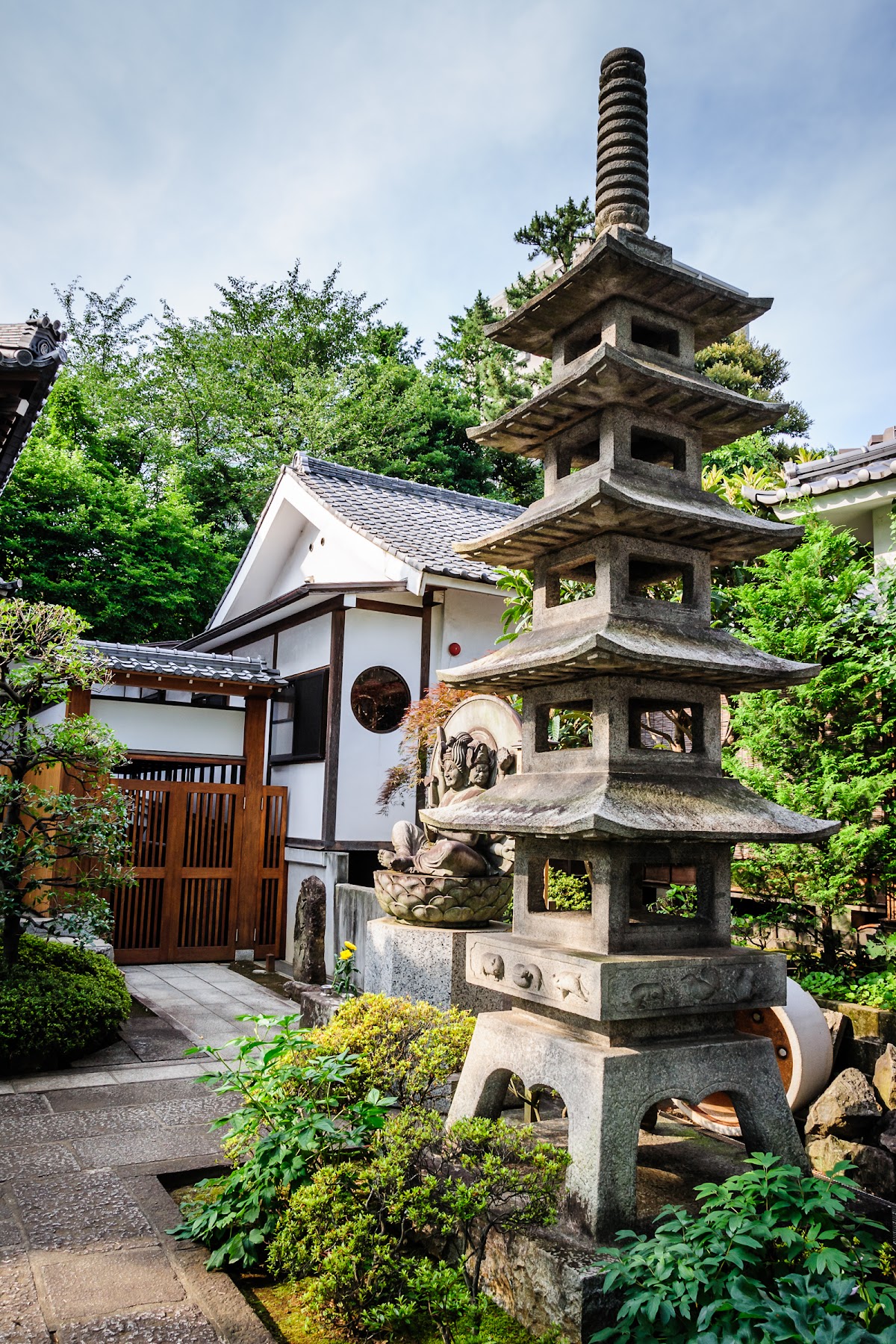
Despite being located in the heart of the city, the temple grounds are enveloped in a tranquil atmosphere. The well-maintained gardens and trees offer peace of mind to visitors. Especially during the seasons when seasonal flowers are in bloom, visitors can enjoy beautiful scenery.
Annual Events and Memorial Services
As a Soto Zen temple, Joganji holds various memorial services and events throughout the year.
Main Annual Events
- New Year’s Day: Shushō-e (New Year’s Ceremony)
- Spring Equinox: Higan-e Memorial Service
- Obon: Urabon-e (Obon Festival)
- Autumn Equinox: Higan-e Memorial Service
- Year-End: New Year’s Eve Bell Ringing
These events are open not only to temple parishioners but also to the general public. The New Year’s Eve bell ringing, in particular, is a beloved local tradition.
Zen Meditation Sessions
As a Soto Zen temple, regular Zen meditation sessions are held. These sessions, open to beginners, are popular as a valuable opportunity to escape the stresses of modern society and calm the mind. Please contact the temple directly for information on dates and times.
Access Information
Location
Address: 2-chome, Honcho, Nakano-ku, Tokyo
Access by Train
It is convenient to access Joganji Temple using public transportation.
Nearest Stations:
- Tokyo Metro Marunouchi Line “Shin-Nakano Station”: Approximately 8 minutes on foot
- Toei Oedo Line “Nakano-Sakaue Station”: Approximately 10 minutes on foot
- JR Chuo Line/Sobu Line “Nakano Station”: Approximately 15 minutes on foot or by bus
Access from Shin-Nakano Station is the most convenient. Exit the station and head towards Ome-kaido. After passing through the residential area, you will arrive at Joganji Temple.
Access by Bus
If you are taking a bus from JR Nakano Station, get off at the “Honmachi 2-chome” bus stop (Kanto Bus or Keio Bus) and walk for about 3 minutes.
Access by Car
If you are coming by car, take the Metropolitan Expressway and the nearest exits are “Nakano Chojabashi Exit” or “Shinjuku Exit.” However, parking for visitors within the temple grounds may be limited, so it is recommended to check in advance. There are also coin-operated parking lots nearby.
Nearby Tourist Attractions
When visiting Joganji Temple, you can also visit nearby historical sites and tourist attractions.
- Nakano City Historical and Folk Museum: A facility where you can learn about the history of Nakano.
- Tetsugakudo Park: A unique park themed around philosophy.
- Arai Yakushi: A temple known for healing eye diseases.
- Nakano Broadway: A mecca for subculture.
Manners and Precautions for Visiting
Etiquette for Visiting
Joganji Temple is a Soto Zen temple, so please follow the basic manners of visiting Buddhist temples.
- Main Gate: Bow before entering the temple grounds.
- Water Basin: Cleanse your hands and mouth.
- Main Hall: Quietly join your hands in prayer and offer your prayers with sincerity.
- Exit: Bow again when leaving the main gate.
Photography
Photography is generally permitted on the temple grounds, but photography inside the main hall and during religious ceremonies should be refrained from. Also, please be considerate of other visitors.
Visiting Hours
Temple visiting hours are generally during the daytime (approximately 9:00 AM to 5:00 PM), but may change during religious services or events. If you wish to visit with certainty, it is recommended to inquire with the temple in advance.
Joganji Temples Across Japan
The name “Joganji” exists for several temples throughout Japan. Each has a different history and characteristics, so care should be taken to avoid confusion.
Joganji Temple in Kimitsu City, Chiba Prefecture
There is another Joganji Temple in Kimitsu City, known as a local tourist spot. This is also a historical temple that attracts local devotion.
Joganji Temple in Tsu City, Mie Prefecture
The Joganji Temple in Tsu City, Mie Prefecture, is a Tendai Shinsei sect temple, said to have been founded by Shinsei Shonin. It houses a wooden seated Amida Buddha statue, a nationally important cultural property, and is said to have been founded in 1493. This Amida Buddha statue is a valuable cultural asset, believed to be Shinsei Shonin’s personal devotional image and the image he used at the time of his death. ### Joganji Temple in Tsurumi Ward, Yokohama City, Kanagawa Prefecture
In Tsurumi Ward, Yokohama City, there is a Soto Zen Buddhist temple called Iōzan Joganji. This temple also serves as a center of local faith.
Joganji Temple in Odawara City, Kanagawa Prefecture
As you can see, there are temples named Joganji throughout Japan, but the Joganji Temple in Nakano Ward has its own unique history and characteristics as the “Temple of the Nakano Chōja (Wealthy Man).”
The Legend of the Nakano Chōja and Local Culture
The Story of Nakano Chōja, Suzuki Kuro
The story of Nakano Chōja, Suzuki Kuro, holds an important place in the history of Nakano Ward. His life, in which he amassed wealth through diligent effort from humble beginnings and contributed to the development of the local community, has been passed down as a tale of success and advancement.
Suzuki Kuro, who achieved success in horse breeding and sales, not only pursued personal wealth but also dedicated himself to building the spiritual foundation of the community, such as the enshrinement of Kumano Gongen and the founding of Joganji Temple.
Memorial Service for His Daughter and Devotion to Kannon
The direct trigger for Suzuki Kuro’s entry into the Buddhist priesthood was the untimely death of his beloved daughter. His story of transforming his grief over the loss of his daughter into devotion to Buddhism, and founding Joganji Temple to pray for the repose and salvation of many people, is recounted as a moving episode where parental love and Buddhist compassion intertwine.
Because of this history, Joganji Temple is a temple visited by many worshippers, especially those praying for child-rearing and the peace and well-being of their families.
Origin of the Place Name Nakano
The place name Nakano itself is said to have been derived from the fact that this area is located “in the middle of Musashino.” Historically, the village of Nakano Hongo was formed through Suzuki Kuro’s activities, which became the foundation of the present-day Nakano Ward.
Joganji Temple and the Soto Zen School
What is the Soto Zen School?
The Soto Zen School is a branch of Japanese Zen Buddhism, a Buddhist sect founded by Zen Master Dogen. The teachings are based on “Shikantaza,” or simply “sitting in meditation,” emphasizing that daily life itself is a form of spiritual practice.
Relationship with Daiyuzan Saijoji Temple
The founder of Joganji Temple, Zen Master Shunya Sōnō, was the 5th head priest of Daiyuzan Saijoji Temple in Odawara. Saijoji Temple is known as a prestigious temple of the Sōtō Zen sect and is also famous for its Tengu (mythical creature) worship. Joganji Temple, as a temple that inherited the lineage of Saijoji Temple, has transmitted the teachings of the Sōtō Zen sect.
The legend that Suzuki Kurō became a monk after receiving teachings from Zen Master Shunya Sōnō demonstrates the deep connection between Joganji Temple and Saijoji Temple.
Practice of Zen
At Joganji Temple, as a Sōtō Zen temple, training is centered on seated meditation. Through seated meditation sessions for parishioners and general participants, the temple continues its activities to transmit the teachings of Zen to the modern age.
Cultural Properties and Historical Value
Temple Treasures and Cultural Properties
Joganji Temple houses temple treasures that have been passed down through approximately 600 years of history. Materials related to the temple’s founder, Suzuki Kuro, as well as Buddhist implements and ancient documents preserved by successive chief priests, are invaluable historical resources for studying the history of Nakano Ward.
Position in Nakano Ward’s History
Joganji Temple is an indispensable presence when discussing the history of Nakano Ward. As the setting for the Nakano Chōja legend and a temple that played a central role in the formation of the Nakano Hongō village, it serves as an important base for local history research.
The Nakano Ward Museum of History and Folklore also features exhibits and materials related to Joganji Temple and Suzuki Kuro, playing an important role in local history education.
The Role of Joganji Temple in Modern Times
Center of the Local Community
Even in modern times, Joganji Temple functions as the center of the community in the Honmachi area of Nakano Ward. Through memorial services and annual events, parishioners and local residents gather, creating a space for the preservation of traditional culture and the deepening of community ties.
A Healing Space in the City
Located in the heart of Tokyo, Joganji Temple offers a tranquil and healing space within its grounds. It’s a place to escape the hustle and bustle of daily life and find peace of mind; people other than parishioners are also welcome to visit.
Dissemination of Buddhist Culture
Through Zen meditation sessions and Dharma talks, the temple continues its activities to convey Buddhist teachings to people living in modern society. In particular, the practice of Zen is attracting attention as an effective way for modern people living in a stressful society to achieve inner peace.
Summary
Joganji Temple is a Soto Zen temple founded approximately 600 years ago by Nakano Chōja Suzuki Kuro, and is located in Honcho, Nakano Ward, Tokyo. Its mountain name is Tahōzan, and it has a long history as a temple associated with Kannon (the Goddess of Mercy).
The temple’s founder, Suzuki Kuro, was a man who amassed a fortune through horse breeding and sales, earning him the nickname “Nakano Chōja” (the wealthy man of Nakano). He became a monk to pray for the repose of his daughter’s soul, and founded Jōganji Temple after receiving teachings from Zen Master Sōno Sōno of Saijōji Temple in Odawara. This story holds a significant place in the history of Nakano Ward and forms the foundation of its local culture.
Historical sites related to Nakano Chōja remain within the temple grounds, and even today, it remains a center of local faith and a tranquil sanctuary in the city, cherished by many. Conveniently located about an 8-minute walk from Shin-Nakano Station on the Tokyo Metro Marunouchi Line, it’s a precious place where one can quietly worship while experiencing the history of Nakano Ward.
As a Sōtō Zen temple, it also conducts activities such as Zen meditation sessions, playing a role in passing on the teachings of Zen to the modern age. When visiting Nakano Ward, why not pay a visit to this historic Jōganji Temple?