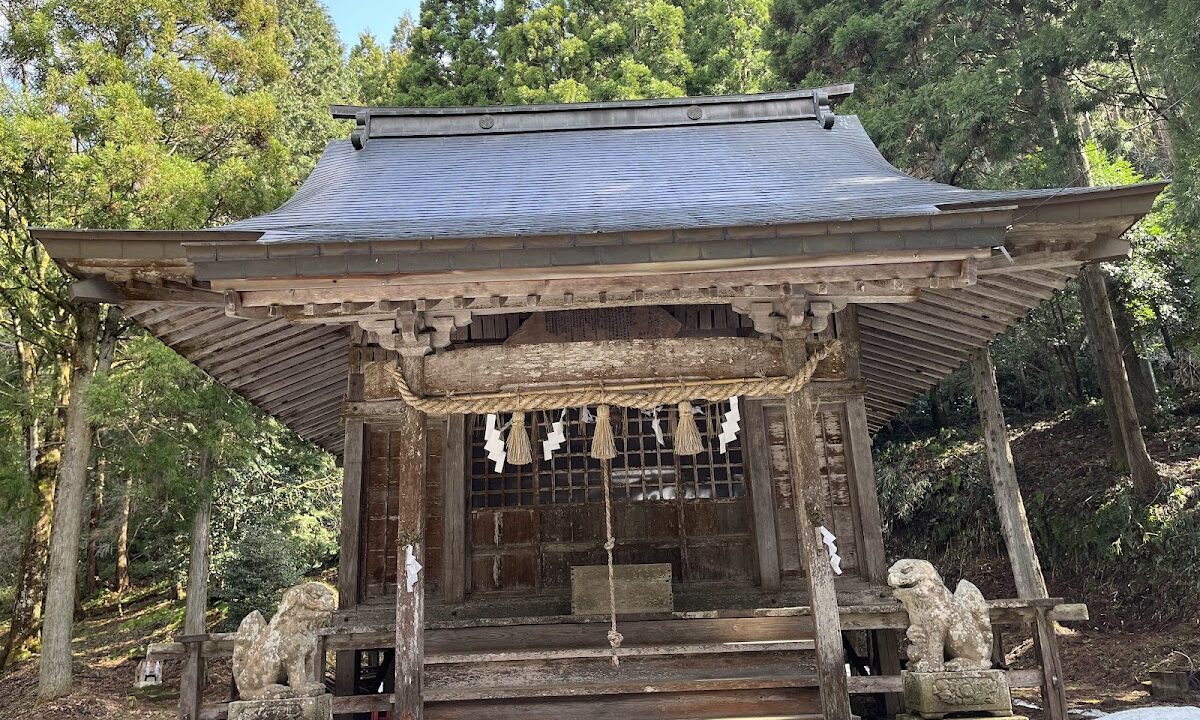
Kitamura Shrine (Kitamura, Kawara-cho, Tottori City, Tottori Prefecture): History and Deities | A Local Shrine Continuously Protected as a Guardian Deity
Kitamura Shrine, located in Kitamura, Kawara-cho, Tottori City, Tottori Prefecture, is a historical shrine that has been revered as the guardian deity of the region for approximately 500 years, since the Muromachi period. Since its founding in 1532, it has attracted the faith of the people as a spiritual pillar of the Kitamura settlement, and during the Edo period, it developed deep ties with the Ikeda family, the lords of the Tottori domain.
This article provides a comprehensive explanation of the detailed history of Kitamura Shrine, the origins of its enshrined deities, the special shrine crest granted by the Ikeda lords, and the role of this community-based shrine.
Basic Information about Kitamura Shrine
Location and Access
Location: Kitamura, Kawara-cho, Tottori City, Tottori Prefecture
The Kitamura area is now part of the administrative district of Kitamura, Kawara-cho, Tottori City, following the merger of the former Kawara-cho with Tottori City on November 1, 2004. According to the resident registry as of December 31, 2007, the Kitamura area is a small settlement with a population of 376 and 117 households. However, Kitamura Shrine is carefully preserved as the spiritual center of this region.
Overview of the Shrine
Kitamura Shrine has long been revered by the local residents as their “Ubusunagami” (guardian deity of the land). Ubusunagami refers to the guardian deity of the land, a god who watches over residents from birth. For generations, the people of Kitamura have visited Kitamura Shrine at significant life events, offering gratitude and prayers to the god.
Deities Enshrined at Kitamura Shrine
Kitamura Shrine enshrines four deities. Each deity has a deep meaning and possesses diverse divine virtues.
Amaterasu Omikami
The supreme deity in Japanese mythology, the goddess personifying the sun. Considered the ancestral deity of the Imperial family, she is enshrined at the Inner Shrine of Ise Grand Shrine. She is believed to bestow divine virtues such as national peace and security, abundant harvests, and good fortune. Her enshrinement as the principal deity at Kitamura Shrine signifies a prayer for the prosperity and peace of the entire region.
Tsukuyomi-no-Mikoto
The god of the moon, considered the younger brother of Amaterasu Omikami. He is revered as the god who governs the night, the calendar, and the tides. For people engaged in agriculture and fishing, the phases of the moon were closely related to their lives, making the worship of Tsukuyomi-no-Mikoto deeply rooted in daily life.
Ukemochi-no-Kami
The goddess who presides over food, and is believed to bestow blessings of abundant harvests and business prosperity. Originally enshrined separately as Inari Daimyojin, a subsidiary shrine within the grounds, she was merged with Kitamura Shrine in 1868 (Meiji 1) as one of its main deities. In the Kitamura area, where agriculture was the primary industry, devotion to Ukemochi-no-Kami was particularly strong.
Seoritsuhime-no-Mikoto
A goddess known as the god of water and purification. She is believed to possess the power to cleanse sins and impurities by washing them away in rivers and the sea. Originally enshrined as Mitaki-Takigami, a subsidiary shrine within the grounds, she was merged with Kitamura Shrine in 1868, similar to Ukemochi-no-Kami. In agricultural areas where water sources and irrigation were crucial, devotion to the water god was essential.
History and Origins of Kitamura Shrine
From Founding to the Edo Period
The official founding of Kitamura Shrine is said to be November of Kyoroku 5 (1532). This period was the late Muromachi period and the beginning of the Sengoku period (Warring States period). From its founding, it was called by the honorific title “Jitsugetsu Daimyojin” and revered Amaterasu Omikami (goddess of the sun) and Tsukuyomi-no-Mikoto (god of the moon) as its principal deities.
The name Jitsugetsu Daimyojin personifies the celestial bodies of the sun and moon, and these deities, who protected the village day and night, were deeply revered by the people of Kitamura.
Connection with the Ikeda Domain Lords
A noteworthy event in the history of Kitamura Shrine occurred in March of Man’en 1 (1860), at the end of the Edo period.
Lord Ikeda Yoshinori, the lord of the Tottori Domain at the time, was promoting land reclamation, and an irrigation project to expand farmland was planned in the Kitamura area. This required digging an irrigation canal (ide) through the grounds of Kitamura Shrine to carry water.
The shrine grounds are a sacred place, and normally, excavating them for construction would be frowned upon. However, because the project was necessary for the development of local agriculture, the shrine decided to cooperate.
Lord Ikeda Yoshinori was deeply grateful for this cooperation and bestowed a special favor upon the shrine: permission to use the Ikeda family crest, the “Swallowtail Butterfly Crest.”
Significance of the Swallowtail Butterfly Crest
The Swallowtail Butterfly Crest is the family crest of the Ikeda family, who descended from the Taira clan, and is a highly prestigious emblem. It is extremely unusual for a shrine to use the family crest of a daimyo (feudal lord), and this was a testament to the special reverence and gratitude from the Ikeda lord.
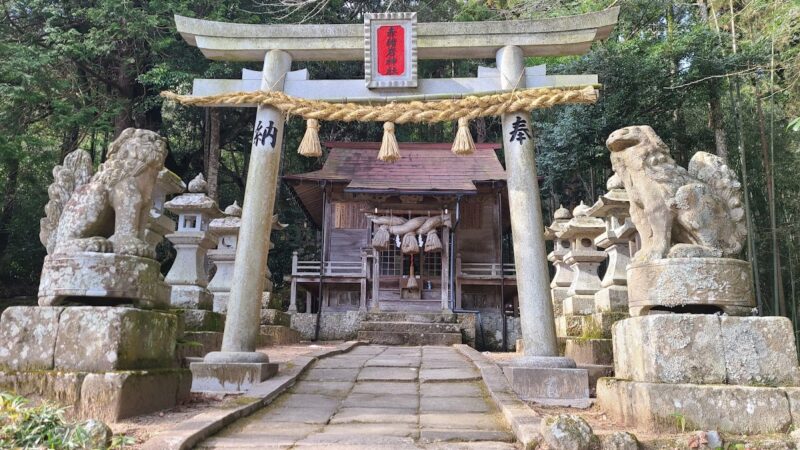
Following this event, the Kitamura Shrine’s crest became the swallowtail butterfly crest, and this emblem is still used today as the shrine’s symbol. The swallowtail butterfly crest can be seen on the worship hall, shrine buildings, and ritual implements, conveying the historical connection with the Ikeda clan lords.
Meiji Era Shrine Reforms
On November 20, 1868 (Meiji 1), as part of the Meiji government’s reforms to the shrine system, Kitamura Shrine underwent significant changes.
Two subsidiary shrines, Inari Daimyojin (enshrining Uke Mochi no Kami) and Mitaki Takigami (enshrining Seoritsuhime no Mikoto), which had previously been enshrined separately within the grounds, were merged into the main shrine, and the shrine’s name was changed from “Nichigetsu Daimyojin” to “Kitamura Shrine.”
This name change incorporated the local name, further clarifying its character as the tutelary deity of the region. Simultaneously, by enshrining four deities, the shrine became a place of diverse divine virtues.
Kitamura Shrine Grounds and Main Hall
Worship Hall and Main Hall
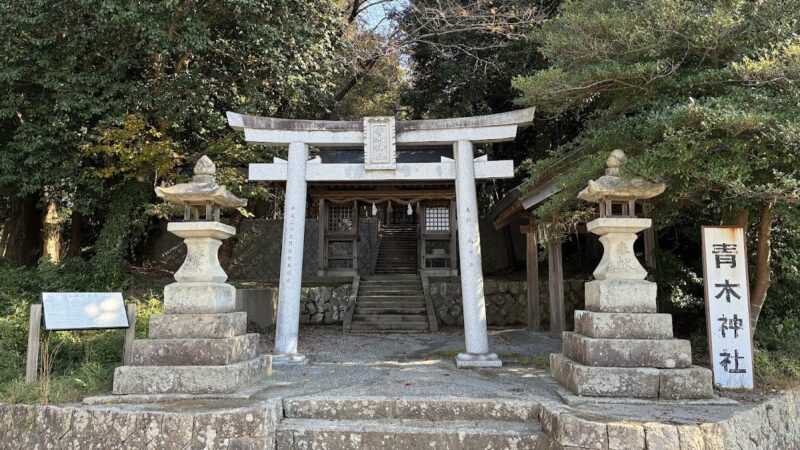
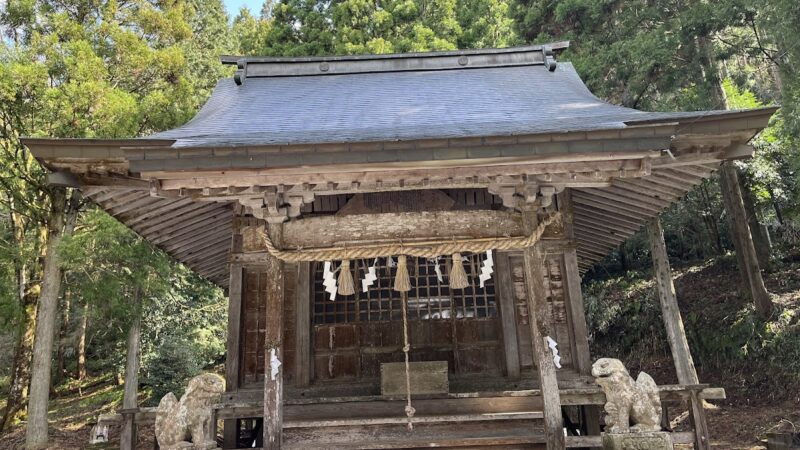
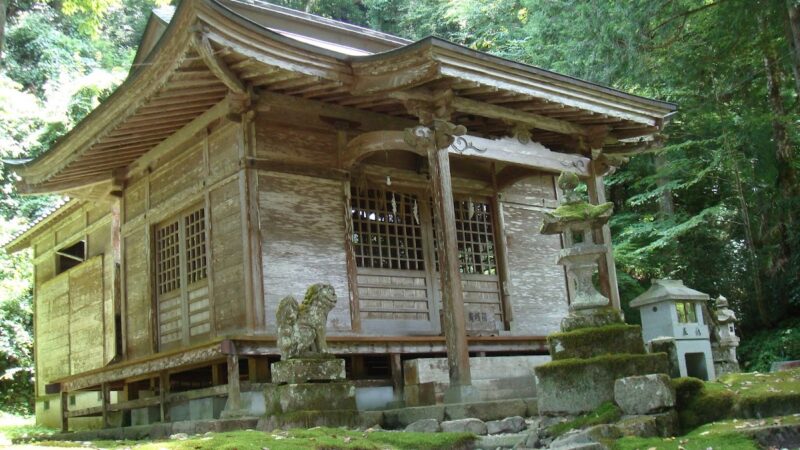
Kitamura Shrine’s grounds are situated amidst a tranquil rural landscape. Passing through the torii gate, the path leads to the worship hall. The worship hall is where worshippers offer their prayers, and beyond it sits the main hall.
The main hall enshrines four deities and remains a cherished place for praying for the peace and prosperity of the region and abundant harvests. The shrine displays the swallowtail butterfly crest of the Ikeda family, conveying a sense of historical significance.
Atmosphere of the Shrine Grounds
Although small, the well-maintained grounds reflect the affection and faith of the local residents towards the shrine. Ancient trees flourish within the grounds, allowing visitors to enjoy the beauty of nature throughout the seasons.
Especially during the fresh greenery of spring and the vibrant autumn foliage, the grounds are beautifully colored, soothing the hearts of visitors.
History and Culture of Kitamura District
The Origins of Kitamura Settlement
Kitamura is a settlement located in the rural area of Inaba Province (present-day eastern Tottori Prefecture). Blessed with abundant water resources from the Chiyogawa River system, agriculture, primarily rice cultivation, has been practiced there since ancient times.
Although the settlement is small in size, the residents have strong ties, and the region retains a rich tradition as a community. Kitamura Shrine has walked hand in hand with the history of this community as a spiritual pillar of it all.
The Heisei Mergers and the Present
On November 1, 2004 (Heisei 16), Kawaramachi merged with Tottori City, and Kitamura became Kitamura, Kawaramachi, Tottori City. While the administrative boundaries changed, the regional identity and faith in the shrine have been passed down unchanged.
Despite facing challenges such as population decline and an aging population, the people of Kitamura cherish their community centered around the shrine and continue their efforts to preserve traditional events and festivals.
Annual Events of Kitamura Shrine
Grand Festival
Kitamura Shrine holds its annual grand festival every autumn. This is the most important festival for the shrine, a traditional event in which all local residents participate.
The rituals express gratitude for a bountiful harvest and pray for the safety of the community. On the day of the festival, the usually quiet shrine grounds become lively, attracting many people of all ages.
Other Festivals
Various Shinto rituals are held throughout the year, including the spring prayer festival and the New Year’s Day festival. These events are important opportunities to deepen community bonds and pass on traditional culture to future generations.
Role as a Local Guardian Deity
Life Rituals and Shrines
Kitamura Shrine, as a local guardian deity, has been deeply involved in the life milestones of local residents.
- First Shrine Visit: A baby’s first visit to the shrine after birth to pray for healthy growth.
- Shichi-Go-San: Celebrating a child’s growth and praying for future health and happiness.
- Exorcism: People in their unlucky years visit the shrine to ward off misfortune.
- Wedding Ceremony: A Shinto wedding ceremony is held to celebrate the couple’s new beginning.
Through these life rituals, Kitamura Shrine continues to be an integral part of the lives of local residents.
Center of the Community
The shrine is not merely a place of worship, but also serves as the center of the local community. Through preparations for festivals and cleaning the shrine grounds, interaction among residents is fostered, strengthening community bonds.
Especially in sparsely populated settlements, activities centered around the shrine are a crucial element in maintaining community unity.
Divine Virtues of Kitamura Shrine
The divine virtues bestowed by the four deities enshrined at Kitamura Shrine are diverse.
Family Safety and Community Peace
Through the divine virtues of Amaterasu Omikami, peace in the home and safety throughout the community are protected. As the guardian deity of one’s birthplace, she protects the land throughout one’s life.
Abundant Harvest and Business Prosperity
Through the divine virtues of Uke-mochi-no-kami, abundant harvests and business prosperity are brought about. In Kitamura, an agricultural area, this divine virtue has been especially important.
Protection from Misfortune and Good Fortune
Through the purifying power of Seoritsuhime-no-Mikoto, sins and impurities are cleansed, and disasters are avoided. Furthermore, through the divine virtues of Tsukuyomi-no-Mikoto, good fortune and improved luck can be expected.
Etiquette and Manners for Worship
Basic Worship Method
The basic etiquette for visiting a shrine is as follows:
- Bow at the Torii Gate: Before entering the shrine grounds, bow at the torii gate.
- Purify at the Water Basin: If there is a water basin, purify your hands and mouth.
- Worship at the Main Hall: Place your offering in the offering box and worship using the two bows, two claps, and one bow ritual.
- Bow Upon Departure: When leaving, turn back to the torii gate and bow.
Mindset When Visiting a Shrine
Visiting a shrine is an act of expressing gratitude and respect to the gods. It is important to worship quietly, using this as an opportunity to express gratitude and reflect on oneself.
Nearby Attractions
History and Culture of Kawaramachi
The Kawaramachi area, to which Kitamura belongs, is dotted with other historical sites and cultural properties. It is a region where you can feel the rich nature nurtured by the clear waters of the Chiyogawa River and the history of Inaba.
Access to Tottori City
Kitamura Shrine is easily accessible from the center of Tottori City, making it possible to visit in conjunction with other tourist attractions such as the Tottori Sand Dunes and Tottori Castle Ruins.
Preservation and Inheritance of Kitamura Shrine
Local Initiatives
Amidst a declining population, the people of Kitamura are dedicated to maintaining the shrine and preserving its traditions. Activities such as passing on traditional ceremonies to younger generations, cleaning the shrine grounds, and repairing the shrine buildings continue to the best of their ability.
Outlook for the Future
As a shrine in a small village, maintenance presents many challenges, but Kitamura Shrine is a valuable cultural asset with a history of nearly 500 years. It is hoped that this history and tradition will be passed down to future generations through the efforts of the local residents.
Significance of Visiting Kitamura Shrine
Kitamura Shrine is not a large-scale tourist shrine, but it is a valuable presence that conveys a simple and sincere form of faith rooted in the community.
The shrine’s history, dating back to the Muromachi period, its special connection with the Ikeda clan lords, and above all, its unwavering devotion to the local community as a tutelary deity, embody the often-lost “connection between local community and faith” in modern times.
Nearly nestled in a quiet rural village, this small shrine offers a landscape that could be considered a quintessential Japanese scene, along with a form of faith that has been passed down through generations. If you have the opportunity to visit Tottori, we highly recommend visiting Kitamura Shrine in Kawaramachi Kitamura to experience the region’s history and the faith of its people.
Summary
Kitamura Shrine (Kawaramachi Kitamura, Tottori City, Tottori Prefecture) is a historic shrine founded in 1532, enshrining four deities: Amaterasu Omikami, Tsukuyomi-no-Mikoto, Uke-mochi-no-Kami, and Seoritsuhime-no-Mikoto.
During the Edo period, it received the special honor of being permitted to use the swallowtail butterfly crest by Lord Ikeda Yoshinori, the lord of the Tottori clan, and in 1868 (Meiji 1), its name was changed to its current name. Despite being located within a small settlement, Kitamura Shrine is deeply rooted in the lives of the local residents as their tutelary deity, and has continued to attract worshippers throughout its nearly 500-year history.
Despite facing the challenge of a declining population, Kitamura Shrine, whose traditions are preserved through the efforts of the local people, can be considered a valuable example of the origins of Japanese community and shrine worship.