Sumiyoshi Shrine (Kitajima, Wakayama City, Wakayama Prefecture) Complete Guide | History, Benefits, and Access Information
Sumiyoshi Shrine, located in Kitajima, Wakayama City, is a historic shrine dedicated to the god of the sea. Since its establishment in Eisho 7 (1510), it has been cherished by local residents as the guardian shrine of the Kitajima area. This article provides a detailed introduction to Sumiyoshi Shrine, including its history, benefits, highlights, and access information.
Basic Information about Sumiyoshi Shrine
Sumiyoshi Shrine is located at 158 Kitajima, Wakayama City, with the postal code 〒640-8403. While there are several Sumiyoshi Shrines in Wakayama City, this one is known as the Sumiyoshi Shrine located in the Kitajima area.
Location and Contact Information
Address: 158 Kitajima, Wakayama City, Wakayama Prefecture 640-8403
Phone Number: 090-3971-5989
Jurisdiction: Wakayama Prefectural Shrine Association
Parishioner Area
Sumiyoshi Shrine serves as the tutelary shrine for the entire Kitajima district, protecting the following areas:
- Kitanocho
- Nishinocho
- Nakanocho
- Minaminocho
- Kitajima Housing Complex
For the residents of these areas, Sumiyoshi Shrine is a central part of their daily lives and a vital part of their faith.
History of Sumiyoshi Shrine
Founding and Enshrinement
The history of Sumiyoshi Shrine dates back to the late Muromachi period. In Eisho 7 (1510), it was invited from Soja Yanomiya and enshrined as the tutelary shrine of the village. This period coincided with the turbulent Sengoku period, and it is believed to have been founded as a place to pray for peace and security in the region and safety at sea. ### Destruction due to War Damage
In July 1945, during the Great Wakayama Air Raid at the end of World War II, the main hall of Sumiyoshi Shrine was destroyed by fire. While much of Wakayama city was engulfed in flames, this shrine was no exception. The loss of the shrine, which had watched over the community for so many years, was a great loss for the local residents.
Post-War Reconstruction and Relocation
After the war, local residents played a central role in the reconstruction of the shrine. Their efforts bore fruit, and on March 26, 1964, a new shrine building was completed and the relocation ceremony was held. It is noteworthy that the shrine was rebuilt in the traditional Sumiyoshi style. Sumiyoshi style is considered one of the oldest shrine architectural styles in Japan and is a highly prestigious style exemplified by Sumiyoshi Taisha in Osaka.
The reconstruction approximately 19 years after the war damage can be seen as a testament to the deep faith of the local residents and their strong will to protect and continue their tutelary deity.
Deities and Benefits
Main Deities: The Three Gods of Suminoe
Sumiyoshi Shrine enshrines the Three Gods of Suminoe as a分神 (bunshin – branch deity) of Sumiyoshi Taisha. The Three Gods of Suminoe refer to the following three deities:
- Sokotsutsu-no-Mikoto
- Nakatsutsu-no-Mikoto
- Uwatsutsu-no-Mikoto
These deities are said to have been born when Izanagi-no-Mikoto performed a purification ritual in the sea upon his return from the underworld, according to the Kojiki and Nihon Shoki.
Worship as a God of the Sea
Sumiyoshi Shrine is widely worshipped as a “god of the sea.” The three deities of Sumie have been revered since ancient times as guardians of safe voyages and maritime safety. Wakayama City is a port town facing the Kii Channel, and is a region deeply connected to the sea. Therefore, it enjoys strong devotion from those involved in fishing and shipping, and visitors come to pray for safety at sea.
Expected Benefits
The main benefits you can expect at Sumiyoshi Shrine are as follows:
- Safe Navigation and Maritime Safety: Safe operation of ships and safety in fishing.
- Traffic Safety: Safe travel, including land transportation.
- Business Prosperity: Prosperity in port trade and commerce.
- Protection from Misfortune and Disaster: Protection from various calamities.
- Improvement in Waka Poetry and Literature: Sumiyoshi-sama is also known as the god of Waka poetry.
- Good Fortune and Happiness: Increased luck and the arrival of happiness.
Highlights of the Shrine Grounds
Distinctive Black Torii Gate
At the entrance to Sumiyoshi Shrine stands a fairly large, dark-colored torii gate. This gate is a distinctive landmark of the shrine, allowing you to identify its location from afar. Black torii gates are relatively rare and leave a lasting impression on visitors.
Sumiyoshi-style Shrine
The Sumiyoshi-style shrine building, adopted during the reconstruction in 1964 (Showa 39), is a major highlight of this shrine. Sumiyoshi-style architecture has the following characteristics:
- A linear and simple structure
- A gable roof
- The main entrance is on the gable end
- One of the oldest shrine architectural styles, alongside Shinmei-style
Despite being a post-war reconstruction, the shrine building faithfully reproduces the traditional style, conveying the beauty of Japanese shrine architecture to the present day.
Sacred Tree: Nagi Tree
The sacred tree of Sumiyoshi Shrine is the Nagi tree. The Nagi tree has been considered sacred since ancient times and is cherished as a sacred tree in many shrines.
The Nagi tree is associated with the following beliefs:
- Leaf veins run only vertically: Because it is difficult to split horizontally, it is considered a symbol of unbreakable bonds, and is associated with matchmaking and marital harmony.
- Related to Nagi (calm): Because it brings calm to the sea, it is considered a guardian for safe voyages.
- Protection from disaster: It is believed to have the power to sever bad relationships and forge good ones.
When visiting the shrine, please pay attention to this sacred tree.
The Charm of the Cozy Precincts
Sumiyoshi Shrine’s grounds are small and have a calm atmosphere. While not a large shrine, it is approachable and you can feel the warmth of a shrine deeply rooted in the community. Located in a residential area, the quiet space with few people is perfect for forgetting the hustle and bustle of the city and finding peace of mind.
The main hall, though very small, is firmly guarded by guardian lion-dogs, maintaining its dignity as a shrine.
Access Methods
Access by Public Transportation
Sumiyoshi Shrine can be accessed by public transportation, but it is a bit of a distance from the nearest station.
Using the JR Kisei Main Line
Approximately 9 minutes on foot from Wakayama City Station
Wakayama City Station is located in the same place as Nankai Electric Railway’s Wakayama City Station and is relatively easy to access. Walk northwest from the station.
Using the Nankai Electric Railway
It is also possible to access the shrine on foot from Wakayama Port Station, but Wakayama City Station is closer.
Using the Bus
Approximately 3 minutes on foot from Route 80 “Shindo” Bus Stop
Approximately 6 minutes on foot (441m) from Kajitori Higashi Bus Stop
If using the bus, these bus stops are the closest. Please check the Wakayama Bus routes in advance.
Access by Car
Caution is required when accessing by car.
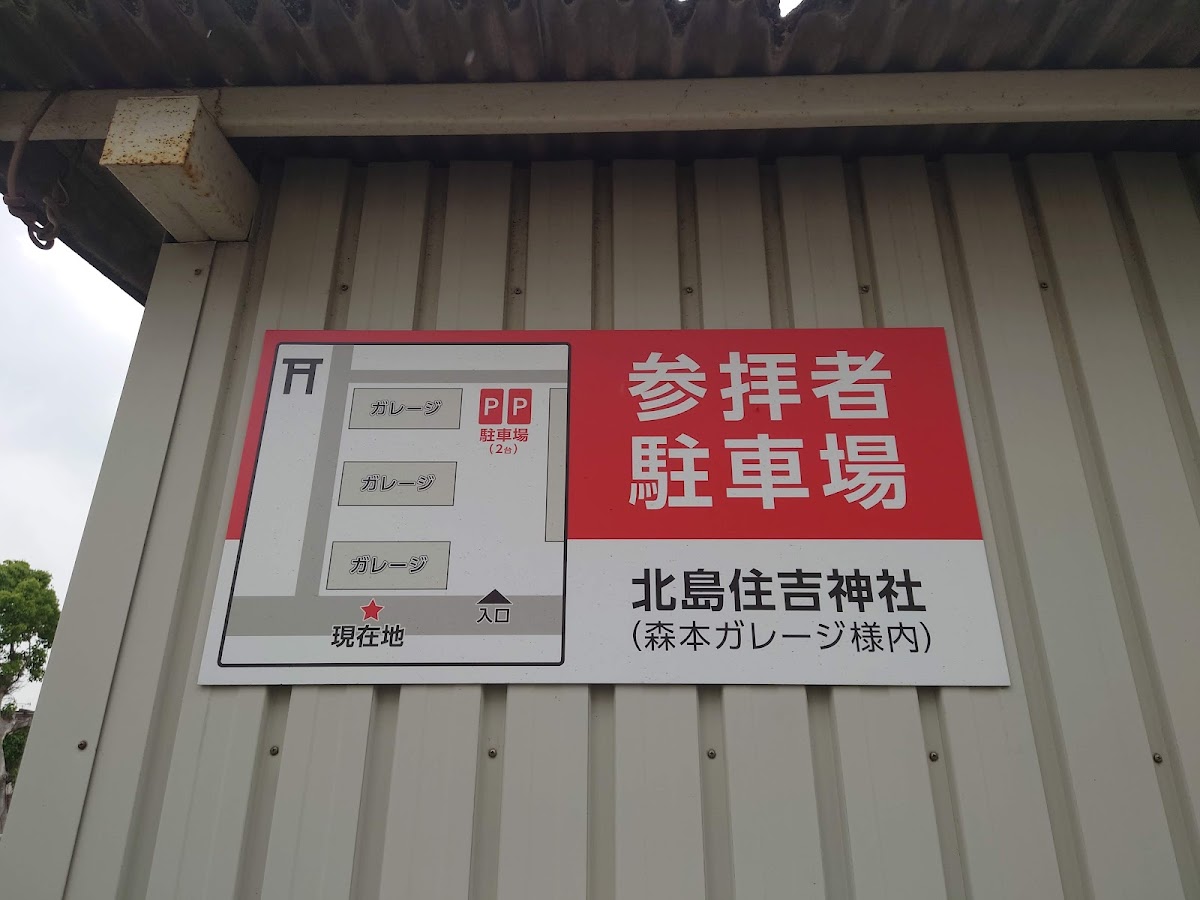
Parking: There is no dedicated parking lot for the shrine.
Road Conditions: The surrounding roads are narrow, so caution is required when driving.
Located in a residential area, many roads are narrow, making it difficult to pass oncoming vehicles in some places. If visiting by car, it is recommended to use nearby coin-operated parking lots and walk to the shrine.
Map and Accurate Location Information
The exact location of Sumiyoshi Shrine is 158 Kitajima, Wakayama City. When searching using a car navigation system or smartphone map app, you can confirm the exact location by entering “Sumiyoshi Shrine Wakayama City Kitajima” or the address directly.
There are several Sumiyoshi Shrines in Wakayama City, so please be careful not to make a mistake. Make sure you are going to the Sumiyoshi Shrine in the Kitajima area.
Nearby Shrines and Temples
There are other shrines and temples worth visiting in the vicinity of Sumiyoshi Shrine.
Hachiman Shrine
Hachiman Shrine, located near Sumiyoshi Shrine, is also a shrine that attracts local worship. Hachiman is known as the god of martial fortune and is believed to bring protection from evil and good luck in competitions.
Inari Shrine
An Inari Shrine, known as the god of business prosperity and abundant harvests, is also nearby. You can enjoy a “shrine pilgrimage” by visiting multiple shrines.
Ikuhime Shrine
One of the historical shrines in Wakayama City, it is revered as the guardian deity of the region.
Visiting these shrines together will make for a more fulfilling shrine pilgrimage experience.
Manners and Etiquette for Visiting a Shrine
Basic Etiquette for Visiting a Shrine
When visiting Sumiyoshi Shrine, please observe the following basic etiquette:
- Bow before passing through the torii gate: This is a courtesy before entering the sacred area.
- Avoid walking in the center of the approach to the shrine: The center is considered the path of the gods.
- Purify yourself at the water basin: Cleanse your hands and mouth to purify your mind and body.
- Two bows, two claps, one bow: This is the basic method of worship before the gods.
Water Basin Etiquette
- Take the ladle with your right hand and purify your left hand.
- Switch the ladle to your left hand and purify your right hand.
- Switch the ladle back to your right hand, receive water in your left hand, and rinse your mouth.
- Purify your left hand again.
- Stand the ladle upright, purify the handle, and return it to its original position.
Mindset During Worship
When visiting a shrine, it is important not only to make wishes but also to express gratitude for everyday blessings. Furthermore, it is believed that quietly and calmly praying deepens one’s dialogue with the gods.
Annual Events and Festivals
Sumiyoshi Shrine, as the local guardian shrine, holds various annual events. For detailed schedules, we recommend contacting the shrine directly or checking the Wakayama Prefectural Shrine Association website.
Main events generally held at Sumiyoshi Shrine:
- Annual Grand Festival: The shrine’s most important festival
- Hatsumode: New Year’s visit
- Setsubun Festival: Prayers for warding off evil and bringing good fortune
- Summer Purification Ceremony: A Shinto ritual to purify oneself of the impurities accumulated over the past six months
- Year-End Purification Ceremony: A Shinto ritual to purify oneself of the impurities accumulated over the past year
The festivals are primarily supported by local residents and also function as a place to deepen the bonds of the local community.
The History of Sumiyoshi Shrine and Wakayama City
Wakayama, a Port Town, and the Faith of the Sea
Wakayama City has flourished since ancient times as a port town facing the Kii Channel. During the Edo period, it developed as a castle town of the Kishu Tokugawa family, and the shipping industry thrived. Against this backdrop, the faith in Sumiyoshi Shrine, dedicated to the god of the sea, was deeply rooted in the lives of the local people.
War Damage and Reconstruction
It is said that approximately 80% of Wakayama City was destroyed in the Great Wakayama Air Raid of July 1945. Sumiyoshi Shrine was also destroyed in this bombing, but its reconstruction during the post-war reconstruction period through the efforts of local residents speaks to the strong bond between the shrine and the community.
The current Sumiyoshi Shrine is an important presence that conveys the history of the region, serving as a symbol of reconstruction from war damage.
Visitor Voices and Reputation
A Quiet and Peaceful Space
Visitors often comment that it is “a peaceful space with very few people, located in a residential area.” The appeal lies in the peaceful environment for worship, away from the hustle and bustle of the city.
Distinctive Torii Gate and Sacred Tree
Many visitors comment on the distinctive features, such as the “quite large, dark torii gate” and the “impressive Nagi tree,” suggesting that the unique elements of the shrine grounds leave a lasting impression.
Access Notes
On the other hand, some visitors have noted that “the nearby roads are narrow, there is no parking,” and “it’s quite far from the nearest station.” When planning your visit, it’s recommended to consider these points when choosing your mode of transportation.
How to Enjoy Visiting Sumiyoshi Shrine
Collecting Goshuin (Shrine Stamps)
Collecting goshuin is one of the joys of visiting shrines. While it’s possible to receive a goshuin at Sumiyoshi Shrine, it’s recommended to check in advance, as there may not always be a resident priest.
Photography
There are many photo opportunities, including the distinctive black torii gate, the Sumiyoshi-style shrine buildings, and the sacred Nagi tree. However, please be sure to observe proper etiquette when taking photos, so as not to disturb other worshippers and to remember that this is a sacred place.
Seasonal Expressions
The shrine grounds show different expressions with each season—the fresh green of spring, the deep green of summer, the autumn foliage, and the tranquility of winter—offering new discoveries with every visit.
Differences from Other Sumiyoshi Shrines in Wakayama City
There are several Sumiyoshi Shrines in Wakayama City:
- Kitajima Sumiyoshi Shrine (Featured in this article)
- Sumiyoshi Shrine near Kinokawa Station
- Mototeramachi Sumiyoshi Shrine
- Suiken Sumiyoshi Shrine
Each has its own unique history and characteristics, and all enshrine a divided spirit from Sumiyoshi Taisha. Kitajima Sumiyoshi Shrine is characterized by its history of reconstruction after war damage, its Sumiyoshi-style shrine building, and its sacred Nagi tree.
Summary: The Charm of Sumiyoshi Shrine
Sumiyoshi Shrine in Kitajima, Wakayama City, is a historic shrine that has watched over the region for over 500 years since its founding in Eisho 7 (1510). Its resilience, having overcome the hardship of being destroyed by war and rebuilt through the efforts of local residents, speaks volumes about the strong bond between the shrine and the community.
Dedicated to the three gods of the sea, Sumiyoshi Shrine is known for its blessings of safe voyages and maritime safety, and is a valuable presence that conveys the history and culture of the port town of Wakayama. It boasts many points of interest, including its Sumiyoshi-style shrine buildings, distinctive black torii gate, and sacred Nagi tree.
The compact grounds offer a perfect space for quiet and peaceful worship. When visiting Wakayama City, be sure to visit this historic Sumiyoshi Shrine. You will feel the warmth unique to a shrine deeply rooted in the community and the powerful protection of the sea gods.
We recommend using public transportation to access the shrine, but please be aware of the road conditions in the area. Checking the exact location on a map beforehand and planning your visit with plenty of time to spare will ensure a more fulfilling shrine visit experience.