What is Danjo Garan?
Danjo Garan is one of the two major sacred sites of Mount Koya, and the central religious complex that Kobo Daishi Kukai first developed when he founded Mount Koya. “Garan” means a pure place where monks practice, and 19 halls and pagodas are arranged on a flat area at an altitude of approximately 900 meters.
Surrounded by tall cedar groves, this sacred area has attracted worshippers for over 1200 years as the fundamental training ground for Shingon Esoteric Buddhism, and in 2004 it was registered as a UNESCO World Heritage Site as part of the “Sacred Sites and Pilgrimage Routes in the Kii Mountain Range.”
Major Buildings and Points of Interest for Worship
Konpon Daito (Great Pagoda)
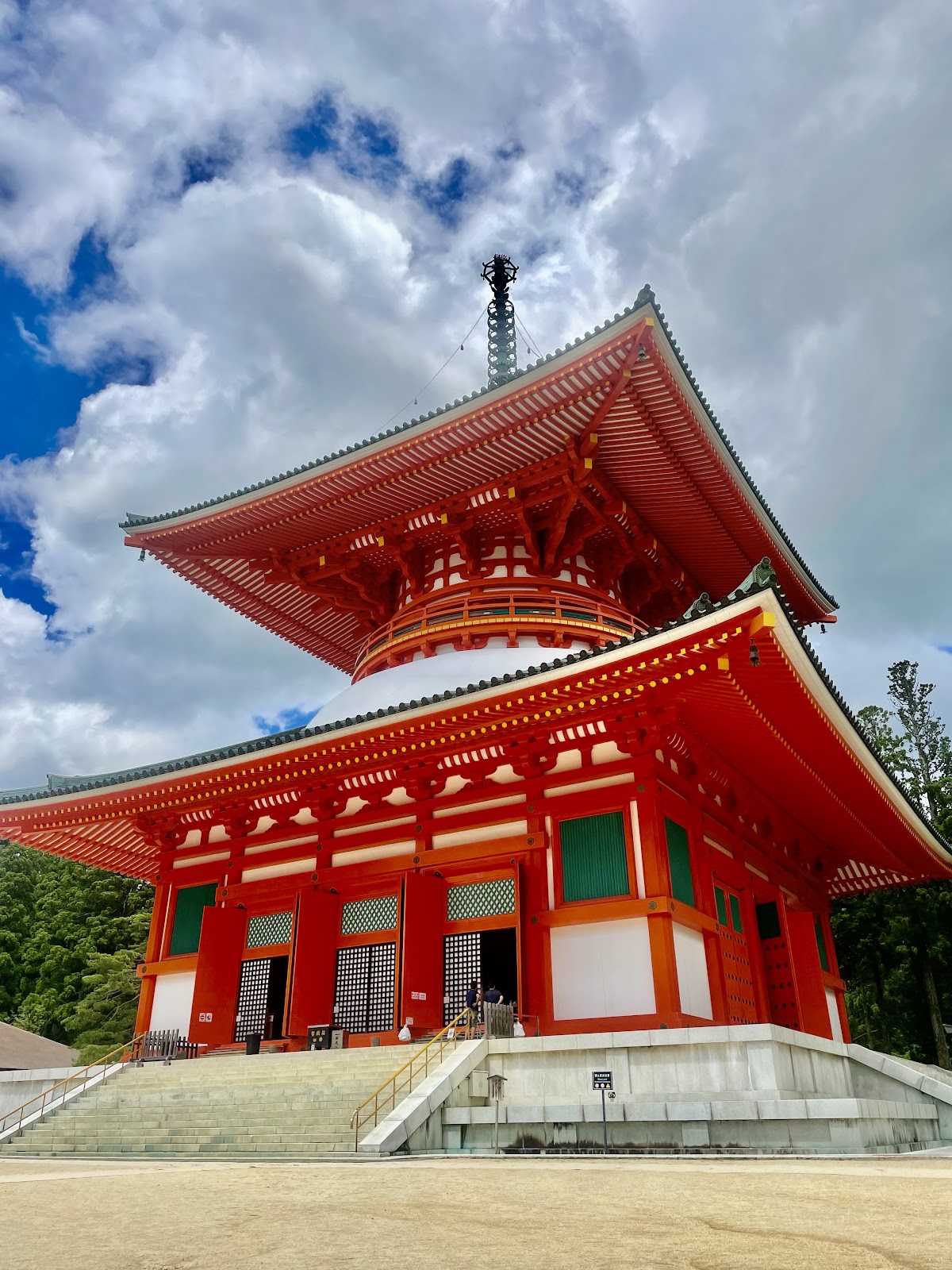
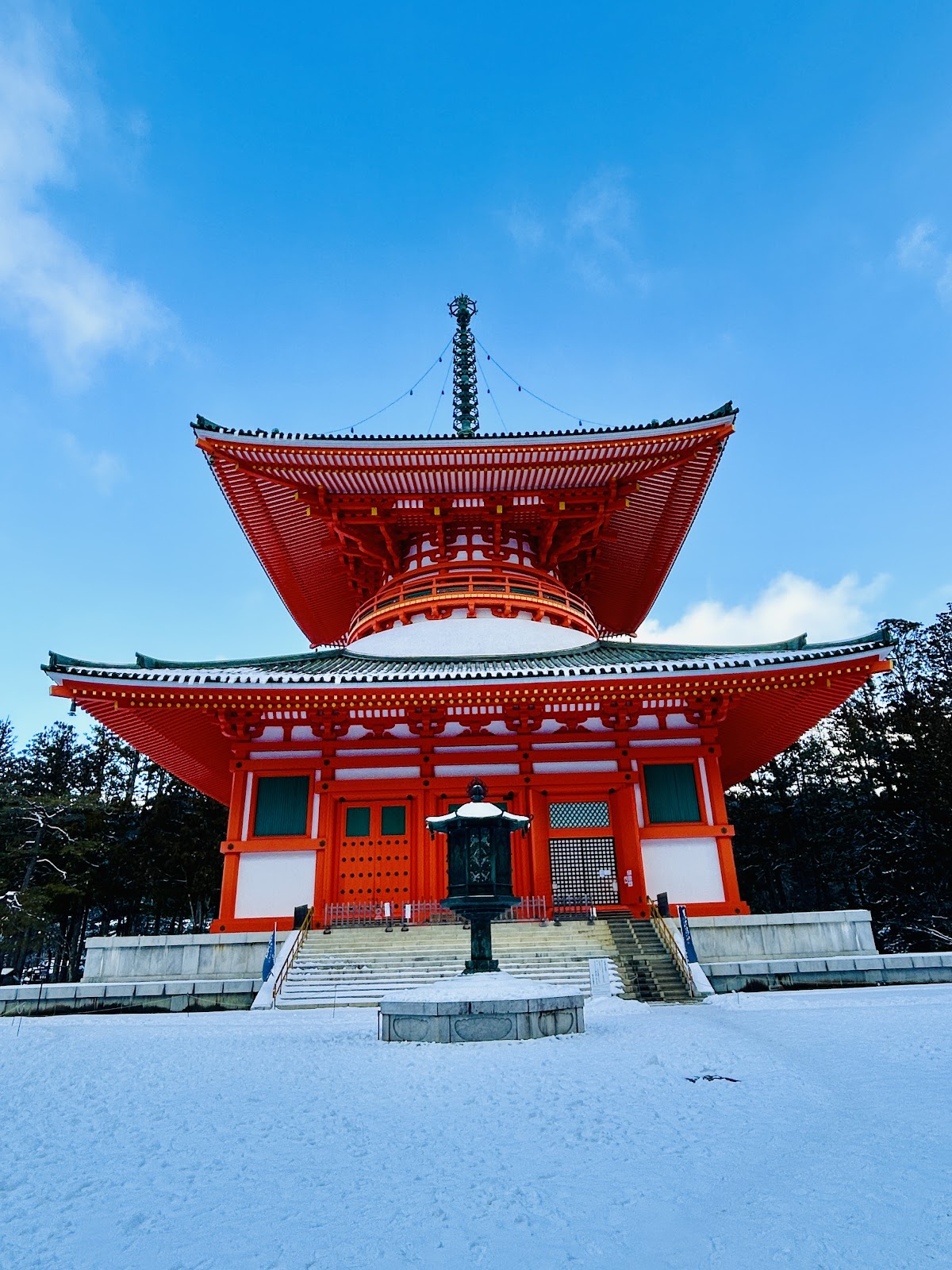
This vermilion-lacquered pagoda, 48.5 meters tall, is the symbol of Danjo Garan. It is the fundamental training ground for Shingon Esoteric Buddhism, conceived by Kobo Daishi and completed by his disciples. Inside, the Dainichi Nyorai of the Womb Realm is enshrined at the center, surrounded by the four Buddhas of the Diamond Realm (Akshobhya, Ratnasambhava, Amitabha, and Amoghasiddhi), representing the world of a three-dimensional mandala.
Points to Note for Visitors: Interior viewing is possible (fee required). The mandala paintings on the pillars and walls are breathtaking, allowing you to experience the cosmology of Shingon Esoteric Buddhism.
Kondo (Main Hall)
This building serves as the main hall for the entire Koyasan area, where important religious services and ceremonies are held. The current building is the seventh reconstruction, completed in 1932 (Showa 7). The principal image is Yakushi Nyorai (Medicine Buddha), who is responsible for protecting the entire Koyasan area and relieving the suffering of all sentient beings.
Points to Note for Visitors: Morning services are held every day from 6:00 AM, and general visitors can participate. The experience of being enveloped in the chanting of the monks is invaluable.
Miedo Hall
This hall, designated a National Treasure, stands on the site where Kobo Daishi (Kukai) resided. Even today, the “Shojinku” ceremony, where meals are offered daily as if the Daishi were still alive, continues.
Points to Note During Visit: While the interior is not open to the public, quietly offering prayers from the outside allows one to feel a spiritual connection with Kobo Daishi.
Chumon Gate
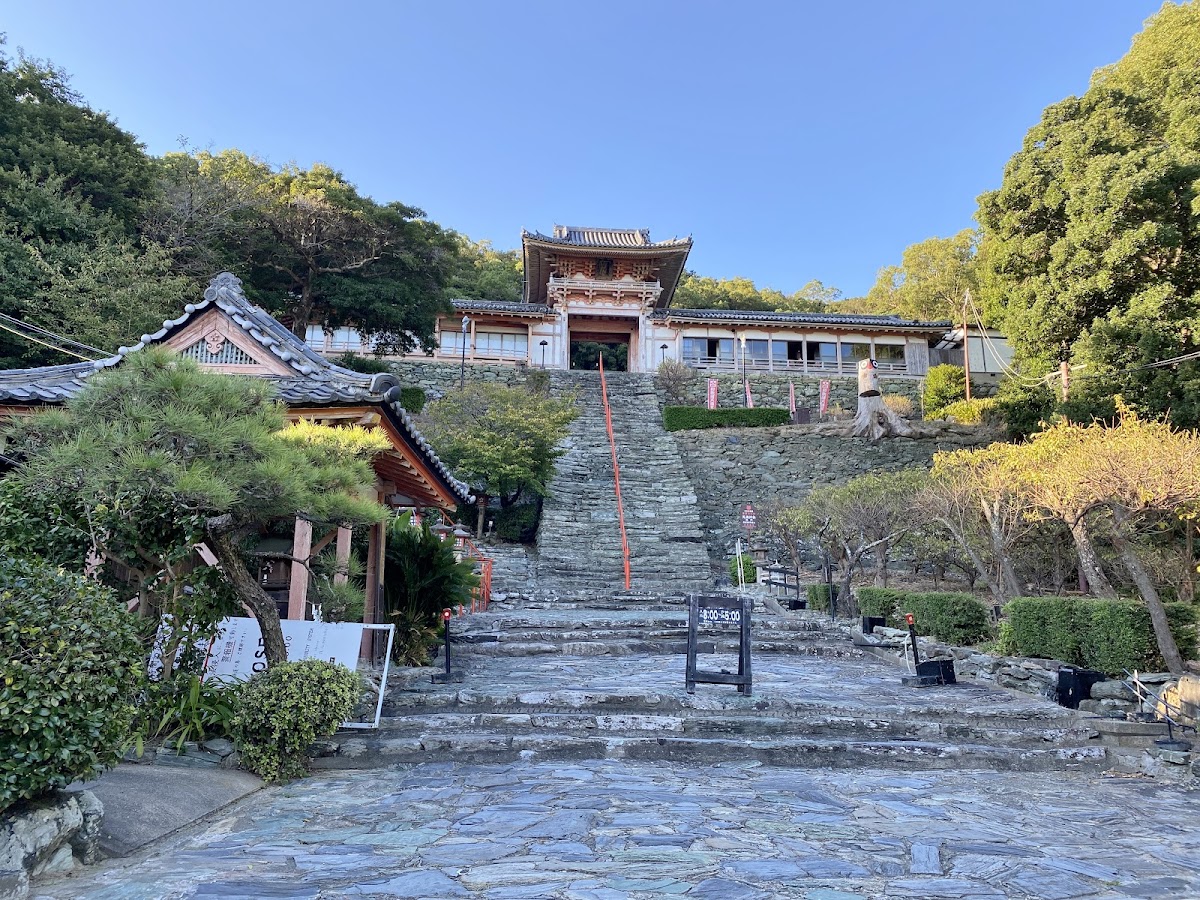
The main gate of the Danjo Garan complex, rebuilt in 2015 after approximately 170 years. The Four Heavenly Kings statues (Jikokuten, Zochoten, Komokuten, and Tamonten) on either side welcome visitors.
Other Important Halls and Pagodas
- West Pagoda: A multi-storied pagoda that forms a pair with the Konpon Daito (Great Pagoda)
- Fudo-do Hall: The oldest existing building designated as a National Treasure (built in 1197)
- Sanko Pine: A sacred tree where Kobo Daishi is said to have caught the three-pronged vajra thrown from Tang China.
Benefits and Faith
As the central training ground of Shingon Esoteric Buddhism, Danjo Garan is believed to offer the following benefits:
Fulfillment of Wishes and Good Fortune
This is the place where Kobo Daishi prayed for the peace and prosperity of all Japan, and it is believed that individual wishes are also guided toward fulfillment from a cosmic perspective. In particular, worshipping at the Konpon Daito is believed to bring the protection of Buddha by placing oneself at the center of the mandala.
Healing from Illness
The principal image of the Kondo Hall, Yakushi Nyorai (Medicine Buddha), is considered the Buddha of medicine and is believed to heal not only physical illnesses but also mental suffering.
Academic Achievement and Intellectual Improvement
Kobo Daishi (Kukai) was a figure who greatly contributed to the development of education and culture in Japan. Visiting the Danjo Garan (temple complex) is popular among those who wish for improvement in academics and the arts.
Ancestor Worship
The entire Mount Koya is considered a place where “life and death coexist,” and visiting the Danjo Garan also carries the meaning of expressing gratitude to and honoring ancestors.
Etiquette and Manners for Visiting the Temple
- Enter through the Middle Gate: The formal pilgrimage route begins at the Middle Gate.
- Circulate Clockwise: The basic rule for visiting the temple grounds is to proceed clockwise (to the right).
- Be Quiet: Be mindful that this is a place of spiritual practice and refrain from loud conversations.
- Photography: Photography is permitted from the exterior, but is generally prohibited inside the halls.
- Dress Code: There are no specific regulations, but it is advisable to avoid revealing clothing.
Access Information
Access by Train and Bus
- Nankai Electric Railway: Get off at Gokurakubashi Station on the Nankai Koyasan Line → Nankai Koyasan Cable Car to Koyasan Station (5 minutes)
- From Koyasan Station: Get off at Senjuinbashi or Kondo-mae on the Nankai Rinkan Bus (approx. 10 minutes), then a short walk.
- From the Okunoin area: Approximately 20 minutes on foot
Access by Car
- From Osaka: Hanwa Expressway “Wakayama IC” → Approximately 90 minutes via National Routes 24 and 480
- Parking: Several paid parking lots are available around Kongobu-ji Temple (approximately 500-600 yen per day)
Getting Around within Koyasan
Koyasan’s attractions are concentrated in a relatively compact area. It’s approximately a 30-minute walk from Danjo Garan to Okunoin, and approximately a 5-minute walk to Kongobu-ji Temple.
Visiting Information
- Visiting Hours: 8:30 AM – 5:00 PM (Last entry at 4:30 PM)
- Admission Fee:
- Main Hall: 500 yen
- Great Pagoda: 500 yen
- Combined Ticket (Main Hall, Great Pagoda, Kongobu-ji Temple): 1,500 yen
- Strolling within the temple grounds is free
- Estimated Time Required: 60-90 minutes is recommended for a thorough visit
Best Season to Visit
- Spring (Late April – May): Beautiful fresh greenery and pleasant weather
- Autumn (Late October – November): Stunning autumn foliage, creating a spectacular contrast with the vermilion-painted halls and pagodas
- Early Morning: Fewer tourists, allowing for a peaceful and tranquil visit
- Winter: The snow-covered temple complex is fantastical, but warm clothing is essential.
Nearby Attractions
- Kongōbu-ji Temple: The head temple of the Koyasan Shingon sect (5-minute walk)
- Okunoin: The largest sacred site containing the mausoleum of Kobo Daishi (20-minute walk)
- Reihokan Museum: Exhibiting valuable cultural artifacts of Koyasan (10-minute walk)
- Tokugawa Mausoleum: Mausoleum dedicated to Tokugawa Ieyasu and Hidetada (15-minute walk)
Danjō Garan is not merely a tourist destination, but a living place of faith. Why not take some time to quietly reflect on yourself in this sacred place where the ideals and prayers of Kobo Daishi, 1200 years ago, have been continuously passed down to the present day?