What is the Konpon Daito (Great Pagoda)?
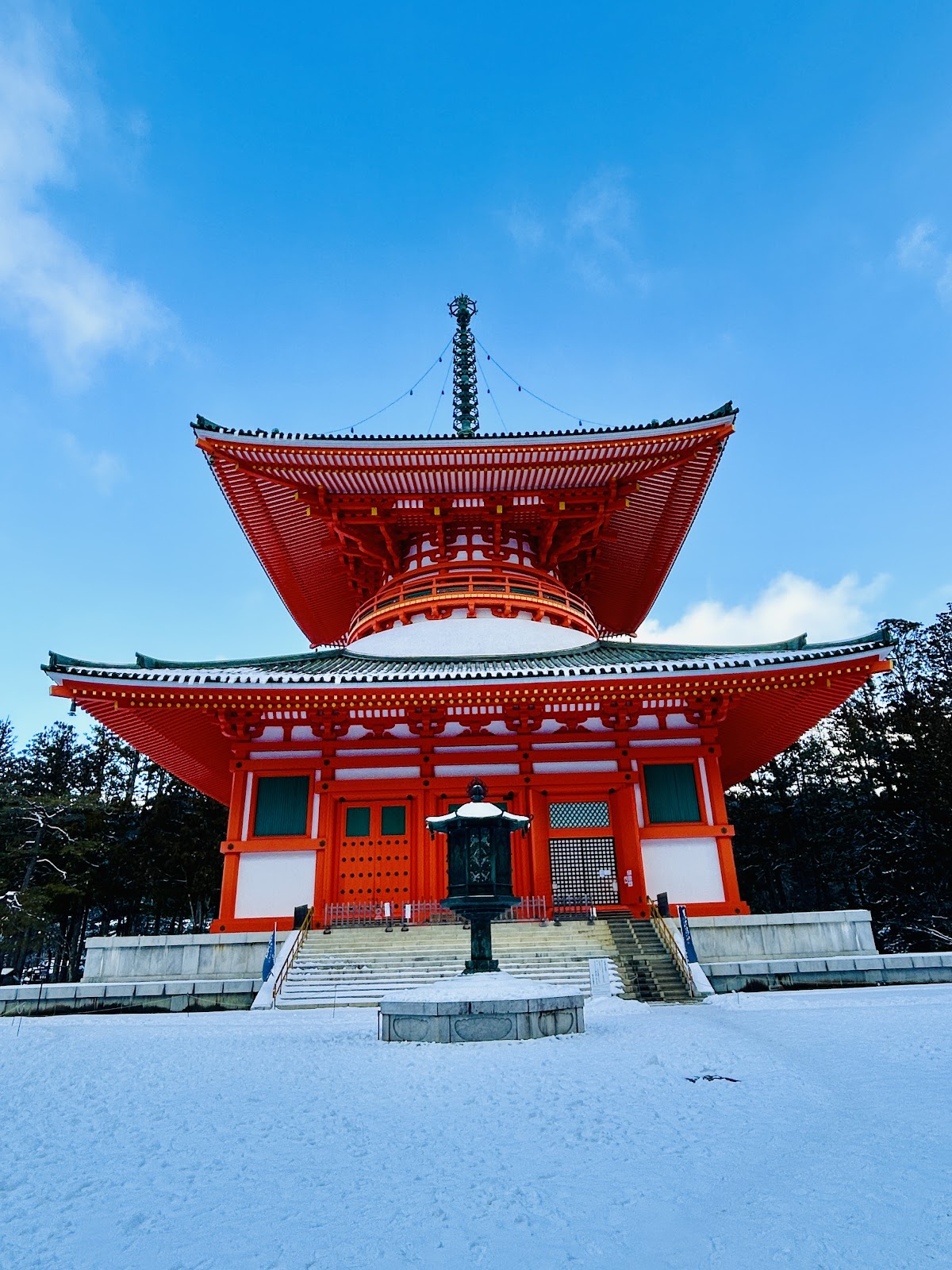
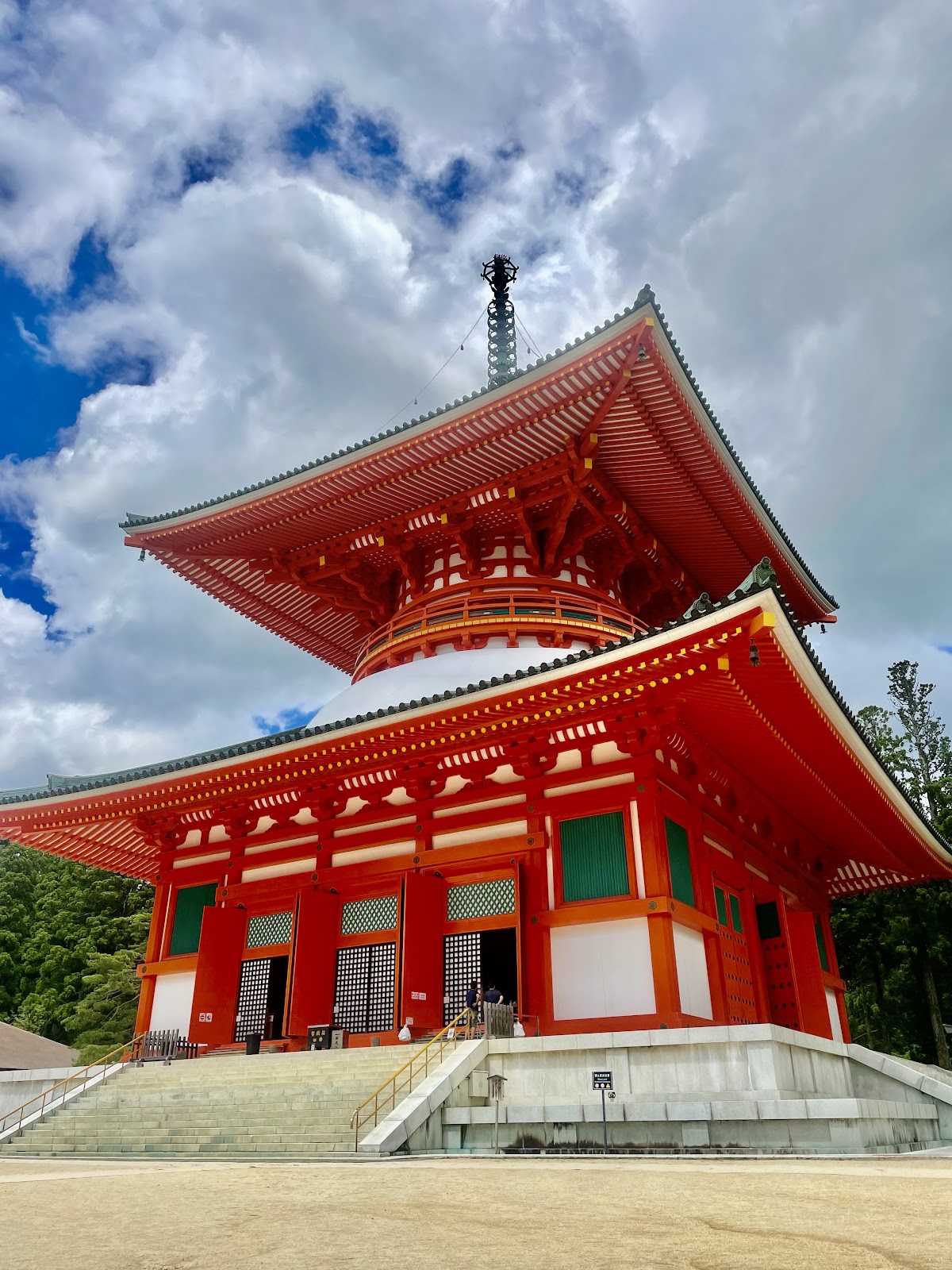
The Konpon Daito (Great Pagoda) is a vermilion pagoda, approximately 48.5 meters tall, located in the Danjo Garan complex of Mount Koya in Wakayama Prefecture. It is positioned as the central symbol of Mount Koya, which was conceived by Kobo Daishi Kukai as the fundamental training ground for Shingon Esoteric Buddhism.
The current pagoda was rebuilt in 1937 (Showa 12) and inherits the architectural style considered to be the first multi-storied pagoda style in Japan. Its vibrant vermilion exterior makes it a landmark of Mount Koya, easily visible from afar.
Architectural Features
Exterior and Structure
- Height: Approximately 48.5 meters (equivalent to a 16-story building)
- Style: Tahōtō style (square lower level, circular upper level)
- Color: A vivid vermilion (red paint), forming the symbolic landscape of Mount Koya
- Roof: Double-layered structure, topped with a jewel on the upper level
Interior Splendor
The interior of the Konpon Daitō (Great Pagoda) unfolds as a world of “three-dimensional mandala” expressing the cosmology of Shingon Esoteric Buddhism.
- Center: The principal image is Dainichi Nyorai (Womb Realm).
- Four Sides: The Four Buddhas of the Vajradhatu Realm (Akshobhya Buddha, Ratnasambhava Buddha, Amitabha Buddha, and Amoghasiddhi Buddha) are arranged.
- Pillars: The 16 pillars are adorned with vibrant, magnificent colors, depicting the Eight Great Bodhisattvas and the Eight Patriarchs of Shingon Buddhism.
- Ceiling: Colorful patterns and decorations express the worldview of Esoteric Buddhism.
This spatial arrangement visually and three-dimensionally embodies the teachings of Esoteric Buddhism, guiding worshippers into the world of Buddha.
Points for Worship
Etiquette for Worship
- Worship from the Outer Hall: The interior can be viewed from the outer hall (gejin) (entry into the inner hall is not permitted).
- Maintain Silence: As this is a sacred space, please worship quietly.
- Photography Restrictions: Photography is prohibited inside. Only exterior photography is permitted.
- Shoe Removal: Please remove your shoes at the entrance before entering.
Highlights
- Arrangement of the Three-Dimensional Mandala: The arrangement of the Five Wisdom Buddhas expresses the cosmology of Esoteric Buddhism.
- Vividly Colored Pillar Paintings: Exquisite depictions of Bodhisattva and patriarch figures painted on 16 pillars.
- Ceiling Paintings: The epitome of Esoteric Buddhist art, woven from magnificent patterns.
- Vermilion Exterior: Particularly beautiful in contrast to the blue sky or snowscape.
Recommended Visiting Times
- Early Morning (7:00-8:30): Fewer visitors, allowing for a peaceful and tranquil viewing experience.
- Evening (16:00-17:00): The vermilion color shines especially vividly in the setting sun.
- Snowy Days: The contrast between the white snow and the vermilion is a spectacular sight.
Benefits and Faith
Main Benefits
- Fulfillment of All Wishes: As the fundamental training ground of Shingon Esoteric Buddhism, all wishes are conveyed to the Buddha.
- Protection from Misfortune and Disaster: Protection from disaster through the blessings of Dainichi Nyorai (Vairocana Buddha).
- Academic Success: Benefit from the wisdom of Kobo Daishi (Kukai).
- Fulfillment of Personal Wishes: Prayers to Dainichi Nyorai, the principal deity of Esoteric Buddhism.
Background of Faith
The Konpon Daito (Great Pagoda) was conceived by Kobo Daishi Kukai as “the fundamental pagoda that all those who study Esoteric Buddhism should worship.” In Shingon Esoteric Buddhism, Dainichi Nyorai is considered the fundamental Buddha of the universe, and the Konpon Daito is positioned as a place that embodies his teachings.
Access and Visiting Information
Location
132 Koyasan, Koya-cho, Ito-gun, Wakayama Prefecture 648-0211 (within Danjo Garan)
Access Methods
By Train and Bus
- From Gokurakubashi Station on the Nankai Koyasan Line, take the Nankai Koyasan Cable Car to Koyasan Station (approx. 5 minutes)
- From Koyasan Station, take the Nankai Rinkan Bus to Senjuinbashi or Kondo-mae (approx. 10 minutes), then walk for 3 minutes.
By Car
- Approximately 40 minutes from Koyaguchi IC on the Keina-Wa Expressway via National Routes 370 and 480
- Parking: Use the parking lot in front of the Chumon Gate, Kongobu-ji Temple parking lot, etc. (Paid)
Visiting Hours and Fees
- Visiting Hours: 8:30~17:00 (Last entry 16:30)
- Winter hours (November to March): 8:30 AM to 4:30 PM (last entry 4:00 PM)
- Admission Fee: Adults 500 yen, Junior and Senior High School Students 300 yen, Elementary School Students and younger free
- Combined ticket with Kondo available (Adults 800 yen)
- Closed Days: Open all year round
Nearby Attractions
The Konpon Daito is the central facility of the Danjo Garan complex. Nearby spots to visit:
- Kondo: The main hall of Koyasan (1 minute walk)
- Miei-do: The personal Buddha hall of Kobo Daishi (2 minute walk)
- Chumon: The main gate of the Danjo Garan complex, guarded by the Four Heavenly Kings (3 minute walk)
- Jabara-michi: The path leading from Kondo to Okunoin (5 minute walk to the starting point)
History
The history of the Konpon Daito dates back to the time of Kobo Daishi Kukai.
- 816 (Kōnin 7): Kūkai founded Mount Kōya and conceived the idea for the Konpon Daitō (Great Pagoda).
- 887 (Ninna 3): After Kūkai’s death, the first pagoda was completed by his disciple, Shinzen Sōjō.
- Medieval Period: Repeatedly destroyed by fire and rebuilt.
- 1843 (Tenpō 14): Destroyed by lightning.
- 1937 (Shōwa 12): The current pagoda was rebuilt (reinforced concrete construction, inheriting traditional style).
The current Konpon Daitō, while utilizing modern architectural technology, faithfully reproduces the traditional style of a multi-storied pagoda and continues to welcome many worshippers as the center of Kōyasan faith.