What is the Koyasan Daimon Gate?
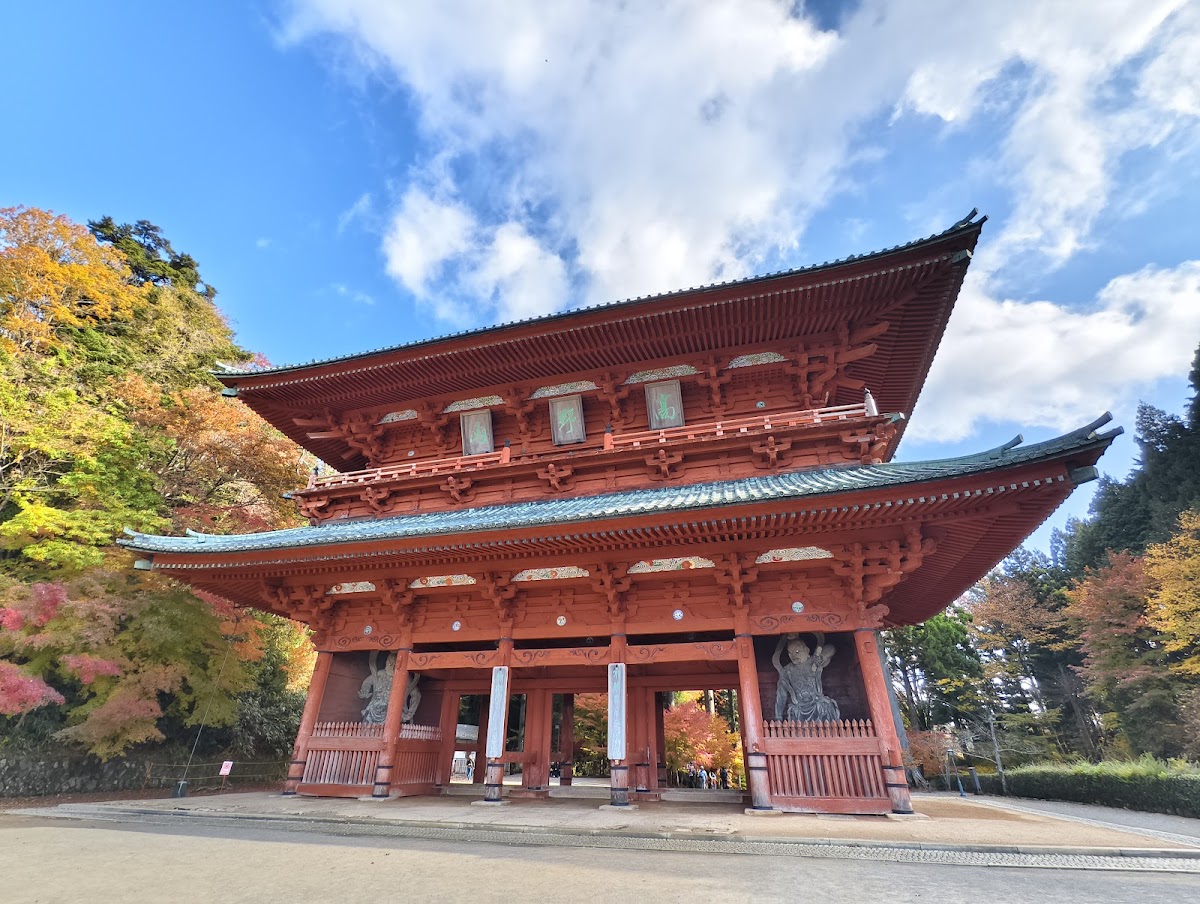
The Daimon Gate is a magnificent two-story gate that serves as the main entrance to Koyasan, welcoming visitors first. Located at the western edge of Koyasan, at an altitude of approximately 900m, this vermilion-painted two-story gate, 25.8m high and 21m wide, strongly impresses visitors with its significance as the entrance to a sacred area.
History and Reconstruction
The Daimon Gate is believed to have been built in the 11th century, approximately 200 years after the founding of Koyasan. However, it has been repeatedly destroyed and rebuilt due to fires, and the current building was reconstructed in 1705 (Hoei 2). It is designated as a National Important Cultural Property and is known as one of the representative structures of Koyasan.
The Imposing Kongo Rikishi Statues
On either side of the Daimon Gate are enshrined colossal Kongo Rikishi statues (Nio statues), each approximately 5.8m tall. On the right is the Agyo statue with its mouth open, and on the left is the Ungyo statue with its mouth closed, both positioned to ward off evil spirits and protect the sacred area. These statues are believed to have been created by a Buddhist sculptor in the style of Unkei, and their powerful forms overwhelm visitors.
Points to Note During Your Visit
Photo Spots
From the plaza in front of the main gate, you can photograph the magnificent view of the vermilion gate tower and the mountains behind it. The sight of the gate shrouded in morning mist in the early morning, or the moment when the vermilion color shines brightly at dusk, is particularly special. If you turn around before passing through the gate, a magnificent panorama of the Kii Mountains unfolds.
Viewing the Kongo Rikishi Statues
The Nio statues can be viewed up close from both sides of the gate. By observing the muscular physiques and the details of their angry expressions, you can appreciate the high level of skill of the Edo period Buddhist sculptors. Please also pay attention to the contrast between the two statues, which represent the perfect harmony between A and Un (the two figures).
Etiquette for Worship
The Daimon Gate is the entrance to the entire Koyasan area, and beyond it lies a sacred area where Kobo Daishi is said to still practice asceticism. It is recommended to bow before passing through the gate and to worship with a reverent heart.
Access Information
Public Transportation
- Using Nankai Electric Railway and Cable Car: Get off at Gokurakubashi Station on the Nankai Koyasan Line, then take the Koyasan Cable Car to Koyasan Station (approximately 5 minutes). From the station, take the Nankai Rinkan Bus bound for “Daimon Minami Parking Lot” for approximately 15 minutes, and get off at the “Daimon” bus stop.
- Bus Service: Buses run approximately 2-3 times per hour from Koyasan Station (may vary depending on the season).
By Car
- Approximately 40 minutes from the Keina-Wa Expressway “Koyaguchi IC” via National Route 480.
- Daimon Minami Parking Lot (free) is available.
- During winter (December-March), snow and ice are possible, so snow tires or chains are necessary.
Access on Foot
Approximately 50 minutes on foot from Koyasan Station. Walking the pilgrimage route via Nyonindo allows you to experience the same journey as pilgrims of the past.
Benefits and Faith
Protection Against Evil and Misfortune
The Kongo Rikishi statues are worshipped as guardian deities that ward off evil spirits, and passing through the Daimon Gate is believed to bring protection against evil and misfortune.
Entry to the Sacred Realm
The Daimon Gate is not merely a structure; it serves as a boundary separating the secular world from the sacred realm. It is believed that passing through it purifies the mind and body, allowing one to receive the spiritual power of Mount Koya.
Prayer for Safe Travels
In the past, pilgrims who had crossed the treacherous mountain paths would offer thanks for their safe arrival at the Daimon Gate and pray for a safe journey home. Even today, many pilgrims visit to pray for safe travels.
Nearby Attractions
Heading east from the Daimon Gate, you will find the main sacred sites of Mount Koya, including Kongobu-ji Temple, Danjo Garan, and Okunoin. Planning a pilgrimage route that covers the entire Mount Koya area, starting from the Daimon Gate, will provide a more fulfilling pilgrimage experience.