Shinkoji Temple (Sakata City, Yamagata Prefecture) Complete Guide | History and Highlights of the Matsuyama Domain Lords’ Family Temple
Located in Sakata City, Yamagata Prefecture, Shinkoji Temple is an important temple that preserves the history and culture of the region, serving as the family temple for successive generations of the Sakai family, the lords of the Matsuyama Domain during the Edo period. As a branch temple of Zojoji Temple of the Jodo sect, it boasts a distinguished history and is an indispensable presence when discussing the history of the Matsuyama Domain. This article provides a detailed introduction to Shinkoji Temple, from its founding to the present day, highlights within the temple grounds, and access information.
History and Origins of Shinkoji Temple
From Sennenji Temple to Shinkoji Temple: The Beginning of the Temple
The history of Shinkoji Temple dates back to 1662 (Kanbun 2). It is said that when Sakai Tadatsune, the first lord of the Matsuyama Domain, entered the domain, Master Kainan built a hermitage on this site and named it “Sennenji Temple,” marking its beginning. Initially a small hermitage, its deep connection with the lord of the Matsuyama domain eventually led to its development into an important religious institution of the domain.
Temple Name Change and Formal Founding in Kanbun 6
In Kanbun 6 (1666), the sixth abbot of Zendo-ji Temple in Sakata, Master Chōyo, received the temple name “Sesshuzan Seikakuin Shinkō-ji” from Chion-in Temple in Kyoto and formally founded the temple. Master Chōyo was deeply revered by Sakai Tadatsune, the first lord of the Matsuyama domain, and this relationship of trust became the catalyst for Shinkō-ji becoming the family temple of the Sakai family of the Matsuyama domain. By gaining the status of a branch temple of Zōjō-ji Temple of the Jōdo sect, Shinkō-ji established an important position both religiously and socially.
Deep Ties with the Sakai Family of the Matsuyama Domain
The Matsuyama domain was a branch domain of the Shōnai domain and was ruled by the Sakai family. From the first lord, Sakai Tadatsune, successive lords generously protected Shinkō-ji and designated it as their family temple. The feudal lords were devoted to the teachings of Master Chōyo and considered Shinkōji Temple their spiritual center. This relationship continued until the end of the Edo period, and the history of the Matsuyama domain and the history of Shinkōji Temple are closely intertwined.
Highlights and Cultural Properties on the Temple Grounds
Matsuyama Domain Sakai Family Mausoleum
One of the most important highlights of Shinkōji Temple is the Matsuyama Domain Sakai Family Mausoleum. This mausoleum, where successive lords of the Matsuyama domain and their families rest, retains the form of a daimyo (feudal lord) mausoleum from the Edo period and is a valuable historical site for understanding the funeral culture and beliefs of that time.
The mausoleum is enveloped in a solemn atmosphere, and the orderly arrangement of stone pagodas and tombstones conveys the status of the Matsuyama domain and the dignity of the Sakai family. Visitors can reflect on the history of the Edo period here.
Matsuyama Domain Sakai Family Memorial Tablet Hall
The Matsuyama Domain Sakai Family Memorial Tablet Hall is also located on the temple grounds. The memorial hall is where the memorial tablets of successive feudal lords and their families are enshrined, and it is an important space where memorial services and prayers are held. It is a facility that symbolizes Shinkoji Temple’s role as a family temple, and it is still carefully preserved by people connected to the Sakai family and the local community.
At the memorial hall, memorial services based on the traditions of the Jodo sect continue, preserving a form of faith that has remained unchanged since the Edo period.
Batō Kannon Hall
A Batō Kannon Hall has also been built on the grounds of Shinkoji Temple. Batō Kannon has been worshipped as a Buddha who protects livestock such as horses and cattle, and as a form of Kannon Bodhisattva who saves all sentient beings.
During the Edo period, horses were indispensable for farming and transportation, and were an important asset that supported the lives of ordinary people. The Batō Kannon Hall attracted the faith of these people and became one of the centers of faith in the region. Even today, worshippers can be seen visiting and praying with various wishes.
Architecture of the Main Hall and Temple Grounds
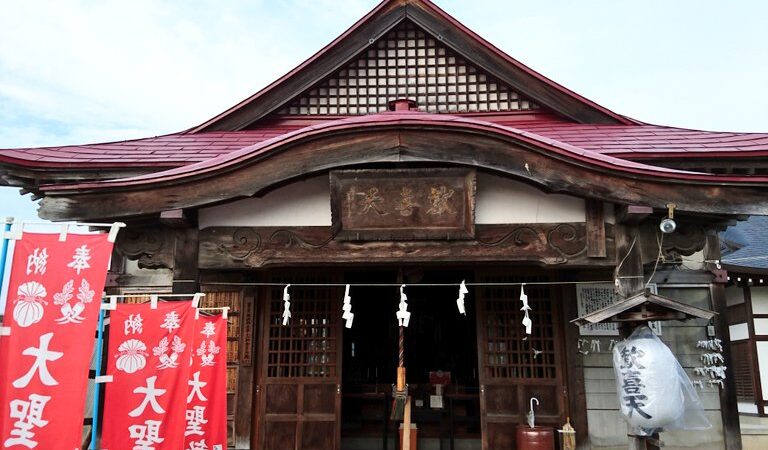
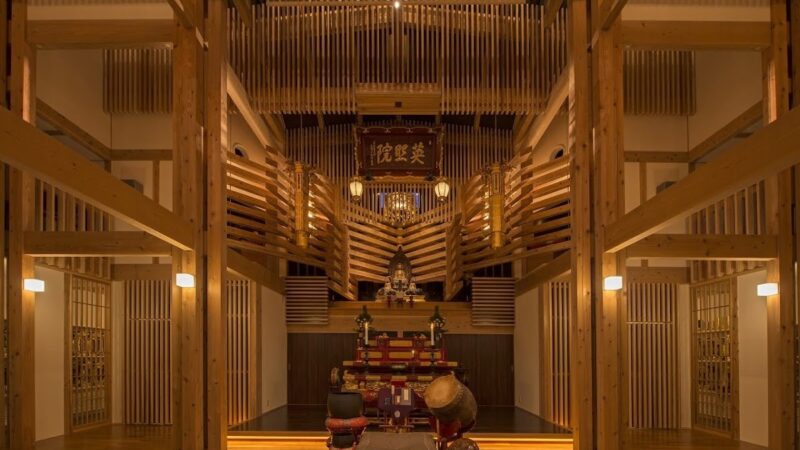
The main hall of Shinkoji Temple is a building in the traditional style of Jodo-shu (Pure Land Buddhism) temples. The main hall, with its tranquil presence and sense of dignity, has served as a place of worship for the local people throughout its long history.
The entire temple grounds retain much of the atmosphere of Edo-period temple architecture, creating a peaceful and serene space. Walking along the path from the main gate to the main hall, you can feel the history of faith that transcends time.
Positioning as a Branch Temple of Zojoji Temple (Jodo Sect)
Jodo-shu Teachings and Shinkoji Temple
Shinkoji Temple belongs to the Jodo-shu sect. Founded by Honen Shonin, the Jodo-shu sect teaches that by chanting “Namu Amida Butsu,” everyone can equally attain rebirth in the Pure Land through the original vow of Amida Buddha.
In the Jodo sect, which has Chion-in Temple in Kyoto as its head temple and Zojo-ji Temple in Edo as its grand head temple, Shinko-ji Temple is positioned as a branch temple of Zojo-ji. This lineage indicates that Shinko-ji was not merely a local temple, but functioned as part of a nationwide religious network.
Relationship with Kyoto’s Chion-in Temple
As mentioned above, the fact that Master Choyo received the temple name from Kyoto’s Chion-in Temple in 1666 was an extremely important event in the history of Shinko-ji Temple. Chion-in is the head temple of the Jodo sect, and receiving an official temple name from it guaranteed the legitimacy and status of the temple.
Due to this relationship, Shinko-ji Temple, despite being located in a rural area, had connections to the core of the Jodo sect and was able to receive guidance from the head temple in terms of teachings and religious ceremonies.
The History of the Matsuyama Domain and the Role of Shinkoji Temple
The Establishment of the Matsuyama Domain and the Sakai Family
The Matsuyama Domain was established in 1622 (Genna 8) as a branch domain of the Shonai Domain, when Sakai Tadatsune was granted 25,000 koku. The Sakai family was a lineage of Sakai Tadatsugu, a senior retainer of Tokugawa Ieyasu, and was a prestigious family that supported the Tokugawa shogunate as a fudai daimyo (hereditary vassal).
The Matsuyama Domain encompassed the area around present-day Sakata City and played an important role in the politics and economy of the Shonai region. Along with the development of Matsuyama Castle town, the center of the domain’s administration, Shinkoji Temple also increased in importance as the domain’s religious center.
The Role as a Family Temple
For daimyo families in the Edo period, a family temple held more significance than merely a burial place. It served as a venue for funerals and memorial services for the lord and his family, and also played a role as the spiritual pillar of the domain.
Shinkoji Temple served as the family temple of the Sakai family of the Matsuyama Domain, performing funeral rites for successive lords, managing the mausoleum, and continuing daily memorial services. It is also believed to have been a place where lords could encounter Buddhist teachings and gain guidance for their political decisions. The relationship between the lords and the temple, beginning with their devotion to Master Choyo, likely influenced the administration of the domain.
Connections with the Local Community
In addition to its role as a family temple, Shinkoji Temple was also a place of worship for the local people. As a temple under the patronage of the lords, it became a center of religious activity in the region, supporting the religious lives of ordinary people.
Through devotion to the Batō Kannon Hall and various annual events, Shinkoji Temple is thought to have been open not only to the samurai class but also to the wider local community.
Cultural Value of Shinkoji Temple in Sakata City
Importance as a Historical Building
Sakata City is known as a port town that prospered through Kitamae-bune trade and possesses a rich historical and cultural heritage. Within this context, Shinkoji Temple is positioned as an important cultural property that conveys the history of the Matsuyama Domain, a samurai government.
As one of Sakata City’s cultural properties, Shinkoji Temple is also utilized for local history education and as a tourist resource, playing a role in conveying the history of the Edo period to visitors.
Connections with Other Cultural Properties
Besides Shinkoji Temple, Sakata City has several other important temples, including Doryuzan Sokoji Temple, which boasts a 600-year history. Sokoji Temple is a Soto Zen temple and is known for its cultural properties such as the Mushroom Cedar and Horai-en Garden.
These temples, along with Shinkoji Temple, belong to different sects and have different historical backgrounds, yet together they have shaped Sakata City’s rich religious culture. When visiting Shinkoji Temple, visiting these other cultural properties in conjunction will allow you to gain a deeper understanding of Sakata City’s history.
Access and Visiting Information for Shinkoji Temple
Location and Basic Information
Location: 9 Kitamachi, Sakata City, Yamagata Prefecture
Shinkoji Temple is located in the city center of Sakata City and is relatively easy to access.
Transportation Access
Access by Train:
- Approximately 10 minutes by car from JR Uetsu Main Line “Sakata Station”
- Using a taxi or rental car is convenient.
Access by Car:
- Approximately 15 minutes from Nihonkai Tohoku Expressway “Sakata Chuo IC”
- Easily accessible from the city center.
Parking: There may be parking spaces on the temple grounds or nearby, but it is recommended to check in advance.
Notes for Visitors
Shinkoji Temple is a temple where religious activities are still being conducted. Please note the following points when visiting the temple:
- Please maintain silence within the temple grounds and be considerate of other visitors and religious services.
- The mausoleum is a sacred place; please visit with respect.
- Photography may be restricted in certain areas, such as inside the main hall and the mausoleum.
- We recommend checking visiting hours and accessibility in advance.
Nearby Tourist Attractions
When visiting Shinkoji Temple, you can also visit other tourist attractions in Sakata City:
- Sankyo Warehouses: A rice storage warehouse from the Meiji era, a building symbolizing Sakata’s prosperity.
- Former Honma Residence: The residence of the Honma family, one of Japan’s leading landowners.
- Sakata City Museum of Art: A museum showcasing local arts and culture.
- Dotakiyama Sokoji Temple: An ancient Soto Zen temple known for its mushroom cedar and Horai Garden.
Combining these spots will allow you to experience Sakata’s history and culture more deeply.
Annual Events and Memorial Services at Shinkoji Temple
Events as a Jodo Sect Temple
Shinkoji Temple observes annual events based on the traditions of the Jodo Sect. The following events are particularly important:
- Obon Memorial Service: A significant time for ancestor worship, bringing together parishioners and local residents.
- Higan-e: A memorial service held during the spring and autumn equinoxes, praying for rebirth in the Pure Land.
- Goki-e: A memorial service commemorating the death of Honen Shonin, the founder of the Jodo Sect.
These events demonstrate Shinkoji Temple’s religious identity as a Jodo Sect temple and serve as important opportunities to maintain ties with the local community.
Memorial Services for the Sakai Family of Matsuyama Domain
As a family temple, Shinkoji Temple also holds memorial services for successive generations of the Sakai family of the Matsuyama Domain. At the mausoleum and memorial hall, memorial services are continuously held by those connected to the Sakai family and related parties, preserving a form of faith unchanged since the Edo period.
Significance of Visiting Shinkoji Temple
As a Place for Historical Learning
Shinkoji Temple is a valuable place where you can learn about diverse historical themes, such as the relationship between daimyo families and Buddhist temples during the Edo period, the family temple system, and the faith of the Jodo sect. It is a must-see spot, especially for those interested in the history of the Matsuyama domain.
By visiting the mausoleum and memorial hall, you can feel the weight of actual history, something you cannot learn from history textbooks.
As a Place of Spiritual Peace
The grounds of this temple with its long history possess a unique and tranquil atmosphere. Escape the hustle and bustle of everyday life and find peace of mind; Shinkoji Temple is a meaningful space for us living in the modern age.
The Nembutsu, “Namu Amida Butsu,” a teaching of the Jodo sect, is a message of hope that everyone will be saved equally. Visiting Shinkoji Temple allows you to experience this universal teaching.
As an Entry Point to Understanding Local Culture
Religious facilities like Shinkoji Temple are essential for understanding the history and culture of Sakata City. You can gain a multifaceted understanding of the region, from the economic prosperity of Sakata as a port town, to the existence of the Matsuyama Domain (a samurai government), and the religious culture that supported the spiritual lives of the people.
Starting from Shinkoji Temple, you can explore other cultural properties and historical buildings in Sakata City to more deeply appreciate the rich cultural heritage of this region.
Summary: The History and Faith Conveyed by Shinkoji Temple
Located in Sakata City, Yamagata Prefecture, Shinkoji Temple is a Jodo sect temple with a history of over 360 years since its founding in 1662. Founded by Master Kainan as the founder of Sennenji Temple, Shinkoji Temple was officially established in 1666 (Kanbun 6) when Master Choyo received the temple’s name from Chion-in Temple in Kyoto.
Due to the devotion of Sakai Tadatsune, the first lord of the Matsuyama Domain, to Master Choyo, Shinkoji Temple became the family temple of successive generations of the Sakai family of the Matsuyama Domain, and continues to convey the history of the domain through its mausoleum and memorial tablets. While maintaining its status as a branch temple of Zojoji Temple of the Jodo sect, it has also embraced the faith of local people, as evidenced by its Batō Kannon Hall.
Shinkoji Temple, where religious activities continue today, is an important cultural property of Sakata City, contributing to local history education and tourism. It is a valuable place to learn about diverse historical and cultural themes, such as the relationship between daimyo families and Buddhist temples during the Edo period, the family temple system, and the faith of the Jodo sect.
When visiting Sakata City, be sure to visit Shinkoji Temple and experience the rich cultural heritage woven from the history of the Matsuyama Domain and the faith of the Jodo sect. Spending time in the tranquil temple grounds will deepen your understanding of history and bring you peace of mind.