Shirayama Hime Shrine (Iwakuni City, Yamaguchi Prefecture) Complete Guide | Deities, Blessings, Goshuin (Shrine Seal), and Access Information
Shirayama Hime Shrine, located within Kikkō Park in Iwakuni City, Yamaguchi Prefecture, is a historic shrine that enshrines a divided spirit of Shirayama Shrine in Ishikawa Prefecture. It is close to Iwakuni Castle and Kintaikyo Bridge, two of Iwakuni City’s most famous tourist spots, offering visitors a peaceful and tranquil space. This article provides detailed information useful for visiting Shirayama Hime Shrine, including its history, deities, blessings, goshuin (shrine seal), and access methods.
What is Shirayama Hime Shrine?
Shirayama Hime Shrine is located within Kikkō Park in Yokoyama 2-chome, Iwakuni City, Yamaguchi Prefecture. It is also commonly known as “Hakusan Shrine” and is beloved by locals. It boasts a convenient location, very close to the Iwakuni Castle Ropeway station and within walking distance of Kintaikyo Bridge.
The shrine grounds are home to ancient maple and cedar trees over several hundred years old, creating a mystical atmosphere, especially on rainy or foggy days. It is beloved by both tourists and locals alike as a shrine where visitors can enjoy the beauty of nature throughout the seasons.
A Shrine Known as the “Toshogu of the West”
Hakusan Hime Shrine is sometimes referred to as the “Toshogu of the West.” This designation reflects its high status and the beauty of its architecture. The fact that it was established by inviting a divided spirit from Hakusan Shrine in Kaga Province (present-day Ishikawa Prefecture) speaks to its prestige.
History of Hakusan Hime Shrine
Circumstances of its Founding
There are various theories regarding the founding date of Hakusan Hime Shrine, and no definitive records remain, but several traditions exist.
According to the oldest records, the first shrine building was constructed around 876 AD (Jōgan 18). Furthermore, one theory suggests that the shrine was founded in 1559 (Eiroku 2), beginning with the transfer and enshrinement of a divided spirit from the Hakusan Shrine in Kaga Province (Ishikawa Prefecture). In any case, it is an ancient shrine believed to have existed since the Heian period.
Development during the Edo Period
During the Edo period, the shrine flourished under the patronage of the Kikkawa family, the lords of the Iwakuni Domain. In 1694 (Genroku 7), Kikkawa Hiroki, the fourth lord of the Iwakuni Domain, donated a stone torii gate, which still remains on the shrine grounds today. This stone torii gate is a valuable cultural asset demonstrating how highly the Iwakuni Domain lords regarded the Hakusan Hime Shrine at the time.
Reconstruction during the Meiji Period
Most of the current buildings were completed in 1898 (Meiji 31). The main buildings, including the sanctuary (excluding the worship hall), were renovated during this period, laying the foundation for its current appearance.
The 2004 Fire and Reconstruction
In 2004 (Heisei 16), a fire broke out, tragically destroying the main shrine and other structures. However, thanks to the efforts of local people and worshippers, the main shrine was quickly rebuilt. The newly constructed shrine is a beautiful building that incorporates modern technology while adhering to traditional styles.
Deities and Blessings
Deities
Hakusan Hime Shrine enshrines three deities.
Kukuri-hime no Mikoto
Kukuri-hime no Mikoto, the principal deity, is also the deity of Hakusan Hime Shrine in Ishikawa Prefecture and is a central deity of Hakusan faith. The name “Kukuri” is related to “to tie” and “to manipulate,” and is said to mean bringing things together and forming connections. In the *Nihon Shoki* (Chronicles of Japan), she appears as the god who mediated between Izanagi and Izanami, and is worshipped as a god of matchmaking and harmony. Koshirayama-hime no Mikoto
This deity represents the spirit of Mount Hakusan and is an important deity in Hakusan worship. “Koshi” refers to Koshi Province, representing the ancient Hokuriku region.
Onamuchi no Mikoto
This deity is considered another name for Okuninushi no Mikoto. Known as the god of nation-building, he is believed to grant a wide range of blessings, including matchmaking, business prosperity, medicine, and agriculture.
Main Blessings
Hakusan Hime Shrine is particularly known for the following blessings:
Prayer for Safe Childbirth
With a long history of reverence as a god of safe childbirth, the shrine attracts many visitors praying for safe delivery. Safe childbirth amulets are popular at the shrine office, and many pregnant women and their families visit.
Matchmaking
As Kukurihime-no-Mikoto is the goddess of matchmaking, this shrine is believed to bring blessings for successful relationships and marital harmony.
Family Safety and Protection from Evil
As Ōkuninushi-no-Mikoto is enshrined here, blessings for family safety and protection from evil can also be expected.
Healing from Illness
Ōkuninushi-no-Mikoto also has the characteristics of a god of medicine, so this shrine is believed to bring blessings for healing from illness and good health and longevity.
Highlights of the Shrine Grounds
Genroku Stone Torii Gate
The stone torii gate standing at the entrance to the shrine grounds was donated in 1694 (Genroku 7) by Kikkawa Hiroki, the fourth lord of the Iwakuni Domain, and is a valuable cultural asset with a history of over 300 years. Its dignified appearance is a symbolic presence welcoming visitors.
Main Hall and Worship Hall
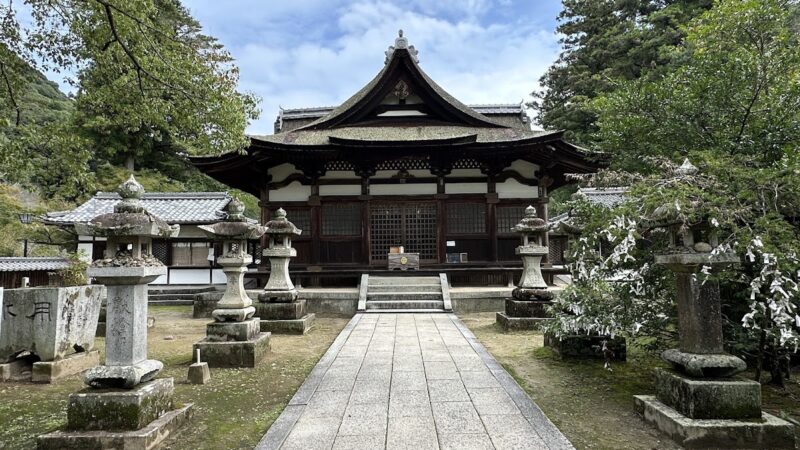
The main hall, rebuilt after the 2004 fire, faithfully reproduces the style of traditional shrine architecture. The main hall of worship remains from the Meiji era, giving a sense of historical weight.
Shrine within the grounds: Nishikigawa Suijinja Shrine
Within the shrine grounds is Nishikigawa Suijinja Shrine, dedicated to Mizuhanome-no-kami. As the god of water, prayers are offered for the blessings of the Nishikigawa River and for protection from floods. The Nishikigawa River, which flows through Iwakuni City, is an important river supporting the Kintaikyo Bridge, and the shrine is revered by locals as its guardian deity.
Sacred Trees and Nature
Throughout the shrine grounds are large cedar trees and ancient maple trees estimated to be several hundred years old. Especially during the autumn foliage season, the grounds are dyed in red and yellow, creating a fantastical landscape. Furthermore, on rainy or foggy days, these trees exude a mystical atmosphere, transporting visitors to another world.
Goshuin (Shrine Seal) Information
Goshuin (shrine seals) can be obtained at Hakusan Hime Shrine.
Features of the Goshuin (Shrine Seal)
The goshuin features the calligraphy of “Hakusan Hime Shrine” and the shrine’s seal. Its simple yet powerful brushstrokes are distinctive and popular among goshuin collectors.
Location and Hours of Issuance
Goshuin can be obtained at the shrine office. However, staff may not always be present, so it is recommended to call ahead to confirm availability.
Contact Information: 0827-41-0600
Goshuincho (Shrine Seal Book)
It is recommended to check during your visit whether original goshuincho are available.
Access Information
Basic Information
Address: 8-10, Yokoyama 2-chome, Iwakuni City, Yamaguchi Prefecture 741-0081
Phone Number: 0827-41-0600
Visiting Hours: Grounds are freely accessible (please check the opening hours of the shrine office)
Parking: Parking is available at Kikko Park
Access by Public Transportation
From JR Iwakuni Station:
- Approximately 20 minutes by bus from JR Iwakuni Station, get off at the “Kintaikyo” bus stop, then approximately 5 minutes on foot
- Use the Iwakuni Bus “Shin-Iwakuni Station – Kintaikyo” line
From Shin-Iwakuni Station (Shinkansen):
- Approximately 15 minutes by bus from Shin-Iwakuni Station, get off at the “Kintaikyo” bus stop, then approximately 5 minutes on foot
Access by Car
From Sanyo Expressway:
- Approximately 10 minutes from Iwakuni IC
- Proceed towards Kintaikyo Bridge and head towards Kikkō Park.
Parking
Kikkō Park has several parking lots. While there are paid parking lots around Kintaikyo Bridge, parking within Kikkō Park is often free. However, it can get crowded during peak tourist seasons and weekends, so it’s recommended to allow ample time for your visit.
Location relative to surrounding tourist spots
Hakusan Hime Shrine is located in the heart of Iwakuni City’s main tourist area, allowing for efficient sightseeing.
Kintaikyo Bridge
Approximately 5 minutes on foot. A beautiful wooden bridge, considered one of Japan’s three most famous bridges, and a symbol of Iwakuni City.
Iwakuni Castle Ropeway Station
Approximately 1 minute on foot. Located very close to Hakusan Hime Shrine, it’s an access point to Iwakuni Castle.
Kikkō Shrine
Approximately 3 minutes on foot. A shrine dedicated to the Kikkawa family, the lords of the Iwakuni domain, and contains buildings designated as Important Cultural Properties.
Momijidani Park
Approximately 10 minutes on foot. A park with beautiful autumn foliage, perfect for nature walks.
Points and Manners for Visiting a Shrine
Etiquette for Visiting a Shrine
Please observe the basic etiquette for visiting a shrine.
- Bow before passing through the torii gate.
- Cleanse your hands and mouth at the water basin.
- Bow twice, clap twice, and bow once in front of the main hall.
- After praying, turn around and bow once as you leave the torii gate.
Photography
Photography is generally permitted on the shrine grounds, but please refrain from taking pictures inside the main hall or in sacred areas. Also, please be considerate of other visitors.
Attire
There are no specific dress code regulations, but it is advisable to avoid revealing or overly flashy clothing, as this is a sacred place.
Annual Events
Hakusan Hime Shrine holds various festivals throughout the year. Please contact the shrine directly for detailed schedules.
Main Annual Events
New Year’s Day Festival
A festival to welcome the new year and pray for peace throughout the year. Annual Grand Festival
This is the most important festival of the shrine, attracting many worshippers.
Autumn Grand Festival
This festival expresses gratitude for the harvest and prays for a bountiful harvest.
About Hakusan Faith
Understanding Hakusan faith is important for understanding Hakusan Hime Shrine.
What is Hakusan Faith?
Hakusan faith is a mountain worship tradition that considers Mount Hakusan (2,702m above sea level), a sacred peak towering on the border of Ishikawa and Gifu prefectures, as its deity. Mount Hakusan, along with Mount Fuji and Mount Tateyama, is considered one of Japan’s three sacred mountains and has been an object of worship since ancient times.
Hakusan Shrines Nationwide
Hakusan faith has spread throughout Japan, and it is said that there are approximately 3,000 Hakusan shrines from Hokkaido in the north to Kyushu in the south. The head shrine is Hakusan Hime Shrine (Kaga Ichinomiya) in Hakusan City, Ishikawa Prefecture.
Shirayama Hime Shrine in Iwakuni City was established by inviting a divided spirit from Shirayama Shrine in Kaga Province, and plays a part in the network of Shirayama faith.
Combine with Iwakuni sightseeing
When visiting Shirayama Hime Shrine, combining it with other nearby tourist spots will allow you to experience the charm of Iwakuni more deeply.
Recommended sightseeing route
Half-day course
- Cross Kintaikyo Bridge (30 min)
- Stroll through Kikko Park (30 min)
- Visit Shirayama Hime Shrine (20 min)
- Visit Kikko Shrine (20 min)
- Take the Iwakuni Castle Ropeway to Iwakuni Castle (1 hour round trip)
Full-day course
In addition to the above, you can also visit the Iwakuni Art Museum, the Iwakuni White Snake Museum, and Momijidani Park.
Iwakuni cuisine
You can also enjoy Iwakuni specialties such as Iwakuni sushi (Dono-sama sushi) and ayu (sweetfish) dishes from the Nishiki River. There are many restaurants around Kintaikyo Bridge, allowing you to enjoy local cuisine between sightseeing.
Seasonal Highlights
Spring (March-May)
The cherry blossoms in Kikko Park are in full bloom, and the shrine grounds are enveloped in a spring atmosphere. In the season of fresh greenery, the young leaves of cedar and maple trees are beautiful, making for a refreshing visit.
Summer (June-August)
The shrine grounds, enveloped in deep green, have a cool atmosphere. Combined with the clear waters of the Nishiki River, you can enjoy a pleasant time even in the hot summer.
Autumn (September-November)
This is the most beautiful season at Hakusan Hime Shrine. The maple trees in the grounds change color, and the red and yellow leaves adorn the shrine. Visiting both Hakusan Hime Shrine and Momijidani Park allows you to fully enjoy autumn in Iwakuni.
Winter (December-February)
The shrine grounds, enveloped in silence during winter, have a solemn atmosphere. Snow sometimes falls, and the snow-covered shrine grounds present a fantastical beauty.
Summary
Hakusan Hime Shrine (Iwakuni City, Yamaguchi Prefecture) is a historic shrine that enshrines a divided spirit of Hakusan Shrine in Ishikawa Prefecture, and is known for its blessings for safe childbirth and matchmaking. It is located near major tourist spots in Iwakuni City, such as Kintaikyo Bridge and Iwakuni Castle, and is situated in a naturally rich environment within Kikkō Park.
It boasts a long history dating back to the Heian period and developed under the patronage of the Iwakuni feudal lords. Having overcome the hardship of a fire in 2004, it remains a beloved place for many worshippers.
The shrine grounds are home to centuries-old cedar and maple trees, showcasing beauty throughout the seasons. The autumn foliage season is particularly a must-see. When visiting Iwakuni, be sure to visit Hakusan Hime Shrine and experience its history and natural beauty.
You can also receive a Goshuin (shrine stamp), which will be a valuable opportunity to experience a part of the Hakusan faith. When visiting Iwakuni, I highly recommend adding Hakusan Hime Shrine to your list of places to visit.