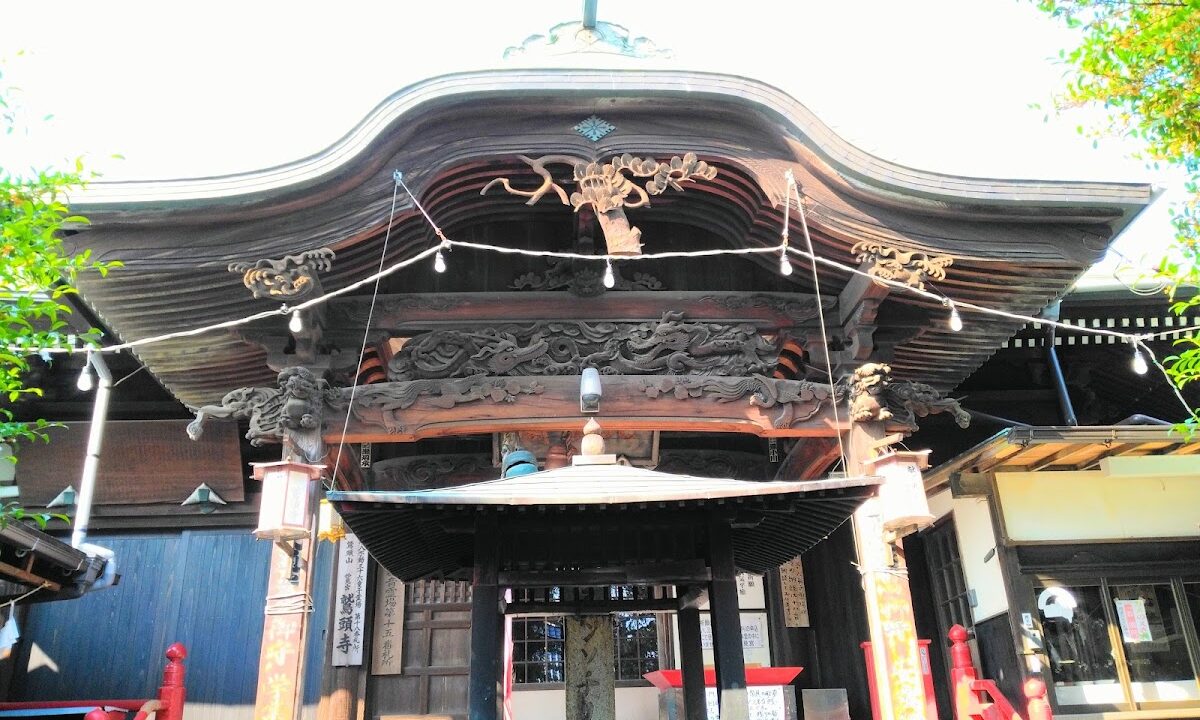
Myokengu Jutoji Temple (Kudamatsu City, Yamaguchi Prefecture) Complete Guide | The Charm of Approximately 1400 Years of History and the Birthplace of Setsubun
About Myokengu Jutoji Temple
Myokengu Jutoji Temple is an ancient temple of the Shingon Omuro sect located in Kudamatsu City, Yamaguchi Prefecture, boasting a history of approximately 1400 years. Affectionately known as “Myoken-sama” by the local people, it is also known as the birthplace of Setsubun in Japan.
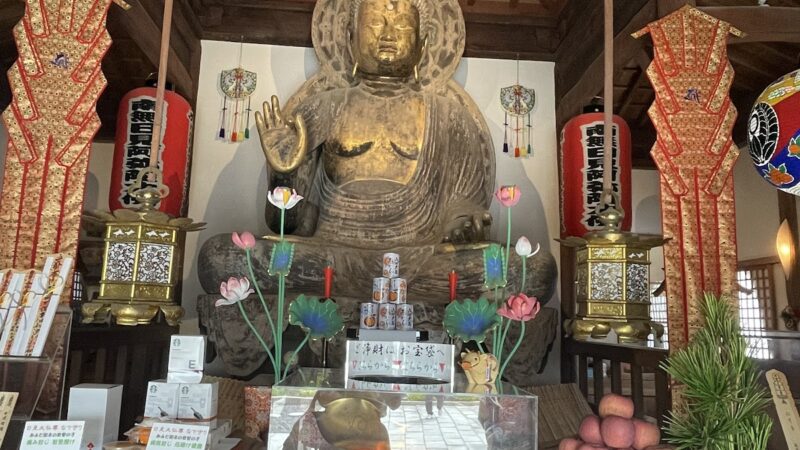
The principal image is Myoken Daibosatsu, which has been revered since ancient times as the tutelary deity of the Ouchi clan. As a valuable temple that preserves the form of syncretism of Shinto and Buddhism, it is a spot of high historical and cultural value.
Basic Temple Information
Myokengu Jutoji Temple’s mountain name is Myokenzan, and it belongs to the Shingon Omuro sect. The shrine-like designation “Myokengu” before the temple name stems from the fact that Myoken worship is originally a syncretic belief of Shinto and Buddhism. Having skillfully escaped the anti-Buddhist movement of the Meiji era, it still retains much of its appearance from the period of syncretism between Shinto and Buddhism.
With the main hall, several smaller halls and shrines stand within the temple grounds, and torii gates line the approach, creating a unique landscape that blends elements of both Shinto and Buddhist temples. This distinctive appearance makes it a valuable place to experience Japanese religious history, attracting many worshippers and history enthusiasts.
History of Myoken-gu Washizuji Temple
Founding and Deep Connection with the Ouchi Clan
Myoken-gu Washizuji Temple is said to have been founded by Prince Rinsho, considered the ancestor of the Ouchi clan. The Ouchi clan was a powerful daimyo family based in Suo Province (present-day Yamaguchi Prefecture) during the Sengoku period, wielding considerable influence in western Japan from the Muromachi period to the Sengoku period.
The Ouchi clan deeply revered Myoken Bodhisattva as their tutelary deity, and Myoken-gu Washizuji Temple flourished as the center of their faith. While there is a Myoken Shrine in Koryuji Temple in Yamaguchi City, dedicated to Myoken Bodhisattva, the tutelary deity of the Ouchi clan, that shrine was established by inviting the deity from Kudamatsu. Myoken-gu Washizuji Temple is considered the original and authentic location.
Flourishing Era of Shinto-Buddhist Syncretism
During the era of Shinto-Buddhist syncretism, Myoken-gu Washizuji Temple was a large religious complex with seven shrine buildings. Among them, Akai-bo, the predecessor of Washizuji Temple, held exceptional status, possessing enough authority to function as a betto-ji (a temple responsible for managing shrines).
A betto-ji was a temple that managed shrines, and based on the syncretic Shinto-Buddhist philosophy, it played a role in conducting shrine rituals in a Buddhist manner. The fact that Myoken-gu Washizuji Temple fulfilled this role speaks to its religious importance at the time.
The Origin of Myoken Worship
Myoken-gu Washizuji Temple is also said to be the origin of Myoken worship. Myoken worship is a religion that worships Myoken Bodhisattva, the deification of the North Star and the Big Dipper. It is a form of faith that fuses Chinese Taoist thought with Buddhism.
In Japan, it spread from the Heian period onward, mainly among the samurai class, and was particularly revered as a god of safe voyages, protection from evil influences, and good fortune. In Kudamatsu City, there is the Komatsu Shrine, which has a “pine tree where stars fell,” and this legend is said to be the origin of the place name “Kudamatsu.” This legend of falling stars and Myoken worship are closely intertwined, supporting the historical importance of Myoken-gu Washizuji Temple.
Highlights of the Temple Grounds
Gongen-zukuri Main Hall
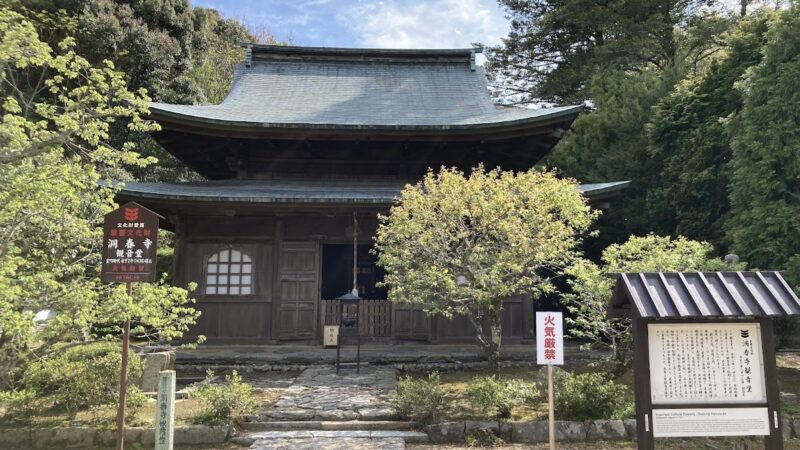
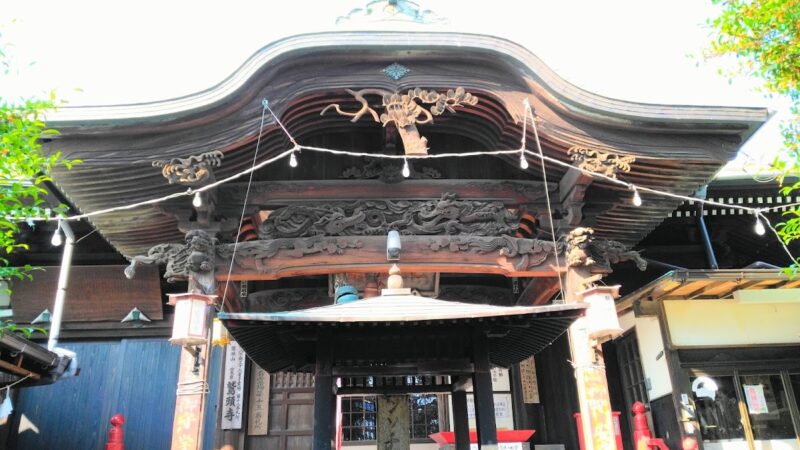
The main hall of Myoken-gu Washizuji Temple is built in the Gongen-zukuri architectural style. Gongen-zukuri is a complex shrine style where the main hall and worship hall are connected by a stone corridor, and is a typical style of shrine architecture seen in Nikko Toshogu Shrine, among others.
The main hall, while belonging to the Shingon sect of Buddhism, has the appearance of a Shinto shrine, making it a valuable architectural structure that conveys the history of the syncretism of Shinto and Buddhism. The principal image, Myoken Daibosatsu, is enshrined here, allowing visitors to offer prayers in a solemn atmosphere.
Niomon Gate and the Custom of Offering Straw Sandals
Midway along the approach to the temple stands a magnificent Niomon gate, flanked by imposing Nio statues. These Nio statues are associated with a unique belief: offering straw sandals is believed to grant wishes.
Small straw sandals are sold on the temple grounds for 500 yen, and many visitors offer them with their wishes. When passing through the Niomon Gate, be sure to experience this custom. You can feel firsthand a form of folk belief passed down from ancient times.
Approach to the Temple and Torii Gate
A torii gate, characteristic of Shinto shrines, stands along the approach to Myoken-gu Washizu-ji Temple. The presence of a torii gate at a temple is a remnant of the syncretism of Shinto and Buddhism. Walking along the approach to the temple, you can feel the atmosphere of a time when the boundaries between Shinto shrines and Buddhist temples were blurred.
The approach is lined with lush trees, allowing you to enjoy the beauty of nature throughout the seasons. Especially during the fresh greenery of spring and the vibrant autumn foliage, beautiful scenery welcomes visitors.
Subsidiary Shrines and Multiple Halls
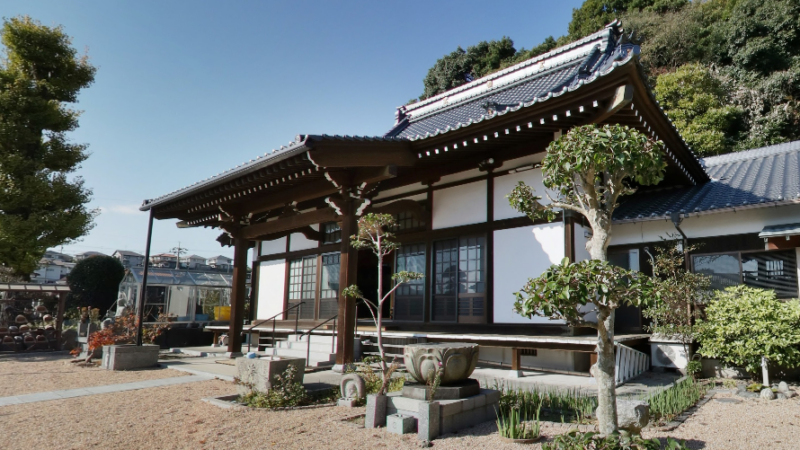
Besides the main hall, several other halls and subsidiary shrines are scattered throughout the spacious grounds. These are remnants of the seven shrine buildings from the era of syncretism of Shinto and Buddhism, evoking the temple’s former prosperity.
Each hall and shrine enshrines a different deity, and each has its own unique faith. By taking your time to slowly explore the grounds, you can experience the profound depth of Japanese religious history.
Annual Events and Festivals
Daikoku Market (January 7th)
The most lively event at Myoken-gu Washizuji Temple is the Daikoku Market, held annually on January 7th. This event, dedicated to Daikokuten, one of the Seven Lucky Gods, attracts approximately 10,000 visitors.
Main Events of the Daikoku Festival
Serving of Seven-Herb Rice Porridge To pray for good health and protection from illness, seven-herb rice porridge is served free of charge to visitors. You can enjoy this traditional festival food made with the seven spring herbs.
Free Amazake (Sweet Rice Wine) Amazake, a warming drink perfect for the cold season, is also offered free of charge. A cup of amazake after your visit will warm both your body and soul.
Rice Bale Carrying Competition A traditional strength competition is held where participants carry heavy rice bales. Loud cheers are given to the contestants, filling the temple grounds with excitement.
New Year’s Lucky Rice Bale Rolling Competition A competition to roll rice bales is also held, attracting many participants as a way to test their luck in the new year.
Waraji Dedication
At the Daikoku Market, many worshippers dedicate straw sandals, imbuing them with their wishes for the year.
The Daikoku Market has become a representative event of the New Year in Kudamatsu City, offering a valuable opportunity to experience local traditional culture.
Setsubun Festival (February 3rd)
Myoken-gu Washizuji Temple is said to be the birthplace of Setsubun in Japan, and the Setsubun Festival on February 3rd holds special significance. Traditional events such as bean-throwing are held during the festival, attracting many worshippers praying for protection from evil and good fortune.
The tradition that the origin of Setsubun events throughout Japan lies in this place demonstrates the historical importance of Myoken-gu Washizuji Temple. Visiting during the Setsubun season allows you to experience the roots of traditional Japanese culture.
Wind Calming Festival (August 30th)
The Wind Calming Festival is held on August 30th. The Wind Chill Festival is a traditional event that has continued since the days when agriculture and fishing flourished, praying for protection from wind damage such as typhoons.
Especially before typhoon season, it is an important festival cherished by the local people as a prayer for the safety of the region and a bountiful harvest.
Access Information
Basic Information
Address 1-10-15 Nakaichi, Kudamatsu City, Yamaguchi Prefecture 744-0014
Sect Shingon-shu Omuro-ha
Mountain Name Myokenzan
Principal Image Myoken Daibosatsu (Myoken Bodhisattva)
Access by Train
Approximately 15 minutes on foot from JR Sanyo Main Line “Kudamatsu Station”. Kudamatsu Station is one of the major stations in Yamaguchi Prefecture, and is easily accessible from Hiroshima and Yamaguchi/Shimonoseki.
The route from the station to the temple is relatively flat and passes through the city center. Along the way, you’ll find shopping streets and other areas, allowing you to enjoy the local atmosphere as you walk.
Access by Car
Approximately 15 minutes from the Sanyo Expressway “Tokuyama East Interchange,” or approximately 10 minutes from the “Kudamatsu Service Area (Smart IC).”
While there is a parking lot for visitors on the temple grounds, congestion is expected during events such as the Daikoku Market, so using public transportation is recommended. Temporary parking may be set up during events, so it’s advisable to check in advance.
Transportation Access in the Surrounding Area
Kudamatsu City is an industrial city located in the eastern part of Yamaguchi Prefecture, facing the Seto Inland Sea. It’s approximately 1 hour by car from Hiroshima City and approximately 40 minutes from Yamaguchi City. It’s also conveniently located as a base for sightseeing in the Shunan area.
Points to Note and Manners When Visiting
Manners for Visiting
Myoken-gu Washizuji Temple is a temple that retains the form of syncretism of Shinto and Buddhism. While there is a torii gate on the approach, please observe basic temple etiquette.
At the main hall, you should clasp your hands together in prayer and offer your prayers quietly. While the Shinto style of two bows, two claps, and one bow is acceptable at the smaller shrines, the basic practice throughout the temple is clasped hands in prayer.
Photography
Photography of the temple grounds and architecture is generally permitted, but there may be restrictions on photographing the interior of the main hall or the Buddha statues. Please check before taking photos, or refrain from taking photos in areas where photography is prohibited.
Clothing and Belongings
There are no specific dress code requirements, but please dress respectfully as this is a religious site. Since there are stairs and slopes on the approach and within the temple grounds, comfortable shoes are recommended.
During events, large crowds are expected, so please take extra care of your valuables.
Goshuin (Temple Seals)
Goshuin are available at Myoken-gu Washizu-ji Temple. Goshuin are popular among visitors as proof of worship and as a way to forge a connection with the temple.
When requesting a goshuin, please bring your goshuincho (stamp book) and ask respectfully. It’s important to understand that Goshuin (temple/shrine stamps) are not merely stamps, but symbols of faith, and to treat them with respect.
For information on Goshuin reception hours and locations, please check the temple’s information board or office during your visit. Reception hours may differ on event days.
Nearby Tourist Attractions
Komatsu Shrine
Located in Kudamatsu City, Komatsu Shrine is known for the legend of the pine tree where a star fell. This legend is said to be the origin of the place name “Kudamatsu,” and it has a deep connection to the Myoken faith of Myoken-gu Washizuji Temple.
Visiting both Myoken-gu Washizuji Temple and Komatsu Shrine will allow you to gain a deeper understanding of Kudamatsu’s history and legends.
Kudamatsu Health Park
This comprehensive leisure facility in Kudamatsu City features a heated swimming pool, hot springs, and restaurants. It’s an ideal relaxation spot after visiting the temple.
Especially during the summer, the “Kudamatsu Health Park Leisure Pool” is popular, making it a facility that families can enjoy.
Sightseeing in the Shunan Area
Kudamatsu City is located in the Shunan region, and the surrounding area boasts a variety of tourist attractions, including Tokuyama Zoo, Shunan City Museum of Art and History, and the Kaiten Memorial Museum. You can enjoy sightseeing in the Shunan area starting from Myoken-gu Washizu-ji Temple.
Accommodation Information
Hotels and Accommodations in the Area
Kudamatsu City and the surrounding area offer a variety of accommodations, from business hotels to hot spring inns.
Business hotels such as HOTEL AZ Yamaguchi Kudamatsu offer comfortable stays at reasonable prices. There are also accommodations with scenic views along the Seto Inland Sea, such as Kokumin Shukusha Oshiro.
During events such as the Daikoku Market, accommodations can become crowded, so early reservations are recommended.
Summary of the Charms of Myoken-gu Washizu-ji Temple
Myoken-gu Washizu-ji Temple has a long history of approximately 1400 years and is a temple with a special history as the birthplace of Setsubun (the bean-throwing festival) in Japan. Myoken-gu Washizuji Temple boasts a multifaceted appeal, encompassing its history as the tutelary shrine of the Ouchi clan, its value as a precious cultural asset preserving the syncretism of Shinto and Buddhism, and its deeply rooted local annual events.
In particular, the unique landscape, a fusion of Shinto and Buddhist elements—such as the Gongen-zukuri style main hall, the straw sandal offerings at the Niomon gate, and the torii gates along the approach—makes it a valuable place to experience Japanese religious history.
Every year on January 7th, the Daikoku Market attracts approximately 10,000 visitors, featuring traditional events such as the serving of seven-herb rice porridge and a rice bale carrying competition. The Setsubun Festival on February 3rd and the Kazechiru Festival on August 30th also offer valuable opportunities to experience local traditional culture.
Its convenient location, within walking distance of JR Kudamatsu Station, is another attractive feature. When visiting Yamaguchi Prefecture, be sure to visit Myoken-gu Washizuji Temple and experience a peaceful pilgrimage in a space steeped in history and tradition.
Points to Note Before Visiting
Please note the following points when visiting Myoken-gu Washizuji Temple.
- Opening hours and visiting hours may change depending on the season and events.
- During events such as the Daikoku Market, procedures may differ from usual.
- Some facilities may be unavailable due to weather or temple circumstances.
- We recommend checking directly with the Kudamatsu City Tourism Association or the temple for the latest information.
Myoken-gu Washizuji Temple is a historical and cultural spot that Kudamatsu City, Yamaguchi Prefecture, is proud of. Experience the depth of Japanese traditional culture and history at this ancient temple, affectionately known as “Myoken-sama.”