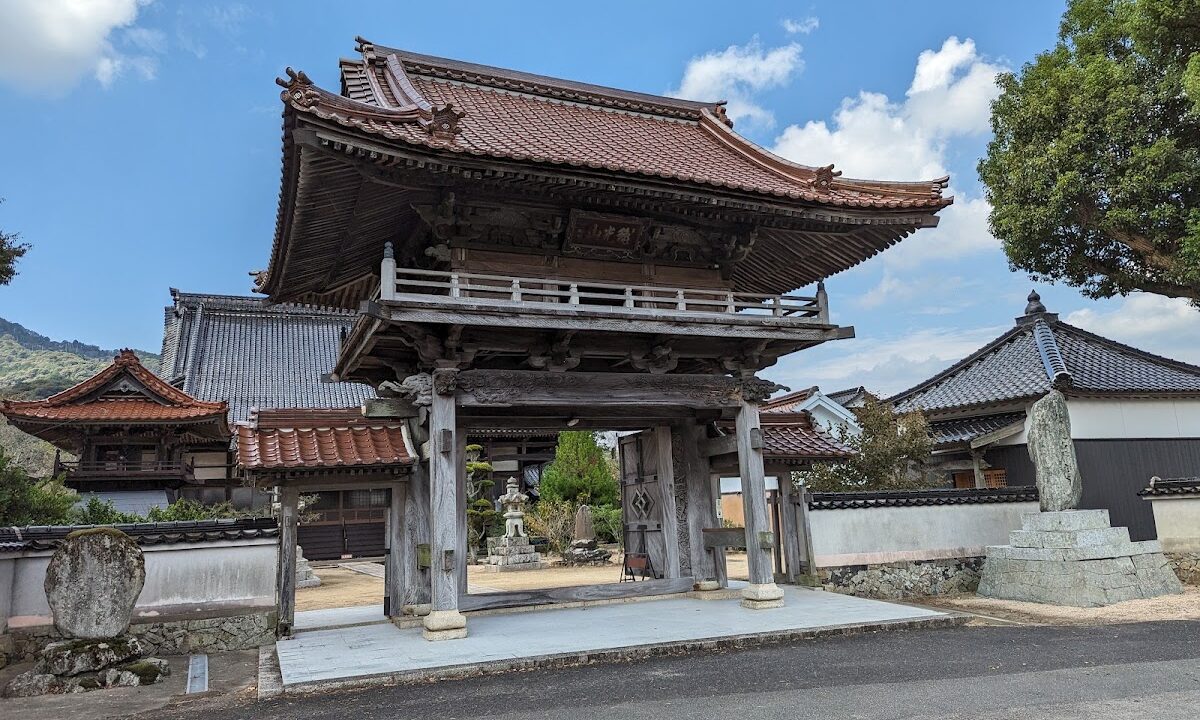
Complete Guide to Kaiyuji Temple (Shimonoseki City, Yamaguchi Prefecture) | Exploring the History of the Ming Dynasty Edition of the Buddhist Canon and the Katsura Family
Kaiyuji Temple, located in Kikugawa-cho, Shimonoseki City, Yamaguchi Prefecture, is known as a temple associated with Katsura Hiroshige, a senior retainer of the Chofu Domain, and as a temple that houses the Ming Dynasty edition of the Buddhist Canon, a prefectural designated cultural property. This article provides detailed information useful for those considering a visit to Kaiyuji Temple, including its history, cultural assets, access methods, and surrounding area information.
What is Kaiyuji Temple? | A Historic Jodo Sect Temple in Shimonoseki City, Yamaguchi Prefecture
Kaiyuji Temple is a Jodo sect temple located at 224 Yoshiga, Kikugawa-cho, Shimonoseki City, Yamaguchi Prefecture. Its mountain name is Shukozan, and it is known as the family temple of the Katsura family, who were senior retainers of the Chofu Domain.
There are approximately 1,413 temples in Yamaguchi Prefecture today, and 259 temples in Shimonoseki City alone. Among them, Kaiyuji Temple is positioned as an important temple possessing cultural assets of particularly high historical value.
Basic Temple Information
- Location: 224 Yoshiga, Kikugawa-cho, Shimonoseki City, Yamaguchi Prefecture
- Sect: Jodo-shu Seizan-ha
- Mountain Name: Akimitsu-zan
- Principal Image: Amida Buddha
- Founder: Gen’a Shonin (Died in Eiroku 12, 1569)
- Cultural Property: Ming Dynasty edition of the Tripitaka (Yamaguchi Prefecture Designated Tangible Cultural Property)
History of Kaiyuji Temple | From Shozen-in to Kaiyuji Temple
The history of Kaiyuji Temple dates back to the late Muromachi period. According to the “Temple History,” the temple was founded by Gen’a Shonin, who passed away in 1569. Initially, it was called “Shozen-in.”
Origin of the Temple Name Change
The temple’s current name, “Kaiyuji,” was adopted during the time of the 5th abbot, Tonku Kyorin Shonin, in 1607. This name change has an important background.
Katsura Hiroshige, a senior retainer of the Chofu Domain, owned land in Yoshiga, Kikugawa-cho. After Katsura Hiroshige’s death, a temple was built on the site of his residence. The temple’s name was changed to “Kaiyuji” after Katsura Hiroshige’s posthumous Buddhist name, “Kaiyu,” reflecting his efforts in the reconstruction. Thus, Kaiyuji came to serve as the Katsura family’s ancestral temple.
Kaiyuji in the Edo Period
Throughout the Edo period, Kaiyuji flourished under the patronage of the Katsura family. In the early Meiji period, the temple had grown to have five branch temples within Toyoura County, functioning as a central temple of the Jodo-shu Seizan sect in the region.
Katsura Hiroshige and the Katsura Family | The Relationship Between a Senior Retainer of the Chofu Domain and Kaiyuji Temple
The existence of Katsura Hiroshige and the Katsura family is indispensable when discussing Kaiyuji Temple.
Who was Katsura Hiroshige?
Katsura Hiroshige was a prominent figure who served as a senior retainer of the Chofu Domain (a domain centered around the Chofu area of present-day Shimonoseki City, Yamaguchi Prefecture). He held territory in Yoshiga, Kikugawa Town, and was involved in the governance of this region. The Katsura family was a prestigious family that served the Chofu Domain for generations and played an important role in the domain’s administration.
Role as a Family Temple
After Katsura Hiroshige’s death, Kaiyuji Temple, built on the site of his former residence, became the family temple for successive generations of the Katsura family, a place where memorial services and Buddhist ceremonies for the family were held. The inclusion of his posthumous Buddhist name, “Kaiyu,” in the temple’s name expresses the deep connection between the Katsura family and the temple. ## Ming Dynasty Edition of the Complete Buddhist Canon | A Treasure Designated as a Tangible Cultural Property of Yamaguchi Prefecture
The greatest highlight of Kaiyuji Temple is the “Ming Dynasty Edition of the Complete Buddhist Canon,” designated as a Tangible Cultural Property of Yamaguchi Prefecture.
What is the Complete Buddhist Canon?
The Complete Buddhist Canon (Issaikyo) is a comprehensive collection of Buddhist scriptures, also known as the “Great Buddhist Canon.” It is a vast collection of scriptures encompassing all Buddhist teachings, including the three treasures of sutras, vinaya, and abhidharma.
Characteristics of the Ming Dynasty Edition of the Complete Buddhist Canon
The Ming Dynasty Edition of the Complete Buddhist Canon held by Kaiyuji Temple was published during the Ming Dynasty in China. Due to advancements in printing technology, the Ming Dynasty editions of the Complete Buddhist Canon were produced with exquisite detail, and many were brought to Japan.
The Ming Dynasty Edition of the Complete Buddhist Canon at Kaiyuji Temple is housed in a revolving sutra repository on the temple grounds. This repository itself has high historical value, and its revolving structure is based on the belief that one can gain the same merit as by reciting the scriptures.
Cultural Value
The Ming Dynasty edition of the Buddhist canon at Kaiyuji Temple, designated as a cultural property of Yamaguchi Prefecture, possesses high value in the following respects:
- Completeness: Preserved in a relatively complete form as a complete canon.
- Condition: Maintained in good condition through proper storage in the sutra repository.
- Historical Significance: Important as evidence of Japan-Ming trade and cultural exchange.
- Regional Value: Valuable material demonstrating the spread of Buddhist culture in Yamaguchi Prefecture.
Highlights on the Temple Grounds | Revolving Sutra Repository and Main Hall
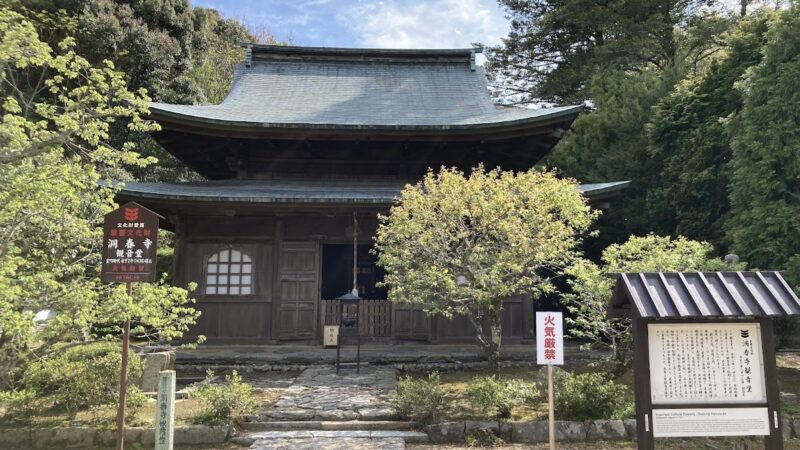
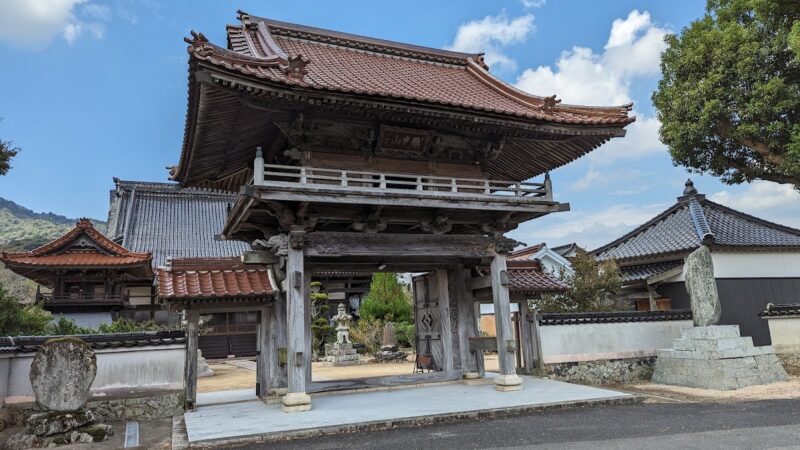
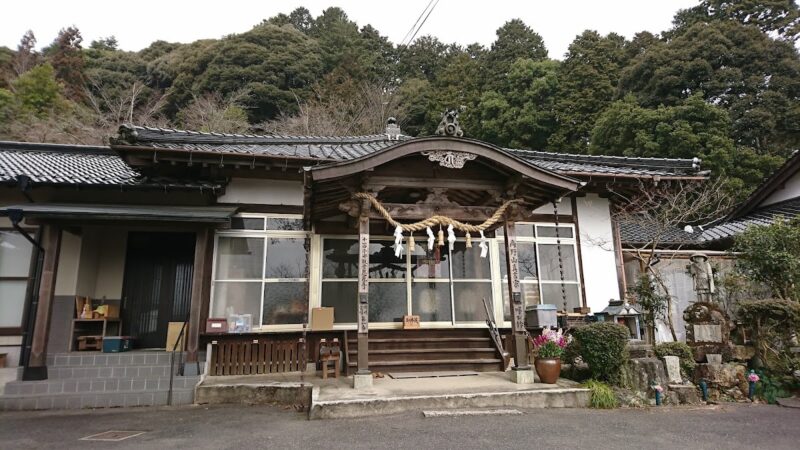
There are several noteworthy buildings on the grounds of Kaiyuji Temple.
Revolving Sutra Repository
The revolving sutra repository, which houses the Ming Dynasty edition of the Buddhist canon, is the main highlight of a visit to Kaiyuji Temple. There is a belief that rotating the sutra repository once grants the same merit as reciting all the scriptures, and visitors are allowed to rotate the repository.
While revolving sutra repositories can be found in temples throughout Japan, examples containing the precious cultural artifact of the Ming Dynasty edition of the Complete Buddhist Canon are limited, making the sutra repositories at Kaiyuji Temple particularly valuable.
Main Hall
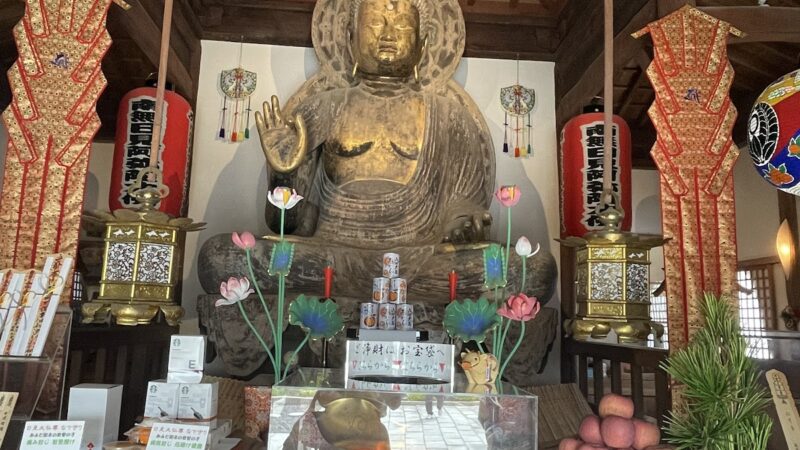
The main hall of Kaiyuji Temple houses the principal image, Amida Buddha. As a temple of the Jodo-shu Seizan sect, faith centered on Amida Buddha is maintained. The architectural style and interior decoration of the main hall reflect the prestige of its status as the Katsura family’s ancestral temple.
Atmosphere of the Temple Grounds
Located in the naturally rich environment of Yoshiga, Kikugawa-cho, the grounds of Kaiyuji Temple are enveloped in a tranquil atmosphere. With its historical background as the former residence of Katsura Hiroshige, this place offers visitors a sense of historical weight and spiritual peace.
Access | How to Get to Kaiyuji Temple
Kaiyuji Temple is located in Kikugawa-cho, Shimonoseki City, Yamaguchi Prefecture, and can be accessed by the following methods.
Access by Car
- Chugoku Expressway: Approximately 15 minutes from Ozuki IC
- Sanyo Expressway: Approximately 25 minutes from Shimonoseki IC via National Route 491
- Parking: Parking spaces for visitors are available on the temple grounds (prior confirmation is recommended)
Access by Public Transportation
- JR Sanyo Main Line: Approximately 15 minutes by taxi from Ozuki Station
- Bus: Take a Shimonoseki City Bus or Sanden Bus towards Kikugawa (a short walk from the nearest bus stop may be required)
Notes on Access
Kikugawa Town is located in the northeastern part of Shimonoseki City, and public transportation is limited. Access by car is the most convenient, but consider taking a taxi. It is recommended to check opening hours and whether there are any religious services before visiting.
Nearby Tourist Attractions | Highlights of Kikugawa Town and Shimonoseki City
When visiting Kaiyuji Temple, you can also visit nearby tourist attractions.
Highlights of Kikugawa Town
- Kikugawa Onsen: A hot spring facility popular with locals
- Michi-no-Eki Kikugawa: Where you can buy local agricultural products and specialty goods
- Nature of Kikugawa Town: Rich rural landscapes and satoyama scenery
Major Tourist Attractions in Shimonoseki City
- Shimonoseki Municipal Aquarium (Kaikyokan): Exhibits marine life from the Kanmon Strait
- Karato Market: A market where you can enjoy fresh seafood
- Akama Shrine: A shrine dedicated to Emperor Antoku, who drowned himself in the Battle of Dan-no-ura
- Kozanji Temple: A temple associated with the Mori family, lords of the Chofu Domain
- Chofu Castle Town: A historical townscape with remaining samurai residences
Historical Exploration Route
Kaiyuji Temple is the family temple of the Katsura clan and has deep ties to the Chofu Domain. Therefore, incorporating it into a historical exploration route that includes visits to samurai residences and Kozanji Temple in the Chofu area will allow for a deeper understanding of the region’s history.
Points to Note and Manners When Visiting
When visiting Kaiyuji Temple, please note the following:
Visiting Manners
- Be Quiet: Temples are places of prayer. Please pray quietly.
- Photography: Please obtain permission in advance before photographing cultural properties.
- Dress Code: There are no particularly strict regulations, but modest attire is desirable.
- Use of the Sutra Repository: Please handle the revolving sutra repository carefully when turning it.
About Visiting
- Visiting Hours: Generally, visits are possible during the day, but entry may be restricted due to religious services, etc.
- Admission Fee: Usually free, but a fee may be required for special viewings.
- Viewing the Ming Dynasty Edition of the Complete Buddhist Canon: Due to cultural property preservation, detailed viewing of the interior of the sutra repository may not be possible under normal circumstances.
Advance Confirmation Recommended
If you are visiting from afar or wish to view the Ming Dynasty Edition of the Complete Buddhist Canon in detail, it is recommended that you contact the temple in advance to confirm. Checking the schedule of religious services and events, and whether viewing is possible, will give you peace of mind.
The Temple Culture of Yamaguchi Prefecture and the Position of Kaiyuji Temple
Yamaguchi Prefecture has long served as a gateway for exchange with the Asian continent, and flourished as the base of the Ouchi clan during the Sengoku period and the Mori clan during the Edo period. Due to this historical background, numerous historically significant temples exist within the prefecture.
Major Temples in Yamaguchi Prefecture
- Rurikoji Temple (Yamaguchi City): Known for its National Treasure five-story pagoda
- Tokoji Temple (Hagi City): One of the Mori family’s ancestral temples
- Kozanji Temple (Shimonoseki City): A temple associated with the Mori family, lords of the Chofu Domain
Characteristics of Kaiyuji Temple
Although smaller in scale compared to these famous temples, Kaiyuji Temple possesses unique value in the following respects:
- Cultural Property: Houses a Ming Dynasty edition of the Complete Buddhist Canon, a prefecturally designated cultural property
- History of Domain Administration: Clearly positioned as the ancestral temple of the Katsura family, important retainers of the Chofu Domain
- Regional Characteristics: Embodying the history and culture of the Kikugawa town area
Kaiyuji Temple and the Jodo-shu Seizan School
Kaiyuji Temple belongs to the Jodo-shu Seizan school. Understanding the Jodo-shu Seizan school will clarify the characteristics of Kaiyuji Temple’s faith.
What is the Jodo-shu Seizan School?
The Jodo-shu Seizan School is a branch of the Jodo sect, founded by Shoku Shonin (Seizan Shonin), a disciple of Honen Shonin. Its head temple is Komyoji Temple in Kyoto. It teaches the belief in Amida Buddha’s original vow and the desire for rebirth in the Pure Land through the recitation of the Nembutsu (invocation of Amida Buddha).
Characteristics of the Seizan School
- Reliance on Other Power: Emphasis on salvation through the power of Amida Buddha’s original vow
- Nembutsu Practice: Practice of chanting the Nembutsu, “Namu Amida Butsu”
- Emphasis on Scholarship: Inheriting Shoku Shonin’s aspect as a scholarly monk, it values doctrinal study.
The Ming Dynasty edition of the Buddhist canon held by Kaiyu-ji Temple is also thought to be related to this tradition of emphasizing scholarship.
Best Season and Ways to Enjoy a Visit to Kaiyuji Temple
Seasonal Charms
- Spring (March-May): The season of fresh greenery; the trees in the temple grounds bud, creating a refreshing atmosphere.
- Summer (June-August): Enjoy the coolness of the lush green temple grounds.
- Autumn (September-November): The autumn leaves are beautiful, making it the perfect season for historical walks.
- Winter (December-February): Experience a deeper spirituality in the tranquil temple grounds.
Recommended Visiting Plans
- Historical Exploration Course: Kaiyuji Temple → Chofu Castle Town → Kozanji Temple (Duration: Half a day to 1 day)
- Cultural Heritage Tour Course: Kaiyuji Temple’s Ming Dynasty Buddhist Canon → Rurikoji Temple’s Five-Storied Pagoda (Duration: 1 day)
- Shimonoseki Full Enjoyment Course: Kaiyuji Temple → Karato Market → Kanmon Strait (Duration: 1 day)
The Future of Kaiyuji Temple and Cultural Property Preservation
The Ming Dynasty edition of the Buddhist canon, housed at Kaiyuji Temple, is a valuable cultural property requiring appropriate protection. While the storage method using a rotating sutra repository is traditional, it holds significant importance from a modern perspective of cultural property preservation.
Cultural Property Preservation Efforts
In Yamaguchi Prefecture, regular condition checks and improvements to the preservation environment are carried out regarding the protection of the Ming Dynasty edition of the Buddhist canon, a prefecturally designated cultural property. It is also important for visitors to treat cultural properties with care and to be mindful of passing them on to future generations.
Engagement with the Community
Kaiyuji Temple is an important center for conveying the history and culture of Kikugawa Town. It is expected to be utilized for local history education and as a tourist resource, and efforts are needed for local residents and the temple to cooperate in widely disseminating its value.
Summary | The Charm and Significance of Visiting Kaiyuji Temple
Kaiyuji Temple, located in Kikugawa-cho, Shimonoseki City, Yamaguchi Prefecture, holds high historical and cultural value as a temple associated with Katsura Hiroshige, a senior retainer of the Chofu Domain, and as a temple that houses the Ming Dynasty edition of the Complete Buddhist Canon, a prefectural designated cultural property.
The Ming Dynasty edition of the Complete Buddhist Canon, housed in a revolving sutra repository, is a valuable document demonstrating the transmission and acceptance of Buddhist culture in Japan, and speaks to the scholarly tradition of Kaiyuji Temple as a temple of the Jodo-shu Seizan sect.
Kaiyaji Temple, which bears the posthumous Buddhist name of Katsura Hiroshige and has been preserved as the Katsura family’s ancestral temple, is also an important historical site that conveys the history of the Chofu Domain to the present day. Reflecting on history in the tranquil temple grounds and appreciating the value of cultural assets will be a valuable experience for us living in the modern age.
When visiting Shimonoseki City or Yamaguchi Prefecture, be sure to visit Kaiyuji Temple and experience the charm of its history and cultural assets. A treasure trove—the Ming Dynasty edition of the Complete Buddhist Canon—and the story woven from the history of the Katsura family await you.