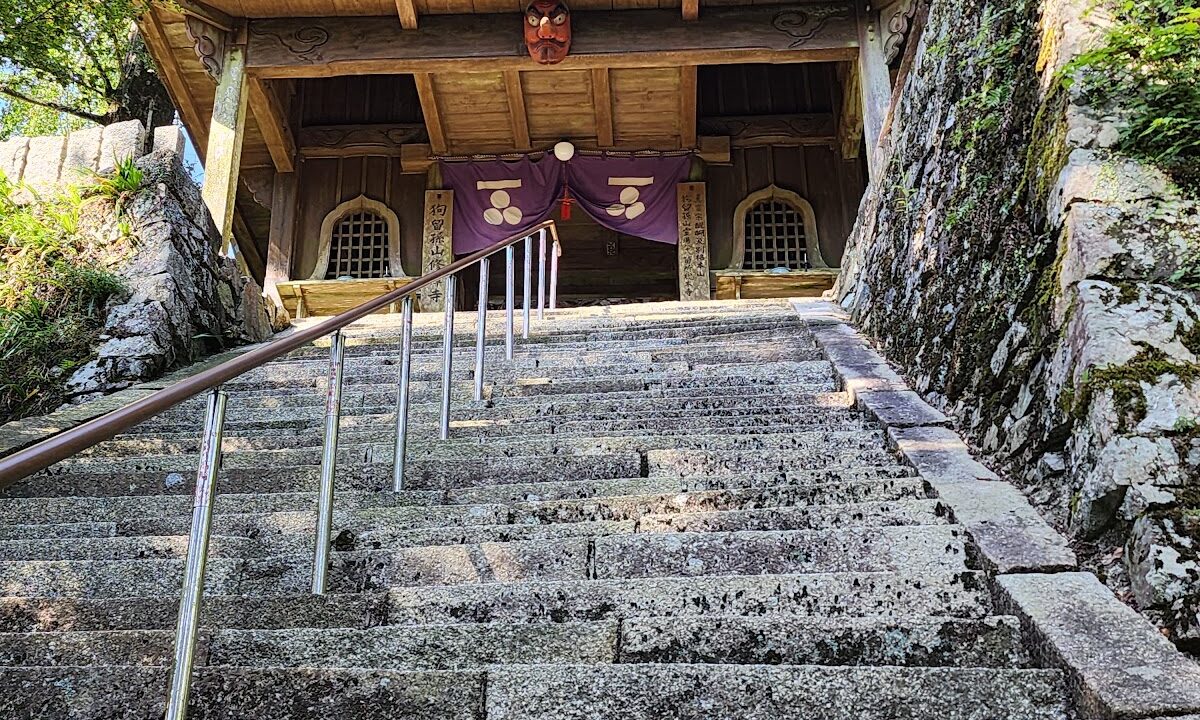
Complete Guide to Shuzenji Temple (Odake Kannon) in Shimonoseki City, Yamaguchi Prefecture | History, Access, and Visiting Information
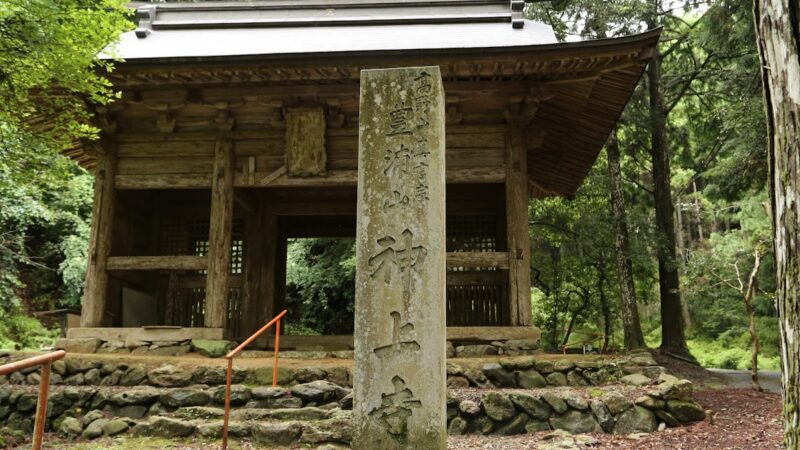
Shuzenji Temple, located on Mt. Kuruson (elevation 616 meters) in Toyoda-cho, Shimonoseki City, Yamaguchi Prefecture, is a special head temple of the Shingon Daigo sect, affectionately known as “Odake Kannon.” With a history of over 1200 years since its founding by Kobo Daishi Kukai, it has long been a sacred mountain for Shugendo (mountain asceticism), attracting many worshippers. This article provides detailed information on Shuzenji Temple’s history, highlights, visiting information, and access methods.
What is Shuzenji Temple (Odake Kannon)?
Shuzenji Temple’s official name is “Kurusonzan Gokokuin Shuzenji,” and it holds an important position among the sacred sites of the Saigoku sect as a special head temple of the Shingon Daigo sect. Locally, it is affectionately known as “Ontake Kannon” or “Odake-san,” and is a sacred site where people of all ages visit to pray for the fulfillment of their wishes.
Meaning and Origin of Kuruson-yama
“Kuruson” is a transliteration of a Sanskrit word meaning “truly wonderful fulfillment.” As this name suggests, Kuruson-yama Shuzenji Temple has been revered since ancient times as a sacred site where people’s wishes are granted. The place name also uses this Sanskrit word, which speaks to the profound spiritual power of this place.
Head Temple of the Kuruson-yama Eighty-Eight Sacred Sites
Shuzenji Temple is also known as the head temple of the Kuruson-yama Eighty-Eight Sacred Sites. This pilgrimage route, modeled after the 88 temples of Shikoku, is a pilgrimage route that visits temples scattered throughout the Kuruson Mountain area, and is a center of faith visited by many pilgrims.
History and Origins of Shuzenji Temple
Founded by Kobo Daishi Kukai
Shuzenji Temple is said to have been founded in 807 AD by Kobo Daishi Kukai. After returning from Tang China, Kukai established temples throughout Japan in the process of spreading Shingon Esoteric Buddhism, and it is believed that he recognized the miraculous power of Kuruson Mountain and founded Shuzenji Temple there. This period was the early Heian period, a time when Buddhism in Japan greatly developed.
Restoration by Zen Master Eisai
During the Kamakura period, Zen Master Eisai, who introduced Zen Buddhism to Japan, is said to have visited Shuzenji Temple and restored (restored) the temple. While Eisai is known as the founder of the Rinzai school of Zen Buddhism, his connection with Shuzenji Temple, a Shingon Buddhist temple, is an interesting historical example of trans-sectarian exchange within the Buddhist world at the time. The stay and training of high-ranking monks, including Zen Master Eisai, established Shuzenji Temple’s status as a sacred site for Shugendo (mountain asceticism).
History as a Sacred Mountain of Shugendo
Mount Kuruson has been revered since ancient times as a sacred mountain for mountain worship and Shugendo. Shugendo is a uniquely Japanese religion that uses mountains as a place for ascetic training, a form of faith that fuses Shinto and Buddhism. Mount Kuruson has provided an ideal environment for practicing Shugendo, which involves climbing steep mountain paths and training in nature to gain spiritual power.
Principal Image and Beliefs
Eleven-Faced Kannon Bodhisattva
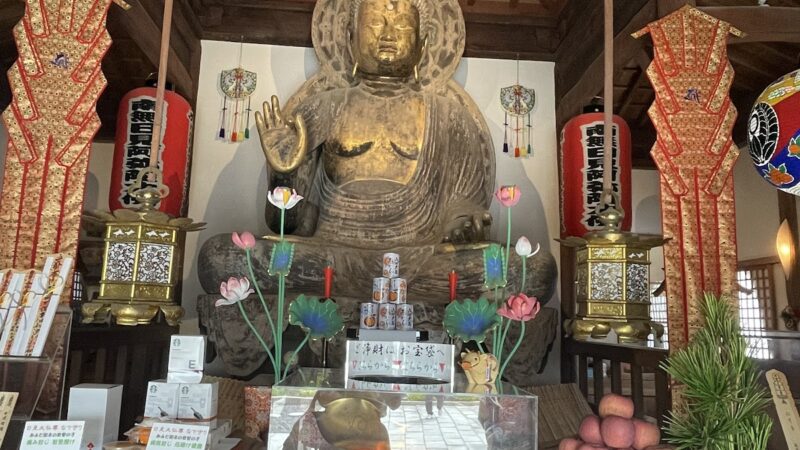
The principal image of Shuzenji Temple is an Eleven-Faced Kannon Bodhisattva, standing 1 shaku 8 sun (approximately 54 centimeters) tall. The Eleven-Faced Kannon is a Bodhisattva of Kannon with eleven faces on its head, symbolizing compassion and the salvation of all sentient beings by looking in all directions. This principal image, known as “Ontake Kannon,” is widely worshipped, attracting pilgrims with various wishes, such as the fulfillment of personal desires, recovery from illness, and family safety.
Faith as a Kannon Pilgrimage Site
Shuzenji Temple has long attracted many worshippers as a Kannon pilgrimage site in western Japan. Kannon worship is particularly popular among the common people within Japanese Buddhism, and Kannon is revered as a familiar figure, “Kannon-sama.” The Kannon at Shuzenji Temple is considered especially miraculous, and pilgrims continue to visit from far and wide.
Shuzenji Temple Grounds and Highlights
Main Hall
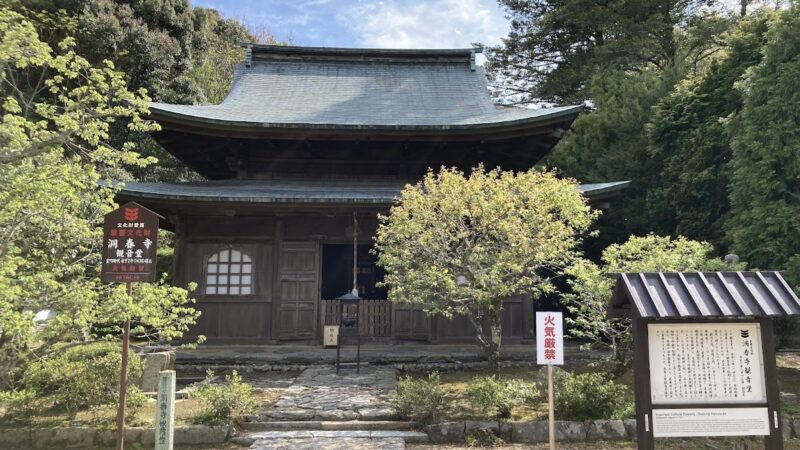
The main hall of Shuzenji Temple is located on the mountainside of Kuruson-yama and is enveloped in a solemn atmosphere. The main hall houses the principal image, the Eleven-Faced Kannon Bodhisattva, allowing worshippers to offer prayers in tranquility. Surrounded by abundant nature, the main hall is a truly sacred space befitting a sacred site.
Kuruson-san Sacred Sites: Eighty-Eight Places
The Kuruson-san Sacred Sites: Eighty-Eight Places, with Shuzenji Temple as its head temple, is a pilgrimage route that visits temples scattered throughout the Kuruson-san area. Modeled after the Shikoku Pilgrimage, this sacred site enshrines Kobo Daishi or Kannon Bodhisattva at each temple, and it is believed that great merit can be gained by visiting all of them. The pilgrimage route is a full-fledged course including mountain trails, and also functions as a place for spiritual training.
Natural Environment and Scenery
Kuruson-san, at an altitude of 616 meters, is a sacred mountain blessed with abundant nature. You can enjoy the beautiful scenery of each season: fresh greenery in spring, deep green in summer, autumn leaves in fall, and snowscapes in winter. From near the summit, you can enjoy a panoramic view of Shimonoseki city and the surrounding mountains. Visiting the temple amidst nature is a refreshing experience for both mind and body.
Visiting Information
Location and Basic Information
Location: Mokuroji, Toyoda-cho, Shimonoseki City, Yamaguchi Prefecture
Sect: Shingon-shu Daigo-ha
Status: Special Head Temple
Principal Image: Eleven-faced Kannon Bodhisattva
Founder: Kobo Daishi Kukai (807 AD)
Restoration: Zen Master Eisai
Visiting Hours and Admission Fee
Shuzenji Temple is generally open for daytime visits. However, due to its mountainous location, visiting during daylight hours is recommended. Especially in winter, sunset is early, so visiting from morning to early afternoon is safest. It is recommended to check with the temple in advance regarding admission fees.
Annual Events and Festivals
Shuzenji Temple holds various Buddhist services and festivals throughout the year. Many visitors come, especially on the days of Kannon (Goddess of Mercy) and Kobo Daishi (Kukai). For detailed event schedules, it is recommended to check the temple’s official information.
Access
Access by Car
Shuzenji Temple is easily accessible by car. From the center of Shimonoseki City, take National Route 491 towards Toyoda-cho. The journey takes approximately one hour from Shimonoseki Station.
Route from Major Roads:
- Approximately 40 minutes from the Chugoku Expressway “Ozuki IC”
- Approximately 50 minutes from the Sanyo Expressway “Shimonoseki IC”
Parking Information
Shuzenji Temple has a parking lot for visitors. However, due to its mountainous location, parking space is limited. Especially during festivals and temple days, congestion is expected, so it is recommended to visit with plenty of time to spare.
Access by Public Transportation
If using public transportation, you will need to take a bus or taxi from either JR San’in Main Line’s “Ozuki Station” or “Shimonoseki Station.” However, due to the mountainous location, public transportation services are limited, and access by car is recommended.
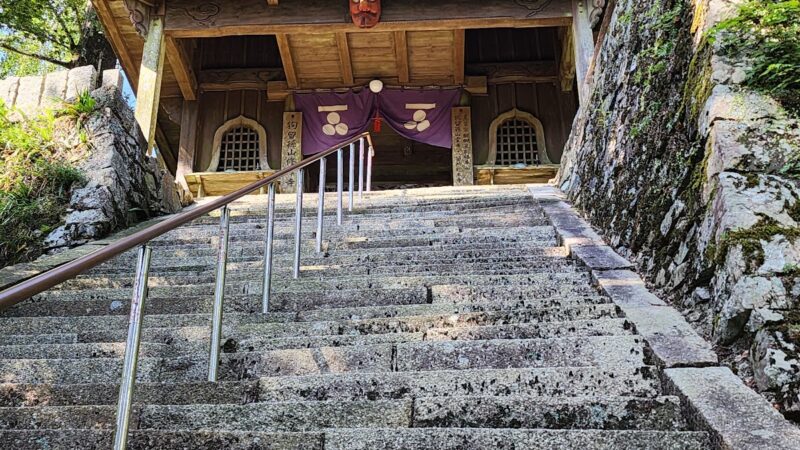
Regarding Visiting on Foot: From the parking lot to the main hall, you will need to walk up a mountain path. We recommend wearing comfortable shoes and clothing suitable for walking.
Points to Note and Manners When Visiting
Clothing and Equipment
Since Shuzenji Temple is located in a mountainous area, appropriate clothing and equipment are necessary for visiting. Please pay particular attention to the following points:
- Comfortable shoes: Sneakers or hiking boots are recommended as you will be walking on mountain trails.
- Comfortable clothing: Choose clothing that allows for easy movement as there are stairs and slopes.
- Seasonal precautions: Insect repellent and sun protection are necessary in summer, and warm clothing is necessary in winter.
- Drinking water: Bring drinking water for hydration, especially in summer.
Etiquette for Visiting the Temple
It is important to observe proper etiquette when visiting a sacred site:
- Quietness: Be quiet within the temple grounds and do not disturb the prayers of other visitors.
- Photography: Refrain from taking photos in areas where photography is prohibited, such as inside the main hall.
- Nature conservation: Always take your trash with you and protect the natural environment.
- Proper worship etiquette: Bow before entering the main hall and bow again after offering your prayers.
Nearby Tourist Attractions
Highlights of Toyoda-cho
Toyoda-cho in Shimonoseki City, where Shuzenji Temple is located, offers many other attractive tourist spots. With its rich natural environment and numerous historical cultural assets, visiting these areas in conjunction with a visit to Shuzenji Temple will provide a more fulfilling travel experience.
Sightseeing in Shimonoseki City
Shimonoseki City is located at the westernmost tip of Honshu and boasts many tourist attractions, including the Kanmon Strait, Karato Market, and Akama Shrine. Combining sightseeing in Shimonoseki City before and after your visit to Shuzenji Temple allows you to create a fulfilling itinerary that allows you to enjoy history, nature, and gourmet food.
The Charm and Significance of Visiting Shuzenji Temple
As a Sacred Site for Fulfilling Wishes
As evidenced by its name, “Kuruson-yama,” meaning “truly wondrous fulfillment,” Shuzenji Temple holds a special place as a sacred site for fulfilling wishes. Its history of receiving the wishes of many people for over 1200 years speaks to the profound spiritual power of this sacred site.
Preserving the Tradition of Shugendo
Shuzenji Temple, which continues to uphold the tradition of Shugendo even in modern times, is a valuable resource for understanding Japanese religious culture. As a place of practice for Shugendo, a fusion of mountain worship and Buddhism, and as a center of Kannon worship, Shuzenji Temple continues to attract many believers.
Faith in Harmony with Nature
Visiting Shuzenji Temple, nestled in the rich natural environment of Mount Kuruson, offers a precious opportunity to escape the hustle and bustle of the city and find peace of mind. By offering prayers in harmony with nature, you can refresh your mind and body and gain new vitality.
About the Shingon-shu Daigo-ha
Characteristics of the Daigo-ha
The Shingon-shu Daigo-ha, to which Shuzenji Temple belongs, is a branch of the Shingon sect with Daigoji Temple in Kyoto as its head temple. It is characterized by its deep connection with Shugendo, while being based on the teachings of Shingon Esoteric Buddhism. The fact that Shuzenji Temple holds the high status of a special head temple indicates its important position within the Daigo school of Shingon Buddhism.
Faith in Kobo Daishi
Faith in Kobo Daishi Kukai, the founder of Shingon Buddhism, is an important element of Shingon temples. At Shuzenji Temple, devotion to Kobo Daishi is strong, and he is revered as the temple’s founder. The 88 sacred sites of Kuruson-san are modeled after the 88 sacred sites of Shikoku, which were founded by Kobo Daishi.
Preparation and Planning for Your Visit
Best Season to Visit
Shuzenji Temple is open to visitors throughout the year, but each season has its own characteristics:
Spring (March-May): The fresh greenery is beautiful, and the weather is mild, making it ideal for visiting. However, those with hay fever should take precautions.
Summer (June-August): The temple grounds, enveloped in deep green, are cool, but insect repellent and hydration are essential. Autumn (September-November): The autumn foliage is beautiful, and this is the season with the most visitors. The weather is stable and pleasant.
Winter (December-February): The snowy scenery is magical, but be careful of icy roads. Dress warmly.
Estimated Time Required
The time required for a visit to Shuzenji Temple varies depending on the content of your visit:
- Visiting the Main Hall Only: Approximately 1-2 hours
- Including a Stroll Through the Temple Grounds: Approximately 2-3 hours
- Pilgrimage to the 88 Temples: Half a day to a full day (depending on physical strength and experience)
By visiting with ample time, you can stroll through the temple grounds at your leisure and offer your prayers in peace.
Connection with the Community
Center of Local Faith
Shuzenji Temple is deeply connected to the local community as a center of faith for the surrounding area, including Toyoda-cho in Shimonoseki City. For the local people, “Odake-san” is a familiar presence, a place of solace they visit during life’s turning points and difficult times.
Value as a Cultural Asset
Shuzenji Temple, with its history of over 1200 years, also holds an important cultural asset status in Yamaguchi Prefecture. The temple’s cultural properties, including historical buildings, Buddhist statues, and ancient documents, are valuable resources that convey the region’s history.
Summary: The Significance of Visiting Shuzenji Temple
Shuzenji Temple (Ontake Kannon), nestled on Mount Kuruson in Shimonoseki City, Yamaguchi Prefecture, is a special head temple of the Shingon Daigo sect, with a history of over 1200 years since its founding by Kobo Daishi Kukai. As the name Mount Kuruson, meaning “truly wondrous achievement,” suggests, it has attracted the faith of many as a sacred site for the fulfillment of wishes.
As a sacred mountain of Shugendo and a sacred site of Kannon, Shuzenji Temple conveys an important aspect of Japanese religious culture to the present day. Visiting a temple amidst its rich natural environment will bring peace of mind and renewed vitality to those of us living in modern society.
When you visit Shimonoseki City, why not extend your trip to Shuzenji Temple and offer a quiet prayer at this historic sacred site? The nature of Mount Kuruson and its 1200 years of history will surely warmly welcome visitors.