Complete Guide to Katsugunzan Atago-ji Temple (Shimonoseki City, Yamaguchi Prefecture): History, Faith, and Visiting Information
Located in Misaki-cho, Shimonoseki City, Yamaguchi Prefecture, Katsugunzan Atago-ji Temple is a temple of extremely significant historical and religious importance as one of the few Tendai sect temples in Japan that continues to enshrine Atago Gongen. This article comprehensively explains the history and details of its faith, which has been preserved to this day, having overcome the major upheaval of the Meiji era’s separation of Shinto and Buddhism and the anti-Buddhist movement.
Overview of Katsugunzan Atago-ji Temple
Katsugunzan Atago-ji Temple is a Tendai sect temple located at 14-13 Misaki-cho, Shimonoseki City, Yamaguchi Prefecture. Known as “Katsugunzan” (mountain name) and “Atago-ji” (temple name), it is a rare temple in Japan that enshrines Atago Gongen as its principal deity.
Located in the Misaki-cho area in the southern part of Shimonoseki City, this temple is surrounded by facilities such as the Bank of Japan Shimonoseki Branch and Kōtoku-in Temple, forming a corner of Shimonoseki City’s historical center. The geographical location of Shimonoseki City, Yamaguchi Prefecture, is deeply intertwined with the history of Shimonoseki, which has flourished since ancient times as a key point for maritime traffic, and Atago-ji Temple has also played a part in that history.
Basic Temple Information
- Official Name: Shōgunzan Atago-ji Temple
- Sect: Tendai Buddhism
- Location: 14-13 Misaki-cho, Shimonoseki City, Yamaguchi Prefecture
- Principal Deity: Atago Gongen
- Features: One of the few temples that continued to enshrine Atago Gongen even after the anti-Buddhist movement
What is Atago Gongen?: The History of War God Worship
Atago Gongen is one of the important deities in Japanese Shinto-Buddhist syncretism, and has been widely worshipped, especially as a god of fire prevention and victory in battle. At the core of this faith lies a unique religious form that fuses Buddhist elements, such as the “Victorious Jizo,” with ancient Japanese mountain worship.
The Appearance and Characteristics of Atago Gongen
Atago Gongen is typically depicted as a warrior clad in armor and mounted on horseback. This is also known as the “Victorious Jizo,” and strongly reflects its character as a god of war. It is common for the figure to hold a sword in its right hand and a jewel in its left, symbolizing both military strength and wisdom.
The worship of Atago Gongen spread throughout Japan, with Mount Atago in Kyoto as its head temple. Particularly during the Sengoku and Edo periods, it attracted fervent devotion, especially among the samurai class, and was revered by many warriors as an object of prayer for victory in battle. The anecdote of Akechi Mitsuhide visiting Mount Atago before the Honnō-ji Incident is a famous example demonstrating the deep connection between Atago Gongen worship and the samurai class.
Development as a War God Worship
The mountain’s name, “Katsugunzan” (meaning “Victorious Army Mountain”), clearly expresses Atago Gongen’s character as a war god. From the medieval to the early modern period, samurai prayed to Atago Gongen for victory before battle and offered thanks after achieving victory.
The aspect of Atago worship as a war god was not merely that of a god of military power, but also that of a guardian deity who upheld justice and repelled evil. For this reason, it came to be widely worshipped not only by samurai but also as a guardian deity protecting local communities.
Atago Shugendo: Fusion with Mountain Worship
Another important aspect of Atago worship is its deep connection with Shugendo (mountain asceticism). The Shugendo practitioners known as Atago Shugendo believed that they could acquire magical and religious powers by performing rigorous training on Mount Atago, a sacred site.
Atago Faith in Shugendo
Shugendo is a unique religious form that arose from the fusion of ancient Japanese mountain worship and Buddhism, particularly Esoteric Buddhism. Mount Atago was positioned as an important sacred site for Shugendo, alongside Mount Hiei and Mount Koya, and many Shugendo practitioners devoted themselves to rigorous training there.
Atago Shugendo training included ascetic practices such as fasting, waterfall meditation, and mountain asceticism, with the aim of gaining supernatural powers through these practices. The Shugendo practitioners also performed unique religious practices linked to Atago Gongen’s role as a god of fire prevention, such as fire-walking rituals.
Relationship with the Tendai Sect
The fact that Shogunzan Atago-ji Temple belongs to the Tendai sect demonstrates the historical connection between Atago faith and the Tendai sect. The Tendai sect played a central role in integrating Japanese mountain worship and Buddhism, with Enryaku-ji Temple on Mount Hiei as its head temple, and established numerous branch temples throughout Japan.
Atago worship also developed as a fusion of Tendai doctrine and Shugendo practices, and was widely accepted in Tendai-affiliated temples. The Tendai tradition at Shogunzan Atago-ji Temple reflects this historical background.
Connection to Sae-no-kami Worship
The worship of Atago Gongen has also been linked to Sae-no-kami worship. Sae-no-kami are deities that protect boundaries and prevent the intrusion of evil from outside, and have long held an important position in Japanese folk beliefs.
Atago Gongen as a Boundary Guardian Deity
The fact that Atago Gongen is often enshrined in boundary locations such as mountaintops, passes, and village entrances reflects its characteristics as a Sae-no-kami. Shimonoseki’s geographical location, at the westernmost tip of Honshu and its gateway to Kyushu, is truly a borderland.
The presence of Shogunzan Atago-ji Temple in Shimonoseki suggests that it has played a role as a guardian deity of the region. In Shimonoseki, a crucial hub for maritime traffic, Atago Gongen is believed to have been worshipped as a god protecting safe voyages and regional peace.
Connection to Fire Prevention Beliefs
The most widely known aspect of Atago Gongen’s worship is its role as a god of fire prevention. In pre-modern Japan, where wooden architecture was prevalent, fire was one of the most feared disasters. Especially in urban areas and port towns, a single fire could cause immense damage, making the belief in a fire prevention god a crucial need.
In port towns like Shimonoseki, the belief in Atago Gongen as a fire prevention deity was particularly important. In port towns densely populated with ships, warehouses, and merchant houses, the risk of fire was always present, and prayers to Atago Gongen became a part of daily religious practice.
Separation of Shinto and Buddhism, the Anti-Buddhist Movement, and the Survival of Atago Temple
The policy of separating Shinto and Buddhism implemented in the early Meiji era, and the accompanying anti-Buddhist movement, marked a major turning point in Japanese religious history. This policy forced the dismantling of syncretic Shinto-Buddhist beliefs, leading to the closure of many temples and the destruction of Buddhist statues and artifacts.
Impact of the Anti-Buddhist Movement
Temples dedicated to Atago Gongen were a typical example of syncretic Shinto-Buddhist beliefs and were therefore particularly strongly affected by the anti-Buddhist movement. Many temples dedicated to Atago Gongen were forced to be converted into shrines or completely abolished. Of the numerous temples dedicated to Atago Gongen throughout Japan, only a very small number remain as temples today.
The effects of the anti-Buddhist movement were severe in the Chugoku region, including Yamaguchi Prefecture. Many temples were abandoned, and Buddhist cultural artifacts were lost. In this context, the fact that Shogunzan Atago-ji Temple survived speaks to the deep faith of the local people and the efforts of those involved with the temple.
Existing Temples Dedicating Atago Gongen
Examples of temples that survived the anti-Buddhist movement and continue to devote Atago Gongen are limited throughout Japan. The following are some of the main temples known to be associated with this tradition:
- Asahiyama Hōenji (Date District, Fukushima Prefecture)
- Atagosan Enryūji (Maizuru City, Kyoto Prefecture)
- Atagosan Jōfukuin Ryūsenji (Matsusaka City, Mie Prefecture)
- Atagosan Kannonji (Fukuoka City, Fukuoka Prefecture)
- Atagosan Chōfukuji (Koyu District, Miyazaki Prefecture)
- Atagosan Ryūgenji (Kitakata City, Fukushima Prefecture)
- Sekiryōzan Fudōin (Himeji City, Hyogo Prefecture)
- Shōgunzan Atagoji (Shimonoseki City, Yamaguchi Prefecture)
- Tsutsujisan Rinshōji (Sennan City, Osaka Prefecture)
These temples hold significant cultural and historical value as precious living witnesses to the history of Japanese religion. Shōgunzan Atagoji is particularly noteworthy as the only example in the Chūgoku region.
Background of Survival and Local Community
Several factors can be considered to have contributed to the survival of Shogunzan Atago-ji Temple, which overcame the anti-Buddhist movement. Firstly, the deep-rooted Atago faith in the Shimonoseki region. In Shimonoseki, which flourished as a port town, the faith in Atago Gongen, the god of fire prevention and safe voyages, was deeply ingrained.
Secondly, its affiliation with the established Tendai sect is also thought to have contributed to its survival. The sect’s organizational support and network with other Tendai temples likely helped it overcome difficult times.
Thirdly, the support of influential local figures and parishioners was also important. In the turbulent period after the Meiji Restoration, the will of the local community to protect the temple is presumed to have been a major factor in its survival.
Historical Background of Misaki-cho, Shimonoseki City
Misaki-cho, where Shogunzan Atago-ji Temple is located, is situated in the southern part of Shimonoseki City and is a historically significant area. Shimonoseki has long flourished as a vital hub for maritime traffic, occupying a strategically important location facing the Kanmon Strait, which connects Honshu and Kyushu.
History and Religious Culture of Shimonoseki
From ancient to medieval times, Shimonoseki was known as “Akamagaseki” and was an important base for the Seto Inland Sea shipping routes. It is also known as the site of the Battle of Dan-no-ura, the final battle between the Taira and Minamoto clans, marking a crucial turning point in Japanese history.
From the medieval to early modern periods, Shimonoseki developed not only as a hub for maritime traffic but also as one of the centers of religious culture. Many temples and shrines were built, and Buddhist culture flourished. Atago-ji Temple on Shogunzan Mountain also played a part in this religious culture of Shimonoseki.
Geography and Culture of Misaki-no-machi
The name Misaki-no-machi itself reflects its geographical feature of being a cape jutting out into the sea. In addition to Atago-ji Temple, this area is home to other temples such as Kōtoku-in, as well as important facilities such as the Shimonoseki branch of the Bank of Japan.
Historically, Misaki-cho formed a central part of Shimonoseki, functioning as a commercial and cultural hub. Even today, it remains an important area of Shimonoseki City, dotted with historical buildings and cultural facilities.
Religious Practices and Annual Events at Atago-ji Temple
At Shogunzan Atago-ji Temple, religious practices based on the Tendai sect are carried out. It is believed that various religious events are conducted in a unique form of worship, with Atago Gongen as the principal deity, fused with the doctrines of the Tendai sect.
Fire Prevention Prayer and Goma Ritual
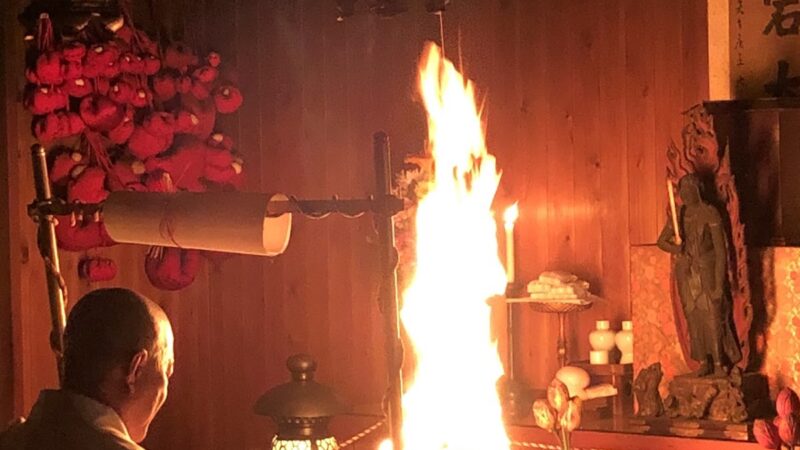
One of the most important religious practices at a temple dedicated to Atago Gongen is the prayer for fire prevention. In particular, the Goma ritual, a esoteric Buddhist ceremony using fire, occupies a central position in Atago worship. The fire of the Goma ritual is believed to have the power to burn away worldly desires and fulfill wishes.
In port towns like Shimonoseki, the constant threat of fire made prayers for fire prevention a pressing religious need for local residents. It is believed that the fire prevention prayers at Atago-ji Temple went beyond mere personal religious practice, possessing a public significance in protecting the safety of the community.
Prayer for Victory and Long-Lasting Military Fortune
As its mountain name, “Shogunzan” (勝軍山), suggests, another important aspect of faith at Atago-ji Temple is the prayer for victory and long-lasting military fortune. Historically, Shimonoseki was a militarily important base and the site of many battles.
Before the modern era, samurai and soldiers prayed to Atago Gongen for victory before going into battle. Even after the Meiji Restoration, during wars such as the First Sino-Japanese War and the Russo-Japanese War, soldiers and their families likely prayed for long-lasting military fortune.
Traditional Tendai Sect Events
As a temple belonging to the Tendai sect, it is believed that Atago-ji Temple also holds traditional Tendai sect annual events. Major events of the Tendai sect include the New Year’s Shushō-e (New Year’s service), the spring and autumn equinox services, and the Obon festival.
Through these events, Atago-ji Temple has functioned as one of the religious centers in the local community, serving as a spiritual anchor for the people.
Cultural Properties and Architecture of Atago-ji Temple
It is believed that Atago-ji Temple on Mount Shōgun possesses various cultural properties and buildings that tell the story of its long history. These cultural properties, which have survived the difficult period of the anti-Buddhist movement, are valuable resources in the history of Japanese religious culture.
Principal Image and Buddhist Statues
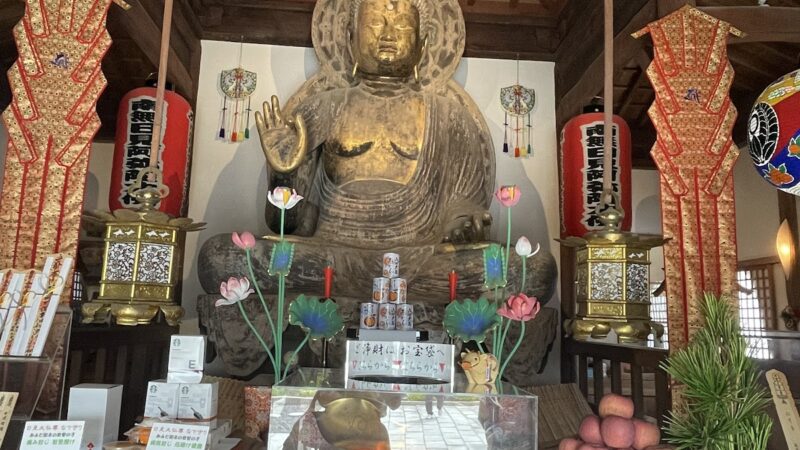
The Atago Gongen statue, the principal image of Atago-ji Temple, is the temple’s most important cultural property. Depicted in armor and mounted on a horse, the Atago Gongen statue strongly retains the characteristics of religious art from the era of syncretism of Shinto and Buddhism.
Furthermore, it’s possible that statues of Jizo Bodhisattva, considered the principal deity of Atago Gongen, and Fudo Myoo, as it’s a Tendai sect temple, are also enshrined there. These Buddhist statues are valuable cultural assets reflecting the beliefs and artistic styles of their respective eras.
Characteristics of Temple Architecture
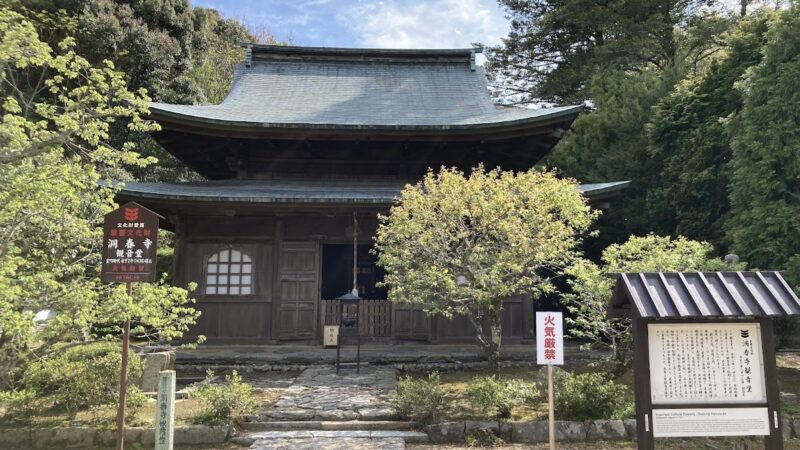
The architectural style of Atago-ji Temple is thought to be based on the traditional form of Tendai sect temples, while also reflecting regional characteristics and historical changes. The main buildings, such as the main hall, priest’s quarters, and temple gate, support the temple’s religious functions.
The architectural style adapted to the climate and environment of Shimonoseki is also an interesting subject of study. There may be architectural ingenuity to cope with the climatic conditions of the Seto Inland Sea coast, which is exposed to typhoons and strong winds.
Visiting Information and Access
This section summarizes practical information for visiting Shogunzan Atago-ji Temple.
Location and Contact Information
- Address: 14-13 Misaki-cho, Shimonoseki City, Yamaguchi Prefecture 750-0006
- Sect: Tendai Buddhism
- Nearest Station: JR Shimonoseki Station
Access Methods
Access by Train:
Train or bus from JR Shimonoseki Station. Located in the center of Shimonoseki City, it is easily accessible by public transport.
Access by Car:
From Shimonoseki IC, head towards the city center. Misaki-cho is located in the southern part of Shimonoseki City and is easily accessible from the city center.
Precautions for Visiting
When visiting a temple, it is expected that you show respect for a religious site and worship in silence. If you wish to take photographs or tour the temple, it is recommended that you check with the temple in advance.
Nearby Tourist Attractions and Cultural Facilities
When visiting Shogunzan Atago-ji Temple, visiting other historical and cultural spots in Shimonoseki City will allow you to gain a deeper understanding of the region’s history and culture.
Major Temples and Shrines in Shimonoseki City
Besides Atago-ji Temple, Shimonoseki City has many other historical temples and shrines. Akama Shrine is famous as a shrine dedicated to Emperor Antoku, who drowned during the Battle of Dan-no-ura. Several temples, including Kōtoku-in Temple, are also scattered around Misaki-machi.
Historical Buildings and Cultural Facilities
Misaki-machi also boasts important modern buildings such as the Shimonoseki Branch of the Bank of Japan. Shimonoseki City also has numerous facilities where you can learn about local history, such as the Shimonoseki City Museum of History.
Kanmon Strait and Surrounding Sightseeing
The Kanmon Strait, Shimonoseki’s greatest tourist resource, is easily accessible from Atago-ji Temple. Visiting representative Shimonoseki tourist spots such as the Kanmon Bridge and the Kanmon Yume Tower allows you to experience the charm of Shimonoseki as a strait city.
The Modern Significance of Atago Faith
What significance does Atago Gongen faith hold in modern society? The existence of Katsugunzan Atago-ji Temple is not merely a historical heritage site, but also possesses religious and cultural value that resonates even today.
Value as a Cultural Heritage Site
Katsugunzan Atago-ji Temple is a living witness to the unique Japanese religious culture of Shinto-Buddhist syncretism. As a temple that survived the Meiji-era separation of Shinto and Buddhism, it is indispensable for understanding the history of Japanese religion.
Amidst the loss of many cultural artifacts due to the anti-Buddhist movement, the continued existence of this temple, which enshrines Atago Gongen, serves as a valuable window into the lost religious culture.
Core of Regional Identity
Atago-ji Temple is one of the important elements that form the identity of the Shimonoseki region. As a temple closely intertwined with the region’s history, it has served as a spiritual anchor for local residents.
Even today, Atago-ji Temple is believed to play a role in supporting the unity of the local community through local festivals and annual events.
Disaster Prevention Awareness and Fire Prevention Belief
The fire prevention belief of Atago Gongen resonates with modern disaster prevention awareness. The importance of fire prevention remains unchanged in modern society, and faith in Atago Gongen functions as a cultural foundation for raising disaster prevention awareness.
Research and Preservation Challenges
Preserving and researching historical temples like Shogunzan Atago-ji presents various challenges.
Preservation of Cultural Properties
Appropriately preserving and passing on cultural properties such as Buddhist statues, ritual objects, and ancient documents handed down within the temple to future generations is a crucial task. In particular, cultural properties that survived the anti-Buddhist movement are valuable resources in the history of Japanese religious culture, and their preservation is urgently needed.
Deepening Historical Research
Further research is needed on the history of Atago-ji. Many points remain to be clarified, such as the temple’s founding period, historical changes, and relationship with the local community. Investigation of ancient documents and collaboration with local history research are required.
Inheritance of Faith
In the midst of modern society’s declining religious affiliation, how to pass on traditional beliefs is a major challenge. Efforts are needed to reinterpret the significance of Atago faith in a modern context and transmit it to the new generation.
Summary: The Historical and Cultural Value of Shogunzan Atago-ji Temple
Shogunzan Atago-ji Temple occupies an extremely important position in Shimonoseki City, Yamaguchi Prefecture, and in the history of Japanese religion. Its history of continuing to enshrine Atago Gongen, even through the major upheaval of the anti-Buddhist movement, demonstrates the diversity and flexibility of Japanese religious culture.
Atago Gongen, with its multifaceted aspects of faith including war god worship, fire prevention worship, and guardian deity worship, provides important clues to understanding the deeper layers of Japanese religious consciousness. Furthermore, the tradition of Atago Shugendo, a fusion of Tendai Buddhism and Shugendo, strongly reflects the characteristics of Japanese mountain worship.
Located in the strait city of Shimonoseki, Atago-ji Temple has played a vital role in the history and culture of the region. As the guardian deity of a port town, the god of fire prevention, and the spiritual center of the local community, Atago-ji Temple has attracted the faith of many people.
Even today, Atago-ji Temple is not merely a historical relic, but continues to hold significant importance as a living place of worship and a core of local culture. Its preservation, research, and transmission of faith are crucial issues in protecting Japan’s cultural heritage.
Visiting Shogunzan Atago-ji Temple will be a valuable opportunity to experience the rich history of Japanese religious culture and discover the charm of the Shimonoseki region. Prayers to Atago Gongen convey the history of Japanese faith spanning over a thousand years.