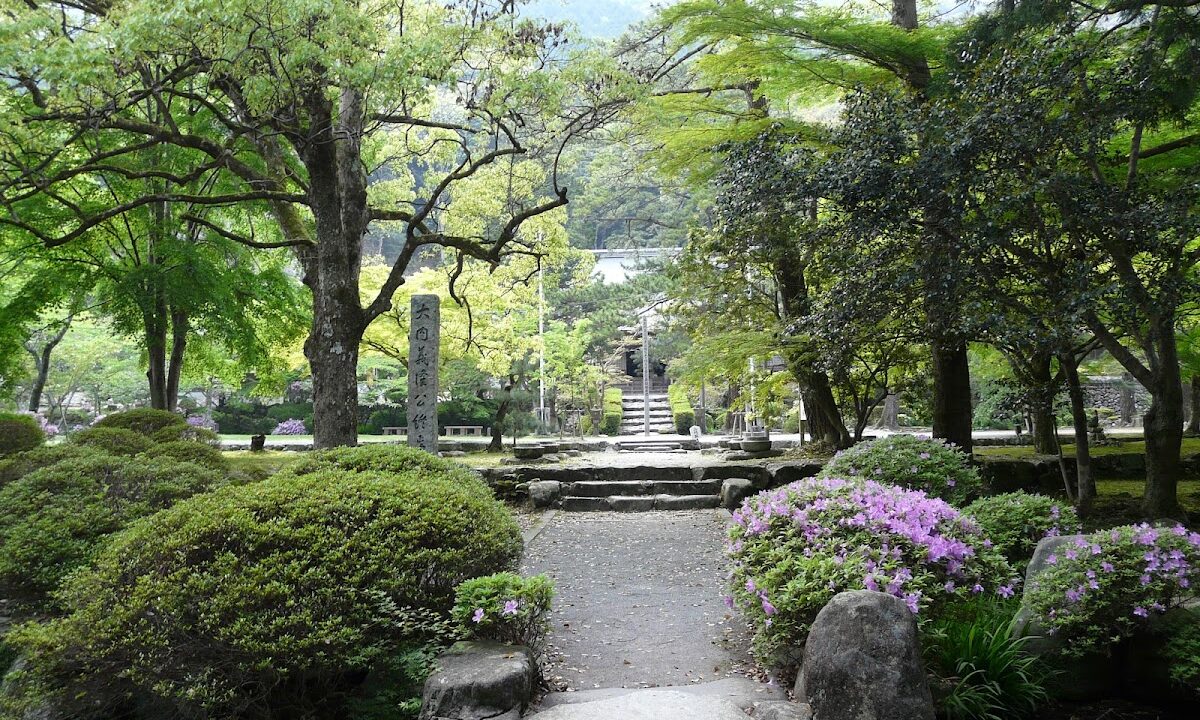
Tainei-ji Temple (Yamaguchi Prefecture) Complete Guide | History, Highlights, Goshuin (Temple Seal), and Access Information
Tainei-ji Temple, located near Nagato Yumoto Onsen in Nagato City, Yamaguchi Prefecture, is a renowned Soto Zen temple founded in 1410. Once boasting such prosperity that it was called the “Koyasan of the West,” it is also known as the final resting place of Ouchi Yoshitaka, a warlord of the Muromachi period. The temple grounds are dotted with historical sights, including the main hall rebuilt during the Edo period, the Banseki Bridge (one of Yamaguchi Prefecture’s three most unusual bridges), and moss-covered sixteen arhats. It also attracts many visitors and tourists as a famous spot for cherry blossoms in spring and autumn foliage.
This article comprehensively introduces everything you need to know before visiting Tainei-ji Temple, from its historical background and highlights to seasonal scenery, goshuin information, Zen meditation experiences, and access methods.
History and Origins of Dainei-ji Temple
Founding and Washizu Hirotada
The official name of Dainei-ji Temple is “Zuiun Banzeisan Dainei Gokoku Zenji.” It is said to have originated in 1410 (Oei 17), when Washizu Hirotada, a member of the Ouchi clan and lord of Fukagawa Castle in Nagato Province, invited Sekioku Shinryo, a high-ranking priest from Soji-ji Temple in Noto Province, to establish Kofuku-ji Temple within the castle grounds.
Washizu Hirotada wielded considerable power as the deputy governor of Nagato Province at the time and was deeply devoted to Sekioku Shinryo. During the Eikyo era (1429-1441), it was formally established as the first Soto Zen temple in Yamaguchi Prefecture, and later renamed Dainei-ji Temple.
The Thriving Period Known as “Koyasan of the West”
From the Muromachi period to the Sengoku period, Dainei-ji Temple flourished as a key temple of the Soto Zen sect in the Chugoku region, boasting such prosperity that it was called “Koyasan of the West.” Many monks dedicated themselves to their training there, and it reached the height of its glory as a center of faith for the surrounding area. Under the patronage of the Ouchi clan, based in Yamaguchi, the temple’s territory expanded.
At its peak, it possessed a vast temple complex and was a large temple with many sub-temples. Even today, the size of the grounds and remaining structures can be imagined as evidence of its former grandeur.
The Final Resting Place of Ouchi Yoshitaka
An essential part of Dainei-ji Temple’s history is its connection to Ouchi Yoshitaka, a Sengoku daimyo of the Muromachi period. The Ouchi clan was a prestigious family that expanded its power from western Chugoku to northern Kyushu, centered in Suo and Nagato provinces, and made Yamaguchi a prosperous “Kyoto of the West.”
In 1551, during the “Dainei-ji Incident,” a rebellion led by his vassal Sue Harukata, Ouchi Yoshitaka fled to Nagato Province. On September 1st, cornered, Yoshitaka entered Dainei-ji Temple and, according to legend, looked at his reflection in the “Mirror Pond” within the temple grounds, realizing his end was near. Yoshitaka committed suicide at Hosen-ji Temple (part of the present-day Dainei-ji Temple), bringing an end to the glory of the Ouchi clan, who had reigned supreme as rulers of western Japan.
Due to this historical event, Dainei-ji Temple holds a significant place in the history of Yamaguchi Prefecture as the site of the Ouchi clan’s demise.
Restoration in the Edo Period and Beyond
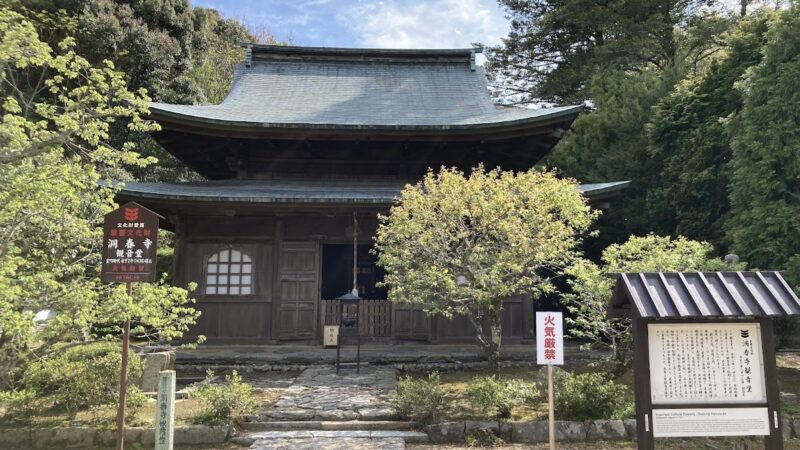
After the fall of the Ouchi clan, Dainei-ji Temple temporarily declined, but was restored during the Edo period with the support of the Mori clan. The current main hall was rebuilt during the Edo period and preserves the architectural style of that time.
Despite being affected by the anti-Buddhist movement after the Meiji Restoration, it has continued to attract local faith and remains an important Soto Zen temple, preserving its religious traditions.
Highlights and Cultural Assets within the Temple Grounds
Banjakukyo Bridge – One of Yamaguchi Prefecture’s Three Unusual Bridges
The Banjakukyo Bridge, spanning the Daineiji River, is a stone arch bridge built in the early Edo period and is counted as one of Yamaguchi Prefecture’s three unusual bridges. The three unusual bridges of Yamaguchi Prefecture include the Kintaikyo Bridge in Iwakuni and the Kibedani Bridge in Kibe.
The Banjakukyo Bridge has a unique structure, skillfully combining natural stones, and the technique of crossing the river without using bridge piers speaks to the high level of stonemasonry at the time. The texture of the moss-covered stones harmonizes with the surrounding nature, making it a popular photo spot that enhances the scenery of each season.
Near the bridge is the Kokei Bridge with its red railings, and the scenery of the Banseki Bridge and Kokei Bridge adorned with autumn leaves is particularly magnificent during the fall foliage season.
Main Hall and Temple Grounds Architecture
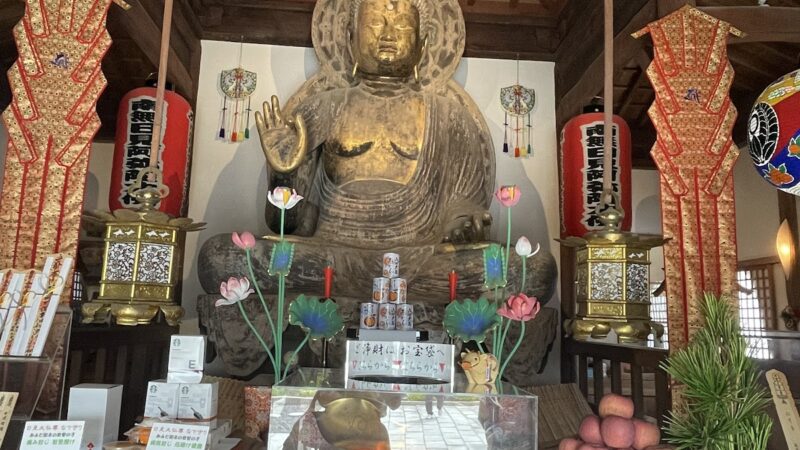
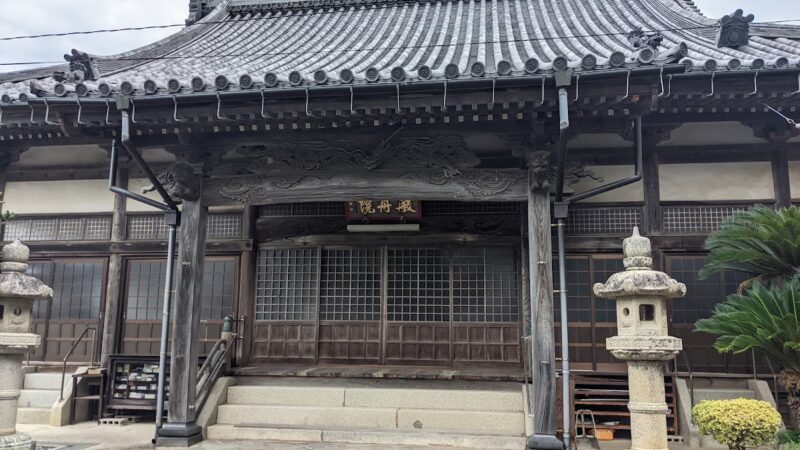
The main hall, rebuilt during the Edo period, exhibits a solemn presence befitting a Soto Zen temple. The principal image is enshrined inside, allowing for a tranquil atmosphere of worship.
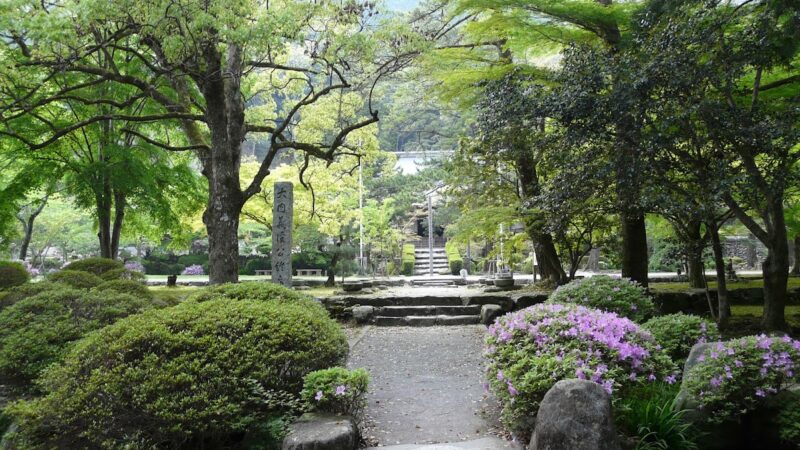
The temple grounds are vast, and the foundation stones of the former temple gate remain, giving a glimpse into the scale of the temple complex in its heyday. The remaining stone steps and stone walls exude a sense of history and dignity.
Mirror Pond
The “Mirror Pond,” where Ouchi Yoshitaka is said to have accepted his fate, is located in a quiet corner of the temple grounds. The legend that Yoshitaka reflected his image in this pond and accepted his destiny symbolizes the weight of Dainei-ji Temple’s history.
The area around the pond is surrounded by trees, creating a space that quietly conveys the tragedy of history. Visitors offer prayers while contemplating the transience of the Sengoku period.
The Helmet-Hanging Rock
Within the temple grounds lies a massive rock known as the “Helmet-Hanging Rock.” This rock is said to be where Ouchi Yoshitaka hung his helmet, and along with the Mirror Pond, it is a historical site that tells the story of Yoshitaka’s final moments.
The natural boulder remains intact, making it a valuable relic that evokes the final moments of the Sengoku warlord.
The Sixteen Arhats
Within the temple grounds are sixteen moss-covered stone statues of Arhats. The statues, covered in moss over many years, further deepen the tranquil atmosphere of the temple grounds, conveying the teachings of Buddhism and the weight of history to visitors.
Each Arhat statue has a different expression, making it a popular spot for stone Buddha enthusiasts and photography lovers.
The Tomb of Ouchi Yoshitaka
Within the temple grounds is the tomb of Ouchi Yoshitaka and his family, designated as a historical site by Yamaguchi Prefecture. As an important historical site that conveys the tragedy of the Sengoku period, it attracts many history enthusiasts.
Fresh flowers are always placed at the grave, showing that the local people continue to mourn the spirits of the Ouchi clan.
Seasonal Scenery
Spring Cherry Blossoms
Dainei-ji Temple is also known as a famous cherry blossom viewing spot. Many cherry trees are planted on the temple grounds and surrounding areas, and in spring, the entire grounds are dyed in a pale pink.
The cherry blossoms around Banseki Bridge are particularly magnificent, creating a beautiful landscape with the contrast between the stone bridge and the blossoms. The best time to see them is usually from late March to early April, and it is bustling with locals and tourists.
Early Summer Greenery
After the cherry blossoms have fallen, the temple grounds are enveloped in vibrant new greenery. The gentle murmur of the Dainei-ji River and the green of the trees harmonize, allowing visitors to enjoy a refreshing stroll.
Early summer is a time when there are relatively few visitors, making it the perfect season to quietly explore the temple grounds.
Autumn Foliage
Dainei-ji Temple is particularly famous as a spot for viewing autumn foliage. The maple and other trees within the temple grounds begin to change color from early to mid-November, reaching their peak from mid to late November.
The contrast between the red Kokei Bridge over the Dainei-ji River and the autumn leaves is breathtaking, making it a popular photography spot for many. The autumn leaves around Banseki Bridge are also beautiful, and the combination of the historic stone bridge and the autumn foliage creates a picturesque scene.
During the autumn foliage season, nighttime illuminations are sometimes held, allowing visitors to enjoy the magical nighttime scenery. For details, please check the Nagato Yumoto Onsen Tourism Association or the official information of Dainei-ji Temple.
Winter Silence
In winter, Dainei-ji Temple is enveloped in silence as the snow-covered grounds are enveloped. With fewer visitors, you can experience the dignified atmosphere characteristic of a Zen temple.
On snowy days, the Banseki Bridge and the Sixteen Arhats are covered in snow, creating a landscape reminiscent of a monochrome ink painting.
Goshuin (Temple Seal) and Goshuincho (Seal Book) Information
About Goshuin
Goshuin (temple seals) are available at Dainei-ji Temple. They are given out at the temple office and are received by many visitors as proof of their visit.
The goshuin features the calligraphy of “Dainei Gokoku Zenji” and the temple seal. It is characterized by a powerful brushstroke befitting a prestigious Soto Zen temple.
Reception Hours: Usually 9:00 AM to 4:00 PM (may vary depending on the season)
Offering Fee: Approximately 300-500 yen
Goshuincho (Seal Book)
Dainei-ji Temple also offers original goshuincho. Designs feature motifs from the temple grounds and the history of Dainei-ji, making them popular souvenirs.
If you don’t already have a Goshuincho (stamp book), this is a great opportunity to purchase one from Dainei-ji Temple and begin your Goshuin pilgrimage.
Visiting Manners
Goshuin are given as proof of your visit. First, visit the main hall, offer your prayers with sincerity, and then receive your Goshuin. Photography should only be done in designated areas, and consideration should be given to avoid disturbing other visitors.
Zen Meditation Experience
Dainei-ji Temple offers a Zen meditation experience exclusively for guests staying at Nagato Yumoto Onsen. This is a valuable opportunity to experience authentic Zen meditation at a Soto Zen temple.
Zen Meditation Experience Details
You will meditate in the tranquil temple grounds in the early morning under the guidance of the head priest. Even beginners will receive careful instruction, so even those new to Zen meditation can participate with confidence.
This time to calm your mind through Zen meditation and to escape the hustle and bustle of everyday life will be a special experience in addition to your hot spring trip.
How to Apply
The Zen meditation experience requires advance reservations. You can apply through the various accommodations in Nagato Yumoto Onsen, or contact Taineiji Temple directly. Since the dates and capacity vary depending on the season, it is recommended to check with your planned inn or hotel.
Basic Information and Access
Basic Information
Name: Zuiun Manzaizan Tainei Gokoku Zenji (Taineiji Temple)
Sect: Soto Zen
Address: 1074 Fukagawa Yumoto, Nagato City, Yamaguchi Prefecture 759-4103
Phone: 0837-25-3469
Visiting Hours: Grounds are freely accessible (please check for access to the main hall interior)
Admission Fee: Free
Parking: Available (Free, approximately 50 spaces)
Official Website: http://www.taineiji.jp/
Access by Train
Approximately 20 minutes on foot (approximately 1.5 km) from JR Sanyo Main Line/San’in Main Line “Nagato Yumoto Station”. If you take a taxi from the station, it will take about 5 minutes to arrive.
Nagato-Yumoto Station is located about 1 hour from Shin-Yamaguchi Station on the San’in Main Line, and about 1 hour from Shimonoseki Station.
Access by Car
From the Chugoku Expressway: Approximately 30 minutes from the Mine IC on the Chugoku Expressway via National Route 435 and Prefectural Route 31.
From the Sanyo Expressway: Approximately 50 minutes from the Shimonoseki IC on the Sanyo Expressway via National Route 191 and Prefectural Route 34.
Using the Ogori-Hagi Road: Approximately 40 minutes from the Edo IC via National Route 316 and Prefectural Route 34.
For car navigation, it is convenient to enter “Dainei-ji Temple” or the address “1074 Fukagawa-Yumoto, Nagato City”.
Parking Information
There is a free parking lot on the temple grounds, which can accommodate approximately 50 regular cars. During peak autumn foliage season and on weekends, it can get crowded, so we recommend visiting with plenty of time to spare.
Large buses can park, but it’s best to contact them in advance for smoother service.
Nearby Tourist Attractions
Nagato Yumoto Onsen
Nagato Yumoto Onsen, located within walking distance of Dainei-ji Temple, is a representative hot spring resort in Yamaguchi Prefecture with a history of approximately 600 years. Inns and hotels line the Otozure River, where you can enjoy high-quality hot springs and the flavors of Yamaguchi.
In 2020, the hot spring town was renovated, adding new attractions such as the “Onto Park” riverside promenade, footbaths, and cafes.
Motonosumi Shrine
Motonosumi Shrine in Nagato City is a breathtaking scenic spot with 123 red torii gates lined up facing the sea. It was selected as one of CNN’s “31 Most Beautiful Places in Japan,” attracting many tourists from both Japan and abroad.
It’s about a 30-minute drive from Dainei-ji Temple, and visiting both is recommended.
Senjojiki
Located on a 333m-high plateau overlooking the Sea of Japan, Senjojiki is a scenic spot with a beautiful contrast between its vast grassland and the blue sea. It also features a campsite and a cafe, making it a popular rest stop during drives.
Kaneko Misuzu Memorial Museum
This museum introduces the life and works of Kaneko Misuzu, a children’s poet from Nagato City. Through her representative works such as “Me, the Little Bird, and the Bell,” you can experience Misuzu’s gentle worldview.
It’s about a 10-minute drive from Dainei-ji Temple.
Points to Note When Visiting Dainei-ji Temple
Recommended Time to Visit
Dainei-ji Temple is beautiful throughout the seasons, but the best times to visit are during the cherry blossom season in spring (late March to early April) and the autumn foliage season (mid-to-late November).
For those who wish to visit in peace and quiet, weekdays in early summer or winter are recommended. There are fewer tourists, allowing you to experience the tranquil atmosphere characteristic of a Zen temple. ### Estimated Time Required
If you take your time strolling around the temple grounds, approximately 60-90 minutes is a good guideline. If you plan to collect temple stamps or enjoy taking photos, allow about 2 hours to fully enjoy your visit.
Clothing and Items to Bring
The temple grounds are hilly and have stone steps, so we recommend wearing comfortable shoes. Insect repellent is essential in summer, and warm clothing is recommended in autumn and winter.
A camera is a must. Especially during the autumn foliage season, the areas around Banseki Bridge and Kokei Bridge are excellent photo spots.
Dining and Rest Facilities
There are no dining facilities on the temple grounds, but you can find restaurants and souvenir shops within walking distance of the Nagato Yumoto Onsen hot spring resort. Enjoying Nagato’s local cuisine while relaxing at a cafe in the hot spring resort is also recommended.
Summary
Dainei-ji Temple is one of the most prestigious Soto Zen temples with a history of over 600 years, and holds an important place in the history of Yamaguchi Prefecture as the site of Ouchi Yoshitaka’s final moments. The temple grounds offer numerous attractions, including the Banseki Bridge, the Sugatami Pond, and the Sixteen Arhats, allowing visitors to enjoy the beautiful scenery of each season, from cherry blossoms in spring to autumn foliage.
Visiting the temple in conjunction with Nagato Yumoto Onsen will make for a fulfilling trip, allowing you to enjoy history, nature, and hot springs. This temple is recommended for a wide range of people, from those who collect temple stamps, history buffs, nature and photography enthusiasts, to those seeking a peaceful Zen meditation experience.
When visiting Yamaguchi Prefecture, be sure to visit Dainei-ji Temple and experience its historical significance and natural beauty.
Frequently Asked Questions (FAQ)
Q1. Is there an entrance fee to Dainei-ji Temple?
Entry to the temple grounds is free. Parking is also free. A donation (approximately 300-500 yen) is required to receive a temple stamp.
Q2. When is the best time to see the autumn leaves?
The best time to see the autumn leaves is usually from mid- to late November. Since this can vary slightly from year to year, we recommend contacting the Nagato Yumoto Onsen Tourism Association or Dainei-ji Temple before your visit.
Q3. Can anyone participate in the Zen meditation experience?
The Zen meditation experience is only available to guests staying at Nagato Yumoto Onsen. Reservations can be made through your chosen inn or hotel. Beginners are welcome, but advance reservations are required.
Q4. Can I bring my pet to the temple?
We recommend checking with Dainei-ji Temple in advance regarding pets. Generally, temples have restrictions on pets, so please observe proper etiquette during your visit.
Q5. What is the nearest station to Dainei-ji Temple?
The nearest station is Nagato Yumoto Station on the JR San’in Main Line, approximately a 20-minute walk or a 5-minute taxi ride. Walking from the station allows you to enjoy a stroll through the hot spring town.
Q6. Who was Ouchi Yoshitaka? Ouchi Yoshitaka was a Sengoku daimyo (feudal lord) during the Muromachi period, and the 16th head of the Ouchi clan, which expanded its power in western Japan, primarily in Suo and Nagato provinces. He was also known as a man of culture and made Yamaguchi a prosperous “Kyoto of the West,” but committed suicide at Dainei-ji Temple in 1551 due to a rebellion by his vassal, Sue Harukata.
Q7. Is photography allowed freely?
Photography is generally permitted within the temple grounds, but there are areas where photography is restricted, such as inside the main hall. Please be considerate of other visitors and check in advance regarding the use of tripods.
Q8. Can I enjoy it on a rainy day?
Dainei-ji Temple on a rainy day has a unique beauty, with its moss-covered stone bridges and Rakan statues becoming even more picturesque. You can fully enjoy it if you bring rain gear, but be careful as the ground can become slippery.
Q9. Are there places to eat nearby?
Within walking distance of Dainei-ji Temple, in the Nagato Yumoto Onsen hot spring resort area, you’ll find restaurants and cafes. You can enjoy local seafood and regional Yamaguchi cuisine. With the renovation of the hot spring resort area, the number of new cafes and restaurants has also increased.
Q10. Is it accessible for wheelchair users?
The temple grounds are hilly and have stone steps, so wheelchair access is limited. We recommend contacting Dainei-ji Temple in advance regarding accessibility, including the route from the parking lot to the main hall.