Sanno Shrine (Koshu City, Yamanashi Prefecture) Complete Guide | History, Cultural Properties, Goshuin (Shrine Seals), and Access Information
Sanno Shrine (Sanno Gongen Shrine), located in Koshu City, Yamanashi Prefecture, is a historic shrine with a history dating back to the early Heian period. It is a venerable shrine that was established by inviting a deity from Hiyoshi Taisha Shrine, and it preserves a rich history and culture, including its main hall (a prefectural designated cultural property) and the Higashi-Goko (Eastern Imperial Procession), known as one of the three major imperial processions of Koshu. This article provides a detailed explanation of everything you need to know before visiting Sanno Shrine, from its history and enshrined deities to its cultural properties, annual events, and access methods.
Basic Information on Sanno Shrine
Sanno Shrine is located in Shioyama Kamihagiwara, Koshu City, Yamanashi Prefecture, and is officially known as “Sanno Gongen Shrine.” It is currently registered with the Yamanashi Prefectural Shrine Association and is cherished as a center of local faith.
Location: Shioyama Kamihagiwara, Koshu City, Yamanashi Prefecture
Main Deity: Oyamakui-no-kami
Shrine Rank: Village Shrine
Cultural Property: Main Hall (Yamanashi Prefecture Designated Tangible Cultural Property)
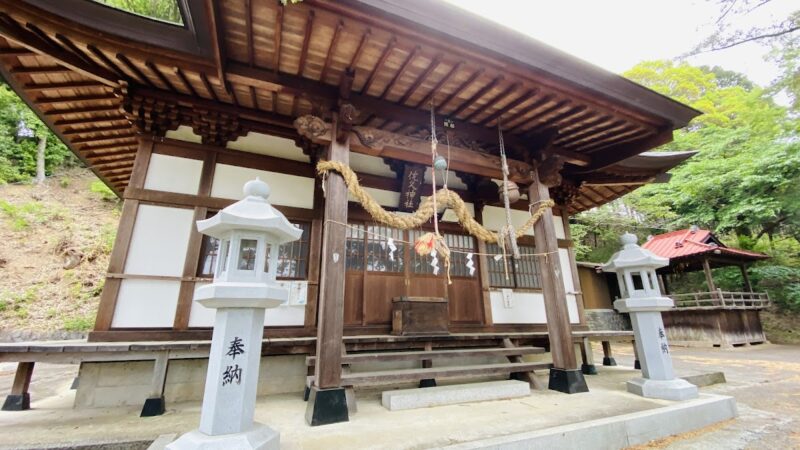
Located in the northeastern part of the Shioyama area, Sanno Shrine stands quietly within a hamlet. It is a shrine visited not only by local residents but also by worshippers interested in history and architecture.
History and Origins of Sanno Shrine
Founding and Invitation from Hiyoshi Taisha Shrine
Sanno Shrine is said to have been founded in the first year of the Daido era (806 AD). It is believed to have begun in the early Heian period when Oyamakui-no-kami was invited from Hiyoshi Taisha Shrine in Omi Province (present-day Shiga Prefecture).
Hiyoshi Taisha Shrine is known as the guardian deity of Mount Hiei and is the head shrine of the Sanno faith. Sanno worship has deep ties to the Tendai sect of Buddhism and spread throughout Japan as Sanno Shrines and Hiyoshi Shrines. The Sanno Shrine in Koshu City is one such shrine.
Donation of Shrine Land by Tokugawa Ieyasu
In 1603 (Keicho 8), Tokugawa Ieyasu, who founded the Edo Shogunate, donated land to the shrine. This was the year Tokugawa Ieyasu was appointed Shogun, and a period of protection policies for major shrines and temples throughout the country. The donation of land to Sanno Shrine indicates its important position in the region.
Reconstruction of the Shrine Buildings during the Genroku Period
In 1698 (Genroku 11), the shrine buildings were reconstructed. It is believed that this reconstruction resulted in the construction of the valuable main hall that remains today. The mid-Edo period was a time of economic stability, and the repair and reconstruction of shrines and temples flourished throughout the country.
Ancient Grand Shrine Recorded in the Kai Province Chronicle
According to the Kai Province Chronicle, a geographical record compiled in the late Edo period, Sanno Shrine is recorded as a grand shrine with a history dating back to ancient times. The book describes the “Eastern Procession,” in which, on the second Monkey Day of April each year, the three shrines of Narusawa’s Karato Myojin, Shimo-Ogihara’s Sanno Gongen, and Kurihara-suji Kami-Kamiuchigawa Village’s Sanno Gongen make a procession to the shrine, and then transfer the deity on the second Monkey Day of November. This indicates that it was an important religious ceremony and one of the three major processions in Kai Province.
Deities and Divine Virtues
Oyamakui-no-Kami
The principal deity of Sanno Shrine is Oyamakui-no-Kami. Oyamakui-no-Kami is worshipped as the god of mountains and water, and is an ancient deity appearing in the Kojiki (Records of Ancient Matters). “Kui” means “stake,” and the deity is considered to reside in the mountains as if a stake had been driven into them, thus the god who rules over the mountains.
Divine Blessings:
- Abundant harvests
- Family safety
- Business prosperity
- Protection from misfortune and good fortune
- Protection of forests
- Flood control and irrigation
Oyamakui-no-kami, the principal deity of Hiyoshi Taisha Shrine, has been revered as the guardian deity of Mount Hiei and the protector of Enryaku-ji Temple. He is particularly revered by those involved in agriculture and forestry, and is worshipped as an important deity in the mountainous region of Yamanashi Prefecture.
Main Hall, a Prefectural Designated Cultural Property
Architectural Style of the Azuchi-Momoyama Period
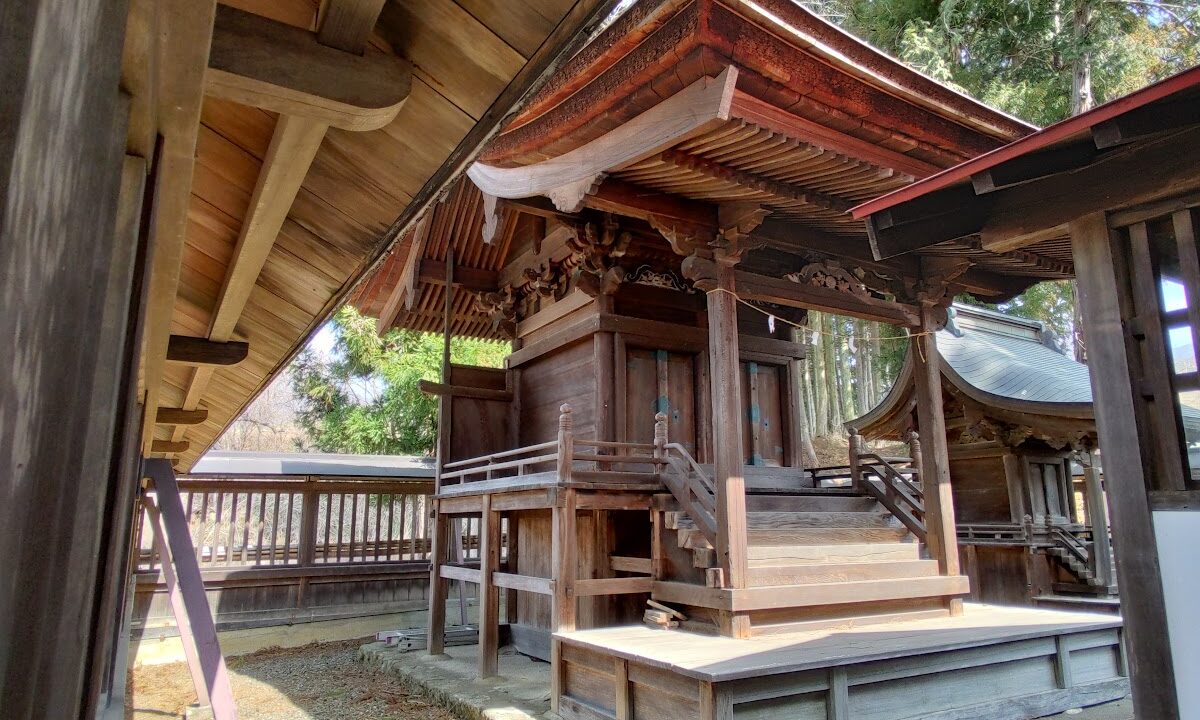
The main hall of Sanno Shrine is designated as a Yamanashi Prefecture Designated Tangible Cultural Property. Its architectural style is a two-bay nagare-zukuri style, a valuable building that retains characteristics of the Azuchi-Momoyama period.
Architectural Style: Two-Bay Nagare-zukuri (a style of architecture)
Construction Period: Azuchi-Momoyama Period (estimated)
Cultural Property Designation: Yamanashi Prefecture Designated Tangible Cultural Property
A two-bay shrine is a type of shrine building with two bays (approximately 3.6 meters) between the pillars at the front. It is larger in scale than a typical one-bay shrine and is an architectural style found in high-ranking shrines. The nagare-zukuri style features a long, extended roof that covers the portico (kohai), and is one of the most common styles in Japanese shrine architecture.
Architectural Characteristics and Value
The Azuchi-Momoyama period was a time of activity for figures like Oda Nobunaga and Toyotomi Hideyoshi, and its architecture is characterized by powerful and luxurious decorations. The main hall of Sanno Shrine also features carvings and decorations characteristic of this period, making it a valuable historical document in architectural history.
During its reconstruction in 1698 (Genroku 11), it’s possible that the building was restored while retaining the style of its predecessors, making it an important structure for understanding the evolution of architectural techniques from the Azuchi-Momoyama period to the Edo period.
The Traditions of the Koshu San-Goko and Higashi-Goko
What are the Koshu San-Goko?
The Koshu San-Goko refers to three important Shinko-sai (processions of deities) that have been held in Yamanashi Prefecture since ancient times. A Shinko-sai is a festival in which a deity is carried in a portable shrine through the parish area.
The “Higashi-Goko,” associated with Sanno Shrine, is counted as one of these Koshu San-Goko and was an important annual event in the region.
History and Content of the Higashi-Gyo (Eastern Imperial Procession)
According to the “Kai-no-Kuni-Shi” (History of Kai Province), the Higashi-Gyo consisted of the following:
Spring Divine Procession (Second Monkey Day of April):
- Karato Myojin Shrine in Narusawa
- Sanno Gongen Shrine in Shimo-Ogihara
- Other related shrines
From these shrines, the deities made a divine procession to Sanno Gongen Shrine in Kami-Kamiuchigawa Village, Kurihara-suji.
Autumn Transfer of Deities (Second Monkey Day of November):
The deities who had made the spring procession returned to their respective main shrines.
This ritual was a large-scale festival conducted in cooperation with multiple shrines, playing an important role in strengthening the ties of the local community.
Current Festival
Currently, the large-scale Higashi-Gyo of the past is no longer held, but an annual festival is held on April 11th. Local residents gather, and the ritual continues, carrying on the tradition.
Annual Events and Festivals
Spring Grand Festival (April 11th)
The most important festival of Sanno Shrine is the Spring Grand Festival, held annually on April 11th. Continuing the tradition of the former Higashi-Gyo (Eastern Imperial Procession), prayers are offered for a bountiful harvest and the peace and well-being of the residents.
During the festival, Shinto rituals such as the recitation of prayers by Shinto priests and the offering of sacred branches are solemnly performed, with local residents in attendance.
Other Annual Events
In addition to the annual festival, Sanno Shrine holds the following annual events:
New Year’s Day Festival (January 1st): Celebrating the New Year and praying for peace throughout the year
Setsubun Festival (Early February): Praying for protection from evil and for good fortune
Autumn Festival (November): Expressing gratitude for the harvest and praying for a bountiful harvest in the coming year
Monthly Festival: Regular rituals held on the 1st and 15th of each month
These events are deeply connected to the seasonal atmosphere of the region and reflect the agricultural-centered lifestyle and culture.
Highlights of the Shrine Grounds
Approach and Stone Steps
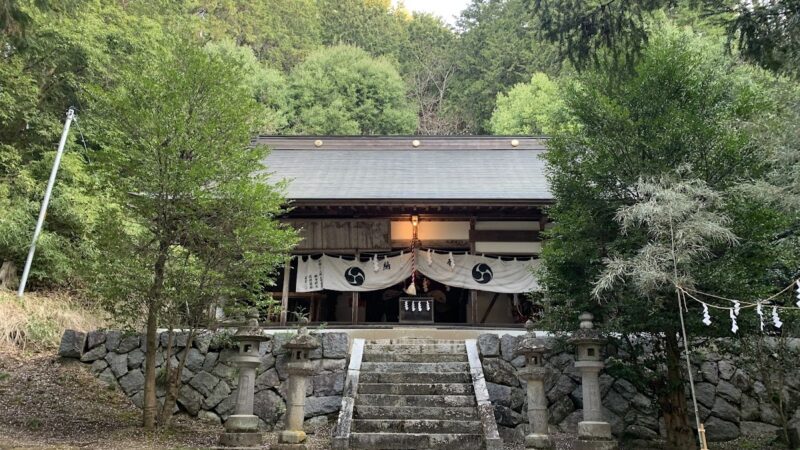
To reach Sanno Shrine, you ascend stone steps. Ancient trees grow on both sides of the steps, creating a tranquil atmosphere. The process of climbing the steps itself prepares you to enter the sacred realm from everyday life.
Shrine Layout
The shrine grounds feature a typical layout for a Shinto shrine, with the worship hall and main sanctuary arranged in a straight line. After praying at the worship hall, you can view the main sanctuary, a prefecturally designated cultural property, located beyond it.
Subsidiary Shrines and Stone Monuments
Several subsidiary shrines and stone monuments are located around the main sanctuary. These were donated between the Edo and Meiji periods, telling the story of the local residents’ faith history.
Relationship between Sanno Faith and Tendai Buddhism
Origin of Sanno Faith
Sanno faith is a form of syncretic Shinto-Buddhist belief that developed around Enryaku-ji Temple on Mount Hiei. Because Saicho, the founder of the Tendai sect, placed great importance on Hiyoshi Taisha, the local deity of Mount Hiei, Tendai Buddhism and Sanno faith became closely linked.
Separation of Shinto and Buddhism and Sanno Shrines
Due to the Meiji-era decree separating Shinto and Buddhism, many Sanno Gongen shrines throughout Japan were renamed “Hiyoshi Shrine,” “Sanno Shrine,” etc. It is believed that the name of Sanno Shrine in Koshu City was also standardized from “Sanno Gongen Shrine” to “Sanno Shrine” around this time.
However, in some areas, the name “Sanno Gongen Shrine” still remains and is cherished as a historical name.
The Shrine Culture of Koshu City and the Position of Sanno Shrine
Overview of Shrines in Koshu City
Koshu City has 59 shrines registered with the Yamanashi Prefectural Shrine Association. Within the city, there are diverse shrines, including those associated with the Takeda clan, shrines considered to be Shikinaisha (shrines listed in the Engishiki), and ancient local shrines.
Characteristics of Sanno Shrine
Among the shrines in Koshu City, Sanno Shrine has the following distinctive features:
- Branching from Hiyoshi Taisha: A clear historical origin, having been established through a branch shrine from a powerful shrine in Omi Province.
- Prefectural Designated Cultural Property: High cultural value as an architectural structure.
- Koshu’s Three Imperial Processions: A bearer of a wide-area festival culture that transcends the local region.
- Patronage of Tokugawa Ieyasu: Historical connection with the Edo Shogunate.
Due to these characteristics, Sanno Shrine occupies an important position in the shrine culture of Koshu City.
Historical Background of the Surrounding Area
History of the Shioyama District
The Shioyama district, where Sanno Shrine is located, is one of the central areas of Koshu City. It has long been a transportation hub in the eastern part of Kai Province and was an important base during the Takeda clan’s era.
There is a theory that the place name Shioyama originates from the fact that salt trade was once conducted in this area. In Yamanashi Prefecture, an inland region, salt was a valuable commodity, and the area developed as a distribution hub for it.
The Takeda Clan and Shrine Worship
During the Sengoku period, the Takeda clan, who ruled Kai Province, provided generous protection to the shrines within their territory. Takeda Shingen, in particular, is known for his reverence for Shinto and Buddhism, and he donated land to many shrines.
The donation of land to Sanno Shrine by Tokugawa Ieyasu is also thought to be a result of the Tokugawa clan, who ruled Kai Province after the fall of the Takeda clan, respecting the region’s traditional beliefs.
Etiquette and Manners for Visiting a Shrine
Basic Etiquette for Visiting a Shrine
When visiting Sanno Shrine, please observe the following etiquette:
- Bow before passing through the torii gate: A courtesy before entering the sacred area.
- Avoid walking in the center of the path: The center is the path of the gods.
- Purify yourself at the water basin: Purify your left hand, right hand, and mouth in that order, and finally wash the handle of the ladle.
- Worship at the main hall: Two bows, two claps, one bow (basic shrine etiquette).
- Bow upon leaving: After leaving the torii gate, turn around and bow.
Photography
Photography is generally permitted on the shrine grounds, but please note the following:
- Refrain from photographing restricted areas, such as inside the main hall.
- Be considerate and avoid interfering with religious ceremonies, such as festivals.
- Respect the privacy of other worshippers.
- Use flash photography sparingly.
Access Information
Access by Public Transportation
Nearest Station: JR Chuo Main Line “Enzan Station”
Access from the Station:
- Taxi: Approximately 10-15 minutes
- Bus: Take a bus bound for Yamanashi City Station from Enzan Station, get off at the nearest bus stop, and walk.
Enzan Station is a stop for the limited express trains “Azusa” and “Kaiji,” making it conveniently accessible from Tokyo. The journey from Shinjuku Station to Enzan Station takes approximately 1 hour 30 minutes to 2 hours by limited express train.
Access by Car
Using the Chuo Expressway:
- Approximately 15 minutes from Katsunuma IC
- Approximately 20 minutes from Ichinomiya-Misaka IC
Parking: There are a few parking spaces on the temple grounds or nearby (spaces are limited, so please be aware during festivals).
Address: Shioyama-Kamihagiwara, Koshu City, Yamanashi Prefecture (when setting on a car navigation system)
Nearby Tourist Attractions
Nearby attractions you can visit when visiting Sanno Shrine:
Erinji Temple: A famous Rinzai Zen temple known as the family temple of Takeda Shingen (approximately 10 minutes by car)
Katsunuma Budou no Oka, Koshu City: A facility where you can enjoy a winery and hot springs (approximately 20 minutes by car)
Daizenji Temple: A Shingon Buddhist temple with a national treasure main hall (approximately 15 minutes by car)
Shioyama Onsenkyo: A historic hot spring resort where day trips to the baths are possible (approximately 5-10 minutes by car)
Goshuin (Temple Stamp) Information
Regarding the Issuance of Goshuin (Shrine Seals)
Goshuin may be issued at Sanno Shrine. However, since there may not always be a permanent shrine office, it is recommended to check with the Yamanashi Prefectural Shrine Association or the local representative in advance.
Goshuin Issuance Hours: May be limited to festival days or special days.
Offering Fee: Generally around 300 to 500 yen.
Manners When Receiving a Goshuin
- Prepare a goshuincho (avoid writing in a notebook or on paper).
- Receive the goshuin after completing your prayers.
- Remember to show respect to the Shinto priests and chief priests.
- Be considerate of waiting times during busy periods.
Relationship with Other Sanno Shrines in Yamanashi Prefecture
There are several Sanno Shrines in Yamanashi Prefecture besides the one in Koshu City.
Kanbe Shrine (Sanno Gongen) in Yamanashi City
In Yamanashi City, there is a shrine called Sanno Gongen, which is considered one of the candidate shrines for the Shikinaisha (shrine listed in the Engishiki) Kanbe Shrine. According to the detailed records, it is said that during the reign of Emperor Keiko, Shioumi Sukune, the provincial governor of Kai Province, invited the deity from Mount Hiei in Omi Province. Like the Sanno Shrine in Koshu City, it is a shrine with deep ties to Hiyoshi Taisha Shrine.
Sanno Shrine in Hayakawa Town
There is also a Sanno Shrine in Yushima, Hayakawa Town, Minamikoma District. This shrine is located near Kai-Iwama Station, and its enshrined deity is said to be Susanoo-no-Mikoto. This demonstrates that even with the same name, Sanno Shrines can have different enshrined deities and histories.
Spread of Sanno Faith
The existence of these Sanno Shrines indicates that Sanno faith was widespread throughout Yamanashi Prefecture. They are often found in areas closely associated with Tendai Buddhist temples and in areas where the Hieizan faith spread.
Cultural Property Protection and Future Challenges
Preservation Status of the Main Hall
The main hall, a prefecturally designated cultural property, requires regular preservation and repair. Because wooden buildings inevitably deteriorate over time, planned maintenance such as roof replacement, reinforcement of pillars and beams, and restoration of carved parts are necessary.
Maintaining the Shrine and Local Communities
In rural areas facing declining birth rates and an aging population, maintaining shrines is a major challenge. The decrease in parishioners raises concerns about the simplification of festivals and the increased burden of maintaining the shrine grounds.
At Sanno Shrine, it is necessary to build a maintenance system that involves both the cooperation of local residents and external support that understands its value as a cultural asset.
Utilization as a Tourism Resource
While protecting cultural assets, it is also important to utilize them as a tourism resource. Koshu City has diverse tourism resources, including its wine industry and historical sites related to the Takeda clan. Incorporating Sanno Shrine into historical and cultural tourism routes that combine these resources will increase opportunities for more people to learn about it.
The Significance of Visiting Sanno Shrine
Dialogue with History
Visiting Sanno Shrine is a dialogue with over 1200 years of history that has continued since the Heian period. Founded in 806 AD, the shrine grounds are imbued with memories from various eras, including the patronage of Tokugawa Ieyasu and the tradition of the three major imperial processions of Koshu.
Appreciation of Architectural Beauty
The main hall, a prefectural designated cultural property, is a valuable structure that preserves the architectural style of the Azuchi-Momoyama period. Its dignified style, including the two-bay nagare-zukuri style, and the carvings and decorations characteristic of the era, make it well worth appreciating for its architectural beauty.
Understanding Local Culture
Sanno Shrine symbolizes the history and culture of the Shioyama district of Koshu City. It provides clues to understanding the unique cultural background of this region, such as the wide-area festival culture of Higashi-Goko, the agricultural-centered lifestyle, and the syncretism of mountain worship and Buddhism.
Peace of Mind
Nestled in a quiet village, Sanno Shrine offers a place of peace away from the hustle and bustle of the city. Climbing the stone steps and being enveloped in the tranquility of the shrine grounds will allow you to spend time free from the stresses of everyday life.
Summary
Sanno Shrine, located in Koshu City, Yamanashi Prefecture, is a venerable shrine with a history of over 1200 years, having been established in 806 AD (Daido 1) by inviting a deity from Hiyoshi Taisha Shrine. The main hall, a prefectural designated cultural property, is a valuable structure that conveys the architectural style of the Azuchi-Momoyama period. The tradition of the Higashi-Goko (Eastern Imperial Procession), one of the three major imperial processions of Koshu, has shaped the region’s cultural identity.
The main deity, Oyamakui-no-Kami, is revered for the divine virtues of abundant harvests, family safety, and protection of forests, and is particularly important in the mountainous region of Yamanashi Prefecture. The annual spring festival is held on April 11th, and the tradition is continued by local residents.
When visiting Koshu City, why not also visit Sanno Shrine along with wineries and historical sites related to the Takeda clan? The weight of history, the beauty of the architecture, and the tranquil atmosphere of the shrine grounds are sure to provide visitors with a special experience.
The shrine is relatively easy to access, located about 10-15 minutes by taxi from JR Shioyama Station and about 15 minutes by car from the Katsunuma Interchange on the Chuo Expressway. As a shrine registered with the Yamanashi Prefectural Shrine Association, it is properly managed, ensuring a safe and secure visit.
Despite facing challenges in cultural property preservation and maintaining the local community, Sanno Shrine will undoubtedly continue to be an important cultural heritage of Koshu City, passed down to future generations. We visitors should also approach this precious historical and cultural heritage with a respectful heart.