A Complete Guide to Agatsuma Shrines | A Thorough Explanation of the History, Deities, and Blessings of Agatsuma Shrines Nationwide
Agatsuma Shrines, located throughout Japan, each possess a unique history and origin, yet have been deeply revered by local communities. This article provides a detailed explanation of the major Agatsuma Shrines across Japan, covering everything from their origins and enshrined deities to their blessings and visiting information.
What are Agatsuma Shrines?
Agatsuma Shrines (Agatsuma Jinja, Azuma Jinja) are the name of shrines found throughout Japan. Many Agatsuma Shrines are associated with the legend of Yamato Takeru no Mikoto’s eastern expedition, and many enshrine Ototachibana-hime no Mikoto as their principal deity.
The name “Azuma” is said to originate from a legend in the Kojiki and Nihon Shoki, in which Prince Yamato Takeru lamented “Azuma (Ah, my wife)” as he mourned Ototachibana-hime, who threw herself into the sea to calm the rough waves while he was crossing Sagami Bay.
On the other hand, there are also Azuma Shrines, such as the Warimiya Azuma Shrine in Gunma Prefecture, which enshrine Ōnamuchi-no-mikoto, the god of nation-building, as their main deity. A characteristic feature is that the enshrined deities and histories differ depending on the historical background of each region.
Warimiya Azuma Shrine (Nakanojō-machi, Agatsuma-gun, Gunma Prefecture)
History and Origin
The Warimiya Azuma Shrine, located in Yokoo, Nakanojō-machi, Agatsuma-gun, Gunma Prefecture, is an ancient shrine said to have been founded in ancient times (approximately 1300 years ago). It has long been revered as the “guardian shrine of Azuma” and has attracted widespread devotion from both within and outside Agatsuma-gun.
Before the Meiji era, it was affectionately known as “Warinomiya,” but due to two shrine mergers during the Meiji period, 54 deities from 151 surrounding shrines were enshrined together, and the shrine’s name was changed to “Agatsuma Shrine,” which it remains to this day. Its former shrine rank was Gosha (village shrine).
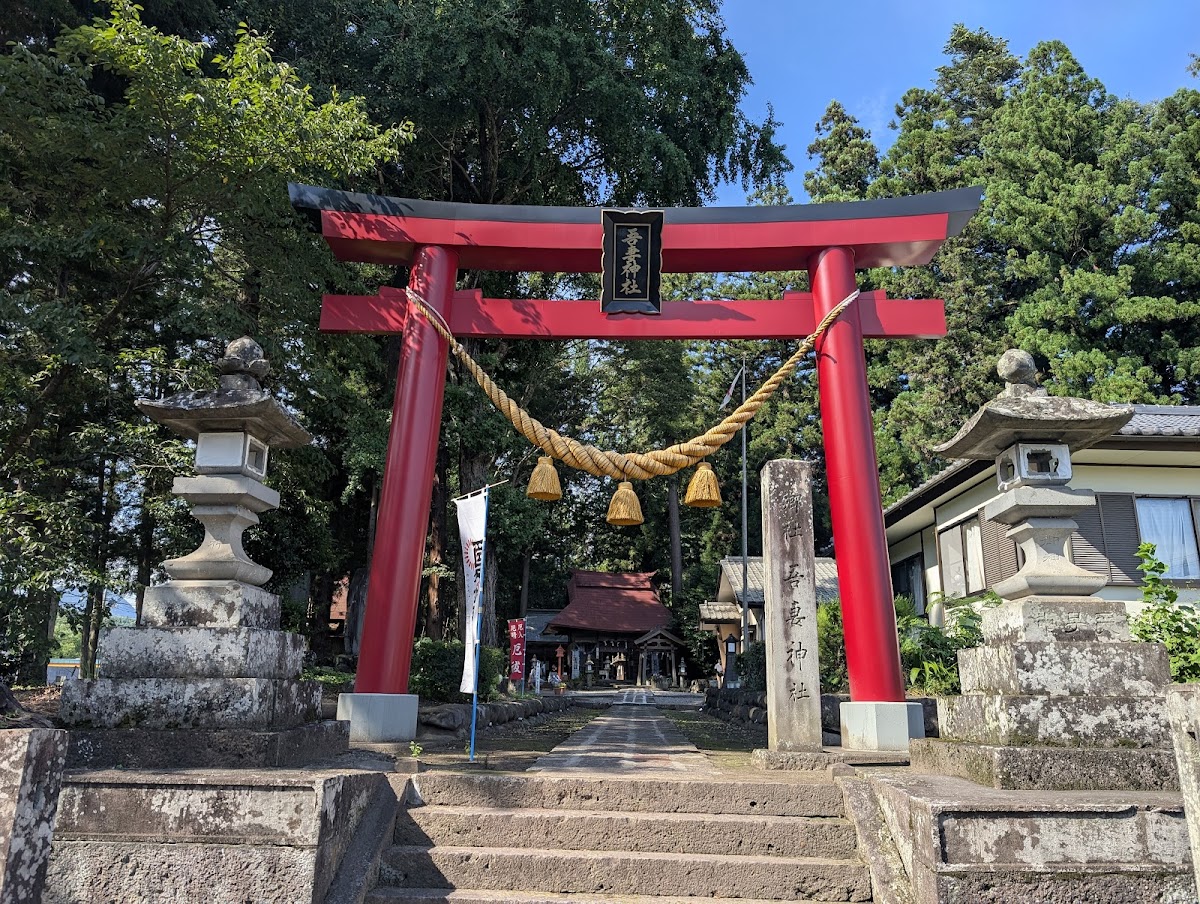
The lanterns in front of the main torii gate, erected in 1865 (Keio 1), were donated not only by local and neighboring people but also by generous individuals from various parts of Gunma Prefecture, demonstrating the deep faith in this shrine.
Deities and Blessings
Main Deity:
- Ōnamuchi-no-Mikoto – Another name for Ōkuninushi-no-Mikoto, the god of nation-building
Blessings:
- Healing from illness
- Matchmaking
- Family safety
- Business prosperity
- Abundant harvest
Ōnamuchi-no-Mikoto is also known as the deity enshrined at Izumo Taisha Shrine and is widely worshipped as the god of nation-building and matchmaking. With the enshrinement of 151 deities, this shrine possesses a diverse range of divine blessings.
Highlights of the Shrine Grounds
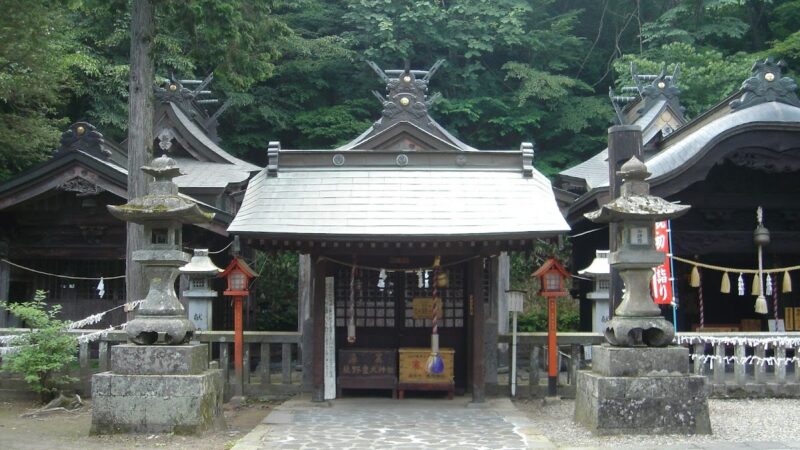
The striking vermilion torii gate standing along National Route 145 is impressive and stands out even from afar. Passing through the torii gate and proceeding along the approach, visitors are greeted by the beautiful vermilion-colored gate.
Beyond the main gate are the Kagura-den (sacred dance hall) and the Haiden (worship hall). The Haiden features intricately carved, vividly colored sculptures, allowing visitors to appreciate the beauty of shrine architecture that has continued since the Edo period. The shrine grounds maintain a tranquil atmosphere while exuding a solemn presence.
Special Offerings
Warimiya Azuma Shrine offers special Goshuin (shrine stamps) seasonally. A special Goshuin (for the Boys’ Festival, offering fee 1,000 yen) is available, and in recent years, paper-cut Goshuin in collaboration with Sanrio characters have also gained popularity.
These modern initiatives are attracting attention as efforts to create connections with new types of visitors while preserving tradition.
Access
Location: Yokoo, Nakanojo-machi, Agatsuma-gun, Gunma Prefecture
Access Method:
- Take a bus or taxi from Nakanojo Station on the JR Agatsuma Line
- Approximately 40 minutes from Shibukawa-Ikaho IC on the Kan-Etsu Expressway via National Route 145
- Parking available
Located along National Route 145, it is easily accessible by car. It can also be a convenient stop on the way to Kusatsu Onsen or Shima Onsen.
Agatsuma Shrine (Kisarazu City, Chiba Prefecture)
History and Legend
Agatsuma Shrine, located in Agatsuma, Kisarazu City, Chiba Prefecture, is a shrine dedicated to Ototachibana-hime no Mikoto. The Edo period geographical record, “Edo Sunago,” states, “Kimisaritsu Agatsuma Daimyojin is the shrine of Ototachibana-hime.”
According to shrine tradition, during Prince Yamato Takeru’s eastern expedition, when he was attempting to cross from Sagami to Kazusa, the sea became rough. Princess Ototachibana threw herself into the sea to appease the sea god’s anger. A few days later, Princess Osode drifted ashore near this location, and it is said that the Azuma Shrine was built to enshrine her.
The old place name “Kimisaritsu” is believed to originate from this legend and later became “Kisarazu.”
Deity and Benefits
Deity:
- Princess Ototachibana
Benefits:
- Maritime Safety
- Marital Harmony
- Protection of Women
- Safe Childbirth
- Safe Voyages
Princess Ototachibana’s devoted love and courage symbolize the bond between husband and wife and the strength of women, attracting the faith of many worshippers.
Access
Location: 2-7-55 Azuma, Kisarazu City, Chiba Prefecture
Access Method:
- Take the bus bound for “Kaneda Nakajima” from the west exit of JR Uchibo Line “Kisarazu Station” and get off at “Azuma Shrine Mae” bus stop.
- Approximately 10 minutes from the Tokyo Bay Aqua-Line “Kisarazu Kaneda IC”
Inquiries: Kisarazu City Tourism Association 0438-22-7711
Azuma Shrine (Ninomiya Town, Kanagawa Prefecture)
A shrine located on the summit of Mt. Azuma
Azuma Shrine, located on the summit of Mt. Azuma in Ninomiya Town, Nakagun, Kanagawa Prefecture, below the observation deck, is also a shrine with a legend related to Ototachibana-hime no Mikoto.
During Yamato Takeru’s eastern expedition, when he was trying to cross to Kazusa by sea from Hashirimizu on the Miura Peninsula, a sudden storm arose. His wife, Ototachibana-hime no Mikoto, threw herself into the sea to appease the sea god’s anger and pray for her husband’s victory in battle. Immediately, the sea calmed down.
Afterward, the comb that washed ashore was buried on the summit of Mount Azuma, a place where people remembered her life. This is said to be the site of Azuma Shrine.
Scenery and Worship
Mount Azuma is a low mountain, approximately 137 meters high, but its summit is known for its spectacular views of Sagami Bay, Mount Fuji, the Hakone mountain range, and the Tanzawa mountain range. Especially from winter to early spring, the mountaintop is covered in blooming rapeseed flowers, attracting many tourists.
Visiting Azuma Shrine allows you to enjoy this beautiful scenery, creating a special experience where a sacred atmosphere harmonizes with the beauty of nature.
Access
Location: Ninomiya-machi, Nakagun, Kanagawa Prefecture
Access Method:
- Approximately 30 minutes on foot from JR Tokaido Line “Ninomiya Station” (via hiking trail)
- 5 minutes on foot from the station to the Azumayama trailhead, then approximately 25 minutes to the summit
Azuma Shrine (Gotemba City, Shizuoka Prefecture)
The Place from which the Name of Gotemba Originates
Azuma Shrine, located in Gotemba City, Shizuoka Prefecture, is a historical shrine built on the site of the Tokugawa family’s palace. It is known as the place from which the name “Gotemba” originates.
During the Tokugawa period, more than 50 palaces for the shogun were built throughout Japan, but only a very few remain as place names today. Gotemba is one of those precious examples.
Historical Sites on the Shrine Grounds
The shrine grounds contain many monuments and historical sites that tell the story of history:
- Kabutoishi – A stone associated with a samurai warrior
- Monument to the Origin of Gotemba – A monument indicating the origin of the place name
- Monument to the Loyal Souls – A monument commemorating those who died in war
These historical sites are valuable cultural assets that convey the history of Gotemba to the present day.
Access
Location: Gotemba City, Shizuoka Prefecture
Access Method:
- Walk or take a bus from JR Gotemba Line “Gotemba Station”
- Approximately 10 minutes from Tomei Expressway “Gotemba IC”
Inquiries: Gotemba City Tourism Association
Azuma Shrine (Honmoku, Naka-ku, Yokohama City, Kanagawa Prefecture)
Guardian Shrine of Honmoku
Azuma Shrine, located in Honmoku, Naka-ku, Yokohama City, was originally called Azuma Gongen Shrine or Azuma Myojin Shrine, and has been worshipped as the guardian shrine of the entire Honmoku area. This shrine was already widely known during the Edo period, as it is mentioned in Edo-period geographical records such as the “Shinpen Musashi Fudoki-ko” and “Edo Meisho Zue.”
The Sacred Object and History
The sacred object that existed before being destroyed by fire during the war is said to have had the inscription “Bunwa 3rd year (1354), January 17th, Shrine Foundation Rebuilt by Heishigehiro” on its back. This is a year from the Nanboku-cho period, and there is a theory that it was established by Shinozuka Iga-no-kami, a retainer of Nitta Yoshisada.
Currently, it has been rebuilt and is carefully protected by the people of Honmoku as the local tutelary shrine.
Access
Location: Honmoku, Naka-ku, Yokohama City, Kanagawa Prefecture
Access Method:
- Take a bus from JR Negishi Line “Negishi Station” or “Ishikawacho Station”
- Take a Yokohama City Bus bound for “Honmoku”
Manners and Etiquette for Visiting Azuma Shrine
We will introduce basic manners for visiting Azuma Shrine.
Basic Procedure for Visiting a Shrine
- Bow before passing through the torii gate – As a sign of respect before entering the sacred area
- Purify yourself at the water basin – Purify your left hand, right hand, and mouth in that order
- Walk along the edge of the path – The center is considered the path of the gods
- Mannerisms in front of the main hall – Two bows, two claps, and one bow are the basics
- Bow upon leaving – Turn around and bow before leaving the torii gate
Precautions when receiving a Goshuin (shrine stamp)
- Prepare your Goshuincho (stamp book) in advance
- It is customary to receive it after visiting the shrine
- Prepare a donation (approximately 300 to 1,000 yen)
- Special Goshuin are often only available for a limited time
- Visit with ample time during busy periods
Tourist Spots around Azuma Shrine
Around Nakanojo Town, Gunma Prefecture
- Shima Onsen – A famous hot spring, the first designated National Health Resort
- Kusatsu Onsen – One of Japan’s three most famous hot springs
- Nakanojo Biennale – An art festival held every two years
- Sawado Onsen – Known as the finishing bath after visiting Kusatsu
Around Kisarazu City, Chiba Prefecture
- Kisarazu Port – Enjoy the view of Tokyo Bay
- Shojo-ji Temple – The setting of the children’s song “Shojo-ji no Tanuki Bayashi”
- Mitsui Outlet Park Kisarazu – A shopping facility
- Nakanoshima Ohashi Bridge – Japan’s tallest pedestrian bridge
Around Ninomiya Town, Kanagawa Prefecture
- Azumayama Park – A famous spot for rapeseed blossoms
- Ninomiya Coast – A beautiful coastline facing Sagami Bay
- Oiso – A historic villa area
- Odawara Castle – A famous castle from the Sengoku period
Annual Events of Azuma Shrine
Various festivals are held throughout the year at each Azuma Shrine. ### Main Annual Events (Example of Warinomiya Azuma Shrine)
- January 1st – New Year’s Day Festival/First Shrine Visit of the Year
- February (Setsubun) – Setsubun Festival
- Spring Equinox – Spring Grand Festival
- May 5th – Boys’ Festival
- July – Summer Purification Ceremony
- September – Autumn Grand Festival
- November – Shichi-Go-San Festival
- December 31st – Great Purification Ceremony/New Year’s Eve Festival
The dates and content of festivals vary by shrine, so please check the official website or contact information of each shrine for details.
Azuma Shrine Goshuin Stamp Pilgrimage
A pilgrimage to collect Goshuin stamps from Azuma Shrines throughout Japan is a historical and romantic journey tracing the legend of Yamato Takeru and Ototachibana-hime.
Tips for Visiting Shrines and Temples for Goshuin Stamps
- Check opening hours in advance – Goshuin stamp reception hours vary by shrine.
- Prepare a Goshuin stamp book – A dedicated stamp book makes for a memorable keepsake.
- Plan your route – Visiting shrines in groups by region is efficient.
- Check for seasonal limited-edition Goshuin stamps – Special Goshuin stamps are often only available for a limited time.
- Prioritize worship – Proper worship is just as important as collecting stamps.
How to Choose a Goshuin Stamp Book
Many Azuma Shrines offer their own original stamp books. Warinomiya Azuma Shrine, in particular, is popular for its stylishly designed stamp books. Starting with the stamp book from the first shrine you visit is also a good way to commemorate the occasion.
Azuma Shrines and the Legend of Yamato Takeru
The history of many Azuma Shrines is deeply intertwined with the legend of Yamato Takeru’s eastern expedition.
Prince Yamato Takeru’s Eastern Expedition
Prince Yamato Takeru was the son of Emperor Keiko, the 12th emperor of Japan, and a legendary hero who, at his father’s command, pacified the western and eastern provinces. During his eastern expedition, he traveled to the Kanto region accompanied by his wife, Ototachibana-hime.
Ototachibana-hime’s Devotion
While crossing the sea from Sagami Province to Kazusa Province, a violent storm arose due to the wrath of the sea god. Ototachibana-hime said, “I will enter the sea and calm the sea god’s heart. You must complete your mission safely,” and threw herself into the raging sea.
The sea immediately calmed, and Prince Yamato Takeru was able to safely reach Kazusa Province. However, it is said that, grief over the loss of his beloved wife, Prince Yamato Takeru lamented, “Ah, my wife!”
Regions Where the Legend Remains
This legend is widely known in Kanagawa Prefecture, Chiba Prefecture, and Tokyo, around Tokyo Bay, and numerous shrines dedicated to Azuma Shrine and Ototachibana-hime are scattered throughout the area. Hashirimizu Shrine (Yokosuka City, Kanagawa Prefecture) is also known as a shrine associated with this legend.
Guidelines for Visiting Azuma Shrine
Appropriate Attire for Visiting
- Aim for clean and understated clothing.
- Avoid excessive exposure.
- Wear shoes that are easy to put on and take off (you may need to remove them when visiting the main shrine).
- Comfortable walking shoes are essential for shrines located on mountaintops.
Useful Items to Bring to Your Visit
- Goshuincho (stamp book) (if you wish to receive a Goshuin stamp).
- Small change (for offerings and first fruits offerings).
- Handkerchief or towel (after using the purification fountain).
- Camera (if photography is permitted on the shrine grounds).
- Drinks (especially in summer or at shrines located on mountaintops).
Photography Etiquette
- Photography is generally prohibited inside the main shrine.
- Refrain from taking photos during festivals.
- Be considerate of other visitors.
- Do not take photos in areas where photography is prohibited.
- When posting on social media, be mindful not to damage the dignity of the shrine.
Summary: The Charm of Azuma Shrines
Azuma Shrines, located throughout Japan, each possess their own unique history and traditions, attracting the faith of local people. From shrines dedicated to the god of nation-building, such as the Warinomiya Azuma Shrine in Gunma Prefecture, to shrines dedicated to Ototachibana-hime in Chiba and Kanagawa Prefectures, they offer a diverse range of deities and blessings.
The legend of Yamato Takeru and Ototachibana-hime, a story of marital bonds, devoted love, and courage, teaches us much even in modern times. Visiting an Azuma Shrine offers a valuable opportunity to experience such Japanese myths and legends.
Many of these shrines are located in attractive tourist destinations, allowing for travel plans that combine them with hot springs and scenic spots. Visiting multiple Azuma Shrines through a pilgrimage to collect Goshuin (shrine stamps) allows for a deeper understanding of the culture and history of various regions of Japan.
While preserving tradition, Azuma Shrines also embrace modern initiatives, such as collaborations with Sanrio characters for their Goshuin, serving as a bridge connecting ancient faith to the future. Why not visit a nearby Azuma Shrine sometime?