
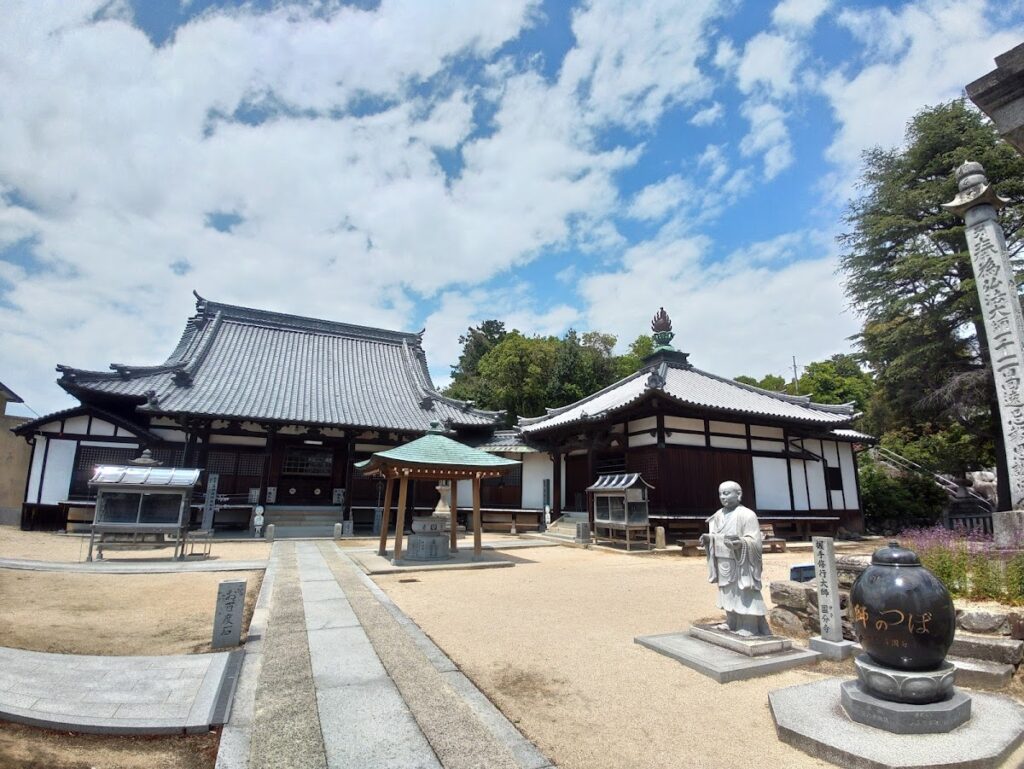
A Complete Guide to Iyo Kokubunji Temple: History and Highlights of the 59th Temple of the Shikoku 88 Temple Pilgrimage
Iyo Kokubunji Temple is an ancient Shingon Ritsu sect temple located in Kokubu, Imabari City, Ehime Prefecture. Its formal name is Kongozan Saishoin, and its principal image is Yakushi Nyorai (Medicine Buddha). As the 59th temple of the Shikoku 88 Temple Pilgrimage, it is an important pilgrimage site visited by many pilgrims.
This article will introduce the charm of this ancient temple in its entirety, from its historical background and highlights within the temple grounds to its valuable cultural assets and practical information useful for visitors.
History of Iyo Kokubunji Temple
Founded by Imperial Order of Emperor Shomu
The origins of Iyo Kokubunji Temple date back to the Nara period, specifically the 13th year of the Tenpyo era (741 AD). Emperor Shomu, wishing for national peace and security and the protection of the nation through Buddhism, ordered the construction of provincial temples (Kokubunji) and nunneries (Kokubun-niji) throughout the country. This imperial decree resulted in the construction of a pair of temples in each province, and a Kokubunji was also built in Iyo Province.
The Iyo Kokubunji is believed to have been completed around 756 AD (Tenpyo Shoho 8). It is said to have been founded by Gyoki Bodhisattva, and that Kobo Daishi (Kukai) also visited the site during his travels. The temple grounds at the time of its founding were much larger than they are today, and the main hall, lecture hall, and seven-story pagoda were magnificent structures.
The Birthplace of Iyo Culture
This region was the location of the provincial capital of Iyo Province and can be considered an important site as the birthplace of Iyo culture. In ancient times, Kokubunji were not merely religious facilities but functioned as centers of local culture. The Iyo Kokubunji also played a significant role in the development of this region as a center of politics, culture, and religion.
History of Destruction and Reconstruction
Iyo Kokubunji Temple has faced numerous trials throughout its long history. It is said to have been destroyed by fire during the Fujiwara Sumitomo Rebellion in 939 AD (Tenkei 2) of the Heian period. Afterward, the temple buildings were repeatedly destroyed and rebuilt due to wars and fires.
The current main hall was rebuilt in 1789 AD (Kansei 1), and the Daishi Hall was built in 1816 AD (Bunka 13). These are valuable structures that preserve the architectural style of the late Edo period.
Site of the Former Kokubunji Temple
The original Iyo Kokubunji Temple was located approximately 150 meters east of the current temple. Its ruins are designated as a national historic site as the “Iyo Kokubunji Pagoda Site,” and 13 (or possibly 12) massive foundation stones remain at what is believed to be the site of the eastern pagoda. These foundation stones are valuable relics that tell the story of a magnificent seven-story pagoda that once stood on this site.
Highlights of the Temple Grounds
Main Hall
Located at the back of the spacious temple grounds, the main hall was rebuilt in 1789 (Kansei 1). It is a stately building with a hipped roof and tiled roofing, and the principal image, Yakushi Nyorai (Medicine Buddha), is enshrined in the inner sanctuary.
Yakushi Nyorai is believed to grant blessings for healing illnesses and longevity, and many worshippers visit to pray. Inside the main hall, Nikko Bosatsu (Sunlight Bodhisattva) and Gekko Bosatsu (Moonlight Bodhisattva) are placed as attendant deities, creating a solemn atmosphere.
Daishi Hall
Located on the right side of the temple grounds, the Daishi Hall was built in 1816 (Bunka 13). It is a hall dedicated to Kobo Daishi Kukai and is the center of faith for the Shikoku Pilgrimage. Pilgrims always visit this Daishi Hall after praying at the main hall.
At the Daishido Hall, chanting and sutra offerings are performed based on the “Daishi faith,” which believes that Kobo Daishi is still alive and saving all sentient beings.
Konpira Hall
To the left of the temple grounds is the Konpira Hall. This hall enshrines Konpira Gongen, the god of maritime safety and business prosperity, and is deeply revered by the local people.
Bell Tower and Bell
Within the temple grounds is a magnificent bell tower, from which a temple bell hangs. The sound of this bell resonates throughout the surrounding area, and it has also served to announce the time.
Relationship with Karakoyama
Iyo Kokubunji Temple stands at the foot of Karakoyama Mountain, close to the scenic Karakohama Beach. Karakoyama Mountain is an isolated hill with an elevation of 105.3 meters, measuring 1.3 kilometers north-south and 1.8 kilometers east-west. The presence of this mountain is thought to have influenced the selection of the temple’s location.
Cultural Properties and Historic Sites
National Historic Site: Iyo Kokubunji Pagoda Site
The most important cultural property of Iyo Kokubunji is the pagoda site, a nationally designated historic site. Located approximately 150 meters east of the current temple in Tonoda, Kokubun, Imabari City, 12 to 13 foundation stones, including the central foundation stone, remain on the base platform.
These foundation stones are enormous, exceeding 1 meter in diameter, indicating the large scale of the seven-story pagoda. The pagoda’s base platform is a square approximately 18 meters on each side, a valuable remains demonstrating the high level of architectural technology of the Nara period.
Results of Archaeological Excavations
Several archaeological excavations have been conducted at the Iyo Kokubunji site. These excavations have uncovered Nara period ditches, pits, postholes, and collapsed roof tiles, gradually revealing the appearance of the temple at the time of its founding.
The excavated roof tiles exhibit Nara period style, indicating a strong connection with the central government at the time. These artifacts serve as evidence that Iyo Kokubunji Temple was built as a national project.
Temple Treasures and Buddhist Statues
The principal image of Yakushi Nyorai (Medicine Buddha) enshrined in the main hall is believed to be a work from the Edo period, and is a Buddhist statue of outstanding beauty. Along with the attendant statues of Nikko Bosatsu (Sunlight Bodhisattva) and Gekko Bosatsu (Moonlight Bodhisattva), it quietly watches over worshippers.
As the 59th Temple of the Shikoku 88 Temple Pilgrimage
Position on the Pilgrimage Route
Iyo Kokubunji Temple is the 59th temple of the Shikoku 88 Temple Pilgrimage, making it an important pilgrimage site in Ehime Prefecture (Iyo Province). It is approximately 7 kilometers from Senyu-ji Temple (the 58th temple) and approximately 10 kilometers from Yokomine-ji Temple (the 60th temple).
Located within Imabari City, it is a relatively easily accessible temple, attracting many pilgrims. The temple grounds are flat and spacious, providing a comfortable environment for elderly pilgrims to visit.
Sutra Copying and Temple Seals
At the sutra copying office, you can receive a temple seal (sutra copying seal) as proof of your visit. The seal will bear the calligraphy of “Konkozan” and “Kokubunji,” along with a red seal representing the principal image, Yakushi Nyorai (Medicine Buddha). Having it recorded in your sutra copying book becomes a precious memento of your pilgrimage.
Related Sites and Historical Remains in the Surrounding Area
Site of the Iyo Provincial Government
The area surrounding Iyo Kokubunji Temple was the site of the ancient provincial government of Iyo Province. The provincial government was the center of local administration and, together with Kokubunji Temple, formed the core of ancient Iyo’s politics and culture. Even today, traces of that time remain in the place names and topography.
Kameyama and Karakoyama
To the west of Karakoyama is Kameyama, another isolated hill. These hills are thought to have functioned as landmarks in this region since ancient times and influenced the selection of the Kokubunji Temple’s location.
Historical Landscape of the Imabari Plain
The Imabari (Ochi) Plain, where Iyo Kokubunji Temple is located, is a land that has been developed since ancient times, and many historical sites are scattered throughout. Exploring the surrounding area starting from Kokubunji Temple allows you to experience the history of ancient Iyo.
Relationship with Preceding and Following Temples
Temple No. 58: Senyu-ji Temple
The temple before Iyo Kokubunji Temple is Senyu-ji Temple, located on the mountainside of Mt. Sakurei. Situated at an altitude of approximately 300 meters, it is a temple with a magnificent view of the Seto Inland Sea. From Senyu-ji Temple to Iyo Kokubunji Temple, the pilgrimage route descends the mountain and heads towards the plains.
Temple No. 60: Yokomine-ji Temple
The next temple, Yokomine-ji Temple, is known as a difficult section, located at an altitude of approximately 750 meters on the middle slopes of the Ishizuchi Mountain range. In stark contrast to the flat Kokubunji Temple, pilgrims must climb a steep mountain path, making it a challenging section for pilgrims.
Inner Sanctuary and Extra Sacred Sites
Surrounding Sacred Sites
Around Iyo Kokubunji Temple, in addition to the 88 temples of Shikoku, there are numerous sacred sites and temples revered by the local people. Visiting these extra sacred sites allows you to experience the local religious culture more deeply.
Karakohama Beach
The scenic Karakohama Beach is a beautiful spot close to Iyo Kokubunji Temple. This beautiful coastline, where the gentle waves of the Seto Inland Sea lap against the shore, has been cherished by many people since ancient times. Visiting after a pilgrimage will leave you feeling refreshed and cleansed.
Access and Visiting Information
Access by Public Transportation
By Train and Bus
- Get off at JR Yosan Line “Iyo-Sakurai Station,” approximately 25 minutes on foot
- Approximately 5 minutes by taxi from the same station
- Get off at Setouchi Bus “Kokubu” bus stop, approximately 5 minutes on foot
Access by Car
- Approximately 10 minutes from Imabari IC via National Route 196
- Parking: Approximately 20 regular cars can be accommodated (free)
- Large buses can be parked
Visiting Hours and Sutra Copying Hours
- Visiting Hours: Grounds are freely accessible (always open)
- Sutra Copying Hours: 7:00 AM to 5:00 PM (may vary depending on the season)
- Closed: None
Visiting Etiquette
- Bow at the main gate before entering the grounds
- Cleanse your hands and mouth at the water basin
- Chant sutras, offer votive slips, and make offerings at the main hall
- Similarly, offer prayers at the Daishido Hall.
- Receive a Goshuin (temple stamp) at the Nokyosho (temple office).
- Bow when leaving the temple gate.
Nearby Tourist Attractions
Imabari City Center
Iyo Kokubunji Temple is approximately a 15-minute drive from Imabari city center. There are many sights to see, including Imabari Castle, the Towel Museum, and Imabari Port. Imabari Castle, in particular, is famous as a seaside castle, offering beautiful views of the Seto Inland Sea.
Shimanami Kaido
Imabari is known as the starting point of the “Shimanami Kaido.” The beautiful series of bridges connecting the islands of the Seto Inland Sea is also popular as a cycling mecca.
Imabari Towels
Imabari is a town famous for its towel industry. High-quality Imabari towels are highly regarded both domestically and internationally, and there are many towel-related facilities in the city.
Annual Events and Festivals
Iyo Kokubunji Temple holds various Buddhist services and events throughout the year.
Main Annual Events
- First three days of the New Year: Many worshippers visit for the first shrine visit of the year.
- Spring and Autumn Equinox Services: Memorial services for ancestors.
- Kobo Daishi Memorial Service: Memorial service held at the Daishi Hall on the 21st of every month.
- Yakushi Nyorai Festival: 8th of every month.
The Charm of Iyo Kokubunji Temple
Layers of History
The greatest charm of Iyo Kokubunji Temple lies in its layered history, spanning from its founding in the Nara period to the present day. The pagoda ruins, a nationally designated historical site, convey the atmosphere of the Nara period, while the current temple buildings retain Edo period architecture. It is a precious space where you can experience nearly 1300 years of history in one place.
Tranquil Grounds
The spacious grounds are a peaceful and calming space. You can escape the hustle and bustle and have time to reflect on yourself. It functions not only as a pilgrimage site but also as a spiritual haven for the local people. ### Easy Access
While many temples on the Shikoku Pilgrimage require climbing steep mountain paths, Iyo Kokubunji Temple is located on flat land, making it easily accessible for the elderly and those with limited physical strength.
Message to Visitors
When visiting Iyo Kokubunji Temple, please allow ample time. In addition to visiting the main hall and the Daishi Hall, we recommend taking a leisurely stroll through the temple grounds and reflecting on the history etched into this land.
We especially recommend extending your visit slightly from the current temple to see the pagoda ruins, a nationally designated historical site. Standing before the massive foundation stones, you can almost picture the seven-story pagoda that once stood here. You will be able to directly experience the depth of the people’s skills and faith during the Nara period.
As a Shingon Ritsu Sect Temple
The current Iyo Kokubunji Temple belongs to the Shingon Ritsu sect. The Shingon Ritsu sect is a Buddhist sect that combines the doctrines of the Shingon sect with the precepts of the Ritsu sect, and it flourished during the Kamakura period under Eizon. It is characterized by its strict adherence to precepts and the practice of esoteric Buddhism.
As a Shingon Ritsu sect temple, Iyo Kokubunji Temple continues to transmit Buddhist teachings to the present day while cherishing its ties with the local community.
Summary
Iyo Kokubunji Temple is an ancient temple established during the Nara period by the imperial decree of Emperor Shomu. It is the 59th temple on the Shikoku 88 Temple Pilgrimage and continues to welcome many pilgrims. Located in Kokubu, Imabari City, Ehime Prefecture, it is a Shingon Ritsu sect temple known as Konkozan Saishoin.
The original Iyo Kokubunji Temple was located approximately 150 meters east of its current location, and the site of its pagoda is preserved as a national historical site. The ruins, with 13 massive foundation stones remaining, convey the existence of the magnificent seven-story pagoda of the past.
The current temple grounds include the main hall, rebuilt in 1789, and the Daishi Hall, built in 1816, preserving the architectural style of the Edo period. The principal image is Yakushi Nyorai (Medicine Buddha), believed to grant healing from illness and promote longevity.
Located in the birthplace of Iyo culture, where the Iyo Provincial Government was located, this is a valuable place to experience history and culture that has continued since ancient times. With easy access, it is a pilgrimage site open to a wide range of visitors, from beginners to experienced pilgrims.
On a Shikoku pilgrimage, Iyo Kokubunji Temple is not merely a transit point, but an important base where you can truly feel the depth of Japan’s ancient history and Buddhist culture. Please take your time to visit and feel the 1300 years of history etched into this land.

