Complete Guide to Jōanji Temple: Visiting the Kuki Clan’s Family Temple and its History Connected to Emperor Meiji
Jōanji Temple, located in Toba City, Mie Prefecture, is a historic temple known as the family temple of the Kuki clan, who ruled Toba from the Sengoku period to the Edo period. As one of the most prestigious Soto Zen temples in Shima, it attracts attention from history enthusiasts and those interested in cultural properties.
About Jōanji Temple: An Overview of One of Shima’s Foremost Soto Zen Temples
Jōanji Temple is a Buddhist temple of the Eiheiji branch of the Soto Zen sect, located in Toba City, Mie Prefecture. Its mountain name is Tamaryūzan. This temple is not merely a religious facility, but is positioned as an important cultural heritage site that tells the history of Toba.
Located at the northern foot of Mt. Hinoyama, Jōanji Temple is enveloped in a tranquil environment, offering peace of mind to visitors. As a Soto Zen temple, it has maintained deep ties with the local community while cherishing Zen meditation and Buddhist teachings.
While there are many Soto Zen temples in the Shima region, Jōanji Temple holds a special place in terms of prestige and history. This is due to its relationship with the powerful Kuki clan, a daimyo family, and its connection to Emperor Meiji, which will be discussed later.
The Founding and History of Jōanji Temple: Commemoration of His Father, Yoshitaka, by Kuki Moritaka
The Story of Kuki Yoshitaka and Kuki Moritaka
The founding of Jōanji Temple dates back to the turbulent period from the Sengoku period to the early Edo period. It is believed to have been founded between 1569 and 1614, and is said to have been built by Kuki Moritaka in memory of his father, Kuki Yoshitaka.
Kuki Yoshitaka was a renowned naval commander who served Oda Nobunaga and Toyotomi Hideyoshi, and was also known as a “pirate daimyo.” Because Yoshitaka sided with the Western Army in the Battle of Sekigahara, he met a tragic end due to the subsequent fate of his lord.
His son, Moritaka, renovated the temple grounds of Jōanji Temple to commemorate his father and to demonstrate the prestige of the Kuki family. This transformed Jōanji Temple from a mere temple into a symbol of the Kuki clan’s authority and history.
Development during the Edo Period and its Relationship with the Toba Domain
During the Edo period, Jōanji Temple developed under the patronage of the Toba Domain as the family temple of the Kuki family, the early lords of the domain. Successive heads of the family, including Kuki Moritaka, dedicated themselves to the maintenance and development of the temple, making numerous donations.
During this period, Jōanji Temple established itself as a central figure of the Sōtō Zen sect in the Shima region, becoming a center of faith for the surrounding area. The temple’s size expanded, and it also functioned as a training ground for many monks.
Emperor Meiji’s Stay: The Satsuma Rebellion and a Special Day at Jōanji Temple
A noteworthy event in Jōanji Temple’s history is the stay of Emperor Meiji. During the Satsuma Rebellion, which broke out in 1877, Emperor Meiji stopped at Toba Port on his way to Kyushu.
Records indicate that Emperor Meiji stayed in the shoin (inner study) of Jōanji Temple. It was extremely unusual for an emperor to stay at a private temple, demonstrating the high status of Jōanji Temple and its importance as the family temple of the Kuki clan.
This historical event elevated Jōanji Temple from a mere local temple to a special institution with ties to the Imperial family. Even today, the fact of this visit is recounted as a source of pride for Jōanji Temple.
Cultural Properties of Jōanji Temple: Numerous City-Designated Cultural Properties
Within the grounds of Jōanji Temple, there are many valuable cultural properties registered as Toba City-designated cultural properties. These are important legacies that convey the history and faith of the Kuki clan to the present day.
Stone Lantern (Genna 4, 1618)
This stone lantern, donated by Kuki Moritaka to commemorate his father, Yoshitaka, bears the inscription of Genna 4 (1618). This lantern embodies Moritaka’s deep affection for his father and is a valuable historical document demonstrating the level of stonemasonry at the time.
The stone lantern is placed along the approach to the temple grounds, quietly watching over visitors. Having withstood the elements for over 400 years, its continued preservation speaks volumes about the durability of stonework and the skill of the craftsmen.
Waniguchi (Waniguchi, Keicho 15, 1610)
The waniguchi, donated by Kuki Moritaka in Keicho 15 (1610), is also carefully preserved as a city-designated cultural property. Waniguchi are Buddhist implements hung at the entrance or main hall of temples, and are rung by worshippers to announce their visit to Buddha. This bronze bell bears the name of the donor, Kuki Moritaka, and the year of donation, making it an important historical document for understanding the form of faith at the time and the relationship between the Kuki clan and the temple.
Kuki Family Mausoleum
Within the grounds of Jōanji Temple, there is a mausoleum for successive heads of the Kuki family. Here, members of the Kuki family, including Kuki Yoshitaka, rest, and memorial services continue to this day by their descendants and related parties.
The mausoleum is enveloped in a solemn atmosphere, quietly telling the history of the family that ruled the Toba region from the Sengoku period to the Edo period. The styles of the tombstones and memorial towers reveal the characteristics of stone art from each era.
Inagaki Family Tombstones
The tombstones of successive Inagaki family members, who succeeded the Kuki clan as lords of the Toba domain, also remain at Jōanji Temple. The Inagaki family ruled Toba after the Kuki clan, and the existence of their tombstones indicates that Jōanji Temple continued its role as the family temple of the Toba domain lords.
These gravestones are also protected as city-designated cultural properties and are valuable historical materials for understanding the history of Toba from the mid-Edo period onward.
Architectural Highlights of Jōanji Temple
Main Hall and Study Hall
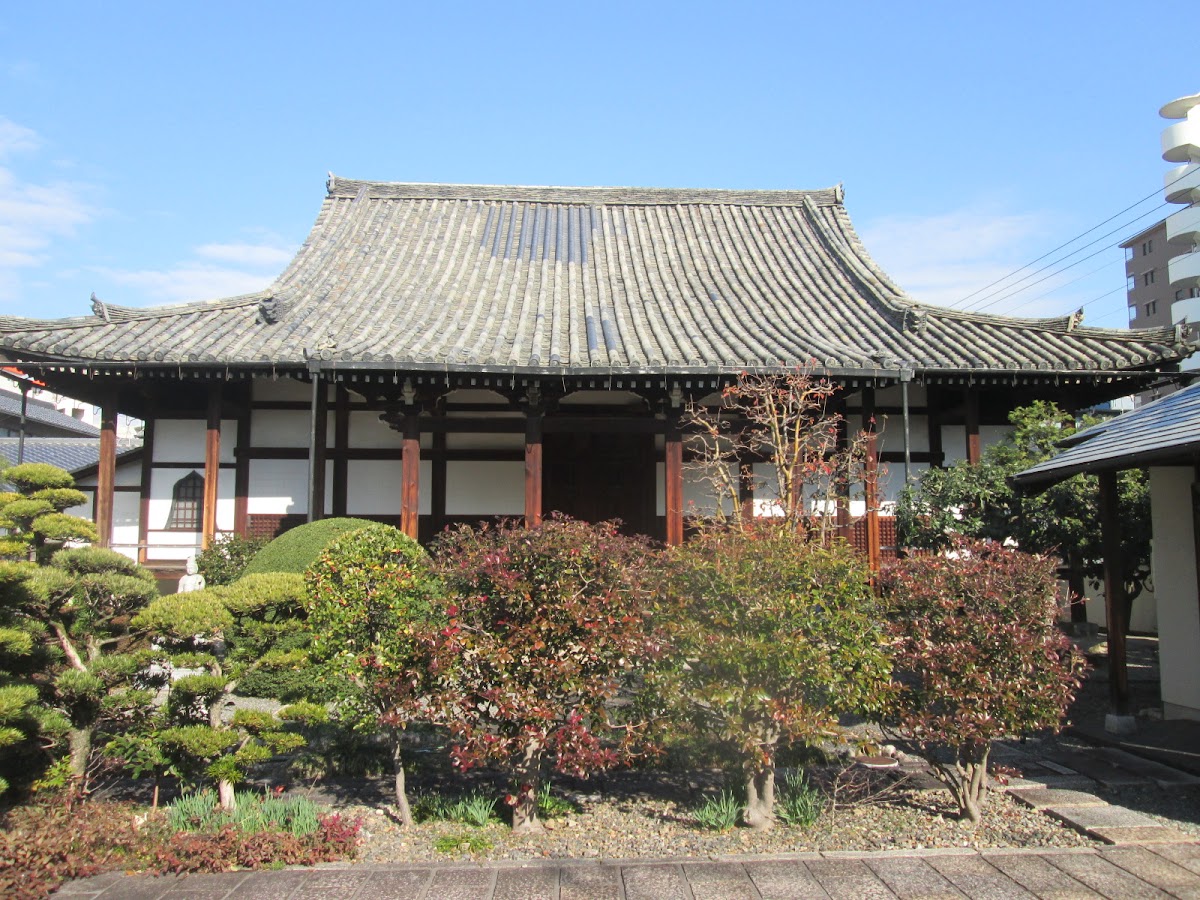
The main hall of Jōanji Temple is a magnificent building with the typical style of a Sōtō Zen temple. The principal image is enshrined inside, and daily services and religious ceremonies are held there.
The study hall is a historically significant building where Emperor Meiji stayed, and it boasts a highly formal design. While not usually open to the public, its historical value is immeasurable. From the study hall, one can enjoy a view of the beautiful garden, creating a tranquil space characteristic of a Zen temple.
Atmosphere and Natural Environment of the Temple Grounds
Located at the northern foot of Mt. Hinoyama, the grounds of Jōanji Temple are surrounded by abundant nature. Plants of each season adorn the grounds, and particularly beautiful scenery can be enjoyed during the cherry blossom season in spring and the autumn foliage season.
The temple grounds are home to many ancient trees, creating an atmosphere that evokes a long history. In this tranquil environment, you can enjoy a peaceful visit and a leisurely stroll.
Access to Jōanji Temple
Basic Information
Address: 2-12-3 Toba, Toba City, Mie Prefecture
Jōanji Temple is located in the heart of Toba City, close to Toba Station, making it relatively easy to access.
Access by Public Transportation
By Train:
- Approximately 15 minutes on foot from JR/Kintetsu Toba Station
- Exit the station and head towards Toba city center, following the signs.
Toba Station is a major station for Ise-Shima tourism, conveniently accessible from both Nagoya and Osaka. There is a tourist information center near the station where you can check detailed directions.
Access by Car
From Ise:
- Approximately 20 minutes via the Ise-Futami-Toba Line
- From Ise IC, take National Route 23 and National Route 42 to Toba city center.
Parking:
There is parking space on the temple grounds, but the number of spaces is limited, so it is recommended to check in advance. Especially during tourist season and memorial services, congestion is expected.
There are also public parking lots in Toba city center, so you can visit on foot from there.
Tourist Spots Around Jōanji Temple
When visiting Jōanji Temple, you can enjoy a more fulfilling Toba sightseeing experience by also visiting the surrounding historical and cultural spots.
Kata Shrine
Kata Shrine, located near Jōanji Temple, is a shrine that has been revered since ancient times as the center of local faith in Toba. It attracts the faith of fishermen who pray for safety at sea and abundant catches, and is an important spot for understanding Toba’s maritime culture.
Edogawa Ranpo Museum (Toba Minatomachi Literature Museum)
Edogawa Ranpo, the master of mystery novels, was born in Toba City. The Edogawa Ranpo Museum features exhibits showcasing Ranpo’s life and works, making it a must-see spot for literature fans.
Sanuki Kotohira Shrine Toba Branch
A branch shrine of Kotohira Shrine, known as the guardian deity of maritime traffic, sits on a hill overlooking Toba Port. From the shrine grounds, you can enjoy a panoramic view of Toba Bay, making it a popular spot for photography.
Hiyoriyama
Hiyoriyama, overlooking Toba Port, was once a place where sailors climbed to check the weather. Currently, it has been developed as an observation point, offering views of Toba Bay and the surrounding islands.
Toba Sightseeing Model Course: Historical Walk Including Jo’anji Temple
We introduce a model course for a historical walk around Toba city, centered on Jo’anji Temple.
Morning:
- Arrive at Toba Station
- Visit Jōanji Temple (30-45 minutes)
- Visit Kata Shrine (15-20 minutes)
Lunch:
Enjoy seafood at restaurants in Toba city center, such as Toba Honten.
Afternoon:
- Visit the Edogawa Ranpo Museum (30-45 minutes)
- Visit the Sanuki Kotohira-gu Toba Branch Shrine (20-30 minutes)
- Visit Hiyoriyama Observatory (15-20 minutes)
- Stroll around Toba Marine Terminal
This course allows you to efficiently experience Toba’s history and culture in half a day to a full day.
Notes and Manners When Visiting Jōanji Temple
Jōanji Temple is a temple where religious activities are still conducted. Please pay attention to the following points when visiting.
Temple Visiting Etiquette
- Maintain silence within the temple grounds and be considerate of other visitors.
- Remove your hat in the main hall and mausoleum and pray with respect.
- Photography is permitted only in designated areas (photography may be prohibited inside the main hall and mausoleum).
- Do not touch cultural artifacts.
- Take all your trash with you.
Visiting Hours and Admission Fee
While Jōanji Temple is generally open to the public, access may be restricted during religious services and events. If you wish to have a special viewing, it is recommended to contact the temple in advance to confirm.
The Role of Jōanji Temple in the Ise-Shima Region
The Ise-Shima region is a major center of faith and tourism, centered around Ise Grand Shrine. In this region, Jōanji Temple has played an important role as a Buddhist temple.
From the era of syncretism of Shinto and Buddhism through the Meiji-era separation of Shinto and Buddhism to the present day, Jōanji Temple has continued to play a vital role in the region’s spiritual culture. While Ise Grand Shrine is a sacred site of Shintoism, Jōanji Temple, as a center of Soto Zen Buddhism, represents the religious diversity of the region.
In recent years, in addition to visiting Ise Grand Shrine, an increasing number of tourists are visiting historical temples like this one during their Ise-Shima sightseeing trip. Jōanji Temple is gaining value as a tourist resource, offering a chance to experience the multifaceted history and culture of Ise-Shima.
The History of Jōanji Temple and the Kuki Navy
The history of the Kuki Navy is essential when discussing Jōanji Temple. The navy led by Kuki Yoshitaka distinguished itself in Oda Nobunaga’s attack on Ishiyama Honganji Temple and the Battle of Kizugawaguchi, leaving its mark on the history of naval warfare in Japan.
Yoshitaka is also known for building ironclad ships, and was a progressive warlord who introduced innovative military technology for his time. Backed by this naval power, the Kuki clan controlled the seas around Shima and Ise, establishing their base in Toba, a key point for maritime traffic.
Jōanji Temple served as a spiritual haven for the Kuki clan, powerful maritime warlords, and a place to comfort the souls of soldiers who died in battle. Even today, standing on the temple grounds, one can feel the story of the former glory and eventual downfall of this family that once ruled the seas.
Experiencing the Spirit of Zen at Jōanji Temple
Jōanji Temple, a Soto Zen temple, cherishes the teachings of Zen. The Soto Zen school emphasizes “Shikantaza,” that is, simply sitting in meditation.
Taking time to reflect on oneself in the tranquil atmosphere of the temple grounds will be a valuable experience, a respite from the hustle and bustle of modern life. By visiting Jōanji Temple, you can connect with the spirit of Zen and attain inner peace.
Sometimes, experiential programs such as Zen meditation sessions and sutra copying sessions are offered, so it is recommended to inquire in advance if you are interested.
Reasons to Visit Jōanji Temple: A Trinity of History, Culture, and Healing
Jōanji Temple is more than just a tourist spot. Here, the following three values are condensed: ### Historical Value
Experience the turbulent history of Japan, from the Sengoku period to the Edo period and the Meiji era, from the perspective of the Kuki clan’s ancestral temple. The special history of Emperor Meiji’s stay is also a unique and valuable element.
Cultural Value
The stone lanterns, bronze gongs, and mausoleum, protected as city-designated cultural properties, are valuable cultural heritage sites that convey the religious practices and artistic and craft standards of the time. Its status as the foremost Soto Zen temple in Shima also speaks to its cultural importance.
Spiritual Value
By calming your mind in the tranquil temple grounds and experiencing the spirit of Zen, you can gain a healing time free from the stresses of everyday life. The unique atmosphere of this historic temple brings deep peace to visitors.
Summary: Experiencing Toba’s History and Tradition at Jōanji Temple
Jōanji Temple is a historic temple founded as the ancestral temple of the Kuki clan and has developed into the foremost Soto Zen temple in Shima. Founded by Kuki Moritaka in memory of his father, Yoshitaka, this temple is a special place where the stories of Sengoku-era warlords and the spirit of Zen Buddhism merge.
The fact that Emperor Meiji stayed in the inner sanctuary during the Satsuma Rebellion speaks to the temple’s high status, and the numerous city-designated cultural properties remaining on the grounds continue to speak to us as witnesses to the faith and culture of that time.
Its convenient location, approximately a 15-minute walk from Toba Station, is also a major draw, making it easy to visit as part of an Ise-Shima sightseeing trip. Nearby attractions include Kata Shrine, the Edogawa Ranpo Museum, the Sanuki Kotohira-gu Toba Branch Shrine, and Hiyoriyama Hill, making it an ideal addition to a historical walking tour for a more fulfilling Toba experience.
Visiting Jōanji Temple in conjunction with a visit to Ise Grand Shrine allows you to experience the spiritual culture of the Ise-Shima region from both Shinto and Buddhist perspectives. The tranquil grounds and the time spent reflecting on the history dating back to the Sengoku period will surely create unforgettable travel memories.
Jōanji Temple is a special place with a trinity of value: you can learn about history, appreciate cultural artifacts, and find peace of mind. When you visit Toba, be sure to stop by this historic temple.