
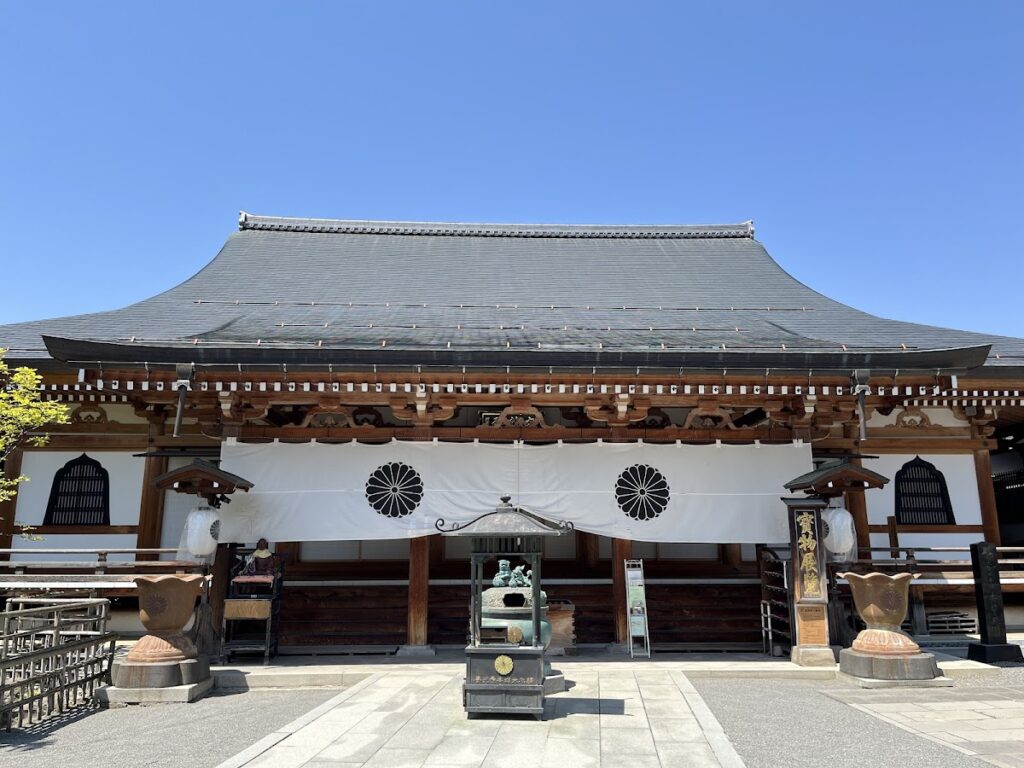
Complete Guide to Shin-Zenkoji Temples: A Thorough Explanation of Zenkoji Faith Temples Scattered Across Japan
There are several temples named Shin-Zenkoji throughout Japan. These temples have a history rooted in deep faith in Zenkoji Temple in Nagano Prefecture, and each possesses its own unique history and characteristics. This article provides a detailed explanation of the major Shin-Zenkoji temples, including their history, sect, principal image, and highlights.
What is Shin-Zenkoji?: The Background of Zenkoji Faith and its Nationwide Expansion
The name Shin-Zenkoji originated from a deep faith in Zenkoji Temple in Shinano Province (present-day Nagano Prefecture). Zenkoji Temple enshrines the Ichiko Sanzon Amida Nyorai statue, considered one of the oldest Buddhist statues in Japan, and has long attracted many worshippers regardless of their sect.
From the Kamakura period to the Edo period, pilgrimages to Zenkoji Temple were extremely popular among ordinary people. However, since it was not easy to make a pilgrimage to Zenkoji Temple in Shinano Province from afar, Shin-Zenkoji temples were built in various locations as extensions of Zenkoji. These temples enshrine statues of Amida Buddha modeled after the principal image of Zenkoji, with the hope that local people could receive the same merit as those who made a pilgrimage to Zenkoji.
Shin-Zenkoji Temple in Ritto City, Shiga Prefecture: A Jodo Sect Temple with a History of Memorial Services for the Taira Clan
History and Establishment
Shin-Zenkoji Temple, located in Hayashi, Ritto City, Shiga Prefecture, is a temple belonging to the Jodo sect. It was established in the mid-Kamakura period by Komatsu Munetada, a descendant of Taira no Shigemori. It is said that Komatsu Munetada made 48 pilgrimages to Zenkoji Temple in Shinano Province to perform memorial services for the Taira clan, and finally, after receiving a spiritual dream, established Shin-Zenkoji Temple at its current location.
This temple is known as “Higan no Hange” (the bustling festival of the equinox), one of the “Eight Scenic Views of Ritto,” and is particularly bustling with many visitors during the spring and autumn equinox periods. Located approximately 2.2 km east of JR Tehara Station, it remains a beloved center of local faith.
Characteristics of the Main Image and Temple
The main image is a statue of Amida Buddha, modeled after the main image of Zenkoji Temple. Based on the teachings of the Jodo sect, it preaches salvation through the compassion of Amida Buddha. The Jodo sect, founded by Honen Shonin, teaches that one can attain rebirth in the Pure Land by chanting “Namu Amida Butsu.”
In addition to the main hall, the temple grounds include a guest hall and living quarters, and as a local temple for parishioners, it also performs memorial services such as perpetual memorial services, memorial services for stillborn babies, and family funerals.
Access and Basic Information
- Address: 256 Hayashi, Ritto City, Shiga Prefecture
- Sect: Jodo-shu (Pure Land Buddhism)
- Principal Image: Amida Buddha
- Access: Approximately 2.2km east from JR Tehara Station
- Phone: 077-554-2773 (FAX only)
Shin-Zenkoji Temple in Higashiyama, Kyoto: A Flower Temple with Imperial Family Connections, Known as Ichijo-dono
History and Connections to the Imperial Family
Shin-Zenkoji Temple, located in Higashiyama Ward, Kyoto City, is a temple belonging to the Shingon-shu Sennyu-ji sect and is one of the sub-temples of Sennyu-ji Temple. Also known as “Ichijo-dono,” it is known as a temple with deep connections to the Imperial Family.
Established in 1243, this temple was originally located elsewhere but later moved to its current location. Sennyu-ji Temple is the Imperial family’s ancestral temple, known as “Midera,” and Shin-Zenko-ji Temple is also part of this group, with strong ties to the Imperial family.
Main Image and Cultural Properties
The main image is a standing statue of Amida Buddha, in the Zenko-ji style Amida Triad format. Within the temple grounds is the Aizen-do Hall, where Aizen Myoo is enshrined, attracting worshippers as an extra stop on the Izumiyama Seven Lucky Gods pilgrimage. Aizen Myoo is known as a deity for successful love and matchmaking, drawing many visitors.
Charm as a “Flower Temple”
Shin-Zenko-ji Temple is also famous as a “flower temple,” particularly known for its hydrangeas. During the rainy season, the temple grounds are covered in a profusion of colorful hydrangeas, attracting many tourists and photography enthusiasts. From the main gate to the front garden, main hall, abbot’s quarters, and gardens, seasonal flowers delight visitors.
The garden features a koi pond, offering a tranquil atmosphere where you can find peace of mind. Despite being located in the bustling Higashiyama area of Kyoto, it provides a peaceful space away from the hustle and bustle.
Access and Basic Information
- Address: Sennyuji Yamauchi-cho, Higashiyama-ku, Kyoto City
- Sect: Shingon-shu Sennyuji-ha
- Principal Image: Standing statue of Amida Buddha
- Features: Extra temple on the Sennyuuji Seven Lucky Gods pilgrimage (Aizen Myoo)
- Access: Take a bus from JR Kyoto Station and get off at Sennyuji-michi, then walk for about 10 minutes.
Shin-Zenkoji Temple in Oyama City, Tochigi Prefecture: Founded by Ippen Shonin, the founder of the Jishu sect
History of Ippen Shonin and the Jishu Sect
Shin-Zenkoji Temple in Oyama City, Tochigi Prefecture, is a temple belonging to the Jishu sect. Its official name is “Shionzan Hōrin-in Shin-Zenkōji,” and it was founded in 1280 (Kōan 3) by Ippen Shōnin, the founder of the Jishū sect.
The Jishū sect was founded by Ippen Shōnin during the Kamakura period. It is characterized by the practice of “Odori Nenbutsu” (dancing nenbutsu) and preaches salvation by Amida Buddha regardless of social status or wealth. Ippen Shōnin traveled throughout Japan on pilgrimage, spreading the teachings of nenbutsu and establishing temples in various locations. Shin-Zenkōji in Oyama is one of them.
Thirty-Three Kannon Bodhisattvas and Oyama Jishō Kannon Bodhisattva
One of the distinctive features of Shin-Zenkōji in Oyama is the thirty-three Kannon Bodhisattvas enshrined on its grounds. Kannon Bodhisattva is believed to transform into thirty-three different forms to save sentient beings, and it is believed that various merits can be gained by visiting these Kannon statues.
Furthermore, the temple also houses a statue of Oyama Jishō Kannon Bodhisattva, which is revered by the local people. This Kannon statue is considered the guardian deity of the region and attracts many worshippers.
Temple Structure and Present Day
Since its founding, the temple has suffered damage from several major fires and disasters, but has been rebuilt each time. The current temple structure was developed from the Edo period to the modern era and includes the main hall, guest hall, and other buildings.
With its open atmosphere characteristic of the Jishu sect, the temple is cherished by the local community and hosts various events throughout the year.
Access and Basic Information
- Address: Oyama City, Tochigi Prefecture
- Sect: Jishu Sect
- Mountain Name: Shiunzan
- Temple Name: Horin-in
- Founded: Koan 3 (1280)
- Founding Priest: Ippen Shonin
Shin-Zenkoji Temple in Sapporo, Hokkaido: A Jodo Sect Temple in the Northern Land
A Center of Faith During the Pioneer Era
Shin-Zenkoji Temple in Sapporo, Hokkaido, is a temple belonging to the Jodo Sect. It was established as a center of faith for people who migrated from Honshu during the Hokkaido pioneering era.
Many temples in Hokkaido were built after the Meiji era, and Shin-Zenkoji Temple in Sapporo also has a history of walking hand in hand with the pioneers. It has played a role in spreading the Zenkoji faith to the northern land.
Modern Temple Management
Shin-Zenkoji Temple in Sapporo is also known for its modern temple management. The temple features a bright and open design, and under the concept of “remembering in a space bathed in light,” it attempts to refresh the traditional image of a temple.
In funerals and memorial services, it offers flexible services tailored to modern lifestyles, aiming to be an open temple that is not bound by the traditional danka (parishioner) system.
Access and Basic Information
- Location: Sapporo City, Hokkaido
- Sect: Jodo-shu (Pure Land Buddhism)
- Features: Modern spatial design, open temple management
Other Shin-Zenkoji Temples: Zenkoji Faith Spreading Nationwide
Shin-Zenkoji Temples in the Kanto Region
In the Kanto region, there are several Shin-Zenkoji temples besides the one in Oyama City, Tochigi Prefecture. Many of these belong to the Tendai sect or Tendai Shinsei sect and have played a role in spreading Zenkoji faith in their respective regions.
Each temple has its own unique history and characteristics, and functions as a center of faith in its region. They enshrine a statue of Amida Buddha as their principal image and are revered as places where one can receive the same merit as visiting Zenkoji Temple.
The Spread of Zenkoji Faith and the Modern Era
Zenkoji faith spread throughout Japan from the medieval to the early modern period, leading to the establishment of temples bearing the name Zenkoji or temples enshrining Zenkoji Buddha statues in various locations. The name Shin-Zenkoji (New Zenkoji) signifies a “new Zenkoji” in contrast to the original Shinano Zenkoji, and these temples have functioned as centers of Zenkoji faith in their respective regions.
Even today, these temples play an important role as spiritual havens for local people, as well as cultural assets and tourist resources.
The Principal Image of Shin-Zenkoji: Zenkoji-style Amida Buddha
What is the Zenkoji-style Amida Triad?
A common characteristic of Shin-Zenkoji temples is the enshrinement of a Zenkoji-style Amida Buddha statue as their principal image. The Zenkoji-style Amida Triad is a three-figure arrangement with Amida Buddha in the center, flanked by Kannon Bodhisattva and Seishi Bodhisattva, and is modeled after the principal image of Shinano Zenkoji.
The principal image of Shinano Zenkoji Temple is an absolute secret Buddha, and no one can see it. However, replicas and carved images of the principal image, said to be a depiction of the original, are enshrined in various Shin-Zenkoji temples.
The Meaning of Amida Buddha Faith
Amida Buddha is the principal deity of the Western Pure Land, and it is said that he welcomes those who chant the Nembutsu (invocation of Amida Buddha) into the Pure Land. At the heart of Zenkoji faith lies this belief in salvation through the compassion of Amida Buddha.
The belief that “one visit to Zenkoji Temple even once will lead to rebirth in the Pure Land” is widely accepted across sects, and is the reason why pilgrimages to Zenkoji and Shin-Zenkoji temples are so popular.
Annual Events and Worship Etiquette at Shin-Zenkoji Temples
Major Annual Events
Various events are held throughout the year at various Shin-Zenkoji temples. Particularly important events include the following:
Spring and Autumn Equinoxes: These are times for ancestral worship, attracting many visitors. Shin-Zenkoji Temple in Ritto City, Shiga Prefecture, in particular, is known for its “Equinox festivities,” with the temple grounds bustling with worshippers during this period.
Obon: A time to welcome the spirits of ancestors, with services such as the Segaki memorial service being held.
Zenkoji Nyorai Unveiling: In conjunction with the unveiling of the main image of Buddha at Shinano Zenkoji Temple (held every few years), special services and events may be held at Shin-Zenkoji temples throughout the region.
Etiquette for Worship
Worship at Shin-Zenkoji Temple follows the general etiquette for Buddhist temples. Bow at the temple gate, purify your hands and mouth at the water basin, and then proceed to the main hall. In the main hall, join your hands in prayer, chant “Namu Amida Butsu,” and offer your prayers with sincerity.
Zenkoji faith is characterized by its openness, allowing anyone to worship regardless of their sect, and Shin-Zenkoji Temple inherits this spirit.
How to Enjoy Visiting Shin-Zenkoji Temples
Visiting Shin-Zenkoji Temples in Various Locations
Visiting the Shin-Zenkoji temples scattered throughout Japan is a valuable opportunity to learn about Japanese Buddhist culture and regional history. Each temple belongs to a different sect and possesses its own unique history and characteristics, offering new discoveries with every visit.
At Shin-Zenkoji Temple in Shiga Prefecture, you can learn about its connection to the Taira clan; at Shin-Zenkoji Temple in Kyoto, its ties to the Imperial family; at Shin-Zenkoji Temple in Tochigi Prefecture, you can trace the footsteps of Ippen Shonin; and at Shin-Zenkoji Temple in Sapporo, you can feel the history of Hokkaido’s development.
Understanding the Depths of Zenkoji Faith
By visiting Shin-Zenkoji temples, you can experience the breadth and depth of Zenkoji faith, which captivated the hearts of Japanese people from the medieval to the early modern period. The longing for the distant Zenkoji Temple in Shinano and the desire to practice that faith locally gave rise to Shin-Zenkoji temples throughout the country.
These temples are not merely religious institutions; they are places where the history, culture, and faith of the region are condensed, speaking volumes to those who visit.
Shin-Zenkoji Temple and the Local Community
Role as a Family Temple
Many Shin-Zenkoji temples function as family temples for their communities. They perform religious ceremonies at important life events, such as funerals, memorial services, perpetual memorial services, and memorial services for stillborn babies, serving as a spiritual pillar for the local community.
In particular, Shin-Zenkoji temples in Ritto City, Shiga Prefecture, and Sapporo City offer services such as family funerals and perpetual memorial services tailored to modern needs, demonstrating temple management that is in line with the times.
Cultural Property Protection and Tourism Resources
Temples possessing cultural properties such as historical buildings, gardens, and Buddhist statues, like Shin-Zenkoji Temple in Higashiyama, Kyoto, are protected as important cultural heritage sites of the region. They also serve as tourist resources, known as “flower temples,” contributing to the local economy.
Modern temples are required to maintain their original role as places of worship while balancing their cultural value and tourist appeal.
Center of the Local Community
Shin-Zenkoji Temple also functions as a center of the local community. Through annual events and memorial services, it provides a place for people to gather and interact. Especially in areas experiencing depopulation and aging, temples play a crucial role in maintaining the bonds of local residents.
Summary: The Universality of Zenkoji Faith as Conveyed by Shin-Zenkoji Temple
Temples named Shin-Zenkoji exist throughout Japan, each with its own unique history and characteristics. While they belong to different sects—a Jodo sect temple in Ritto City, Shiga Prefecture; a Shingon sect temple in Higashiyama, Kyoto; a Jishu sect temple in Oyama City, Tochigi Prefecture; and a Jodo sect temple in Sapporo City, Hokkaido—they all share the common foundation of Zenkoji faith.
These temples are testaments to the Zenkoji faith that spread from the Kamakura period to the Edo period, representing the longing for the distant Zenkoji Temple in Shinano and the desire of people to receive its blessings locally. The Amida Buddha statue enshrined as the principal image continues to attract the faith of many people as a symbol of salvation that transcends sectarian boundaries.
Even today, Shin-Zenkoji temples play a multifaceted role as centers of local faith, cultural heritage sites, and tourist attractions. By visiting Shin-Zenkoji temples scattered throughout Japan, you can feel the richness of Japanese Buddhist culture and the diversity of history in each region. While bound together by the single thread of Zenkoji faith, each Shin-Zenkoji temple exudes its own unique charm, making them valuable examples that convey the profound depth of Japanese religious culture.

