Zenkoji Temple Complete Guide | A Thorough Explanation of History, Worship Methods, Highlights, and Access
Zenkoji Temple is a non-denominational Buddhist temple located in Nagano City, Nagano Prefecture, and is one of Japan’s leading sacred sites, attracting approximately 6 million visitors annually. The saying, “Visit Zenkoji Temple at least once in your lifetime,” has been passed down for generations, reflecting the faith of many people. This article provides a thorough explanation of everything you need to know before visiting Zenkoji Temple, from its history and worship methods to its highlights and access information.
What is Zenkoji Temple?
Zenkoji Temple is an independent Buddhist temple located in Motozen-cho, Nagano City, Nagano Prefecture. Its official name is “Jogakusan Zenkoji.” Its most distinctive feature is that it is a non-denominational temple, not belonging to any particular sect. Zenkoji Temple has a rare structure where it is jointly managed by both the Tendai and Jodo sects. Two temple administrative organizations, “Tendai-shu Daikanjin” and “Jodo-shu Daihongan,” support Zenkoji Temple.
About the Principal Image
The principal image of Zenkoji Temple is the “Ikko Sanzon Amida Nyorai,” considered one of the oldest Buddhist statues in Japan. It is a three-figure arrangement with Amida Nyorai in the center, Kannon Bodhisattva on the right, and Seishi Bodhisattva on the left. This principal image is an absolute secret Buddha and cannot be seen by anyone. During the Gokaicho (public unveiling), a substitute image, the “Maedachi Honzon,” is displayed.
History of Zenkoji Temple
Origin of its Founding
The history of Zenkoji Temple dates back to the Asuka period. According to tradition, the origin of the principal image of Zenkoji Temple lies in an Amida Buddha statue that was brought to Japan from Baekje in 552 AD (or 538 AD). During a conflict between the Soga and Mononobe clans over the acceptance of Buddhism, this statue was thrown into the Horie Canal in Naniwa. Later, Honda Zenko, a retainer of the governor of Shinano Province, is said to have brought the statue back to Shinano and built the hall that would become the present-day Zenkoji Temple.
Successive Support and Development
From the Heian period onward, Zenkoji Temple attracted the faith of many nobles and samurai. In particular, prominent samurai of the era, such as Minamoto no Yoritomo, Ashikaga Takauji, Takeda Shingen, Uesugi Kenshin, and Tokugawa Ieyasu, were devout followers of Zenkoji Temple. There is even an anecdote that Takeda Shingen moved the principal image of Zenkoji Temple to Kai Province.
During the Edo period, the saying “Visit Zenkoji Temple at least once in your life” became widespread among the common people, attracting pilgrims from all over Japan. During this time, Zenkoji Temple firmly established itself as one of Japan’s leading pilgrimage sites.
Zenkoji Temple in the Modern Era
Despite the impact of the Meiji-era separation of Shinto and Buddhism, Zenkoji Temple survived by leveraging its non-denominational nature. Its cultural value was recognized, with the main hall designated a National Treasure in 1950 and the temple gate designated an Important Cultural Property in 1953.
Even today, millions of visitors come for the Gokaicho (grand opening) held once every seven years, maintaining its status as one of Japan’s leading sacred sites.
Main Highlights of Zenkoji Temple
Main Hall (National Treasure)
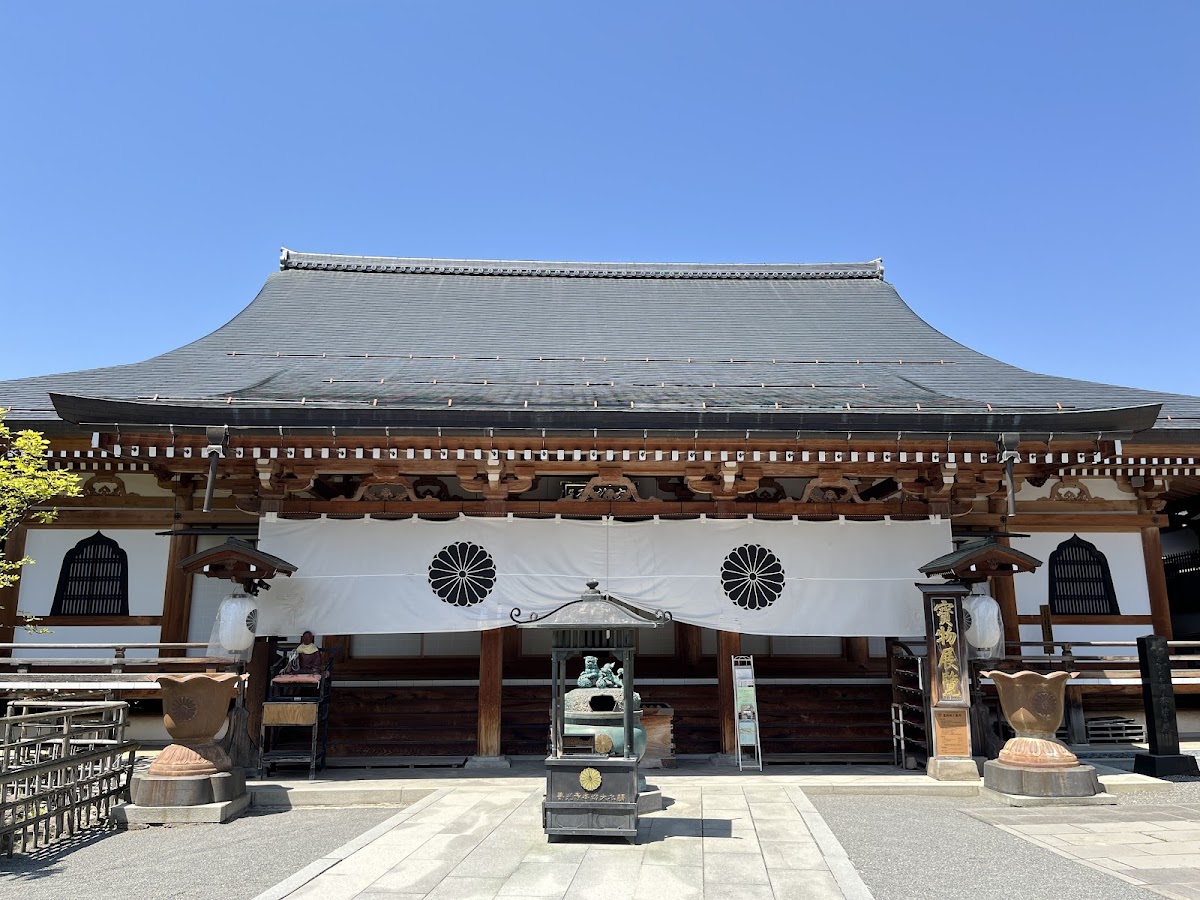
The Zenkoji Temple Main Hall is a magnificent wooden structure designated as a National Treasure. The current main hall was rebuilt in 1707 (Hoei 4) and boasts a massive size, measuring approximately 24 meters wide, 54 meters deep, and 29 meters high.
The architectural style is a unique form called “Shumoku-zukuri,” characterized by its T-shaped floor plan. The roof is entirely covered with cypress bark shingles, and it is highly regarded as one of the largest wooden structures in Japan.
The interior of the main hall is divided into the “Gejin” (outer sanctuary), “Naijin” (inner sanctuary), and “Nainaijin” (inner inner sanctuary). Visitors can enter the Gejin and Naijin. The main image of Buddha is enshrined in the Nainaijin, but it is a strictly secret image and cannot be viewed.
Temple Gate (Important Cultural Property)
The temple gate of Zenkoji Temple is a two-story, hip-and-gable roofed gate built in 1750 (Kanei 3) and is designated as an Important Cultural Property. The imposing gate, standing approximately 20 meters tall, is one of the symbols of Zenkoji Temple.
On the second floor of the main gate, statues of Monju Bodhisattva and the Four Heavenly Kings are enshrined, and visitors can ascend during special viewing periods. The view from the main gate is magnificent, offering a panoramic view of the Zenkoji temple grounds and Nagano city.
There is a legend that five doves are hidden within the characters of the “Zenkoji” plaque on the main gate; finding them is one of the pleasures of visiting.
Niomon Gate
The Niomon Gate is located at the main entrance of Zenkoji Temple. Although a relatively new structure, rebuilt in 2007, it faithfully reproduces the traditional style. Agyo and Ungyo Nio statues are enshrined on either side, welcoming visitors.
Sutra Repository (Important Cultural Property)
The Sutra Repository is an octagonal building constructed in 1759 (Horeki 9) and is designated as an Important Cultural Property. Inside is a rotating bookshelf called a “rinzo” (revolving sutra repository) containing Buddhist scriptures. There is a belief that rotating this revolving sutra once grants the same merit as reading the entire Buddhist canon.
Bell Tower
The bell tower of Zenkoji Temple houses a bell known as the “Bell of Time.” From the Edo period to the present day, the bell has been rung every morning and evening, telling the time to the town of Nagano. The sound of this bell has been selected as one of “100 Soundscapes of Japan to Preserve.”
Six Jizo Statues
Six Jizo Bodhisattva statues line the path from the Niomon Gate to the main hall. Each is believed to guard the six realms of existence: hell, hungry ghosts, animals, asuras, humans, and heaven, watching over the safety of worshippers.
How to Visit Zenkoji Temple
Basic Worship Procedure
The general procedure for visiting Zenkoji Temple is as follows:
- Passing through the Niomon Gate: Enter the temple grounds through the Niomon Gate, the entrance to the Zenkoji Temple approach.
- Passing through the Sanmon Gate: Bow at the Sanmon Gate before passing through.
- Purifying at the Water Basin: Purify your hands and mouth.
- Worship at the Main Hall: Worship in the outer hall of the main hall.
- The Underground Corridor: Those who wish can experience the underground corridor beneath the main hall.
- Worship in the Inner Sanctuary: Those who wish can enter the inner sanctuary and worship.
The Underground Corridor
The Underground Corridor (Okaidan Meguri) is one of the highlights of a visit to Zenkoji Temple. It involves traversing a pitch-black corridor beneath the main hall and touching the “lock of paradise” suspended directly beneath the main image, which is believed to create a connection with the main image.
The corridor is completely dark, and you proceed while holding onto the wall. This experience of darkness has religious significance, representing a journey away from worldly desires to connect with the world of Buddha. The lock is located near the center, but it is not easy to find in the darkness.
The underground passage tour costs 500 yen and can be booked inside the main hall.
Inner Sanctuary Visit
The inner sanctuary visit is a special experience that allows you to enter the inner sanctuary of the main hall, which is normally only accessible from the outer sanctuary, and pray from a closer perspective. Inside the inner sanctuary, you can pray in front of the Ruri-dan (lapis lazuli altar) where the principal image is enshrined.
The inner sanctuary visit also costs 500 yen and is included as part of the underground passage tour. You can also participate in the morning chanting in the inner sanctuary during the morning service.
Morning Service (Morning Prayer)
The morning service is a daily prayer held at Zenkoji Temple. The ceremony is timed to coincide with sunrise, so the start time varies depending on the season (around 5:30 AM in summer, around 7:00 AM in winter).
A highlight of the morning service is the “receiving of prayer beads.” As the head priests of Daikanjin and Daihongan proceed to the main hall, they touch the prayer beads to the heads of the worshippers lined up along the approach, bestowing merit upon them. Many worshippers visit early in the morning to participate in this ceremony.
About the Gokaicho (Opening of the Main Image)
The Gokaicho at Zenkoji Temple is a grand Buddhist ceremony held once every seven years (actually every six years, or seven years in the traditional Japanese age counting system). During the Gokaicho period, the main image is displayed to the public, attracting millions of worshippers.
Ekobashira (Memorial Pillar)
During the Gokaicho period, a pillar approximately 10 meters tall called the “Ekobashira” (Memorial Pillar) is erected in front of the main hall. This pillar is connected to the main image of Buddha by a “rope of goodness,” and it is believed that touching the pillar allows one to form a connection with the main image.
The most recent public viewing was in 2022, and the next one is scheduled for 2028.
Goshuin (Temple Seal) Information
Goshuin can be obtained at several locations at Zenkoji Temple.
Main Goshuin Issuance Locations
- Zenkoji Main Hall: Goshuin of the main image of Buddha
- Daikanjin: Goshuin from the Tendai sect
- Daihongan: Goshuin from the Jodo sect
Each location has a different design, making them popular among collectors. The offering fee for a goshuin is usually around 300 to 500 yen.
Goshuin Notebooks
Zenkoji Temple also sells original goshuin notebooks, and many people purchase them as a memento of their visit to Zenkoji Temple.
Attractions Around Zenkoji Temple
Zenkoji Omotesando (Nakamise Street)
Omotesando, which developed as a temple town in front of Zenkoji Temple, is lined with souvenir shops and restaurants. You can enjoy Nagano specialties such as Shinshu soba noodles, oyaki dumplings, and Hachiman-ya Iso-goro’s shichimi togarashi (seven-spice chili powder).
Shiroyama Park
Shiroyama Park, within walking distance of Zenkoji Temple, is known as a famous cherry blossom viewing spot. In spring, approximately 470 cherry trees bloom, making it a great place to visit in conjunction with Zenkoji Temple.
Togakushi Shrine
Togakushi Shrine, located about an hour’s drive from Zenkoji Temple, is also a representative sacred site of Nagano. If you have time, visiting it is also recommended.
Access Information
Access by Train
From JR Nagano Station
- Take a local bus from “Platform 1 (bound for Zenkoji)” at the Zenkoji-guchi bus rotary for approximately 15 minutes, get off at “Zenkoji Daimon” bus stop, and walk for 5 minutes.
- Alternatively, walk for approximately 30 minutes (approximately 2 km) from Nagano Station.
Nagano Electric Railway
- Walk for approximately 10 minutes from “Zenkoji-shita Station” on the Nagano Electric Railway.
Access by Car
From the Expressway
- Approximately 40 minutes from “Nagano IC” or “Suzaka-Nagano-Higashi IC” on the Joshinetsu Expressway.
- Approximately 40 minutes from “Koshoku IC” on the Nagano Expressway.
Parking
There are several paid parking lots around Zenkoji Temple. In addition to Zenkoji Temple Parking Lots 1-5, there are also many private parking lots. The average fee is around 500 yen for 2 hours. However, it gets extremely crowded during the Gokaicho period and the New Year’s visit period, so using public transportation is recommended.
Visiting Hours and Fees
Visiting Hours
Temple Grounds: Open 24 hours
Main Hall Inner Sanctuary and Underground Passage:
- Summer (April-October): 4:30 AM – 4:30 PM
- Winter (November-March): 6:00 AM – 4:00 PM
Hours vary depending on the season; it is recommended to check the official website in advance.
Admission Fees
- Temple Grounds: Free
- Inner Sanctuary and Underground Passage: 500 yen
- Main Gate Viewing (during special openings): 500 yen
- Sutra Repository Viewing: 300 yen
Annual Events
Zenkoji Temple holds various events throughout the year.
Main Annual Events
January 1st-3rd: Shusho-e (First Shrine Visit of the Year)
February 3rd: Setsubun-e (Bean-Throwing Festival)
February 15th: Nirvana Ceremony
Early April: Hana Matsuri (Flower Festival)
May 5th: Chunichi Teigi Daihoyo (Grand Memorial Service)
July: Obon Festival
December 31st: New Year’s Eve Bell Ringing
During these events, special memorial services and ceremonies are held, attracting many worshippers.
Guidelines for Visiting Zenkoji Temple
Dress Code
There are no specific dress code requirements, but it is advisable to respect the religious nature of the temple and avoid revealing clothing. Shoes are not allowed inside the main hall, so easy-to-remove footwear is recommended.
Photography
Photography is generally permitted within the temple grounds, but there are areas where photography is prohibited, such as inside the main hall. Please follow signs and instructions from staff.
Estimated Time Required
The following are approximate times required for visiting Zenkoji Temple:
- Main Hall visit only: 30 minutes to 1 hour
- Including the Okaidan Meguri (underground passage): 1 hour to 1 hour 30 minutes
- Participating in the morning service: 2 hours to 2 hours 30 minutes
- Including a stroll around the surrounding area: 2 hours to 3 hours
Zenkoji Temple’s Temple Lodgings
There are 39 temple lodgings (shukubo) around Zenkoji Temple. Temple lodgings are accommodations attached to temples where you can experience vegetarian meals and morning services. Staying at a temple lodging during your visit to Zenkoji Temple allows for a deeper religious experience.
The typical cost for a temple lodging is around 8,000 to 15,000 yen per night, including two meals. Reservations can be made directly with each temple lodging or through the Zenkoji Temple office.
Summary
Zenkoji Temple is one of Japan’s leading sacred sites with a history of over 1400 years. Due to its non-denominational nature, Zenkoji Temple has long been an open temple where anyone can worship without discrimination, attracting the faith of many people.
There are many sights to see, including the National Treasure main hall, the Important Cultural Property temple gate, the mystical underground passage, and the once-every-seven-years unveiling of the temple’s sacred image. When you visit Nagano, be sure to visit Zenkoji Temple and experience its solemn atmosphere and the weight of its history.
As the saying goes, “Visit Zenkoji Temple at least once in your lifetime,” a visit to Zenkoji Temple will surely be a special and memorable experience.