
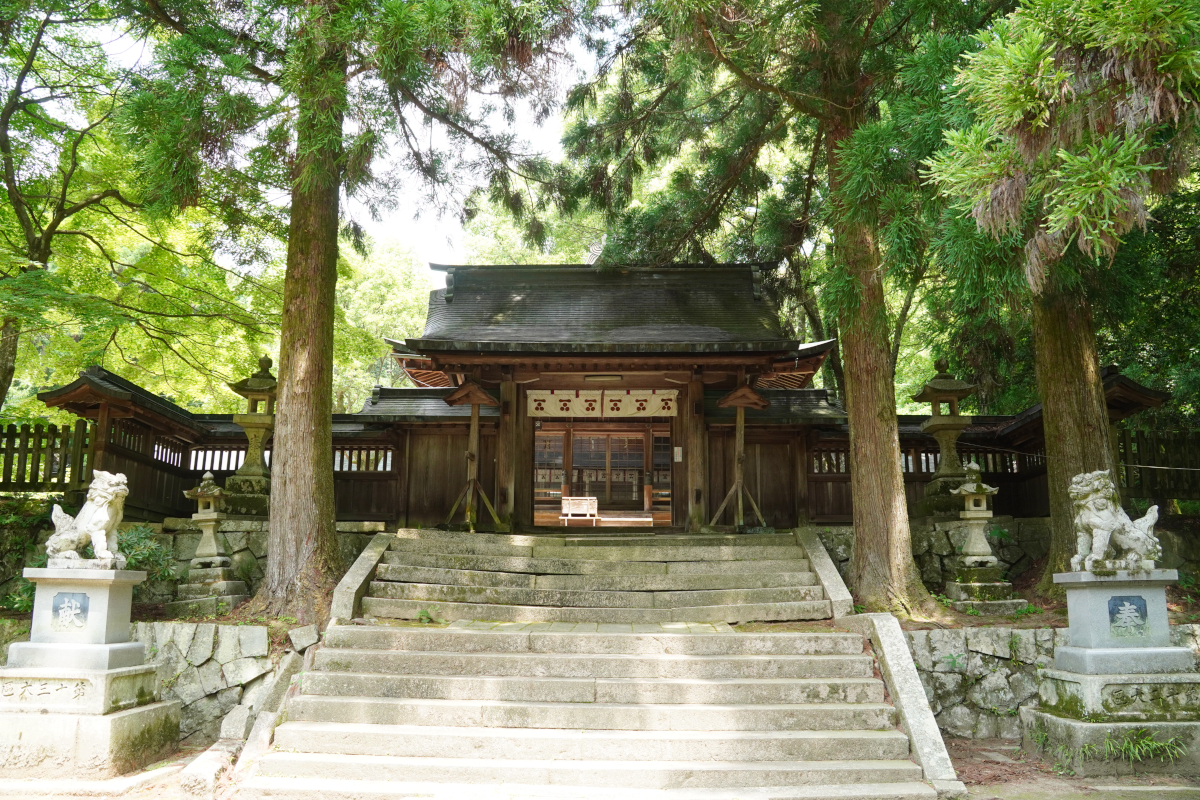
Complete Guide to Toyosaka Shrine and Noda Shrine | History and Highlights of the Special Imperial Shrines Associated with the Mori Clan
Toyosaka Shrine and Noda Shrine, located adjacent to each other at the foot of Mt. Nanao in Yamaguchi City, Yamaguchi Prefecture, are shrines dedicated to Mori Motonari, a famous general of the Sengoku period, and Mori Takachika, a key figure in the Meiji Restoration. Although the two shrines are separate religious corporations, they maintain a close relationship and both boast the high rank of Special Imperial Shrines. This article provides a detailed explanation of the history, architecture, enshrined deities, and visiting information for these two shrines.
Overview and Characteristics of Toyosaka Shrine and Noda Shrine
Toyosaka Shrine and Noda Shrine have a unique layout, standing adjacent to each other from east to west. Toyosaka Shrine is located on the east side, and Noda Shrine on the west side, each possessing its own independent main hall, worship hall, and corridors. However, some facilities, including the shrine office, are shared, and to visitors, they sometimes appear as a single shrine.
The most distinctive feature of both shrines is that, despite being relatively new shrines founded during the Meiji era, they possess the high status of being special government-supported shrines established to commemorate the achievements of the Mori family. After the Meiji Restoration, the Choshu Domain (Mori family) was recognized for its contributions to the Meiji government and was granted a special divine title by the Imperial Court.
The current shrine buildings are built side by side, almost identical in size and layout, and the entire sacred area is enveloped in a serene atmosphere. Despite being founded during the Meiji period, it possesses a solemn space that evokes the dignity of an ancient shrine.
History and Deities of Toyosaka Shrine
Life and Achievements of Mori Motonari
Mori Motonari (1497-1571), the deity enshrined at Toyosaka Shrine, was one of the leading warlords of the Sengoku period. Known for the anecdote of the “Three Arrows,” he is remembered in history as a brilliant general who rose from a minor lord in the Chugoku region to the dominant power in the region in a single generation.
Motonari possessed exceptional strategic brilliance, achieving numerous victories in battles, including his defeat of Sue Harukata at the Battle of Itsukushima. As a result, he became a powerful daimyo, controlling 10 provinces in the Chugoku region, centered on Aki Province (present-day Hiroshima Prefecture). The foundation he built continued until the time of his grandson, Mori Terumoto, and laid the basis for the Mori family’s important role as the Choshu Domain during the late Edo period and the Meiji Restoration.
The Founding History of Toyosaka Shrine
The origin of Toyosaka Shrine dates back to 1604, when Mori Terumoto moved his castle from Hiroshima to Hagi after the Battle of Sekigahara and enshrined the spirit of his grandfather, Motonari, within the Kasuga Shrine.
In 1869 (Meiji 2), in recognition of Motonari’s achievements, the Imperial Court bestowed upon him the divine title of “Toyoei Daimyojin.” Following this, the spirit of Lord Motonari, which had been enshrined within Hagi Castle, was moved to its current location in Yamaguchi City, and an independent shrine, Toyosaka Shrine, was constructed. This relocation took place at the same time as that of Noda Shrine, resulting in the two shrines being located adjacent to each other.
In 1875 (Meiji 8), it was ranked as a prefectural shrine, and further elevated to a special government-supported shrine in 1915 (Taisho 4). A special government-supported shrine is a special rank bestowed upon shrines that enshrine individuals who have made significant contributions to the nation, demonstrating the importance of Toyosaka Shrine.
Toyosaka Shrine’s Main Buildings and Grounds
The main building of Toyosaka Shrine adopts a Gongen-zukuri architectural style, with the main hall, offering hall, and worship hall arranged in a continuous row. A corridor surrounds the shrine building, creating a solemn atmosphere.
Within the shrine grounds is an ema hall, where numerous votive tablets donated by worshippers are displayed. Furthermore, a purification fountain and a shrine gate are also well-maintained, creating a welcoming environment for worshippers. The area surrounding the shrine is enveloped in lush greenery, allowing visitors to enjoy the beauty of nature throughout the seasons.
History and Deities of Noda Shrine
The Life of Lord Mori Takachika and His Contribution to the Meiji Restoration
Mori Takachika (1819-1871), the deity enshrined at Noda Shrine, was the 13th lord of the Choshu Domain during the late Edo period. His posthumous name is “Tadamasa-ko.” Takachika is known by the nickname “Sosei-ko,” which is said to be because he often responded to his retainers’ opinions with “Sosei” (Do as you please).
However, this anecdote does not indicate that Takachika was indecisive, but rather demonstrates his great capacity to respect the opinions of capable retainers and utilize talent. In fact, under Takachika’s rule, the Choshu Domain became a central force in the Meiji Restoration, producing numerous talented individuals such as Yoshida Shoin, Takasugi Shinsaku, Kido Takayoshi (Katsura Kogoro), and Ito Hirobumi.
Takachika witnessed the exploits of his samurai during the Four Borders War (Second Choshu Expedition) and the Boshin War, and died in Yamaguchi in 1871. His achievements in witnessing the success of the Meiji Restoration were highly valued by the Meiji government.
Founding and Development of Noda Shrine
The founding of Noda Shrine was slightly later than that of Toyosaka Shrine. In 1873 (Meiji 6), a group of volunteers conspired to build a shrine dedicated to Lord Takachika within the grounds of Toyosaka Shrine, naming it “Tadamasa Shrine” after Takachika’s posthumous name, “Tadamasa.”
The following year, in 1874 (Meiji 7), it was renamed “Noda Shrine,” after the name of the area where it was located. In 1876 (Meiji 9), it was elevated to the rank of a prefectural shrine, and in 1886 (Meiji 19), it was moved to its current location. At this time, the shrine buildings were renovated to be adjacent to Toyosaka Shrine.
In 1915 (Taisho 4), Noda Shrine was elevated to the rank of a special government-supported shrine. This was around the same time as Toyosaka Shrine, indicating that both shrines were recognized as nationally important.
Enshrined Deity: Lord Mori Motonori
Noda Shrine enshrines Mori Motonori, Takachika’s son, as an enshrined deity. Motonori was the last lord of the Choshu Domain and became a duke after the Meiji Restoration. He is enshrined alongside his father, Takachika, as a figure who carried on his father’s legacy and contributed to modernization.
Noda Shrine’s Main Hall and Noh Theater
Like Toyosaka Shrine, Noda Shrine’s main hall, offering hall, and worship hall are arranged in a series and surrounded by a corridor. The main halls of both shrines are built to almost the same size and layout, possessing a symmetrical beauty.
A distinctive feature of Noda Shrine is its Noh Theater. This Noh theater was donated by the Mori family in 1936. Initially located elsewhere, post-war urban development severed the approach to the shrine, leaving it isolated on the grounds of the adjacent Noda Gakuen school. It was restored and relocated to its current location in 1991.
The Noh theater is still in use today, and Noh performances are held regularly. It is a historically significant building and a facility well worth visiting.
Relationship and Similarities Between the Two Shrines
Integrated Management Despite Being Separate Religious Corporations
Toyoei Shrine and Noda Shrine are legally separate religious corporations. Each has its own independent main hall, worship hall, and corridors, and the deities enshrined are different. However, in terms of actual operation, they are closely related.
The shrine office is shared by both shrines, and goshuin (shrine seals) and other offerings can be received at the same location. Furthermore, major festivals and other religious ceremonies are often held in coordination, and visitors sometimes perceive them as a single shrine.
Shrines Commemorating the Achievements of the Mori Family
A common point between the two shrines is that both were founded to commemorate the achievements of the Mori family. Toyoei Shrine enshrines Motonari, who laid the foundation of the Mori family during the Sengoku period, while Noda Shrine enshrines Takachika, who led the Meiji Restoration to success. Although they lived in different eras, both are important figures in the history of the Mori family.
The fact that these two shrines were built adjacent to each other suggests an intention to commemorate the achievements of the Mori family throughout history in one place. Visitors can trace the history of the Mori family from the Sengoku period to the Meiji Restoration by visiting both shrines.
High Rank of Special Imperial Shrines
Both shrines hold the high rank of Special Imperial Shrines. This rank is bestowed upon shrines that enshrine individuals who made significant contributions to the Meiji Restoration or those who made special contributions to the nation, and was granted to only a limited number of shrines nationwide.
In Yamaguchi Prefecture, in addition to Toyosaka Shrine and Noda Shrine, Shoin Shrine (Hagi City), which enshrines Yoshida Shoin, is also a Special Imperial Shrine. These shrines illustrate the significant role played by the Choshu Domain in the Meiji Restoration.
Visiting Information and Access
Location and Transportation Access
Location
- Toyosaka Shrine: 831 Kamiunorei, Yamaguchi City, Yamaguchi Prefecture
- Noda Shrine: 832 Kamiunorei, Yamaguchi City, Yamaguchi Prefecture
Access by Public Transportation
- Approximately 20 minutes on foot from JR Yamaguchi Line “Yamaguchi Station”
- If using a bus from Yamaguchi Station, get off at the “Prefectural Office” bus stop and walk for approximately 10 minutes
Access by Car
- Approximately 15 minutes from Chugoku Expressway “Ogori IC”
- Located approximately 1 km north of Yamaguchi Prefectural Office, at the foot of Mt. Nanao
- Parking available (free)
Visiting Hours and Admission Fee
- Visiting Hours: Grounds are freely accessible (Shrine office hours are usually 9:00-17:00)
- Admission Fee: Free
- Goshuin (Shrine Stamp): Available at the shrine office (approximately 300 yen each)
Annual Events and Festivals
Both shrines hold various festivals throughout the year.
Main Festivals of Toyosaka Shrine
- Spring Grand Festival (April 24th): A festival commemorating the death anniversary of Lord Motonari
- Autumn Grand Festival (October): A festival expressing gratitude for the harvest
Main Festivals of Noda Shrine
- Spring Grand Festival (April): A festival commemorating Lord Takachika
- Autumn Grand Festival (October): A festival expressing gratitude for divine blessings
These grand festivals feature Kagura (sacred dance and music) performances and Shinto rituals, attracting many worshippers.
Nearby Tourist Attractions
Yamaguchi Prefectural Government Building
Located approximately 1 km south of both shrines, the Yamaguchi Prefectural Government Building is known for its modern architecture. The area around the prefectural government building is the administrative and cultural center of Yamaguchi City and is suitable for strolling.
Koyama Park and Rurikoji Five-Storied Pagoda
Located approximately 2km west of the two shrines, Koyama Park is home to the Rurikoji Five-Storied Pagoda, a national treasure. Built in the mid-Muromachi period, it is a beautiful pagoda considered one of Japan’s three most famous pagodas. It is a representative tourist spot in Yamaguchi City, and a visit to both shrines is highly recommended.
Yamaguchi Xavier Memorial Cathedral
This church, built to commemorate the visit of Francis Xavier to Yamaguchi, features a unique modern architectural style. It is located approximately 1.5km southwest of the two shrines.
Ichinosaka River
The Ichinosaka River, which flows through the center of Yamaguchi City, is known as a famous cherry blossom viewing spot. The cherry trees are beautiful in spring, and are illuminated at night.
Cultural Value of Toyosaka Shrine and Noda Shrine
Places that Convey the History of the Meiji Restoration
The two shrines are important places that convey the history of the Meiji Restoration to the present day. Noda Shrine, in particular, enshrines Mori Takachika, a central figure in the Meiji Restoration, making it a valuable historical site for learning about the turbulent period from the end of the Edo period to the Meiji era.
Within the shrine grounds, there are information boards and explanatory texts that convey the history of the time, informing visitors about the significance of the Meiji Restoration. It is an important learning place for history enthusiasts and school trip groups.
Shrines where you can experience the history of the Mori family
By visiting Toyosaka Shrine and Noda Shrine, you can experience the long history of the Mori family from the Sengoku period to the Meiji Restoration. Through these two shrines, you can understand the flow of history, from the foundation built by Lord Motonari to the culmination of the Meiji Restoration in the era of Lord Takachika, approximately 300 years later.
Centers of local faith
Both shrines are important places of faith for the citizens of Yamaguchi. Many people visit at important life events such as New Year’s visits, Shichi-Go-San (a traditional rite of passage for children), and prayers for success in exams, making them shrines deeply rooted in the local community.
Points and Manners for Visiting the Shrines
Order of Visiting
There is no specific order for visiting both shrines, but many visitors start with Toyosaka Shrine on the east side, followed by Noda Shrine on the west side. Since the two shrines are adjacent, visiting both does not take much time.
Etiquette for Visiting
- Bow before passing through the torii gate.
- Cleanse your hands and mouth at the water basin.
- Offer your donation in front of the main hall.
- Pray with two bows, two claps, and one bow.
- Bow again at the torii gate upon leaving.
Regarding Photography
Photography is generally permitted on the shrine grounds, but please refrain from taking pictures inside the shrine buildings or during festivals. Also, please be considerate of other visitors.
Summary
Toyosaka Shrine and Noda Shrine are historical shrines representing Yamaguchi City and important places that commemorate the achievements of the Mori family. These two shrines, dedicated to two great figures from different eras—Mori Motonari, a renowned general of the Sengoku period, and Mori Takachika, a key figure in the Meiji Restoration—hold the high status of a special government-sponsored shrine, and their historical and cultural value is immeasurable.
Although each shrine has its own independent buildings, the two adjacent shrines are closely related, conveying to visitors the long history of the Mori family and the role of the Choshu Domain in the Meiji Restoration. When visiting Yamaguchi City, be sure to visit both shrines and experience an important page in Japanese history.
The sacred grounds, enveloped in deep greenery, offer a tranquil space that allows you to forget the hustle and bustle of the city. By slowly visiting and reflecting on history, you will have a soul-cleansing experience.


