Complete Guide to Anagiri Daijinja Shrine (Kofu City, Yamanashi Prefecture) | Detailed Explanation of the Lake Legend and the National Important Cultural Property Main Hall
Anagiri Daijinja Shrine, quietly nestled in the heart of Kofu City, Yamanashi Prefecture, is a historically significant shrine with a history rooted in the “Lake Legend” that the Kofu Basin was once a lake. The main hall, built during the Momoyama period, is designated a National Important Cultural Property and holds high architectural historical value. This article provides a detailed overview of Anagiri Daijinja Shrine, including its history, cultural value, highlights, goshuin (shrine stamps), and access information.
About Anagiri Daijinja Shrine
Anagiri Daijinja Shrine is located in Takara 2-chome, Kofu City, Yamanashi Prefecture, and its former shrine rank was Gosha (village shrine). Situated on the left bank of the Aikawa River, at the western edge of the central Kofu city area in the northern part of the Kofu Basin, it is about a 15-minute walk from Kofu Station, yet the shrine grounds are enveloped in a tranquil atmosphere.
Formerly known as “Anagiri Myojin,” and affectionately called “Anagiri-san” by locals, this historic shrine has a rich history, rooted in lake legends and kick-and-split legends related to the formation of the Kofu Basin, and has long been revered by the local people.
Deities Enshrined
The deities enshrined at Anagiri Grand Shrine are the following three:
- Ōnamuchi-no-Mikoto: The principal deity. Another name for Ōkuninushi-no-Mikoto, known as the god of nation-building.
- Sukunahikona-no-Mikoto: A god who worked with Ōnamuchi-no-Mikoto in nation-building.
- Susanoo-no-Mikoto: The god considered to be the father of Ōnamuchi-no-Mikoto.
A wooden statue of Ōnamuchi-no-Mikoto is enshrined in the main hall, and he is revered as the god of nation-building and development.
History of Anagiri Grand Shrine
Founding and History
Anagiri Grand Shrine is said to have been founded during the Wado era (708-715 AD) in the reign of Emperor Genmei, the 43rd emperor. A grand legend related to the formation of the Kofu Basin remains to this day.
The Legend of the Lake in the Kofu Basin
The “Lake Legend” is indispensable when discussing the history of Anagiri Grand Shrine. According to this legend, the ancient Kofu Basin was largely covered by a lake.
During the Wado era, when the provincial governor inspected Kai Province, he saw that the basin was covered by a lake and thought, “If we drain this lake water, the land will become good rice fields.” The governor petitioned the imperial court and, after obtaining approval, prayed to Ōkuninushi-no-Mikoto, the god of provincial development, mobilized many laborers to till the soil, and opened up the Kajikazawa entrance. It is said that they succeeded in diverting the lake water from the Fuji River to the South Sea (Suruga Bay).
Connection to the Kicking Legend
There is another version of the lake water legend called the “Kicking Legend.” This is a more mythical tradition in which a god kicks through a mountain to cause the water to flow. The name “Anagiri” of Anagiri Grand Shrine is thought to originate from this legend of a hole being made in the mountain to allow the water to flow.
These legends are considered to be mythologizations of the history of flood control and development in the Kofu Basin, and can be said to be a valuable oral culture that conveys the memory of ancient civil engineering works to the present day.
Positioning as a Shikinaisha (Shrine Listed in the Engishiki)
Anagiri Grand Shrine is sometimes considered one of the candidate shrines for the “Asama Shrine in Yamanashi District, Kai Province” listed in the Engishiki Jinmyocho (Register of Shrines in the Engi Era). A Shikinaisha is a candidate site for a historically significant shrine listed in the Engishiki of the Heian period, indicating a long history dating back to ancient times.
History from the Early Modern Period Onward
During the Edo period, it was revered as the guardian deity of Kofu town and positioned as one of the important shrines in the Kofu castle town. Under the Meiji era’s shrine ranking system, it was ranked as a Gosha (village shrine) and recognized as a central shrine in the region.
Main Hall, a Nationally Designated Important Cultural Property
The greatest highlight of Anagiri Daijingu Shrine is its main hall, which is designated as a Nationally Designated Important Cultural Property.
Architectural Style and Characteristics
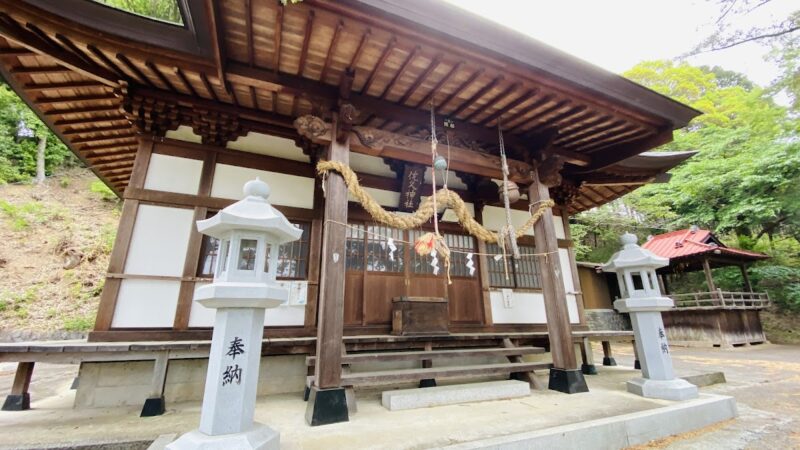
The main hall is built in the Ikkensha Nagare-zukuri style and Hiwadabuki style.
- One-Bay Nagare-zukuri Style: A style where the front pillars are one bay (approximately 1.8m) apart, and the roof extends long and flowing forward.
- Hinoki Bark Roofing: A traditional roofing method using layers of cypress bark.
The main hall has double doors with beautiful metal fittings on the front, conveying the splendor and strength characteristic of the Momoyama period. The detailed carvings and decorations also showcase the excellent techniques of the time, making it a building of great architectural value.
Construction Period
The main hall is estimated to have been built during the Momoyama period (late 16th to early 17th century). This period, also known as the Azuchi-Momoyama period, is characterized by its magnificent and ornate architectural style. The Anagiri Grand Shrine’s main hall clearly exhibits the characteristics of this era and is a valuable example of Momoyama architecture in Yamanashi Prefecture.
History of Cultural Property Designation
The Anagiri Grand Shrine’s main hall was designated a former National Treasure in 1935 (Showa 10). After the war, with the enactment of the Cultural Properties Protection Law, it was re-designated as a National Important Cultural Property in 1950. It is one of the most important cultural properties among shrine architecture in Yamanashi Prefecture.
Highlights of the Shrine Grounds
Zuishinmon Gate
Upon entering the shrine grounds, the first thing that catches the eye is the magnificent Zuishinmon Gate. This gate is an important structure that signifies the status of the shrine, and statues of guardian deities are enshrined on either side. Passing through the Zuishinmon Gate, one can feel the tranquility of a sacred area, far removed from the hustle and bustle of the city.
Haiden (Worship Hall)
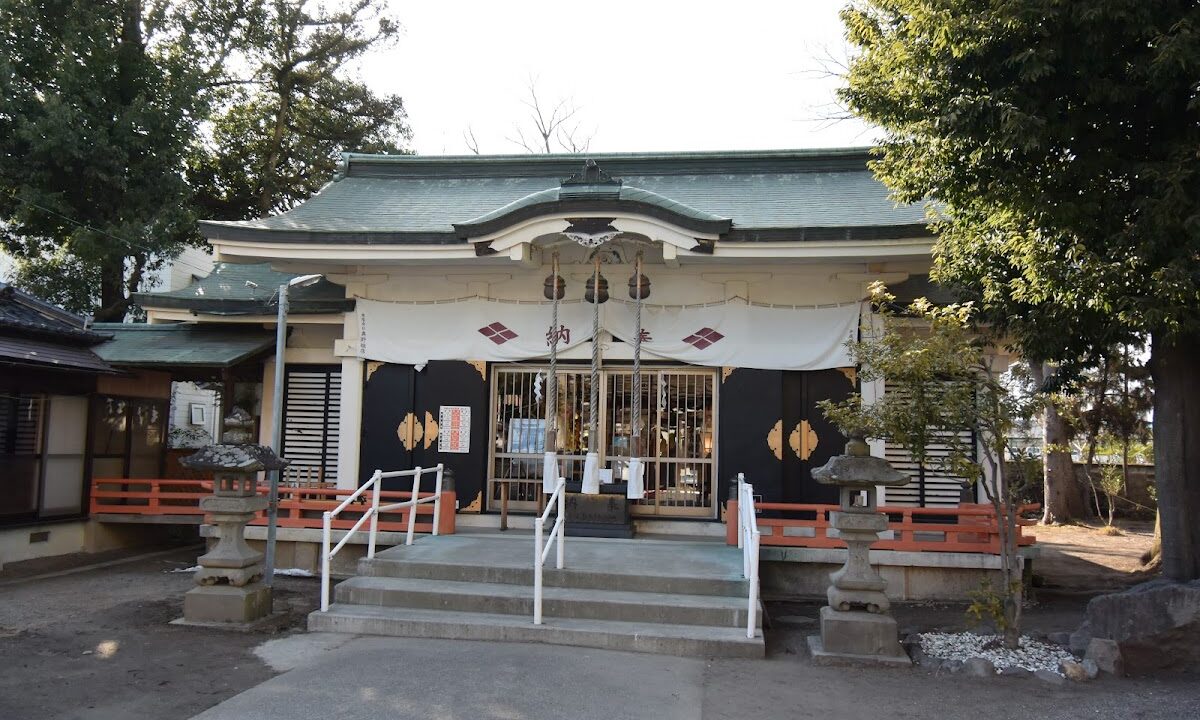
The Haiden, standing in front of the main shrine, is where worshippers offer their prayers. Its simple yet dignified construction beautifully harmonizes with the main shrine.
Shrine Grounds
In addition to the main shrine, several smaller shrines are enshrined within the grounds, reflecting the deep faith of the local community. Each shrine has its own unique history, offering clues to the history of the region.
Shrine Grove
Located in the heart of Kofu City, the shrine grounds are home to lush, ancient trees, creating a valuable green space in an urban area. The shrine grove, displaying different appearances with each season, provides tranquility to visitors.
Festivals and Events
Anagiri Daijinja Shrine holds various festivals and religious ceremonies throughout the year.
Annual Grand Festival
The annual grand festival, held every autumn, is the most important festival at Anagiri Daijinja Shrine. Local residents participate, and traditional religious ceremonies are solemnly performed. Processions of portable shrines and offering ceremonies are also held, making it an important opportunity to deepen community bonds.
New Year’s Day Festival and Setsubun Festival
The New Year’s Day Festival and the Setsubun Festival (a festival for warding off evil) are also bustling with many worshippers. The Setsubun Festival, in particular, features events such as bean-throwing, and many families visit.
Goshuin (Shrine Seal) Information
Goshuin (shrine seals) are available at Anagiri Daijinja Shrine.
Features of the Goshuin (Shrine Seal)
The goshuin of Anagiri Daijingu Shrine features the shrine’s name written in ink and stamped with the shrine’s seal. It is characterized by a simple yet powerful calligraphy style and is popular as a memento of one’s visit.
Issuance Hours
Goshuin are issued during the hours the shrine office is open. However, since the chief priest may be absent, it is recommended to call ahead to confirm if you wish to receive a goshuin.
Basic Information
Location and Contact Information
- Location: 2-8-5 Takara, Kofu City, Yamanashi Prefecture 400-0034
- Phone Number: 055-252-9030 (Inquiries can be made to the Yamanashi Prefectural Shrine Association)
Visiting Hours and Admission Fee
- Visiting Hours: Grounds are freely accessible (Shrine office hours are irregular)
- Admission Fee: Free
Parking
The shrine has free parking for visitors. However, due to limited space, please consider using nearby coin-operated parking lots during peak hours.
Access
Access by Train
- Approximately 15 minutes on foot from JR Chuo Main Line “Kofu Station”
- Exit the south exit of Kofu Station and head west. The shrine is located in the Takara area, beyond the Aikawa River.
Access by Bus
- If using the bus from Kofu Station, take the Yamanashi Kotsu bus and get off at the “Takara” bus stop, then it’s approximately a 3-minute walk.
Access by Car
- Approximately 15 minutes from Chuo Expressway “Kofu Showa IC”
- Approximately 20 minutes from Chuo Expressway “Kofu Minami IC”
Please enter “Anagiri Daijinja” or the address “2-8-5 Takara, Kofu City” into your car navigation system.
Nearby Tourist Attractions
When visiting Anagiri Daijinja, we recommend also visiting nearby tourist attractions.
Kofu Castle Ruins (Maizuru Castle Park)
Located within walking distance of Kofu Station, the Kofu Castle Ruins are a castle built after the fall of the Takeda clan. Visitors can see the stone walls and reconstructed gates, learning about Kofu’s history.
Takeda Shrine
Takeda Shrine, dedicated to Takeda Shingen, is a classic Kofu tourist spot. It’s about a 10-minute drive from Anagiri Daijingu Shrine and is situated on the site of the Takeda clan’s residence (Tsutsujigasaki Mansion).
Shosenkyo Gorge
Shosenkyo Gorge, designated a National Special Place of Scenic Beauty, is a gorge located in the northern part of Kofu City. Its spectacular scenery, with its strangely shaped rocks and waterfalls, is known as one of Yamanashi Prefecture’s representative natural landscapes. It’s about a 30-minute drive from Anagiri Daijingu Shrine.
Kofu City Center
The city center around Kofu Station is lined with restaurants and souvenir shops, where you can enjoy Yamanashi’s local cuisine and specialty products. Enjoy Yamanashi’s unique cuisine, such as Hoto noodles and Koshu wine.
Points and Manners for Visiting a Shrine
Shrine Visiting Etiquette
The basic etiquette for visiting a shrine is “two bows, two claps, one bow.”
- Bow before passing through the torii gate
- Cleanse your hands and mouth at the water basin
- Place your offering in front of the main hall
- Two bows (bowing deeply twice)
- Two claps (clapping your hands twice)
- One bow (bowing deeply once)
Photography
Photography is generally permitted on the shrine grounds, but please refrain from taking pictures inside the main hall or during Shinto rituals. Also, please be considerate of other visitors.
Clothing
There are no specific dress code regulations, but it is advisable to avoid overly revealing clothing, as this is a sacred place.
The Charm of Anagiri Grand Shrine
The charm of Anagiri Grand Shrine lies in its preservation of history and tradition despite its urban location. The lake legend, which tells the story of the formation of the Kofu Basin, conveys the history of how the ancestors of this region interacted with nature and cultivated the land.
The main hall, a nationally designated Important Cultural Property, is a valuable cultural heritage site that embodies the pinnacle of Momoyama period architectural techniques, and is a must-see for anyone interested in architecture or history. The traditional style of a one-bay nagare-zukuri style building with cypress bark roofing, and the beautiful metalwork on the facade, captivate all who see it.
Furthermore, its convenient location in the heart of Kofu City is another attractive feature. It’s within walking distance of Kofu Station, making it easy to visit during sightseeing. Despite being in the midst of the city’s hustle and bustle, stepping onto the shrine grounds envelops you in a tranquil atmosphere, allowing you to find peace of mind.
Summary
Anagiri Grand Shrine is a historically significant shrine with a grand history rooted in the lake legend of the Kofu Basin and a nationally designated Important Cultural Property main hall. The long history of this shrine, said to have been founded during the Wado era, its beautiful main hall built in the Momoyama period, and its convenient location in the heart of Kofu City are its greatest attractions.
When you visit Yamanashi Prefecture, be sure to stop by Anagiri Daijingu Shrine and admire its valuable cultural heritage while reflecting on the formation of the Kofu Basin. You’ll find peace of mind in the tranquil grounds and feel the weight of history that has continued since ancient times.
When sightseeing in Kofu, we also recommend a course that includes Anagiri Daijingu Shrine along with Takeda Shrine and the ruins of Kofu Castle. Enjoy the charm of Kofu City, Yamanashi Prefecture, where history, culture, and nature harmonize perfectly.