Complete Guide to Sansha Suwa Shrine (Kofu City, Yamanashi Prefecture) | History, Deities, Access, and Goshuin Information
Located in Kamiishida, Kofu City, Yamanashi Prefecture, Sansha Suwa Shrine is a venerable shrine deeply intertwined with the history of Kai Province. Founded following a great flood during the Tenchō era, it was originally called “Sansha Shrine” (Three Shrines Shrine) because it enshrined the three deities of Kai Province’s Ichinomiya, Ninomiya, and Sanomiya. Later, it merged with Suwa Shrine to become its current name. This article provides a detailed overview of Sansha Suwa Shrine, including its history, enshrined deities, annual events, access methods, and surrounding area information.
Basic Information about Sansha Suwa Shrine
Location: 2-29-2 Kamiishida, Kofu City, Yamanashi Prefecture 400-0034
Main Deities:
- Konohanasakuya-hime no Mikoto
- Okuninushi no Mikoto
- Okunitama no Mikoto
- Takeminakata no Mikoto
Former Shrine Rank: Village Shrine
Nearest Station: Approximately 10 minutes by car or 25 minutes on foot from JR Kofu Station
Parking: Available (Parking space for visitors on the shrine grounds)
History and Origins of Sansha Suwa Shrine
The Great Flood of Tenchō 3 and the Circumstances of its Founding
The founding of Sansha Suwa Shrine dates back to Tenchō 3 (826). In that year, a great flood struck Kai Province, causing immense damage to the region. Following this disaster, it was decided to invite deities from the three major shrines of Kai Province to pray for protection from floods and for the peace and security of the region.
The three shrines to which deities were invited are as follows:
- Asama Shrine, the Ichinomiya (first-ranked shrine) of Kai Province – Dedicated to Konohanasakuya-hime
- Miwa Shrine, the Ninomiya (second-ranked shrine) of Kai Province – Dedicated to Okuninushi-no-Mikoto
- Kunidama Shrine, the Sannomiya (third-ranked shrine) of Kai Province – Dedicated to Okunitama-no-Mikoto
Because the deities of these three shrines were enshrined together, the shrine came to be called “Sansha Shrine” (Three Shrines Shrine) and developed into a center of local faith.
Tradition of the Flood Prevention Festival
The Flood Prevention Festival has been held since March of the third year of Tenchō (845 AD), the same year as the shrine’s founding. This ceremony has become an important annual event to pray for the prevention of future floods and for the safety of the region. Due to its geographical location near the Arakawa River, flood control has been a pressing concern for local residents, and the Sansha Suwa Shrine has been deeply revered as the guardian deity of flood prevention.
April 15th Festival and Mikoshi Procession
Throughout the Edo period, a grand festival was held every year on April 15th. This festival featured a magnificent procession of mikoshi (portable shrines) from the three shrines—Asama Shrine, Miwa Shrine, and Kunidama Shrine—making it the largest and most lively festival in the region.
However, after 1874 (Meiji 7), the mikoshi procession was limited to Asama Shrine only, and the form of the festival changed. This is thought to be due to the Meiji-era reforms to the shrine system.
Merger with Suwa Shrine
The current name, Sansha Suwa Shrine, originates from an event during the Meiji period. The Suwa Shrine, formerly located nearby, lost its shrine buildings in a fire, and was merged with this shrine in 1874 (Meiji 7). As a result, Takeminakata-no-Mikoto was newly enshrined, and from 1876 (Meiji 9), the shrine came to be known as “Sansha Suwa Shrine.”
This merger added the worship of a god of war and hunting to the shrine’s existing characteristics as a god of water and agriculture, allowing it to develop into a shrine that bestows a wider range of blessings.
Deities and Blessings
Konohanasakuya-hime-no-Mikoto
A goddess known as the principal deity of Asama Shrine, she is a deified representation of Mount Fuji. She is said to possess a beautiful appearance like a cherry blossom and is believed to bring the following blessings:
- Safe childbirth and child-rearing: From the myth of her safely giving birth to three children in the midst of flames
- Harmonious family life: As a symbol of marital harmony
- Protection from fire: Derived from the myth of giving birth in the midst of fire
- Beauty and good relationships: From the belief in her as a beautiful goddess
Okuninushi-no-Mikoto
He is a god of nation-building, also known as the principal deity of Izumo Taisha Shrine. Enshrined from Miwa Shrine (present-day Yamanashioka Shrine):
- Matchmaking: From the myth of marrying many goddesses
- Business Prosperity: From his achievements in nation-building
- Agricultural Protection: As the god who presides over abundant harvests
- Medicine and Health: From the myth of the White Rabbit of Inaba
Okunitama-no-Mikoto
Enshrined from Kunidama Shrine (present-day Tamamoro Shrine), this god presides over the spirit of Kai Province:
- National Security: As the guardian deity of Kai Province
- Regional Prosperity: As the spirit of the land
- Abundant Harvests: As the god who presides over the blessings of the earth
Takeminakata-no-Mikoto
The principal deity of Suwa Grand Shrine, and a child of Okuninushi-no-Mikoto. The deity was enshrined here after the merger with Suwa Shrine:
- Long-lasting military fortune: As a god of martial prowess
- Luck in competition: From myths of strength contests
- Agriculture and hunting: A characteristic of Suwa faith
- Protection from wind and rain: As a god who governs natural phenomena
Highlights of the shrine grounds
Shrine buildings and sacred forest
The grounds of Sansha Suwa Shrine maintain a tranquil atmosphere despite being located in the heart of Kofu city. If you proceed along the Arakawa River from National Route 52 via Prefectural Route 5, you will see a magnificent sacred forest on your right. This forest has long been a familiar landmark in the area and is preserved as a valuable green space even amidst urbanization.
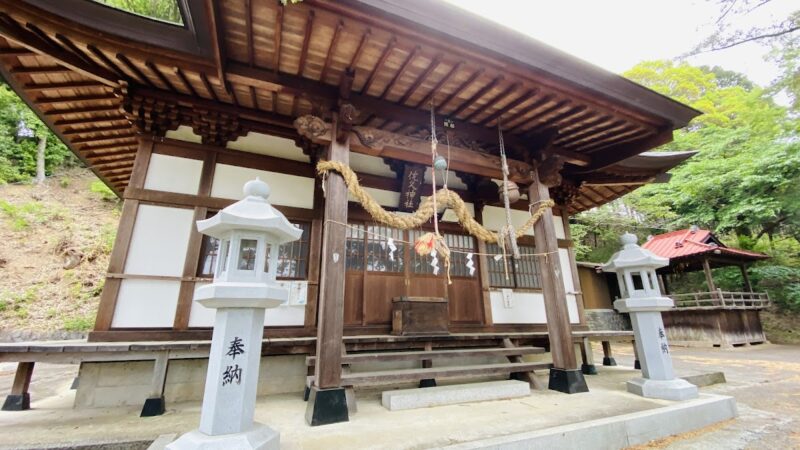
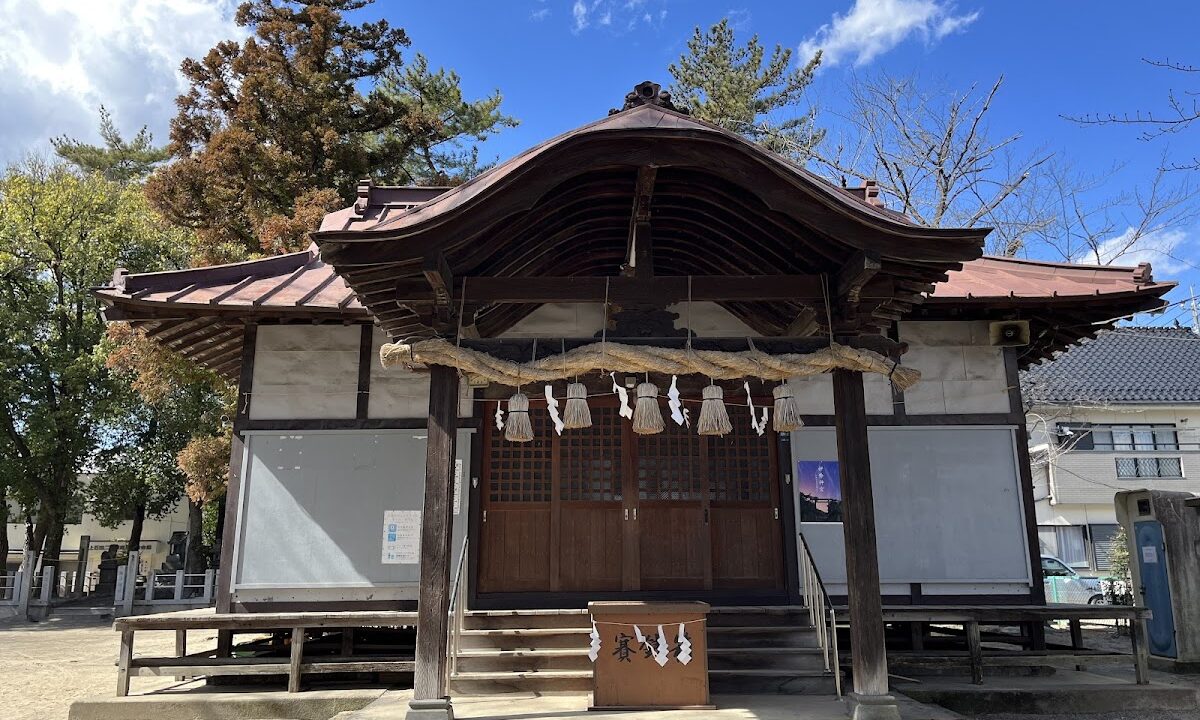
The shrine buildings are thought to have been rebuilt during the Meiji period, but they retain the style of traditional shrine architecture, creating a solemn atmosphere.
Stone Sculptures and Komainu (Guardian Lion-Dogs)
The shrine grounds contain stone sculptures dating from the Edo to Meiji periods, preserving the history of local religious beliefs. The Komainu, in particular, are valuable cultural assets showcasing the skills of local stonemasons, attracting attention from shrine architecture enthusiasts.
Annual Events and Festivals
Flood Control Festival (March)
This is the most important festival, a tradition dating back to the shrine’s founding. Held annually in March, it commemorates the great flood of Tenchō 3 (845 AD) and prays for protection from floods. It is a solemn Shinto ritual praying for the safety of local residents and the control of the Arakawa River.
Grand Festival (April)
This festival continues the tradition of a grand festival held on April 15th, featuring a procession of portable shrines from three shrines. Even today, it remains an important annual event in the region, attracting parishioners and devotees.
Other Festivals
- New Year’s Day Festival: Praying for peace in the new year
- Setsubun Festival: Praying for protection from evil and good fortune
- Summer Purification Ceremony: A Shinto ritual to cleanse away sins and impurities accumulated over the past six months
- Autumn Festival: Giving thanks for a bountiful harvest
- Year-End Purification Ceremony: A Shinto ritual to cleanse away sins and impurities accumulated over the past year
Access Information
Access by Public Transportation
From JR Kofu Station:
- Walking: Approximately 25 minutes (approximately 2 km)
- Taxi: Approximately 10 minutes
- Bus: Get off at the “Kamiishida” bus stop (Yamanashi Kotsu Bus), then a 5-minute walk
From the south exit of Kofu Station, head west along National Route 52, cross the Arakawa Bridge, and then turn onto Prefectural Route 5. Walk approximately 200 meters along the Arakawa River, and you will see the shrine’s forest on your right.
Access by Car
Chuo Expressway:
- Approximately 15 minutes from Kofu-Showa IC
- Approximately 20 minutes from Kofu-Minami IC
From National Route 52:
Cross the Arakawa Bridge, turn onto Prefectural Road 5, and proceed approximately 150 meters. Turn left and continue parallel to the Arakawa River for approximately 200 meters. You will see the shrine’s forest on your right.
Parking: There is parking space for visitors within the shrine grounds.
Landmarks in the Surrounding Area
- Arakawa Bridge (National Route 52)
- Prefectural Road 5 (Kofu-Yamanashi Line)
- Arakawa Riverbed
Although the shrine grounds are sometimes labeled as “Suwa Shrine” on maps, the official name is “Sansha Suwa Shrine.”
Goshuin (Shrine Seal) Information
Sansha Suwa Shrine offers Goshuin (shrine seals). However, since there may not always be a resident Shinto priest, those wishing to receive a Goshuin (temple/shrine stamp) are advised to inquire in advance with the Yamanashi Prefectural Shrine Association or a nearby shrine.
The Goshuin will bear the calligraphy of “Sansha Suwa Shrine” and the shrine’s seal. It serves as a memento of your visit, serving as proof of the historical significance of this shrine, which enshrines four deities.
Nearby Shrines and Temples
Major Shrines in Kofu City
Takeda Shrine (Tsutsujigasaki Mansion Ruins)
- Location: 2611 Furufuchu-cho, Kofu City
- Deity: Takeda Shingen
- Distance: Approximately 15 minutes by car from Sansha Suwa Shrine
- Features: A shrine built on the site of the Takeda clan’s residence, known for good fortune and victory.
Kaina Shrine
- Location: Chuo, Kofu City
- Features: An ancient shrine located in the city center of Kofu.
Hachiman Shrine
- Several Hachiman shrines located within Kofu City
- Benefits include military success and victory.
Ichinomiya, Ninomiya, and Sanomiya of Kai Province
Let’s also visit the original shrines that were invited to Sansha Suwa Shrine:
Asama Shrine (Ichinomiya of Kai Province)
- Location: Ichinomiya, Ichinomiya-cho, Fuefuki City
- Deity enshrined: Konohanasakuya-hime no Mikoto
- Characteristics: Revered since ancient times as the Ichinomiya (first shrine) of Kai Province
Yamanashioka Shrine (formerly Miwa Shrine, the second shrine of Kai Province)
- Location: Shizume, Kasugai-cho, Fuefuki City
- Deity enshrined: Okuninushi no Mikoto and others
- Characteristics: A candidate for the second shrine of Kai Province
Tamamoro Shrine (formerly Kunidama Shrine, the third shrine of Kai Province)
- Location: Kunidama-cho, Kofu City
- Deity enshrined: Okuninushi no Mikoto and others
- Characteristics: Revered as the Soja (chief shrine) and third shrine of Kai Province
Manners and points for visiting a shrine
How to visit a shrine
- Bow before passing through the torii gate
- Purify your body and mind at the water basin
- Purify your left hand, right hand, and mouth in that order
- Purify the handle of the ladle and return it to its original position
- Bow twice, clap twice, and bow once in front of the main hall
- Bow deeply twice
- Clap your hands twice
- Pray with all your heart
- Bow deeply once
- Bow once, turning back as you leave the torii gate
Best season for visiting
- Spring (March-May): The time of the flood control festival and the annual grand festival. The cherry blossom season is also beautiful.
- Autumn (September-November): The time of the autumn annual festival. Beautiful Autumn Foliage
- New Year’s Visit (January 1-3): Bustling with New Year’s worshippers
Regarding Photography
Photography is generally permitted on the shrine grounds, but please note the following:
- Refrain from taking photos inside the main hall
- Follow the instructions of the Shinto priests when taking photos during festivals
- Remember to be considerate of other worshippers
- Pay attention to location information when posting on social media
Features and Charms of Sansha Suwa Shrine
A Rare Shrine Enshrining Four Deities
The most distinctive feature of Sansha Suwa Shrine is that it enshrines four deities, each invited from major shrines in Kai Province. The presence of Konohanasakuya-hime, Okuninushi-no-Mikoto, Okunitama-no-Mikoto, and Takeminakata-no-Mikoto, each with different characteristics and divine virtues, allows worshippers to receive a variety of blessings.
Faith as a Guardian Deity of Flood Control
Due to its location near the Arakawa River and its founding history following the great flood of Tenchō 3 (845 AD), Sansha Suwa Shrine has long been revered as a guardian deity of flood control. Even today, the Flood Control Festival is continued, and prayers for flood control remain an important part of the local faith.
Historical Landscape of Kofu City
In the increasingly urbanized city of Kofu, the sacred grove of Sansha Suwa Shrine preserves a valuable historical landscape. Amidst modern buildings, the shrine’s grove serves as an important cultural asset, conveying the history and traditions of the region.
Connection with the Community
Parishion Area and Sphere of Faith
Sansha Suwa Shrine has a parish area centered around the Kamiishida district of Kofu City, and has functioned as a center of faith for local residents. Even today, it plays a role in supporting community cohesion through local festivals and annual events.
The Role of Conveying Local History
The history of the Sansha Suwa Shrine is intertwined with the history of the Kofu region, from the great flood of the Tenchō era to the merger of shrines during the Meiji period. Visiting the shrine allows you to experience the local history and the faith of our ancestors.
Things to do after visiting the shrine
Tourist spots in Kofu City
Takeda Clan Residence Ruins (Takeda Shrine)
- Site of the residence of Sengoku period warlord Takeda Shingen
- Visit the treasure hall to see items related to the Takeda family
Kofu Castle Ruins (Maizuru Castle Park)
- See the stone walls and turrets of Kofu Castle from the Edo period
- Observation spot with a panoramic view of the city
Yamanashi Prefectural Museum of Art
- Houses many works by Millet
- Enjoy art appreciation and stroll through the gardens
Kofu Gourmet
Hoto
- A representative local dish of Yamanashi
- A miso-based noodle dish with plenty of vegetables
Torimotsu-ni
- Kofu’s B-grade gourmet dish
- Chicken giblets simmered in a sweet and spicy sauce
Shingen Mochi
- A famous confectionary representing Yamanashi
- A Japanese sweet made with kinako (roasted soybean flour) and kuromitsu (black sugar syrup)
Hot Springs and Relaxation
There are many hot spring areas around Kofu City:
- Yumura Onsen: A historic hot spring area within Kofu City
- Isawa Onsen: A large-scale hot spring resort in Fuefuki City
- Day-trip hot spring facilities in Kofu: Scattered throughout the city
Summary: The Significance of Visiting Sansha Suwa Shrine
Sansha Suwa Shrine is a venerable shrine with a history of nearly 1200 years since its founding in 826 AD. It enshrines four deities: three gods invited from the Ichinomiya, Ninomiya, and Sanomiya of Kai Province, and Takeminakata-no-Mikoto, enshrined from Suwa Shrine. It has attracted local faith as a rare shrine that bestows diverse blessings.
The history of Sansha Suwa Shrine is deeply intertwined with the history of the Kofu region, including its founding in the wake of a great flood, the tradition of flood prevention festivals, and the shrine mergers during the Meiji era. Even amidst increasing urbanization, this shrine protects its sacred grove and remains a precious presence that conveys the history and traditions of the region to the present day.
Conveniently located within walking distance of Kofu Station, Sansha Suwa Shrine offers a tranquil atmosphere for worship. When visiting Yamanashi Prefecture, be sure to stop by. You will feel the blessings of the four deities and the weight of its 1200-year history.
Sansha Suwa Shrine accepts a variety of wishes, including prayers for good health, family safety, business prosperity, matchmaking, and good fortune in competitions. It is a spiritual haven not only for local residents but for all visitors to Yamanashi.