Atago Nenbutsu-ji Temple (Kyoto Prefecture) Complete Guide | A Hidden Gem in Okusagano with 1200 Arhats
Nestled at the foot of Mount Atago in Okusagano, Ukyo Ward, Kyoto City, Atago Nenbutsu-ji Temple is a temple with a unique atmosphere, welcoming visitors with 1200 stone statues of Arhats. Known as the “Temple of 1200 Arhats,” the sight of the expressive Arhats filling the temple grounds offers a special experience unlike any other temple in Kyoto.
Located in the deepest part of the Arashiyama/Sagano area, this temple maintains a tranquil atmosphere, in stark contrast to the bustling area around Togetsukyo Bridge. However, in recent years, its high level of creativity and unique scenery have attracted attention overseas, and it has come to be called “Japan’s most famous hidden temple.”
The History of Atago Nenbutsu-ji Temple | The Transformation of an Ancient Temple Dating Back to the Nara Period
Founding and Founder
The history of Atago Nenbutsu-ji Temple dates back to the Nara period. It is said to have been founded by Empress Shōtoku (reigned 764-770), and was initially built in Atago District, Yamashiro Province, in what is now Higashiyama, Kyoto City. From the late Nara period to the early Heian period, it was an ancient temple that attracted many worshippers as Atago-dera.
Restoration in the Heian Period
In the early Heian period, the temple suffered a disaster when its buildings were washed away by a flood of the Kamo River. Later, by order of Emperor Daigo, Senkan Naigu, a high-ranking priest of the Tendai sect, restored the temple. Following this restoration, it was renamed “Tōkakuzan Atago-in” and became a branch temple of Enryaku-ji Temple on Mount Hiei.
Senkan Naigu was a prominent monk of the mid-Heian period who made significant contributions to the development of Pure Land Buddhism. His restoration strengthened Atago Nenbutsu-ji Temple’s character as a Tendai sect temple.
Relocation during the Taisho Era
While Atago Nenbutsu-ji Temple has undergone several changes throughout its long history, its relocation to its current location is relatively recent, occurring during the Taisho era. It was moved to its current location at the foot of Mount Atago, the entrance to the pilgrimage route, and took on a new role as the “starting point for exploring Sagano.”
The relocation from Higashiyama to Okusagano was a major turning point for the temple, and combined with its geographical location as the starting point of the pilgrimage route to Atago Shrine, it underwent unique development.
Showa Era Reconstruction and the Birth of the Rakan Statues
After the war, Atago Nenbutsu-ji Temple, which had fallen into ruin, underwent a large-scale reconstruction project from 1981 (Showa 56) to 1991 (Heisei 3) under the guidance of the then-chief priest, Nishimura Kōchō.
The most distinctive feature of this reconstruction project was the dedication and sculpting of Rakan statues by ordinary worshippers. Worshippers from all over Japan carved stone statues with their own hands and dedicated them. The number reached 1200, creating the landscape that symbolizes Atago Nenbutsu-ji Temple today.
Principal Image and Major Buddhist Statues | The Thousand-Armed Kannon for Warding Off Evil and the Original Buddha
The Thousand-Armed Kannon for Warding Off Evil
The principal image of Atago Nenbutsu-ji Temple is the “Thousand-Armed Kannon for Warding Off Evil.” The Thousand-Armed Kannon is a symbol of compassion, said to save all sentient beings with its thousand arms, and is particularly revered for its miraculous power to ward off evil.
The statue of the Thousand-Armed Kannon enshrined in the main hall has long been an object of deep faith, believed to receive the various wishes of worshippers and protect them from disaster.
Jizo Hall and the Original Buddha
Within the temple grounds is the Jizo Hall, where the Jizo Bodhisattva, the original Buddha of Atago Gongen, is enshrined. An original Buddha is a Buddha considered to be the original form of a deity in the syncretic belief of Shinto and Buddhism.
This Jizo Bodhisattva, demonstrating a deep connection with Atago Shrine, is worshipped as one with Atago Gongen, known as the god of fire prevention, and many worshippers visit to pray for fire prevention and fire suppression.
The Charm of the 1200 Arhats | Expressive Stone Statues
Characteristics of the Arhat Statues
The greatest highlight of Atago Nenbutsu-ji Temple is undoubtedly the 1200 stone Arhat statues that fill the temple grounds. Arhats are abbreviated as Arhat, referring to saints who have attained the highest level of enlightenment in Buddhism.
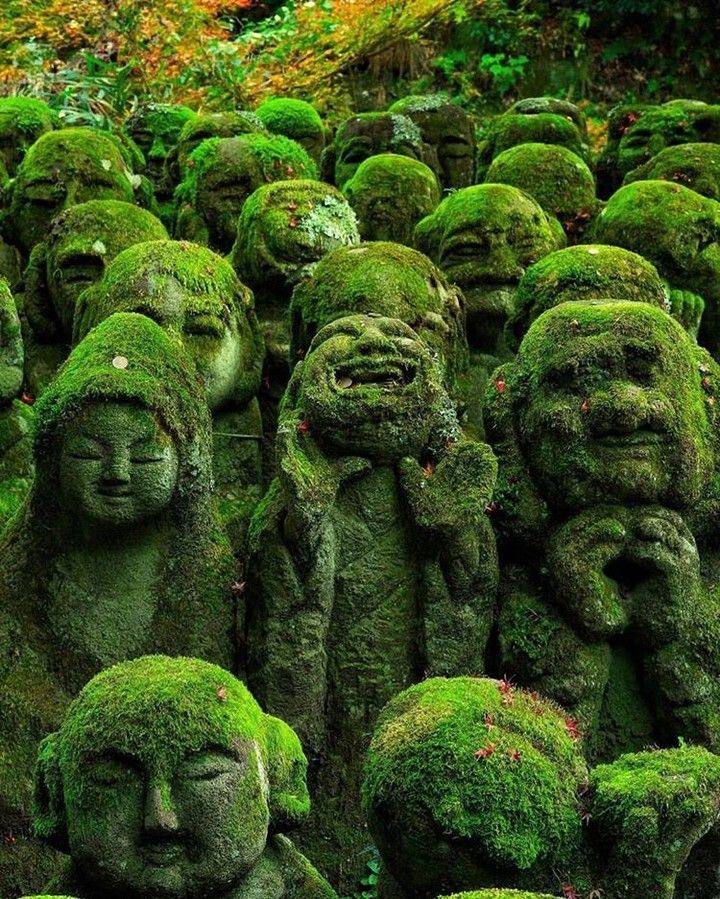
The most striking feature of these Arhat statues is their rich and individual expressions. They come in a wide variety of forms: smiling, deep in thought, playing musical instruments, engaging in sports, and even holding modern objects.
Creations by Worshippers
As mentioned above, these Arhat statues were carved and dedicated by ordinary worshippers themselves during the Showa and Heisei periods. Because they were carved by ordinary people, not professional stonemasons, each imbued with their own feelings, they exude a heartfelt warmth rather than technical perfection.
It is said that the sculptors entrusted the images of deceased family members, friends, or even themselves to the Arhat statues. Therefore, each viewer can find a reflection of themselves or a loved one somewhere within them.
Arhat Scenery Through the Seasons
The Arhat statues display a variety of expressions throughout the year. In spring, the temple is enveloped in cherry blossoms and fresh greenery; in summer, moss-covered stone statues create a cool and refreshing atmosphere. In autumn, the colorful foliage adorns the Arhat statues, and in winter, the snow-covered Arhat statues create a fantastical landscape.
Especially during the autumn foliage season, it’s known as a hidden gem in Okusagano, popular for its beautiful autumn scenery while avoiding crowds.
Highlights of the Temple Grounds | From the Main Hall to the Sanbo Bell
Main Hall
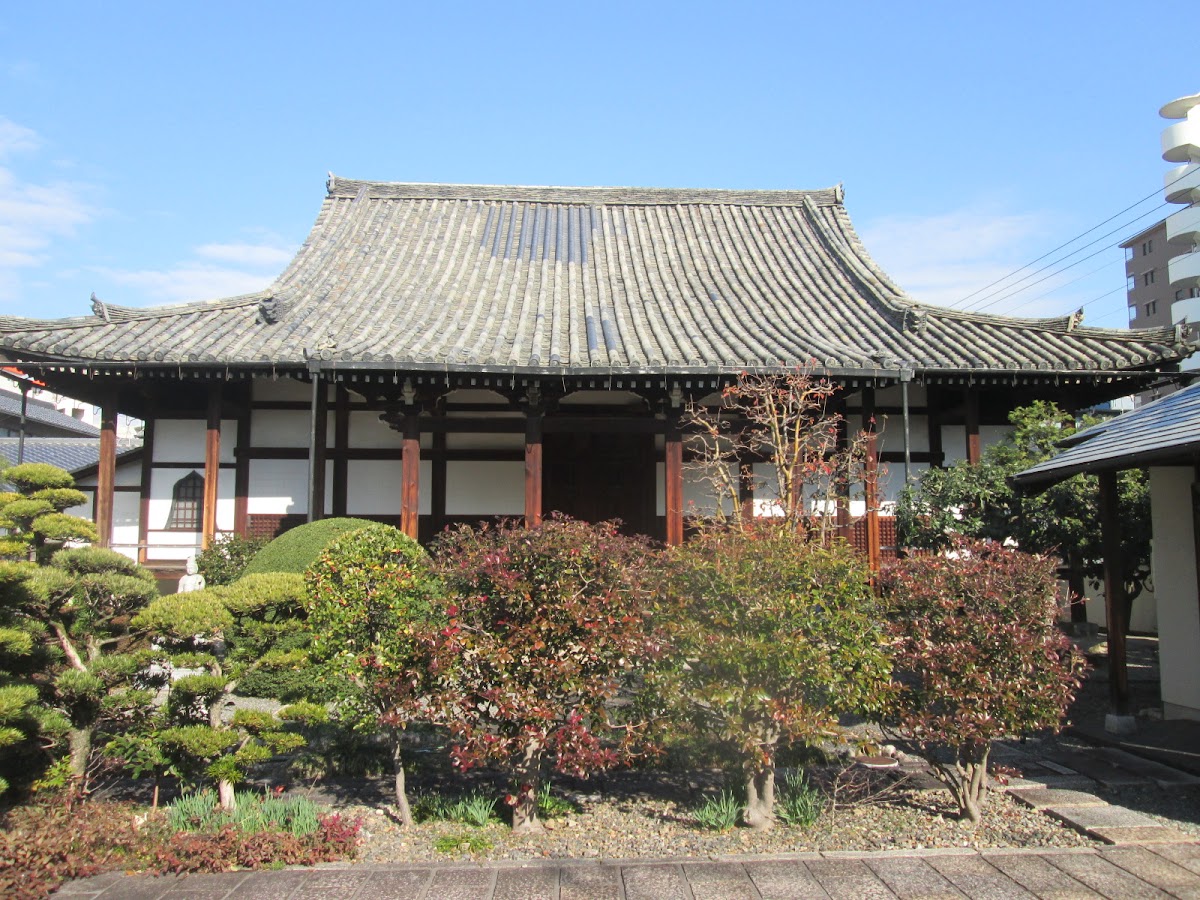
The main hall of Atago Nenbutsu-ji Temple is a valuable building that preserves the architectural style of the Kamakura period. Although it was moved to its current location during reconstruction, its historical value is high, and the main image, the Thousand-Armed Kannon for warding off evil, is enshrined inside.
In front of the main hall is a wide stone staircase, lined with many Arhat statues on both sides. The sight of the Arhat statues lined up with the main hall as a backdrop is a representative photo spot of Atago Nenbutsu-ji Temple.
Jizo Hall
Located next to the main hall, the Jizo Hall enshrines Jizo Bodhisattva, the principal deity of Atago Gongen (mentioned earlier). Though small, it is an important structure that tells the history of Atago worship.
Sanbo Bell
Within the temple grounds is a bell called the “Sanbo Bell.” Visitors are free to ring this bell, and its sound resonates through the quiet mountains of Okusagano. Strolling among the Rakan statues while listening to the bell’s sound will be a precious and calming experience.
Fureai Kannon Hall
A relatively new facility is the “Fureai Kannon Hall.” Here, a Kannon statue that can be touched is enshrined, allowing all visitors, including those with visual impairments, to feel closer to the Buddha.
Access Information | From Kyoto City to Atago Nenbutsu-ji Temple
Access by Public Transportation
Atago Nenbutsu-ji Temple is located in Okusagano, so access by public transportation takes a little time. However, the journey itself is a charming route where you can enjoy the atmosphere of Sagano.
If using Kyoto Bus:
- From JR Kyoto Station, take Kyoto Bus Route 72 or the Kyoto Bus Express bound for “Kiyotaki”.
- Get off at the “Atago-dera-mae” bus stop and it’s a short walk.
- Travel time: Approximately 50 minutes to 1 hour
From JR Saga-Arashiyama Station:
- From JR Saga-Arashiyama Station, take Kyoto Bus Route 72 or the Kyoto Bus Express bound for “Kiyotaki”.
- Get off at the “Atago-dera-mae” bus stop.
- Travel time: Approximately 15 minutes
From Hankyu Arashiyama Station:
- From Hankyu Arashiyama Station, walk across Togetsukyo Bridge towards Sagano.
- Approximately 30 minutes to the Kyoto Bus “Atago-dera-mae” bus stop.
Access on Foot
We also recommend accessing the area on foot as part of a stroll through Sagano.
- Approximately 1 hour walk from JR Saga-Arashiyama Station
- Togetsukyo Bridge → Tenryu-ji Temple → Nonomiya Shrine → Jojakko-ji Temple → Nison-in Temple → Adashino Nenbutsu-ji Temple → Atago Nenbutsu-ji Temple
This route is popular as the “Sagano Pilgrimage,” and Atago Nenbutsu-ji Temple is considered the “starting point” (or ending point) of the Sagano Pilgrimage. It’s approximately a 15-minute walk from Adashino Nenbutsu-ji Temple to Atago Nenbutsu-ji Temple.
Access by Car
Parking:
- Free parking available on the temple grounds (approx. 10 cars)
- May be full during peak seasons such as autumn foliage season
Route:
- Head north on National Route 162 (Shuzan Kaido) from central Kyoto
- Proceed towards Kiyotaki and follow the signs for Atago Nenbutsu-ji Temple
- Travel time: Approximately 40 minutes from Kyoto Station
Visiting Information | Visiting Hours and Admission Fees
Visiting Hours
- Regular: 8:00 AM – 5:00 PM (Last entry at 4:30 PM)
- Winter (December – February): 8:00 AM – 4:30 PM (Last entry at 4:00 PM)
- Open year-round
Admission Fees
- Adults (High school students and older): 300 yen
- Elementary and junior high school students: Free
- Group discounts available (30 or more people)
Estimated Time Required
A leisurely stroll through the temple grounds takes approximately 30 minutes to 1 hour. If you plan to take photos or carefully admire the Rakan statues, it’s recommended to allow at least 1 hour.
Nearby Tourist Attractions | Highlights of the Sagano Area
Adashino Nenbutsu-ji Temple
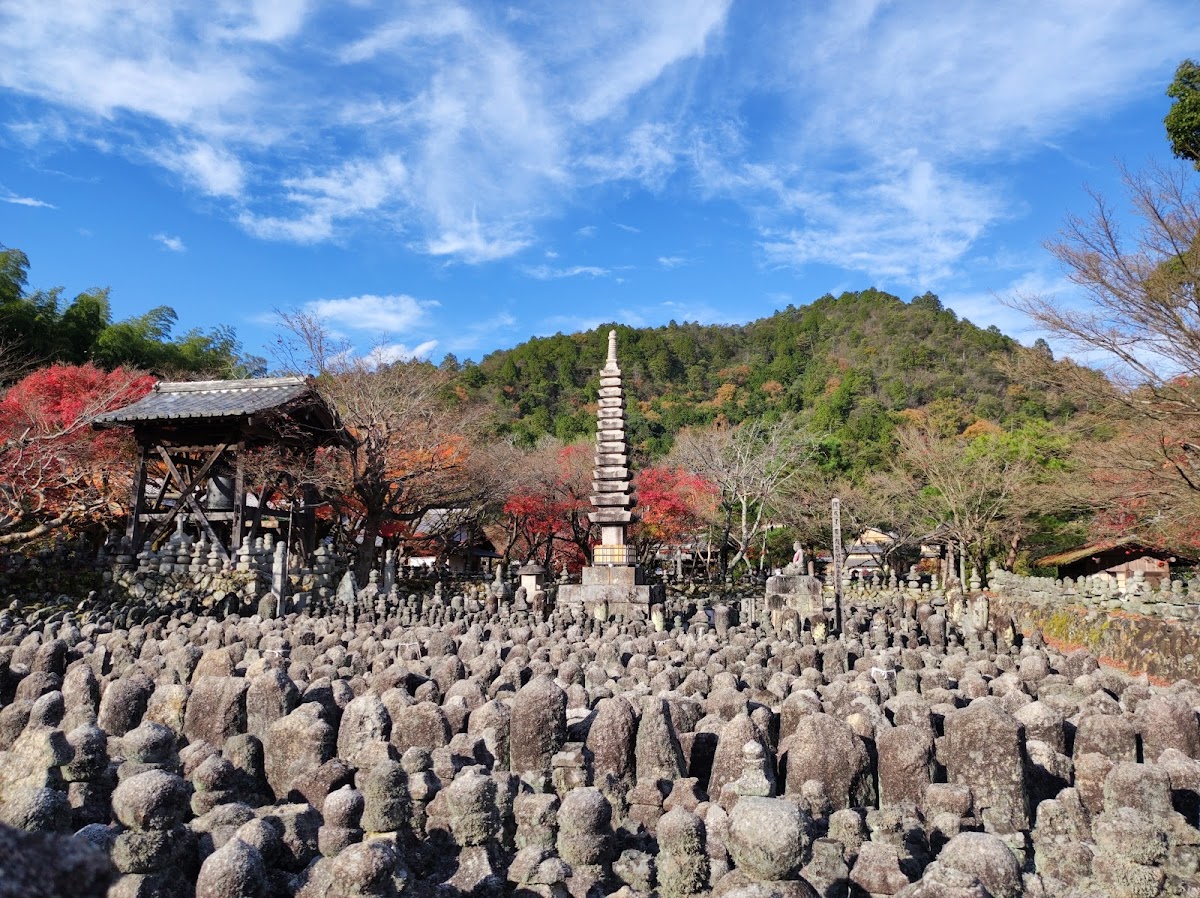
Located about a 15-minute walk from Atago Nenbutsu-ji Temple, Adashino Nenbutsu-ji Temple is home to approximately 8,000 stone Buddha statues and stupas. It was built in Adashino, a former burial ground, to commemorate the unclaimed dead. It’s a popular spot, often visited in conjunction with Atago Nenbutsu-ji Temple.
Kiyotaki Waterfall
Further beyond Atago Nenbutsu-ji Temple lies Kiyotaki Waterfall, a scenic spot known for its beautiful gorge. In summer, there are ryokan (traditional Japanese inns) offering riverside dining, making it a popular spot for Kyoto residents seeking respite from the heat. It’s also a starting point for climbing Mount Atago.
Nison-in Temple and Jojakko-ji Temple
On the way back from Atago Nenbutsu-ji Temple towards Arashiyama, you’ll find Nison-in Temple and Jojakko-ji Temple, both renowned for their autumn foliage. Especially in autumn, a route visiting these temples is a popular way to enjoy the fall colors of Sagano.
Sagano Bamboo Grove
A representative tourist spot in the Arashiyama/Sagano area. The bamboo grove path, stretching from Nonomiya Shrine to Okochi Sanso Villa, is a popular spot for both domestic and international tourists, offering a quintessential Kyoto atmosphere.
Points to Note and Manners When Visiting Atago Nenbutsu-ji Temple
Clothing and Items to Bring
- As there are stone steps and slopes within the temple grounds, comfortable walking shoes are recommended.
- Insect repellent is useful in summer.
- Dress warmly in winter.
- A camera is essential (you are free to photograph the Rakan statues, but please be considerate of other visitors).
Visiting Manners
- You are allowed to touch the Rakan statues, but please handle them carefully.
- Stroll quietly within the temple grounds and be considerate of other visitors.
- Photography may be prohibited inside the main hall, so please check beforehand.
- Offer your donation carefully.
Photography
Photographing the Rakan statues is generally permitted, but when posting on social media, please remember to show respect to the temple. In recent years, the number of tourists from overseas has increased, so please be mindful of international manners.
Atago Nenbutsu-ji Temple in the Four Seasons | Seasonal Highlights
Spring (March-May)
In spring, Atago Nenbutsu-ji Temple is adorned with cherry blossoms and fresh greenery. Somei Yoshino and weeping cherry trees bloom among the Rakan statues, announcing the arrival of spring. From late April to May, the fresh greenery is beautiful, and visitors can enjoy a refreshing visit.
Summer (June-August)
During the rainy season, the moss is beautiful, and the moss-covered Rakan statues have a profound charm. The cool summer air of Okusagano is pleasant, making it an ideal escape from the heat of Kyoto city. However, it is also a time when insects are abundant, so insect repellent is essential.
Autumn (September-November)
Atago Nenbutsu-ji Temple’s autumn foliage is known as a hidden gem in Okusagano. The best time to visit is from mid- to late November, when the sight of trees ablaze with red and yellow leaves enveloping the Arhat statues is breathtaking. Compared to the bustling center of Arashiyama, it’s a relatively quiet place to enjoy the autumn foliage, which is another appealing aspect.
Winter (December-February)
When it snows, the Arhat statues are covered in a snow-covered, fantastical landscape. In the winter silence, the snow-covered Arhat statues exude a solemn atmosphere, like ascetic monks. However, caution is needed when walking on snow.
Cultural Value and International Recognition of Atago Nenbutsu-ji Temple
Recognition as Contemporary Art
The 1200 Arhat statues possess a modern creativity that differs from traditional Buddhist art. These simple sculptures by ordinary worshippers are appreciated as a form of folk art or contemporary art, attracting attention from art professionals.
Attention from Overseas
In recent years, Atagi Nenbutsuji Temple has been featured in overseas media and has gained international recognition as “Otagi Nenbutsuji Temple.” The sight of 1200 unique stone statues lined up is a unique feature not found in other temples in Japan, and it fascinates foreign tourists.
The nickname “Japan’s most famous hidden temple” also arose from this international recognition.
Significance of the Restoration Project
The restoration project by Master Nishimura Kōchō was not merely the reconstruction of the temple, but a new form of temple restoration attempt involving creative activities with the participation of worshippers. This attempt is attracting attention from a religious sociology perspective as it demonstrates a new relationship between Buddhist temples and modern society.
Atagi Nenbutsuji Temple and Atagi Faith
Mount Atago and Atago Shrine
Atagi Nenbutsuji Temple is located at the foot of Mount Atago (elevation 924m) and is at the entrance to the approach to Atago Shrine. Atago Shrine has long been revered by the people of Kyoto as a deity of fire prevention and protection.
During the Edo period, many worshippers climbed Mount Atago to receive the “Hino Youjin” (fire prevention) amulet. Even today, many restaurants in Kyoto display amulets from Atago Shrine.
History of Shinto-Buddhist Syncretism
The fact that the Jizo Hall of Atago Nenbutsu-ji Temple enshrines the original Buddha of Atago Gongen tells the story of the history of Shinto-Buddhist syncretism. Before the Meiji-era separation of Shinto and Buddhism, shrines and temples were worshipped together, and Atago Nenbutsu-ji Temple preserves a part of that history.
Summary | The Charm of Atago Nenbutsu-ji Temple
Atago Nenbutsu-ji Temple is a unique temple that fuses its history dating back to the Nara period with the modern appeal of its 1200 Arhat statues. In the tranquil setting of Okusagano, encountering the expressive Rakan statues offers a soothing and healing experience for visitors.
While slightly removed from the hustle and bustle of central Kyoto, this allows for a peaceful visit away from the crowds. It’s a temple that can be enjoyed in various ways, whether as the final stop on a Sagano tour or as a starting point for a climb of Mount Atago.
With its seasonal beauty, unique Rakan statues, and historical value as an ancient temple, Atago Nenbutsu-ji Temple is a hidden gem that you should definitely visit when in Kyoto.
Strolling through the temple grounds and searching for an Rakan statue resembling yourself or a loved one among the 1200 statues is a unique way to enjoy Atago Nenbutsu-ji. Why not spend some time reflecting on the thoughts and feelings embodied in each Rakan?