Chōanji Temple (Kita Ward, Niigata Prefecture) Complete Guide | Visiting the History of National Important Cultural Properties and Korean Bells
Chōanji Temple, located in the Kuchi-Kawachi district of Kita Ward, Niigata City, Niigata Prefecture, is an ancient temple with a history of nearly 1200 years, said to have been founded in 831 (Tenchō 8). This temple houses two nationally designated important cultural properties: a wooden seated statue of Amida Buddha from the late Heian period and a rare Korean bell, one of only 47 existing in Japan. It is known as a temple of particularly high historical value within Niigata Prefecture.
History and Origins of Chōanji Temple
Founded in the Early Heian Period
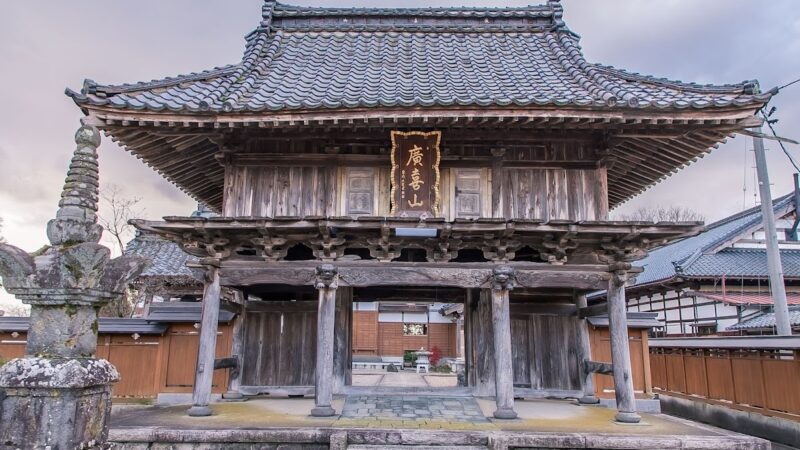
Chōanji Temple is said to have been founded in 831 (Tenchō 8). This period was the early Heian period, a time of great development in Japanese Buddhist culture. Built in the ancient settlement of Kuchi-Kawachi, Chōanji Temple has served as a center of local faith and a spiritual haven for people for nearly 1200 years. The temple’s mountain name is Kōki-san, and it has a long history of being protected by the local people, preserving and passing down valuable cultural assets to this day.
Deep Connections with the Kuchi-Kawachi Settlement
The Kuchi-Kawachi district, where Chōanji Temple is located, is one of the oldest settlements in Niigata City’s Kita Ward. This area is situated in the Agano River basin and has developed as an agricultural settlement since ancient times. Chōanji Temple has served not only as a religious facility but also as a central hub for the local community.
Nationally Designated Important Cultural Properties
The two nationally designated important cultural properties owned by Chōanji Temple are both carefully stored in its repository and occupy an extremely important position in the history of Japanese Buddhist art.
Wooden Seated Amida Buddha Statue
Masterpiece of the Late Heian Period
The wooden seated Amida Buddha statue is estimated to be a work from the late Heian period (late 11th to 12th century). This period was a crucial time in Japanese Buddhist sculpture, as it underwent a transformation into a uniquely Japanese style and established its own distinct aesthetic.
The statue, designated a National Important Cultural Property, is a valuable example of the advanced sculptural techniques of the late Heian period, showcasing the graceful and serene expressions and flowing drapery characteristic of that era.
History of Amida Buddha Worship
Amida Buddha is the lord of the Pure Land and a central figure in Pure Land Buddhism, believed to save those who chant the Buddha’s name. In the late Heian period, with the spread of the belief in the decline of the Dharma, Amida Buddha worship flourished, and many Amida statues were created. The seated Amida Buddha statue at Chōanji Temple was created within this historical context and has a history of attracting the faith of many people.
Bronze Bell (Korean Bell)
A Precious Existing Object, One of Only 47 in Japan
The bronze bell owned by Chōanji Temple is a temple bell cast in the Korean Peninsula during the Goryeo period (918-1392), commonly known as a “Korean bell.” Currently, only 47 Korean bells remain in Japan, making the Chōanji bell an extremely valuable example, being the only one remaining in Niigata Prefecture.
Bell Details and Characteristics
The Chōanji Korean bell has the following characteristics:
- Total Height: 107.5cm
- Diameter: 61.2cm
- Production Period: Estimated to be around the 13th century
- Distinctive Decoration: Intricately designed dragon head, beautiful arabesque pattern
Korean bells have a unique shape and decoration that differs from Japanese temple bells. The exquisite craftsmanship of the dragon head (ryuzu) attached to the top of the bell, and the beauty of the arabesque patterns adorning the bell body, are particularly striking. These decorations demonstrate the advanced casting techniques and aesthetic sensibilities of the Goryeo period.
Legend of the Bell’s Recovery from the Sea of Wakasa
An intriguing legend surrounds the Korean bell at Chōanji Temple. It is said that this bell was recovered from the seabed off Wakasa Province (present-day Fukui Prefecture) around the 13th century. While the details of how it came to be donated to Chōanji Temple are unknown, it is a valuable cultural asset that tells the story of cultural exchange across the Sea of Japan.
The legend of its recovery from the seabed is historically interesting, suggesting the Sea of Japan trade and cultural ties with the Korean Peninsula at that time.
Highlights of Chōanji Temple
Storage Facility
Two nationally designated important cultural properties at Chōanji Temple are housed in a storage facility to ensure their preservation in an appropriate environment. These cultural artifacts are precious and may not be open to the public under normal circumstances, but they may be available for viewing on special occasions. We recommend checking in advance before your visit.
Atmosphere of the Temple Grounds
Located in the quiet village of Kuchi-Kawachi, Chōanji Temple possesses a tranquil atmosphere that reflects its nearly 1200-year history. The temple grounds, harmoniously integrated with the surrounding rural landscape, offer visitors a sense of peace.
Historical Buildings
As a temple with a long history, the buildings, including the main hall, are also noteworthy. The layout of the temple complex and the architectural style, preserved over the ages, allow visitors to feel the history of the region’s Buddhist culture.
Access Information to Chōanji Temple
Location
Address: Kuchi-Kawachi, Kita-ku, Niigata City, Niigata Prefecture
Transportation Access
Access by Car
Kita-ku, Niigata City, is located in the northern part of Niigata City, spreading north of the Agano River. Access by car is convenient.
- Approximately 15-20 minutes by car from the Niigata Bypass “Toyosaka Niigata Higashi Port IC”
- Also accessible from the Nihonkai Tohoku Expressway “Toyosaka Niigata Higashi Port IC”
Access by Public Transportation
If using public transportation, the nearest station is JR Hakushin Line “Toyosaka Station”. From the station, you will need to take a local bus or taxi. Since the Kuchikawachi area is located in the suburbs, it is recommended to check transportation options in advance.
Parking
Due to the size and location of the temple, there may be parking spaces for visitors, but it is recommended to check before visiting.
Notes on Visiting
Regarding Viewing
Chōanji Temple is a historical temple and houses nationally designated important cultural properties, but it is necessary to check in advance whether they are always open to the public. In particular, if you wish to view cultural properties inside the storage facilities, it is strongly recommended that you contact the temple in advance.
Regarding Photography
Please follow the temple’s regulations regarding photography of temple grounds and cultural properties. Especially regarding important cultural properties, photography may be restricted, so be sure to obtain permission before taking pictures.
Visiting Etiquette
- As this temple is located in a quiet residential area/village, please be considerate of the neighbors.
- Maintain silence on the temple grounds and be mindful not to disturb other visitors.
- Always take your trash with you.
- Visit with respect as it is a religious site.
Nearby Tourist Attractions
Highlights of Kita Ward, Niigata City
Kita Ward, Niigata City, where Chōanji Temple is located, has other attractive tourist spots.
Fukushima Lagoon
Fukushima Lagoon, a representative natural spot in Kita Ward, Niigata City, is a vast wetland of approximately 193 hectares and is known as a treasure trove of wild birds. Especially in winter, many migratory birds fly in, making it a popular spot for birdwatching. Facilities such as “Water Park Fukushima Lagoon” and “View Fukushima Lagoon” have also been developed.
Niigata Racecourse
Niigata Racecourse is also a popular spot for horse racing fans. Located in a beautiful location facing the Sea of Japan, it is bustling with horse racing fans during the summer racing season.
History and Culture of the Agano River Basin
The Agano River basin surrounding Chōanji Temple has long been one of the historical and cultural centers of Niigata. Numerous other historical temples, shrines, and historical sites are scattered along the river, making it an ideal area for a historical exploration trip.
Other Temples in Niigata Prefecture with Important Cultural Properties
Visitors to Chōanji Temple may also find other temples in Niigata Prefecture that house important cultural properties interesting.
Kokubunji Temple (Jōetsu City)
Kokubunji Temple in Jōetsu City is the successor temple to Echigo Kokubunji Temple, which was built by order of Emperor Shōmu during the Nara period. It houses important cultural properties such as a seated statue of Yakushi Nyorai (Medicine Buddha).
Undo-an Temple (Minamiuonuma City)
Undo-an Temple in Minamiuonuma City is known as the temple where Sengoku period warlords Uesugi Kagekatsu and Naoe Kanetsugu studied, and it houses numerous historical buildings and cultural assets.
Learn More About Korean Bells
Historical Background of Korean Bells
Korean bells (Goryeo bells) are temple bells cast on the Korean Peninsula during the Goryeo period (918-1392). The Goryeo period was a time when Buddhism flourished as the state religion, many temples were built, and excellent Buddhist art was produced.
How Korean Bells Arrived in Japan
There are several theories about how Korean bells arrived in Japan, but the following routes are generally considered:
- Transportation via Trade: Brought in through trade activities across the Sea of Japan
- Plunder by Wokou: Taken from the Korean Peninsula by Wokou pirates during the medieval period
- Discovery as Washed-Up Objects: Sunk to the sea due to shipwrecks or other accidents and recovered off the Japanese coast
In the case of the Korean bell at Chōanji Temple, the tradition that it was recovered from the seabed off Wakasa may fall under the third case.
Artistic Characteristics of Korean Bells
Compared to Japanese temple bells, Korean bells possess the following unique characteristics:
- Dragon Head Design: A more three-dimensional and powerful depiction of the dragon
- Bell Body Decoration: Exquisite patterns such as arabesque and lotus motifs
- Tone: A unique sound different from Japanese bells
- Shape: A somewhat slender and elegant form
These characteristics reflect the advanced casting techniques and unique aesthetic sense of the Goryeo period.
About Buddhist Sculpture in the Heian Period
Buddhist Sculpture Styles of the Late Heian Period
The late Heian period, when the wooden seated Amida Buddha statue at Chōanji Temple was created, is a crucial period in the history of Japanese Buddhist sculpture, marking the completion of the “Japanese style” (Wayo-style). Buddhist statues from this period have the following characteristics:
- Gentle and graceful expression: Emphasizing compassion rather than sternness
- Flowing drapery: A wavy depiction of drapery known as “wave-style drapery”
- Soft bodily expression: Idealized beauty rather than realism
- Joined wood construction technique: An advanced technique of combining multiple pieces of wood
Influence of the Jocho style
The style established by Jocho, a Buddhist sculptor of the mid-Heian period, had a significant influence on Buddhist statue production in the late Heian period. The seated Amida Buddha statue at Chōanji Temple is highly likely to be a work following the Jocho style, and its graceful form shows the influence of the Jocho style.
The position of Chōanji Temple in the history of Buddhist culture in Niigata Prefecture
Introduction of Buddhism to Echigo Province
The introduction of Buddhism to Niigata Prefecture (Echigo Province) began in earnest from the Nara period to the early Heian period. The year 831, when Chōanji Temple is believed to have been founded, falls precisely during this period, making it one of the representative temples of the dawn of Buddhist culture in Echigo Province.
Temple Culture in the Agano River Basin
The Agano River basin has long been one of the cultural centers of Echigo Province. The Kuchi-Kawachi district, where Chōanji Temple is located, has also fostered its own unique Buddhist culture as part of this river basin cultural sphere.
History of Cultural Property Preservation
The fact that Chōanji Temple has preserved two nationally designated important cultural properties to this day demonstrates the high level of awareness of cultural property preservation among the local people. In particular, the preservation of such valuable cultural properties by a temple in a small settlement is a noteworthy example in the history of cultural property preservation in Japan.
Best Season to Visit
Spring (March-May)
Spring in Niigata is a beautiful season of fresh greenery as the snow melts. In the Kuchi-Kawachi district, with its sprawling rural landscape, you can witness the start of farm work.
Summer (June-August)
In the lush green summer season, the temple grounds are covered in trees, creating a cool and refreshing atmosphere. However, summers in Niigata can be hot and humid, so don’t forget to take precautions against heatstroke.
Autumn (September-November)
Autumn, the harvest season, brings a beautiful golden landscape to the surrounding rice fields. The weather is stable, making it a suitable season for visiting the temple.
Winter (December-February)
Winter in Niigata brings snow, offering a picturesque scene of the temple amidst a snowy landscape. However, it’s important to check road conditions and the temple’s opening hours in advance.
Basic Information
Temple Name: Koki-san Choanji
Location: Kuchikawachi, Kita-ku, Niigata City, Niigata Prefecture
Founded: 831 (Tencho 8)
Sect: (Please check with the temple for details)
Cultural Properties:
- Wooden seated statue of Amida Buddha (National Important Cultural Property)
- Bronze bell (Korean bell) (National Important Cultural Property)
Visiting Hours: Advance confirmation recommended
Admission Fee: Advance confirmation recommended
Parking: Advance confirmation recommended
Summary
Choanji Temple in Kita-ku, Niigata City, Niigata Prefecture, is a valuable temple with a long history dating back to its founding in 831 and possessing two nationally designated important cultural properties. The wooden seated statue of Amida Buddha from the late Heian period and the Korean bell, of which only 47 remain in Japan, are extremely important cultural properties in the history of Japanese Buddhist art, making it a must-visit spot when visiting Niigata Prefecture. Nestled in the quiet village of Kuchi-Kawachi, Chōanji Temple is a special place where you can feel the weight of nearly 1200 years of history and the value of the cultural assets that have been preserved by the local people. It is especially recommended for those interested in Niigata’s history and culture, and for those interested in Buddhist art.
When visiting, it is recommended to check in advance whether it is open for viewing and to pay your respects with reverence for the valuable cultural assets and historic temple.