Complete Guide to Choju-ji Temple (Kamakura City, Kanagawa Prefecture) | The Charm of a Hidden Gem Temple Associated with Ashikaga Takauji and Information on Special Openings
Choju-ji Temple, nestled in Yamanouchi, Kamakura City, Kanagawa Prefecture, is a sub-temple of the Kencho-ji branch of the Rinzai school of Zen Buddhism, known for its connection to Ashikaga Takauji, the first shogun of the Muromachi shogunate. While normally closed to the public, its beautiful moss garden and dry landscape garden captivate visitors during limited openings in spring and autumn. This article comprehensively introduces information you should know before visiting Choju-ji Temple, including its history, highlights, special opening information, and access methods.
History and Origins of Choju-ji Temple
Deep Connection with Ashikaga Takauji
There are various theories regarding the founding of Choju-ji Temple, but the most widely accepted theory is that Ashikaga Takauji, the first shogun of the Muromachi shogunate, founded it in 1336 (Kenmu 3) on the site of his own residence. Ashikaga Takauji died in Kyoto in 1358 (Enbun 3) at the age of 54. His posthumous Buddhist name was “Tōjiin-dono” in Kyoto and “Chōjuji-dono” in the Kanto region.
After Takauji’s death, his son, Ashikaga Motouji, who became the first Kamakura Shogun, built a magnificent temple complex with seven main halls to commemorate his father. This forms the foundation of the present-day Chōjuji Temple.
Founder: Zen Master Kosen Ingen
The founder of Chōjuji Temple was Zen Master Kosen Ingen. Kosen Ingen was a high-ranking priest of Kenchōji Temple, and due to his high moral standing, Takauji invited him to be the founding abbot. From its inception, Chōjuji Temple was ranked as the first of the many temples, and was positioned as a temple of high status, second only to the Five Great Zen Temples of Kamakura.
Mountain Name and Sect
The mountain name of Chōjuji Temple is Hōkizan. As a sub-temple belonging to the Kenchoji branch of the Rinzai school of Zen Buddhism, it has maintained a deep relationship with Kenchoji Temple and has continued to preserve its Buddhist traditions to this day. The principal image is Shakyamuni Buddha, and it conveys the austere atmosphere of a Zen temple.
Highlights of Choju-ji Temple
Beautiful Moss Garden
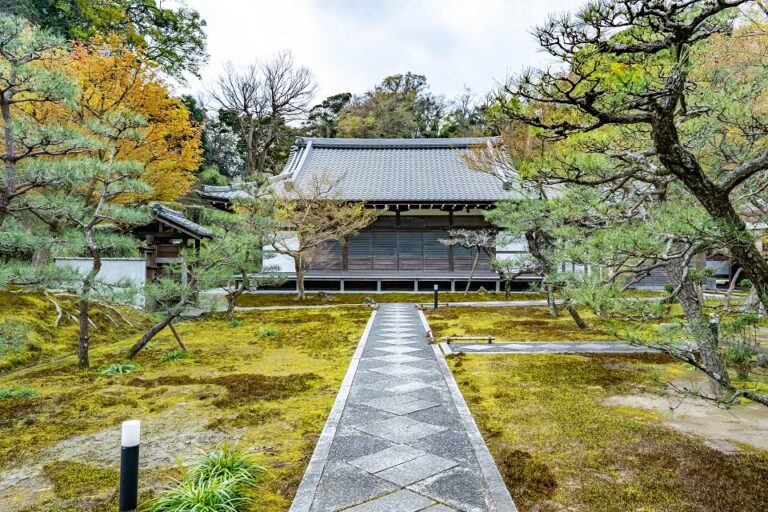
The greatest attraction of Choju-ji Temple is its moss garden, one of the most beautiful in Kamakura. The entire temple grounds are covered in vibrant green moss, and its beauty is especially striking during the rainy season and the autumn foliage season.
The garden, meticulously maintained by a Kyoto gardener, has the feel of a green carpet, offering visitors a deep sense of tranquility and healing. The moss garden in front of the main hall is particularly magnificent, displaying different expressions with each season.
Dry Landscape Garden and Shoin (Study Hall)
During special openings, the Shoin and the small abbot’s quarters are opened, allowing visitors to sit on a red felt carpet and admire the beautiful dry landscape garden. This quiet time is a luxurious moment that allows you to forget the hustle and bustle of everyday life. The dry landscape garden embodies the spirit of Zen, with its abstract scenery created by the interplay of stones and sand patterns, calming the viewer’s mind. The view from the study hall is meticulously composed, allowing visitors to enjoy different views depending on their seating position.
Main Hall
The main hall of Choju-ji Temple, while simple, possesses the dignified characteristics of Zen Buddhist architecture. The hall, contrasting beautifully with the vibrant green of the moss, is truly picturesque. Inside, the principal image, Shakyamuni Buddha, is enshrined, creating a serene space that welcomes visitors.
Kannon Hall
Located at the back of the temple grounds is the Kannon Hall, which enshrines a seated statue of Ashikaga Takauji and a seated statue of the temple’s founder, Kosen Ingen. The scenery of the Kannon Hall surrounded by autumn foliage is particularly beautiful, attracting many visitors during the special autumn opening. This Kannon Hall is an important structure imbued with remembrance for Takauji.
Seasonal Highlights
Spring (April-June)
Spring at Choju-ji Temple is the most beautiful season, with the fresh green moss in full bloom. Especially in June, the hydrangeas are in full bloom, creating a fantastical landscape where the green of the moss and the colors of the hydrangeas harmonize beautifully. The moss, wet with the rain of the rainy season, becomes even more vibrant, creating a moist and atmospheric scene.
Autumn (October-November)
During the special autumn opening, the autumn foliage that colors the temple grounds is the main attraction. The maple and other trees turn red and yellow, creating a magnificent contrast with the green moss. The autumn leaves around the Kannon Hall are particularly beautiful, attracting many photography enthusiasts.
Special Opening Information
Opening Period and Time
Choju-ji Temple is normally closed to the public, but special openings are held during the following periods.
- Spring Openings: Weekends from April to June (Friday, Saturday, Sunday)
- Autumn Openings: Weekends from October to November (Friday, Saturday, Sunday)
- Visiting Hours: 10:00 AM – 3:00 PM (Last entry around 2:45 PM)
*Please note that openings may be cancelled due to weather or temple circumstances. We recommend checking before your visit.
Admission Fee
- Adults: 300 yen
- Children: Free (Junior high school age and younger)
Notes
- Photography is permitted on the temple grounds, but consideration for other visitors is necessary.
- Photography may be prohibited inside the study hall.
- Please refrain from loud conversations to maintain tranquility.
- Please do not enter areas other than designated paths to avoid damaging the moss.
- The use of tripods is prohibited.
Access to Choju-ji Temple
Location
Address: 1503 Yamanouchi, Kamakura City, Kanagawa Prefecture
Phone: 0467-22-2147
Access by Train
Walking distance from JR Yokosuka Line “Kita-Kamakura Station”
Approximately 10-13 minutes on foot from the east exit of Kita-Kamakura Station towards Kencho-ji Temple. Exit the station, turn right, and walk along Kamakura Kaido (Prefectural Road 21) towards Kencho-ji Temple. Choju-ji Temple is located at the corner of the fork in the road leading to Kamegayazaka Pass.
From JR Yokosuka Line “Kamakura Station”
From the east exit of Kamakura Station, take the Enoden bus bound for “Kita-Kamakura” and get off at the “Kencho-ji” bus stop. It’s about a 1-minute walk from there.
Access by Bus
- Enoden Bus: Take the bus bound for “Kita-Kamakura Station” or “Ofuna Station” from the east exit of Kamakura Station.
- Bus Stop to Get Off At: “Kencho-ji”
- Travel Time: Approximately 10 minutes from Kamakura Station
- Walking: Approximately 1 minute from the bus stop
Access by Taxi
- From Kita-Kamakura Station: Approximately 5 minutes (approximately 700 yen)
- From Kamakura Station: Approximately 10 minutes (approximately 1,500 yen)
Parking Information
Choju-ji Temple does not have its own parking lot. We recommend using nearby paid parking lots or public transportation. Nearby Parking
- Kenchoji Temple Parking (Paid): Approximately 3 minutes on foot
- Times Kamakura Yamanouchi Parking: Approximately 5 minutes on foot
*During special opening periods, congestion is expected, so using public transportation is recommended.
Recommended Tourist Spots Around Choju-ji Temple
Kenchoji Temple (3 minutes on foot)
Kenchoji Temple, boasting the highest rank among the Five Great Zen Temples of Kamakura, is also the head temple of Choju-ji Temple. Its vast grounds contain a national treasure bell and an important cultural property Buddha hall, making it well worth a visit. Visiting it in conjunction with a visit to Choju-ji Temple is recommended.
Kamegayatsu Pass (1 minute on foot)
Kamegayatsu Pass, one of the seven passes of Kamakura, is located right next to Choju-ji Temple. This ancient road, used as a key transportation point during the Kamakura period, offers a walking path where you can feel the traces of history.
Engaku-ji Temple (10-minute walk)
A representative and renowned temple of Kita-Kamakura, and the second-ranked of the Five Great Zen Temples of Kamakura. It boasts a national treasure, the Shariden (reliquary hall), and beautiful gardens, offering stunning scenery throughout the seasons.
Jochi-ji Temple (8-minute walk)
An ancient temple, the fourth-ranked of the Five Great Zen Temples of Kamakura. Its moss-covered stone steps and bamboo grove are beautiful, and like Choju-ji Temple, it offers a tranquil atmosphere.
Meigetsu-in Temple (15-minute walk)
Famous as the “Hydrangea Temple,” Meigetsu-in boasts approximately 2,500 hydrangea bushes in June. The view of the garden from the round window is also magnificent.
Recommended Restaurants near Choju-ji Temple
Hachinoki (Kita-Kamakura Main Branch)
A 3-minute walk from Kita-Kamakura Station. A renowned restaurant offering kaiseki cuisine based on vegetarian Buddhist cuisine. Dining while overlooking the beautiful garden is exceptional.
Kyoraian
A renowned soba restaurant near Kenchoji Temple. Popular for its handmade soba noodles and seasonal tempura, it’s perfect for lunch after visiting Chojuji Temple.
Takara no Kama
A popular cafe near Kita-Kamakura Station. Enjoy a relaxing break with homemade cakes and coffee. The terrace offers lush green views.
Kissaten Minka
A cafe renovated from an old traditional Japanese house, offering a calm atmosphere where you can enjoy coffee and sweets.
Points and Manners for Visiting
Clothing and Items to Bring
- Comfortable Shoes: As there are stone steps and gravel paths on the temple grounds, comfortable walking shoes such as sneakers are recommended.
- Seasonal Clothing: It is hot in summer and cold in winter, so please dress appropriately.
- Rain Gear: Bring an umbrella or raincoat during the rainy season and the long autumn rainy season.
- Camera: Don’t forget your camera if you want to photograph the beautiful gardens.
Manners for Visiting
- Respecting Silence: Please respect the solemn atmosphere of the Zen temple and pray quietly.
- Do Not Step on Moss: To protect the beautiful moss garden, please walk only on the designated paths.
- Take Your Trash Home: There are no trash cans on the temple grounds, so please be sure to take your trash home with you.
- No Smoking: Smoking is prohibited throughout the temple grounds.
Tips for Avoiding Crowds
- Visiting on Weekdays: Visiting on weekdays is recommended if possible, but this may be difficult as it is only open on weekends.
- Immediately after opening: It is relatively uncrowded immediately after opening at 10:00 AM.
- After 2:00 PM: The crowds tend to ease in the late afternoon.
- During rainy weather: There are fewer visitors on rainy days, and the moss and gardens wet with rain have a certain charm.
Summary of basic information about Choju-ji Temple
| Item | Content |
|——|——|
| Name | Choju-ji Temple |
| Mountain Name | Hokizan |
| Sect | Rinzai Zen Kencho-ji School |
| Principal Image | Shakyamuni Buddha |
| Founded | Traditionally 1336 (Kenmu 3) |
| Founder | Zen Master Kosen Ingen |
| Founder | Ashikaga Takauji and Ashikaga Motouji |
| Location | 1503 Yamanouchi, Kamakura City, Kanagawa Prefecture |
| Phone Number | 0467-22-2147 |
| Opening Period | Weekends in Spring (April-June) and Autumn (October-November) |
| Visiting Hours | 10:00-15:00 |
| Admission Fee | Adults 300 yen, Junior high school students and younger free |
| Parking | None |
| Access | Approximately 10 minutes on foot from JR Kita-Kamakura Station |
Visitor Reviews and Reputation of Choju-ji Temple
Positive Reviews
Many visitors have given high praise, stating things like “One of the most beautiful moss gardens in Kamakura,” “The tranquil atmosphere is wonderful,” and “The limited opening period gives it a special feeling.” Photography enthusiasts, in particular, often comment, “It’s a great photo spot,” and “I want to visit every season.”
The time spent viewing the garden from the study hall is praised as a healing space, with comments such as “It cleanses the soul” and “You can sit there and forget about time.”
Points to Note
On the other hand, some visitors have noted that “It’s difficult to plan a visit because the opening period is limited,” “It gets crowded because it’s only open on weekends,” and “Access by car is inconvenient because there is no parking.” There are also opinions suggesting that “since it’s relatively small, it’s recommended to visit it in combination with other temples.”
Historical Background of Choju-ji Temple and the Ashikaga Clan
Ashikaga Takauji and Kamakura
Ashikaga Takauji is known as the founder of the Muromachi Shogunate, but he also had deep ties to Kamakura. Takauji was from the Ashikaga clan, a powerful vassal family of the Kamakura Shogunate, and Kamakura was one of their bases.
After the Kenmu Restoration, Takauji established the shogunate in Kyoto, but to govern the Kanto region, he appointed his son, Motouji, as the first Kamakura Shogun in Kamakura. Choju-ji Temple is an important historical site that tells the story of this deep relationship between the Ashikaga clan and Kamakura.
The Kamakura Shogun and Choju-ji Temple
Choju-ji Temple, built by the first Kamakura Shogun, Ashikaga Motouji, to mourn his father Takauji, was also a temple that symbolized the authority of the Ashikaga clan in Kamakura. As a magnificent temple complex with seven main halls, it is believed to have functioned as one of Kamakura’s religious and political centers.
Other Ashikaga-related temples in Kamakura
Jōmyōji Temple
Jōmyōji Temple, the fifth-ranked of the Five Great Zen Temples of Kamakura, also has deep ties to the Ashikaga clan and is said to have been founded by Ashikaga Yoshikane. It boasts a beautiful garden and tea house, and is recommended to visit along with Chōjuji Temple.
Hōkokuji Temple
Hōkokuji Temple, known as the “Bamboo Temple,” is also one of the Ashikaga clan’s ancestral temples. The bamboo grove, with approximately 2,000 moso bamboo trees, is breathtaking, and visitors can enjoy matcha tea while gazing at the bamboo forest.
Model Walking Course in Kita-Kamakura Including Choju-ji Temple
Half-Day Course (Approx. 3-4 hours)
- Kita-Kamakura Station (Start)
- Engaku-ji Temple (Duration: 40 minutes)
- Jochi-ji Temple (Duration: 30 minutes)
- Choju-ji Temple (Duration: 40 minutes)
- Kencho-ji Temple (Duration: 60 minutes)
- Kita-Kamakura Station or Kamakura Station (Goal)
Full-Day Course (Approx. 6-7 hours)
This plan involves visiting the above half-day course in the morning, and then visiting Meigetsu-in Temple and Tokei-ji Temple in the afternoon. Enjoying lunch and shopping around Kamakura Station is also recommended.
Summary: The Charm and Value of Visiting Choju-ji Temple
Located in Yamanouchi, Kamakura City, Kanagawa Prefecture, Choju-ji Temple is an ancient temple deeply connected to the historically important figure Ashikaga Takauji, and is a hidden gem known for its beautiful moss garden and dry landscape garden.
The special opening period, limited to weekends in spring and autumn, makes visiting a little difficult, but this is precisely what preserves the tranquility and beauty of the temple grounds. The luxurious experience of passing through the gates, which are only open for a limited time, and sitting on a red felt carpet while gazing at the garden will bring a peace of mind rarely found in everyday life.
Despite its convenient location within walking distance of Kita-Kamakura Station, Choju-ji Temple remains overshadowed by larger temples such as Kencho-ji and Engaku-ji. However, this modest presence may embody the spirit of Zen.
When visiting Kamakura, be sure to check the special opening period and visit this beautiful ancient temple. The weight of history that dates back to the time of Ashikaga Takauji, and the beauty of the meticulously maintained gardens, will surely create lasting memories.