Complete Guide to Chikurinji Temple: History, Highlights, Access, and Visiting Information
Chikurinji is the name of several historically significant temples located throughout Japan. In particular, Chikurinji Temple in Kochi City, Kochi Prefecture, is known as the 31st temple of the Shikoku 88 Temple Pilgrimage and is a famous temple visited by many pilgrims and tourists. This article provides a detailed explanation of Chikurinji Temple’s history, highlights, visiting information, and access methods.
What is Chikurinji Temple?
While there are several temples named Chikurinji throughout Japan, the most famous is a Shingon sect Chizan-ha temple located on Mt. Godai in Kochi City, Kochi Prefecture. Its official name is “Godaisan Konjōin Chikurinji,” and its principal image is Manjushri Bodhisattva.
Origin of Chikurinji Temple
The name “Chikurin” (bamboo grove) is said to originate from the Zhulin Temple on Mt. Wutai in China. Another theory suggests it was named because a bamboo grove flourished on the temple grounds at the time of its founding. Because its principal deity is Manjushri Bodhisattva, it has attracted worshippers as the Buddha of wisdom.
History of Chikurinji Temple
Founding and Founder
Chikurinji Temple in Kochi is said to have been founded in 724 AD by Gyoki Bodhisattva at the behest of Emperor Shomu. Gyoki wished to climb Mount Wutai in Tang China to worship Manjushri Bodhisattva, but due to his advanced age, he gave up on this plan and searched for a mountain in Japan similar to Mount Wutai. He is said to have found a mountain in what is now Kochi City and built the temple there.
History of Successive Leaders
During the Heian period, Kukai (Kobo Daishi) is said to have visited and restored the temple, which had fallen into disrepair. At that time, Kukai is said to have carved the principal image, a statue of Manjushri Bodhisattva, which is still enshrined today as an important cultural property.
In the Middle Ages, the temple received patronage from the Hosokawa and Chosokabe clans, the shugo daimyo of Tosa, and expanded its influence. However, it declined temporarily due to the wars of the Sengoku period.
In the Edo period, it flourished again under the protection of the Yamauchi family, the lords of the Tosa Domain. In particular, the second lord, Yamauchi Tadayoshi, was a devout follower of Chikurinji Temple and dedicated himself to the construction of the main hall and study hall.
During the anti-Buddhist movement of the Meiji era, many temple treasures were in danger of being lost, but they were saved through the efforts of the local people. Today, it welcomes many visitors as the 31st temple of the Shikoku Pilgrimage and as a temple with a nationally designated scenic garden.
Highlights of Chikurinji Temple
Main Hall
The main hall is an early Edo period building, a magnificent structure with a hipped roof and tiled roof. Inside, the principal image, a statue of Manjushri Bodhisattva, is enshrined. This statue is designated as a National Important Cultural Property and is a valuable Buddhist statue believed to be from the Heian period.
Manjushri Bodhisattva is known as the Buddha who presides over wisdom, and many worshippers visit to pray for academic success and passing exams. Inside the main hall, one can quietly join their hands in prayer and find peace of mind.
Chikurinji Temple Garden (Designated as a National Scenic Spot)
One of the greatest highlights of Chikurinji Temple is its garden, designated as a National Scenic Spot. This garden is believed to have been created in the early Edo period, and while there is a theory that it was designed by Musō Soseki, there is no conclusive evidence.
The garden is a pond-centered garden located south of the shoin (study hall), with skillfully arranged stones and plants around the pond. Visitors can enjoy the scenery throughout the seasons, and it is especially crowded with tourists during the fresh greenery of spring and the vibrant autumn foliage.
Carp swim in the pond, and the reflections of trees and stones on the water’s surface create a beautiful landscape. Sitting on the veranda of the shoin, one can leisurely admire the garden, creating a space where one can find peace of mind.
Five-Storied Pagoda
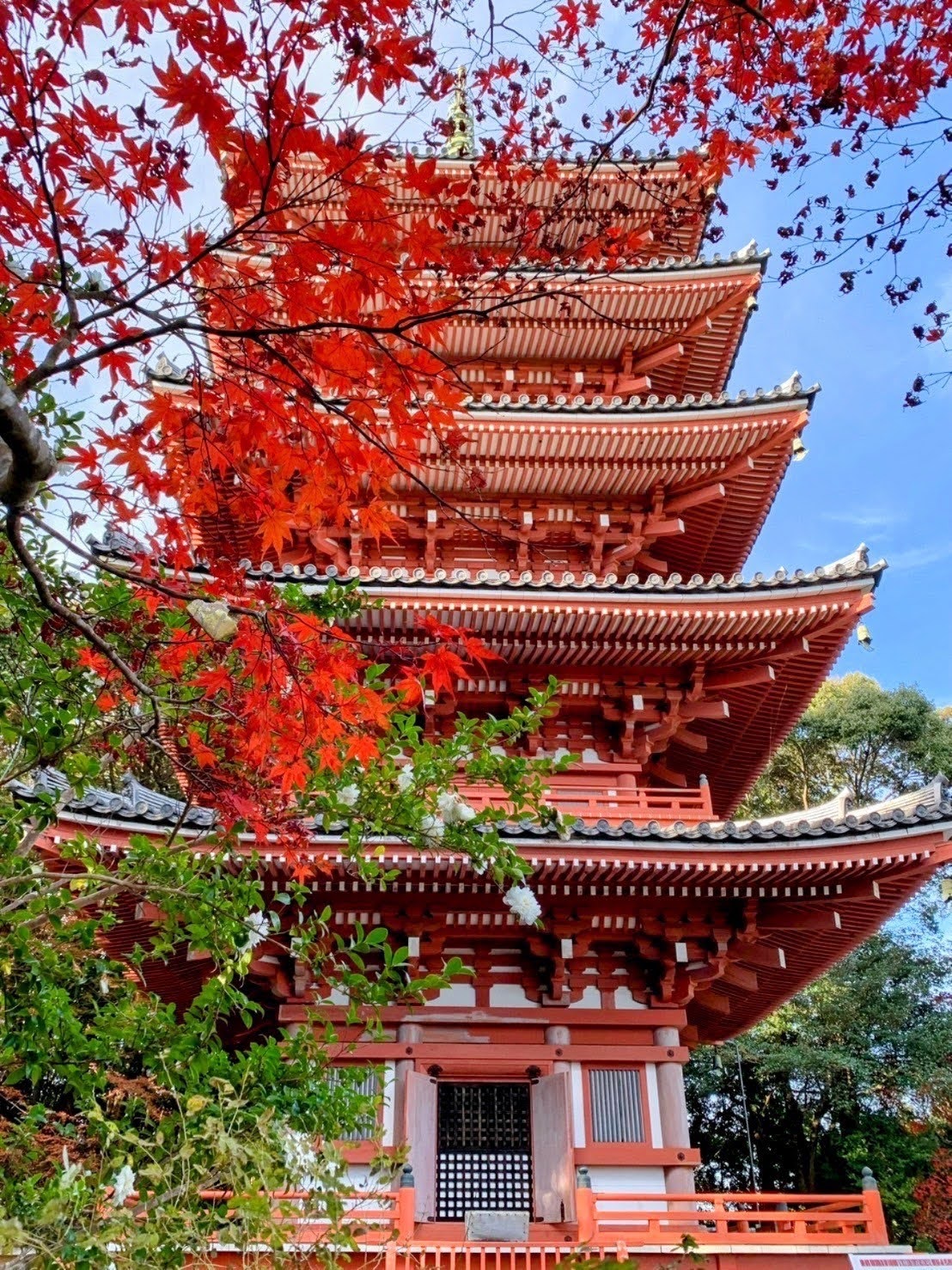
Within the grounds of Chikurinji Temple stands a five-storied pagoda approximately 31 meters tall. Although relatively new, having been built in 1980, this pagoda adheres to traditional architectural styles and serves as a symbol of the temple grounds.
Inside the pagoda is enshrined a statue of Dainichi Nyorai (Vairocana Buddha). From the pagoda’s surroundings, one can enjoy a panoramic view of Kochi city, and on clear days, even the Pacific Ocean can be seen.
Treasure Hall
Chikurinji Temple houses numerous cultural artifacts, many of which are on display in its Treasure Hall. These include the principal image, a statue of Monju Bodhisattva, and numerous Buddhist statues dating from the Heian to Kamakura periods.
Of particular note are the following Buddhist statues designated as Important Cultural Properties:
- Wooden statues of Manjushri Bodhisattva and attendant figures (Heian period)
- Wooden statue of Daiitoku Myoo (Heian period)
- Wooden seated statue of Amida Buddha (Kamakura period)
These statues represent the pinnacle of Buddhist art of the time and are of extremely high value from an art historical perspective. They are a must-see collection for Buddhist statue enthusiasts and art lovers.
Other Structures
Besides the main hall and five-story pagoda, the temple grounds contain several other notable structures, including the Daishi Hall, bell tower, and Niomon Gate.
The Daishi Hall houses a statue of Kobo Daishi and is a place that pilgrims of the Shikoku Pilgrimage always visit. The Niomon Gate features magnificent Nio statues welcoming visitors.
As the 31st Temple of the Shikoku 88 Temple Pilgrimage
Chikurinji Temple is the 31st temple of the Shikoku 88 Temple Pilgrimage, making it an important pilgrimage site for pilgrims.
Temple Hymn
The temple’s hymn is “Namu Monju, the mother of the Buddhas of the three worlds; I too am a child, yearning for milk.” It expresses the desire for the wisdom of Monju Bodhisattva.
Temple Office
Near the main hall is the temple office where you can receive temple stamps and images. The hours are usually from 7:00 AM to 5:00 PM, but these may vary depending on the season, so it is recommended to check in advance.
Distance to Preceding and Following Temples
Chikurinji Temple is approximately 7 kilometers from the 30th temple, Zenrakuji Temple, and approximately 8 kilometers from the 32nd temple, Zenjifuji Temple. For those walking the pilgrimage, each journey takes approximately 2 hours.
Annual Events at Chikurinji Temple
Chikurinji Temple holds various events throughout the year.
Main Events
- Hatsumode (January 1st-3rd): The temple is bustling with New Year’s visitors.
- Setsubun-e (February 3rd): Events such as bean-throwing are held.
- Spring Grand Festival (Early April): A memorial service is held to coincide with the auspicious day of the principal deity, Monju Bodhisattva.
- Obon Memorial Service (August 13th-15th): A memorial service for ancestors is held.
- Autumn Grand Festival (Early October): A memorial service coinciding with the autumn foliage season and a special opening of the garden may be held.
- Joya no Kane (December 31st): Visitors can ring the temple bell on New Year’s Eve.
Please note that details and dates of events may change from year to year, so it is recommended to check with the temple before visiting.
Visiting Information
Visiting Hours
- Regular Hours: 8:00 AM – 5:00 PM
- Treasure Hall: 8:30 AM – 5:00 PM (Last entry at 4:30 PM)
Please check official information before visiting, as hours may change depending on the season.
Admission Fee
- Main Hall & Grounds: Free
- Garden & Treasure Hall: Adults 400 yen, High school students and younger 200 yen (Group discounts available)
*Fees are subject to change.
Location and Contact Information
- Address: 3577 Godaisan, Kochi City, Kochi Prefecture 781-8125
- Phone: 088-882-3085
Access Methods
Access by Public Transportation
From JR Kochi Station
- Take the “MY Yu Bus” or “Gomen/Nahari Line” bus from the Kochi Station Bus Terminal.
- Get off at the “Chikurinji-mae” bus stop (approximately 25 minutes).
- Approximately 5 minutes on foot from the bus stop.
Using Tram and Bus
- Take the Tosa Electric Railway tram “Gomen-bound” from JR Kochi Station.
- Get off at “Harimayabashi”.
- Take the Kochi Prefectural Transportation bus “Chikurinji/Makino Botanical Garden”.
- Get off at the “Chikurinji-mae” bus stop.
Access by Car
- Approximately 20 minutes from Kochi IC on the Kochi Expressway
- Approximately 15 minutes from Kochi city center via National Route 32 and prefectural roads
Parking
- Free parking available (approximately 50 regular cars)
- Large buses can be parked
*During peak seasons, the parking lot may be full, so please consider using public transportation.
Nearby Tourist Attractions
When visiting Chikurinji Temple, we recommend also visiting nearby tourist attractions.
Kochi Prefectural Makino Botanical Garden
This botanical garden is located very close to Chikurinji Temple, on the same Mt. Godai. It was established to commemorate the achievements of Dr. Tomitaro Makino, a botanist from Kochi Prefecture. Approximately 3,000 species of plants are cultivated here, and you can enjoy flowers of all seasons. It is about a 10-minute walk from Chikurinji Temple.
Mt. Godai Observatory
From the observatory near the summit of Mt. Godai, you can enjoy a panoramic view of Kochi city, Urado Bay, and the Pacific Ocean. The scenery, especially at sunset, is beautiful and a popular spot for photography.
Katsurahama Beach
Katsurahama Beach, a representative scenic spot in Kochi Prefecture, is about a 20-minute drive from Chikurinji Temple. It features a statue of Sakamoto Ryoma and the Katsurahama Aquarium, making it a classic Kochi tourist destination.
Kochi Castle
Kochi Castle, with its Edo-period keep still standing, is located in the heart of Kochi City. It’s about a 20-minute drive from Chikurinji Temple, or about 40 minutes by bus and tram.
Points to Note and Manners When Visiting
Dress Code
While there are no strict dress code regulations, please dress appropriately when visiting temples. It’s best to avoid revealing or overly flashy clothing.
Photography
Photography is generally permitted within the temple grounds and gardens, but it may be prohibited inside the main hall or treasure hall. Please check before taking photos and refrain from photographing in prohibited areas.
Etiquette for Visiting the Temple
- Bow before passing through the temple gate.
- Cleanse your hands and mouth at the water basin.
- Quietly join your hands in prayer and bow at the main hall.
- Visit the Daishi Hall as well.
- Obtain a temple stamp at the sutra copying office (optional).
Other Points to Note
- Please be quiet on the temple grounds and avoid disturbing other visitors.
- Please take your trash with you.
- Please do not touch the plants or stone arrangements in the garden.
- Please check in advance whether pets are allowed.
Summary of the Charms of Chikurinji Temple
Chikurinji Temple is a historic temple with a history of nearly 1300 years and is the 31st temple on the Shikoku Pilgrimage, attracting many pilgrims. It boasts numerous attractions, including a beautiful garden designated as a national scenic spot, a group of important cultural property Buddha statues, and a five-story pagoda overlooking the temple grounds.
It is easily accessible from Kochi city center, and there are other tourist spots nearby, such as the Makino Botanical Garden, making it easy to incorporate into your sightseeing itinerary.
Chikurinji Temple offers a tranquil setting where you can find peace of mind, admire its beautiful gardens, and experience traditional Japanese culture and the history of Buddhism. When visiting Kochi Prefecture, be sure to stop by.
Chikurinji Temples Across Japan
Besides the Chikurinji Temple in Kochi Prefecture, there are other temples named “Chikurinji” throughout Japan.
Chikurinji Temple in Kyoto Prefecture
There is also a Chikurinji Temple in Ukyo Ward, Kyoto City. This is a Rinzai Zen temple, situated in a quiet environment surrounded by bamboo groves.
Chikurinji Temple in Shizuoka Prefecture
There is also a Chikurinji Temple in Shizuoka Prefecture, beloved by the local community.
Each Chikurinji Temple has a different history and characteristics, so it is recommended to check its location and sect before visiting.
Summary
Chikurinji Temple is a historic temple founded by Gyoki Bodhisattva and restored by Kobo Daishi. It possesses numerous culturally valuable assets, including a nationally designated scenic garden and a group of Buddhist statues designated as important cultural properties.
Not only does Chikurinji Temple welcome pilgrims as the 31st temple of the Shikoku Pilgrimage, but it is also a popular spot for tourists seeking beautiful gardens and historical buildings. When you visit Kochi, be sure to stop by Chikurinji Temple and experience its history and culture.
Spending time in the tranquil temple grounds, calming your mind and contemplating the wisdom of Manjushri Bodhisattva, will be a precious experience that will allow you to forget the hustle and bustle of everyday life.