Complete Guide to Chohoji Temple (Rokkakudo): An Ancient Temple Founded by Prince Shotoku and the Birthplace of the Ikenobo School of Ikebana
Located in Karasuma Rokkaku, in the heart of Kyoto, Chohoji Temple, affectionately known as “Rokkakudo” by locals, is an ancient temple. Said to have been founded by Prince Shotoku, this temple boasts a history of over 1400 years and attracts many worshippers as the 18th temple on the Saigoku Kannon Pilgrimage. It is also known as the birthplace of the Ikenobo School of Ikebana, and continues to play a significant role as an important center of Japanese culture to this day.
Basic Information about Chohoji Temple
Official Name: Shiunzan Chohoji Temple
Common Name: Rokkakudo Temple
Sect: Tendai Sect Independent Temple
Principal Image: Nyoirin Kannon Bodhisattva (Secret Buddha)
Founder: Prince Shotoku
Established: 2nd year of Emperor Yomei’s reign (587 AD)
Pilgrimage Site: 18th temple of the Saigoku Thirty-Three Kannon Pilgrimage, 1st temple of the Rakuyo Thirty-Three Kannon Pilgrimage
Location: 248 Dozenomae-cho, Rokkakudori Higashinotoin Nishi-iru, Nakagyo-ku, Kyoto City
History of Chohoji Temple
Founding Legend by Prince Shotoku
The founding of Chohoji Temple dates back to the 2nd year of Emperor Yomei’s reign (587 AD). According to legend, the temple’s origins lie in a divine revelation received by Prince Shōtoku when he visited the area in search of building materials for Shitennō-ji Temple. He then constructed a hexagonal hall and enshrined his personal guardian deity, a statue of Nyoirin Kannon.
It is said that when Prince Shōtoku was about to bathe in this area, he hung his personal Nyoirin Kannon statue on a tree by the pond, and the statue became immobile. The prince, puzzled, prayed, and received a divine revelation from Kannon Bodhisattva: “I wish to remain in this place and save the people.” It is said that the temple built by the prince in response to this wish was the beginning of Chōhō-ji Temple.
Development from the Heian Period Onward
In 822 (Kōnin 13), it became an imperial prayer temple of Emperor Saga and received fervent devotion from the imperial court. In 996 AD (Chōtoku 2), Emperor Kazan visited the temple, and it is said to have been designated as the 18th temple on the Saigoku Thirty-Three Kannon Pilgrimage.
From the Heian period to the Kamakura period, Chōhōji Temple attracted the faith of many nobles and commoners as a sacred site of Kannon with miraculous powers. Particularly significant was the event in 1201 AD (Kennin 1), when Shinran Shōnin stayed there for 100 days after arriving from Mount Hiei, and on the 95th day, he received a divine revelation from Prince Shōtoku in a dream. This experience is considered the origin of the later founding of the Jōdo Shinshū sect, making it an extremely important place in the history of Shinshū Buddhism.
Changes since the Early Modern Period
During the Muromachi period, the temple buildings were destroyed by fire during the Ōnin War (1467-1477), but were later rebuilt. During the Edo period, the Ikenobo family served as chief priests for generations, establishing its position as the head family of the Ikenobo school of flower arrangement.
Despite the impact of the Meiji-era separation of Shinto and Buddhism and the anti-Buddhist movement, Chōhōji Temple survived as a center of local faith and the Ikenobō school of flower arrangement. The current main hall was rebuilt in 1877 (Meiji 10), and it retains its traditional hexagonal shape to this day.
Principal Image: Nyoirin Kannon Bodhisattva
Nyoirin Kannon as a Hidden Image
The principal image of Chōhōji Temple is Nyoirin Kannon Bodhisattva, said to be the protective Buddha of Prince Shōtoku. The statue is small, approximately 5.5 centimeters tall (1.8 inches), and is strictly guarded as a hidden image, not usually open to the public.
Nyoirin Kannon is one of the manifestations of Kannon Bodhisattva, depicted with six arms and holding a wish-granting jewel and a Dharma wheel. It is believed to grant people’s wishes and crush worldly desires, and has attracted deep devotion since ancient times.
Miraculous Powers and Faith
Numerous tales of miraculous powers have been recorded since the Heian period, and the miracles of the Kannon of Chōhōji Temple are also recorded in collections of tales, including the *Konjaku Monogatari-shū* (Tales of Times Now Past). As a Kannon that grants various wishes, such as healing from illness, safe childbirth, and successful relationships, it has attracted the faith of a wide range of people, from nobles to commoners.
Even today, as a pilgrimage site for the 33 temples of Saigoku, many worshippers visit and offer prayers to the principal image. Through the Kannon statue enshrined in the worship hall as a substitute for the main image, faith in the principal image, which is a hidden Buddha, continues to this day.
Characteristics of the Hexagonal Main Hall
Hexagonal Pyramidal Roof Architecture
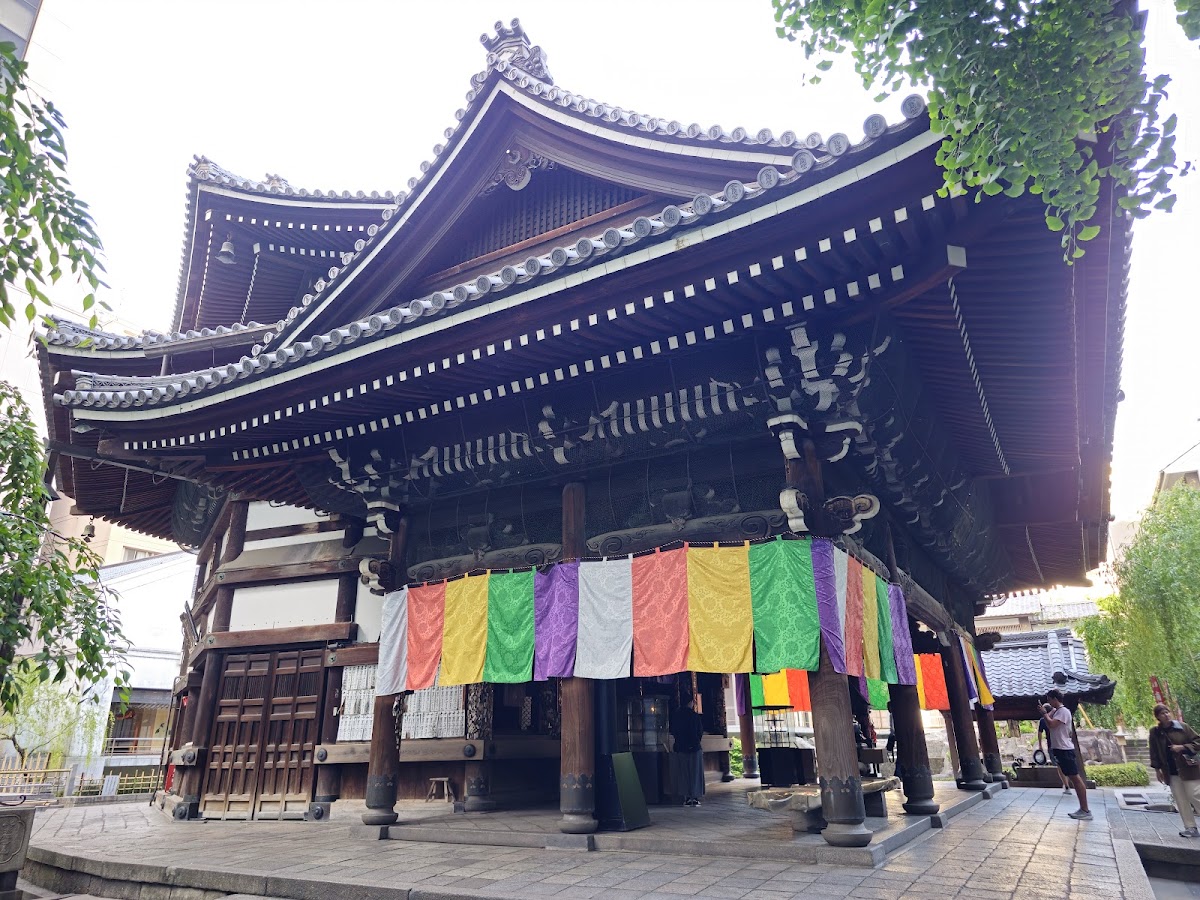
The main reason Chōhōji Temple is called “Rokkakudō” (Hexagonal Hall) is its unique architectural style, with a hexagonal floor plan. This style, called hexagonal pyramidal roof architecture, is extremely rare in Japanese temple architecture.
The hexagon holds special significance in Buddhism, symbolizing the six realms of rebirth and the six paramitas. This shape has been passed down since the time of Prince Shōtoku and is an important element in shaping the identity of Chōhōji Temple.
Structure and Features of the Main Hall
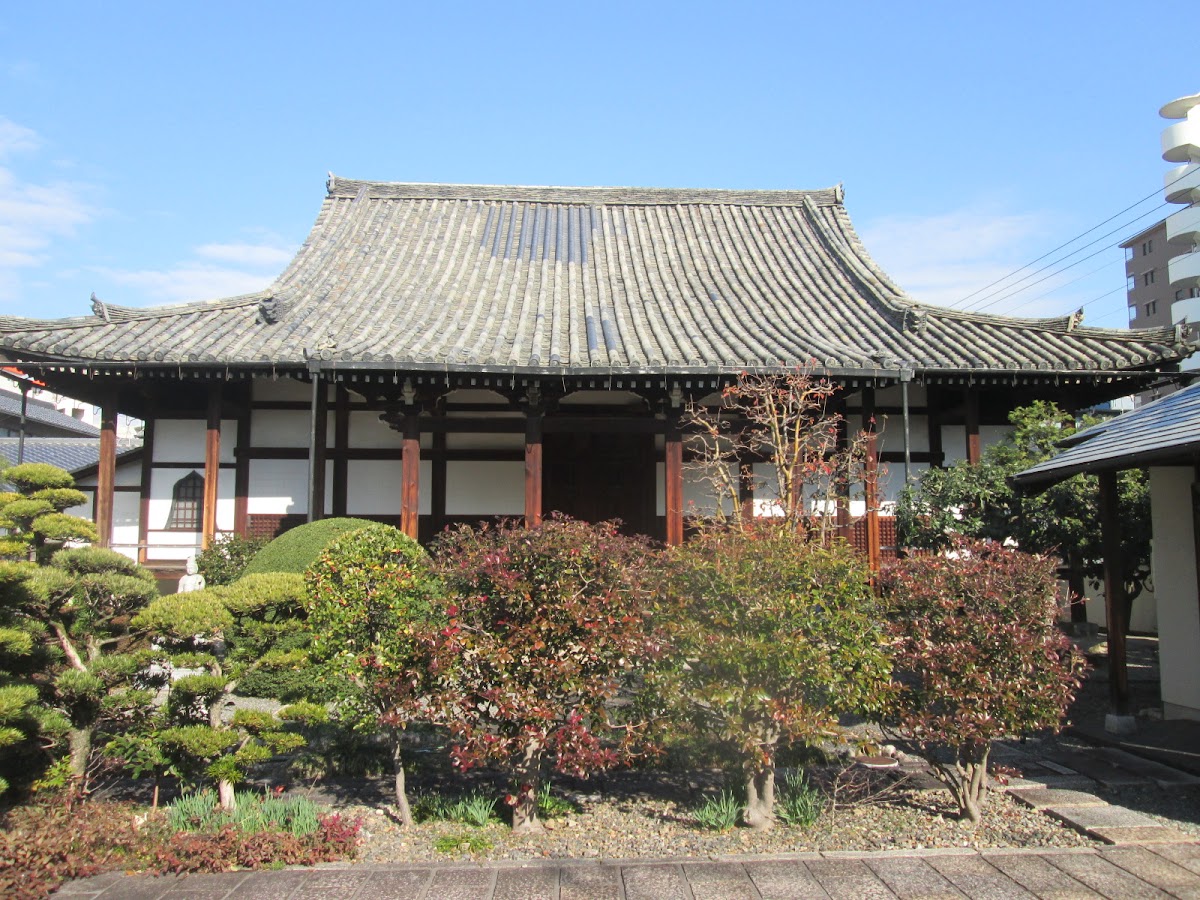
The current main hall was rebuilt in 1877 (Meiji 10) using traditional wooden construction techniques. The roof is tiled, forming a beautiful silhouette that spreads evenly from each side of the hexagon.
Inside the main hall is a worship hall where worshippers pay their respects to the principal image. The interior is enveloped in a solemn atmosphere, creating a space that evokes a long history.
Birthplace of Ikenobo School of Ikebana
Origin and History of Ikenobo
Chōhōji Temple occupies an extremely important position in the history of traditional Japanese culture as the birthplace of the Ikenobo school of Ikebana. The name Ikenobo originates from the fact that the monks’ residences on the temple grounds were located by a pond.
During the mid-Muromachi period, the monks of Chōhōji Temple honed their skills in arranging flowers as offerings to the main deity. In particular, Ikenobō Senkei was active during the Bunmei era (1469-1487) after the Ōnin War, establishing the Tatehana style of flower arrangement. This is the origin of modern Ikebana.
As the Ikenobō School of Ikebana
The Ikenobō family has traditionally served as the head priests of Chōhōji Temple, and continues to uphold the oldest Ikenobō school of flower arrangement in Japan. Within the temple grounds is the Ikenobō Kaikan, where flower arrangement lessons and exhibitions are held.
Every April, the “Hana Kuyō” (Flower Memorial Service) is held, a grand memorial service attended by people involved in flower arrangement. Also, in November, the “Ikenobō Festival” is held, celebrating the history and traditions of Ikenobō flower arrangement.
Significance as the Birthplace of Ikebana
Chōhōji Temple is not merely a base for a school of ikebana; it holds immense cultural and historical significance as the birthplace of the Japanese art form of “ikebana.” Chōhōji played a central role in the process by which the act of arranging flowers, which began as offerings to Buddha, evolved into a uniquely Japanese art form.
Even today, people from all over the world visit to study ikebana, making it a sacred site for pilgrimage as the birthplace of ikebana.
Highlights of the Temple Grounds
Heso-ishi (Navel Stone) (Stone at the Site of the Original Main Hall)
The most famous feature of the temple grounds is a stone called “Heso-ishi” (Navel Stone). This stone has a depression in the center, resembling a human navel, hence its name.
According to legend, this stone marks the site of the original main hall. Furthermore, it is said that this stone’s location corresponds to the center (navel) of Kyoto, and it is affectionately known as the “center of Kyoto.”
During the construction of Heian-kyo (Kyoto), the Rokkakudo (Hexagonal Hall) was located in the center of the road. Emperor Kanmu ordered its relocation, but legend says the hall moved northward of its own accord. The “Navel Stone” is said to mark its original location.
Taishido (Prince’s Hall)
Within the temple grounds is the Taishido, dedicated to Prince Shotoku. Devotion to Prince Shotoku, the founder of Chohoji Temple, remains strong today, and the Taishido is an important place of worship.
In front of the Taishido is a place called the “Ancient Site of Prince Shotoku’s Bathing,” which preserves the legend that the prince purified himself here.
Bell Tower and Bell
Within the temple grounds is a bell tower, where a beautiful bell hangs. This bell not only tells the time but also serves to purify the hearts of worshippers.
Willow Tree (Willow of Matchmaking)
Within the temple grounds is a willow tree known as the “Willow of Matchmaking.” Legend has it that Ariwara no Narihira, a poet of the Heian period, composed a love poem under this willow tree, making it a power spot visited by people praying for good fortune in love.
Swan Pond
There is a pond on the temple grounds where swans are kept. These swans are beloved as a symbol of Chōhōji Temple and bring peace to the hearts of visitors. It is said that the pond from which the name Ikenobō originated was also located in this vicinity.
Sixteen Arhats
Sixteen stone statues of Arhats are enshrined on the temple grounds, each displaying a unique expression. Arhats are saints who have attained the highest level of enlightenment in Buddhism and are worshipped as guardians of visitors.
Cultural Properties and Temple Treasures
Kyoto City Designated Tangible Cultural Properties
Chōhōji Temple houses several Kyoto City designated tangible cultural properties. These include buildings such as the main hall, as well as historically valuable Buddhist statues, paintings, and ancient documents.
These cultural artifacts are appropriately preserved and managed as valuable materials that tell the story of Chōhōji Temple’s long history and cultural importance.
Historical Materials
Numerous important materials for Japanese religious and cultural history are stored here, including documents related to Shinran Shōnin’s retreat and ancient documents concerning Ikenobo flower arrangement. These are also valuable historical materials for researchers.
Saigoku Thirty-Three Kannon Pilgrimage
As the 18th Temple
Chōhōji Temple has a long history as the 18th temple of the Saigoku Thirty-Three Kannon Pilgrimage. The Saigoku Thirty-Three is Japan’s oldest pilgrimage route, visiting 33 Kannon temples mainly in the Kinki region, and is said to have been established by Emperor Kazan.
Many pilgrims visit from all over the country, receive their temple stamps, and then proceed to the next temple. Located in an urban area, it is easily accessible and a convenient temple for many visitors.
Preceding and Following Temples
- Temple No. 17: Rokuharamitsu-ji Temple (Higashiyama Ward, Kyoto City)
- Temple No. 18: Chōhō-ji Temple (Rokkakudō)
- Temple No. 19: Gyōgan-ji Temple (Kakudō) (Nakagyō Ward, Kyoto City)
Three temples are located consecutively within Kyoto City, making it possible to visit multiple temples in a single day.
First Temple of the Rakuyō Thirty-Three Kannon Pilgrimage
Chōhō-ji Temple is not only the first temple of the Saigoku Thirty-Three Kannon Pilgrimage, but also the first temple of the Rakuyō Thirty-Three Kannon Pilgrimage. The Rakuyō Thirty-Three Pilgrimage is a pilgrimage route visiting Kannon temples within Kyoto City, and Chōhō-ji Temple marks its beginning.
Annual Events and Memorial Services
Main Annual Events
Hatsumode (January 1st-3rd)
The shrine is bustling with New Year’s visitors who pray for safety and happiness throughout the year.
Setsubun-e (Around February 3rd)
Events such as bean-throwing are held to pray for protection against evil.
Hana Kuyo (Early April)
Associates of the Ikenobo School of Ikebana gather for a grand memorial service where flowers are offered. This is an important event unique to the birthplace of Ikebana.
Shinran Shonin Goki (November)
Many Shinshu Buddhist followers visit due to the connection with Shinran Shonin’s stay at the shrine.
Ikenobo Festival (November)
A festival celebrating the traditions of the Ikenobo School of Ikebana, with various events taking place.
Access Information
Location
Address: 248 Dozenmae-cho, Rokkakudori Higashinotoin Nishi-iru, Nakagyo-ku, Kyoto City, Kyoto 604-8134
Access by Public Transportation
Subway
- Approximately 3 minutes on foot from Exit 5 of Karasuma Oike Station on the Kyoto Municipal Subway Karasuma Line
- The nearest station is Karasuma Oike Station on the Kyoto Municipal Subway Karasuma Line and Tozai Line
City Bus
- Within walking distance of Kyoto City Bus stops such as Karasuma Sanjo, Karasuma Oike, and Shijo Karasuma
Hankyu Railway
- Approximately 10 minutes on foot from Karasuma Station on the Hankyu Kyoto Line
Access by Car
Located in the heart of Kyoto City, there are many paid parking lots nearby. However, there is no dedicated parking lot on the temple grounds, so you will need to use a nearby coin-operated parking lot.
Visiting Information
Visiting Hours: 6:00 AM – 5:00 PM (may vary depending on the season)
Admission Fee: Free entry to the temple grounds
Temple Stamp Reception Hours: 8:00 AM – 5:00 PM (Temple stamp reception hours)
Nearby Tourist Attractions
Chohoji Temple is located in the Karasuma Oike area, the heart of Kyoto, and is surrounded by many tourist attractions.
- Nishiki Market: Approximately 10-minute walk. A shopping street known as “Kyoto’s Kitchen”
- Nijo Castle: Approximately 15-minute walk. A famous castle and World Heritage Site
- Kyoto International Manga Museum: Approximately 5-minute walk. Introducing Japanese manga culture
- Honnoji Temple: Approximately 10-minute walk. A temple associated with Oda Nobunaga
- Teramachi Street/Shinkyogoku Street: Approximately 10-minute walk. Shopping Street
Points to Note When Visiting Chōhōji Temple
Manners for Visiting
- Please quietly put your hands together in prayer at the main hall and offer your prayers with sincerity.
- The temple grounds are a sacred place, so please behave calmly and avoid making noise.
- Photography is permitted, but please be considerate of other visitors.
Recommended Time to Visit
Spring (March-May)
The cherry blossoms and fresh greenery on the temple grounds are beautiful, and events such as flower memorial services are held.
Autumn (October-November)
The autumn leaves are beautiful, and events such as the Ikenobo Festival are held, making it especially recommended for those interested in flower arrangement.
Early Morning
Since the temple opens at 6 AM, visiting in the quiet early morning hours allows you to experience a tranquil atmosphere away from the hustle and bustle of the city.
About Goshuin (Temple Seals)
At Chōhōji Temple, you can receive Goshuin for both the Saigoku Thirty-Three Kannon Pilgrimage and the Rakuyō Thirty-Three Kannon Pilgrimage. At the temple office, present your goshuincho (stamp book) and you will receive a calligraphic inscription and a red stamp.
A goshuin is not just a stamp; it is proof of your visit and a precious symbol of your connection with Buddha. Please handle it carefully and keep it safe.
Summary
Chōhōji Temple (Rokkakudō) is an ancient temple with a history of over 1400 years, associated with Prince Shōtoku, and attracts many visitors as the 18th temple of the Saigoku Thirty-Three Kannon Pilgrimage. It is a temple with multifaceted charm, possessing a unique hexagonal main hall architecture, devotion to Nyoirin Kannon, and cultural significance as the birthplace of Ikenobo, the school of flower arrangement.
Its convenient location in the heart of Kyoto makes it easily accessible for tourists and pilgrims, offering a peaceful space amidst the city. A place of worship continuing since the time of Prince Shōtoku and an important birthplace of Japanese culture, Chōhōji Temple is one of the temples you should definitely visit when visiting Kyoto.
Feel the heart of Kyoto at the Navel Stone, pray for good fortune in love at the willow tree, and offer your prayers to the principal image, Nyoirin Kannon. Then, experience the origins of Japanese culture at the birthplace of ikebana. A visit to Chohoji Temple will be a rich experience woven from history, culture, and faith.