Daioin Complete Guide | History of Myoshinji Temple’s Sub-temples, Shibata Zeshin’s Fusuma Paintings, and Special Viewing Information
Daioin Temple, located in Hanazono, Ukyo-ku, Kyoto City, is one of the sub-temples of Myoshinji Temple, the head temple of the Rinzai sect of Zen Buddhism. While normally closed to the public, it is open during the spring special viewing period, offering a rare opportunity to admire Shibata Zeshin’s valuable fusuma paintings and beautiful gardens. This article provides a detailed explanation of Daioin Temple’s history, highlights, and viewing information.
What is Daioin Temple? | A Historic Sub-temple within Myoshinji Temple
Daioin Temple is a sub-temple of Myoshinji Temple, the largest Zen temple in Japan. A sub-temple is a small temple located within the grounds of a large temple, and there are approximately 46 sub-temples scattered throughout Myoshinji Temple. Among them, Daioin Temple is known as a historical temple established in the early Edo period.
The Position of Daioin Temple within Myoshinji Temple Grounds
Myoshinji Temple is the head temple of the Myoshinji branch of the Rinzai school of Zen Buddhism, and the largest Zen Buddhist temple in Japan, with approximately 3,400 branch temples nationwide. Within its vast grounds are numerous sub-temples, each possessing its own unique history and cultural assets. Among them, Daioin Temple holds a special significance due to its deep connection with the Owari Domain and its possession of valuable works of art, including fusuma paintings by Shibata Zeshin.
The History of Daioin Temple | As the Family Temple of the Owari Ishikawa Family
Circumstances of its Founding and its Founder, Enan Genjo
Daioin Temple was established in 1603 (Keicho 8) by Ishikawa Mitsutada, a senior retainer of the Owari Domain, to commemorate his father. The founder was the renowned Zen master Enan Genjo.
Ishikawa Mitsutada served Tokugawa Ieyasu and was a prominent retainer of the Owari Domain. Out of deep filial piety to his father, he invited the renowned monk Enan Genjo to be the founding a magnificent family temple. As a result, Daioin became the Ishikawa family’s memorial temple (kogesho), and has functioned for generations as a temple for commemorating the Ishikawa family.
Role as a Memorial Temple
A kogesho is a temple that commemorates a specific family and offers incense and flowers. Daioin served as the Ishikawa family’s memorial temple, enshrining the ancestral tablets of successive generations of the Ishikawa family and conducting memorial services. This deep connection with the samurai class played a crucial role in the temple’s maintenance and development.
Reconstruction and Development in the Edo Period
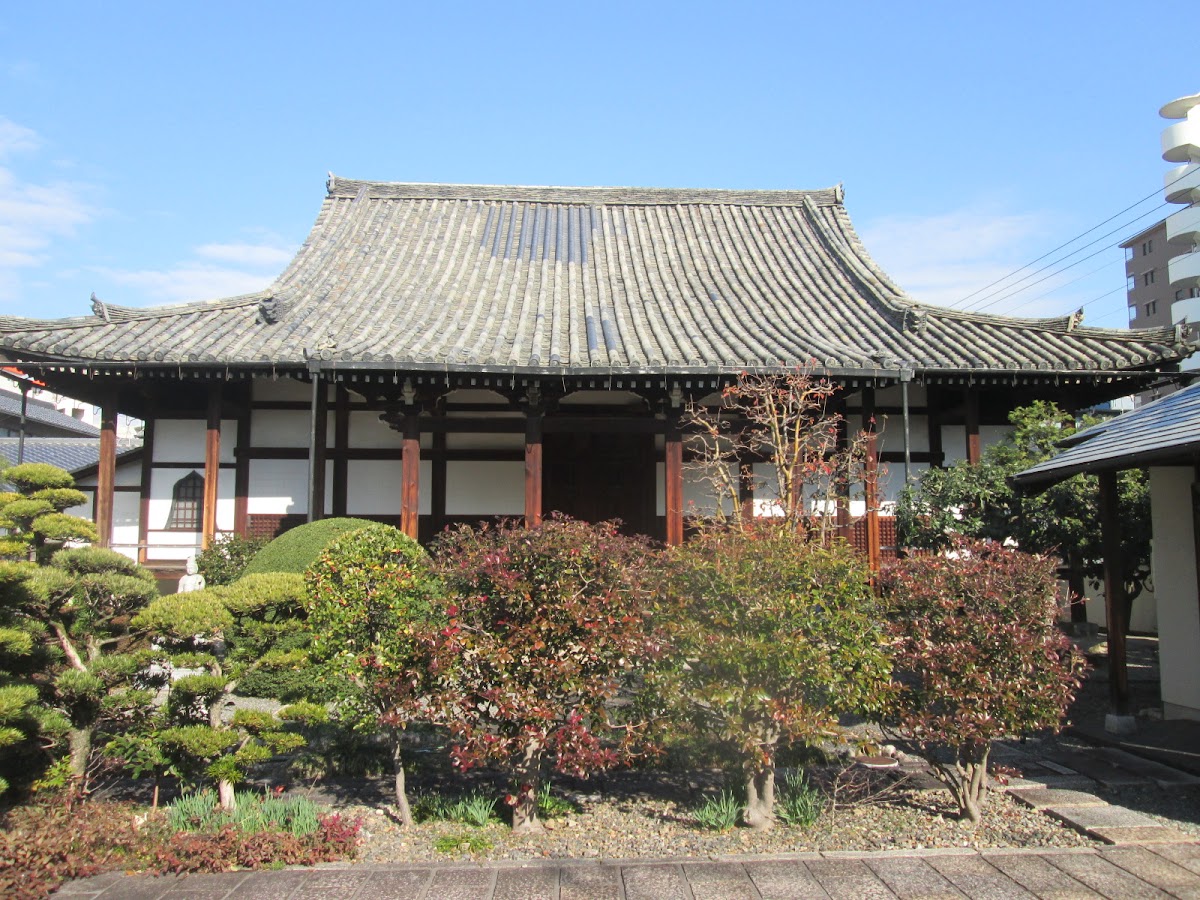
Approximately 120 years after its founding, in Kyoho 11 (1726), the guest hall and study were rebuilt. These buildings still remain today, serving as valuable cultural assets that convey the characteristics of Zen Buddhist architecture from the mid-Edo period.
The Kuri (monk’s quarters) was renovated in the late Edo period, while the Omote-mon (main gate) has stood for over 400 years since its founding. These structures are protected as Kyoto Prefecture designated cultural properties and are highly valued for their historical significance.
Daioin Temple Buildings | Numerous Kyoto Prefecture Designated Cultural Properties
Omote-mon (Main Gate) | 400 Years of History Remaining from Founding
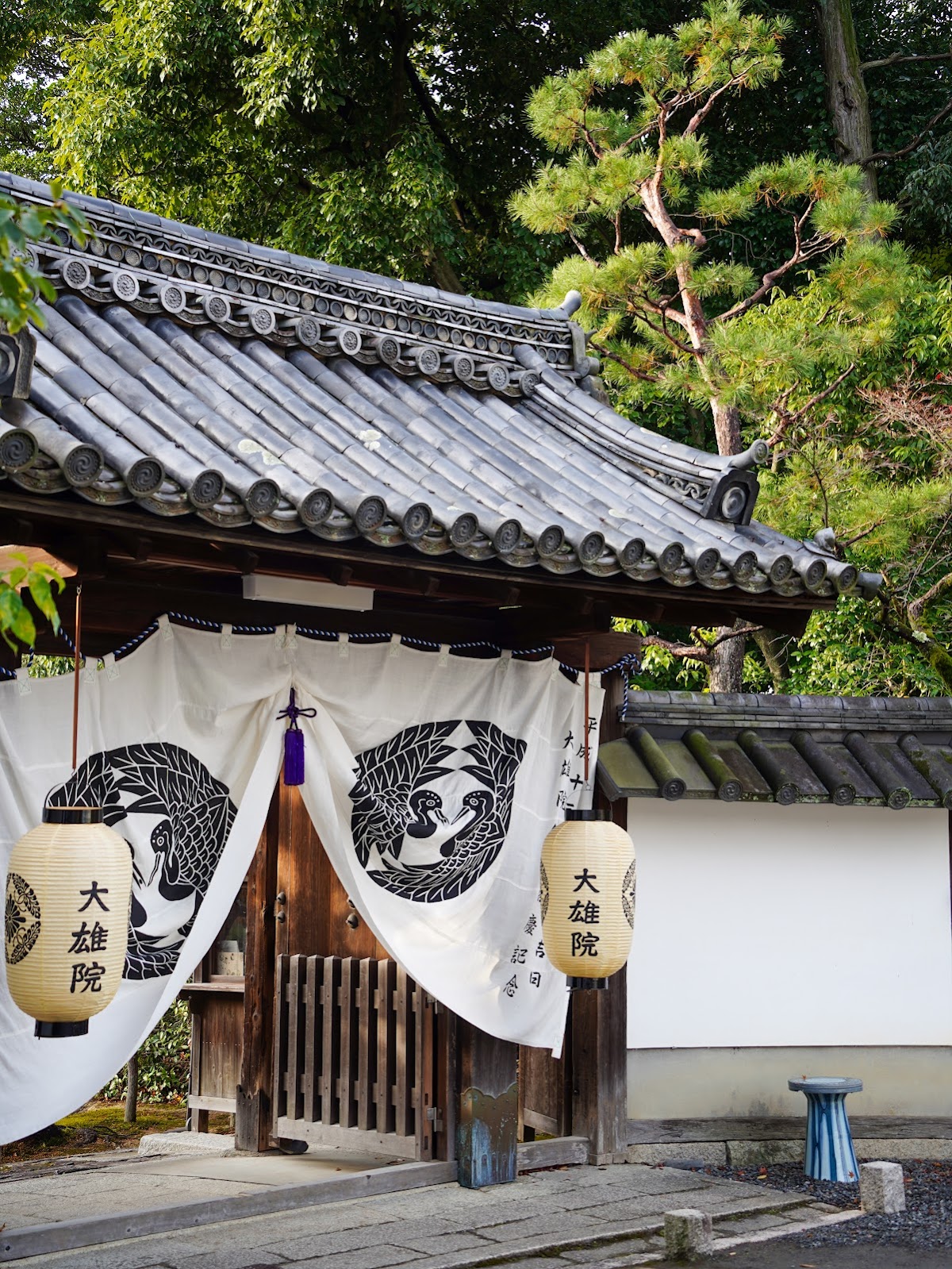
The Omote-mon of Daioin Temple is a valuable structure that has survived since its founding in 1603 (Keicho 8). It has withstood over 400 years of weathering, retaining almost its original appearance. Characterized by its simple yet dignified construction, typical of Zen Buddhist temples, it is designated as a Kyoto Prefecture designated cultural property.
Kyakuden (Abbot’s Quarters) | The Stage for Shibata Zeshin’s Fusuma Paintings
The Kyakuden, rebuilt in 1726 (Kyoho 11), is currently used as the Abbot’s Quarters. The main highlight of this building is the fusuma (sliding door) paintings by Shibata Zeshin, who was active from the late Edo period to the early Meiji period. Each room features fusuma paintings with different themes, allowing visitors to appreciate Zeshin’s diverse artistic skills.
The architectural style of the guest hall is typical of mid-Edo period Zen Buddhist abbot’s quarters and holds significant architectural historical value.
Shoin (Study) | A Space for Tea Ceremony Culture
Rebuilt at the same time as the guest hall, the shoin has been used as a place for tea ceremonies and gatherings of literati. It possesses the characteristics of shoin architecture in Zen Buddhist temples and, along with the guest hall, is a designated cultural property of Kyoto Prefecture.
Kuri (Monk’s Quarters) | Conveying Temple Life in the Late Edo Period
The kuri is a building that functions as the temple’s kitchen and living space for monks. The kuri of Daioin Temple was renovated in the late Edo period and is designated as a cultural property as a valuable building that conveys the state of temple life at that time.
Shibata Zeshin’s Fusuma Paintings | Masterpieces of a Young Genius
Who was Shibata Zeshin? | A Genius of Lacquerware and Japanese Painting
Shibata Zeshin (1807-1891) was a lacquer artist and Japanese painter who was active from the late Edo period to the Meiji era. He developed innovative techniques in lacquerware and established a unique style in Japanese painting. He was highly regarded both domestically and internationally, and in the Meiji period in particular, he served as an official painter for the Imperial Household Ministry.
The Value of the 72 Fusuma Paintings at Daioin Temple
The guest hall of Daioin Temple contains 72 screen paintings created by Zeshin in 1830. These are works from when Zeshin was 23 years old, created during his apprenticeship in Kyoto. At that time, he used the pseudonym “Reisai,” making these extremely important cultural assets for understanding Zeshin’s artistic career in his youth.
Highlights of the Fusuma Paintings in Each Room
Waterfall Monkey Painting
The “Waterfall Monkey Painting,” depicting adorable monkeys, showcases Zeshin’s talent in animal painting. The monkeys’ expressions and movements are vividly portrayed, delighting the viewer.
Guo Ziyi Painting
This fusuma painting, depicting Guo Ziyi, a famous general of the Tang Dynasty in China, possesses the dignity of a historical painting. It is a masterpiece that skillfully expresses the dignity and humanity of a military commander.
Four Seasons Flower Paintings
The “Four Seasons Flower Paintings,” placed in each room, depict various flowers such as sunflowers. This collection of works shines with Zeshin’s delicate observational skills and descriptive abilities.
Daioin Fusuma Painting Project | Revival of the Meiji Palace
In 2020, the “Daioin Fusuma Painting Project” completed an attempt to revive the floral vaulted ceiling of the Meiji Palace, originally created by Shibata Zeshin, as fusuma paintings. Eighteen vibrant fusuma (sliding door) paintings depicting 43 types of flowers have been added, successfully reviving the culmination of Zeshin’s art for the modern age.
This project is attracting attention as an important undertaking to pass on Zeshin’s achievements to future generations by recreating the lost decorations of the Meiji Palace in the form of fusuma paintings.
Daioin Temple’s Garden | A Space Expressing the Spirit of Zen
Daioin Temple boasts a garden that, while simple, evokes a profound spirituality characteristic of Zen temples. The garden, employing the dry landscape garden technique, embodies the Zen philosophy of expressing the truth of the universe through the arrangement of stones, sand, and plants.
During special viewing periods, visitors can view the garden from the guest hall, enjoying a landscape where the beauty of nature in each season harmonizes with the spirituality of Zen. The fresh greenery in spring and the vibrant green maple leaves in early summer are beautiful, quietly soothing the hearts of visitors.
Daioin Temple’s Visiting Information | Special Openings and Reservation Methods
Daioin Temple as a Normally Closed Temple
Daioin Temple is normally closed to the public. Daioin Temple is not normally open to the public and is maintained as a quiet place for spiritual practice and prayer. Therefore, special viewing periods are a rare opportunity.
Spring Special Viewing Period
Daioin Temple holds special viewings every spring. The 2026 spring special viewing is scheduled from April 18th (Sat) to May 10th (Sun). During this period, you can admire Shibata Zeshin’s fusuma paintings and gardens, which are not normally on display.
Viewing Hours and Admission Fees
During special viewing periods, viewing hours are usually from 10:00 to around 16:00, but this may change from year to year. Admission fees may also vary depending on the content of the special viewing, so it is recommended to check the official website in advance.
Reservation-Based Viewing
Even during special viewing periods, a reservation system may be in place. To avoid crowds and enjoy a leisurely viewing experience, advance reservations are recommended. For reservation methods and details, please check the official website of Daiyuin Temple or the information provided by Myoshinji Temple.
Participation in Zen Meditation and Sutra Copying Sessions
Daiyuin Temple sometimes holds experiential programs such as Zen meditation and sutra copying sessions during special viewing periods. These are popular with many participants as a valuable opportunity to experience the spirit of Zen. Those wishing to participate are advised to check the dates, times, and participation methods in advance and make a reservation.
Access | How to Get to Myoshinji Temple
Access by Public Transportation
Daiyuin Temple is located within the grounds of Myoshinji Temple. You can access Myoshinji Temple using the following methods:
If using JR
- Get off at Hanazono Station on the JR Sagano Line, approximately 5 minutes on foot.
If using city bus
- Get off at Myoshinji-mae bus stop on the Kyoto City Bus, approximately 3 minutes on foot.
- Get off at Myoshinji Kitamon-mae bus stop on the Kyoto City Bus, immediately adjacent.
If using Randen (Keifuku Electric Railway)
- Get off at Myoshinji Station on the Randen Kitano Line, approximately 3 minutes on foot.
Access by car
Myoshinji Temple has a parking lot for visitors, but the number of spaces is limited. During special viewing periods, congestion is expected, so we recommend using public transportation.
Nearby attractions | Other sub-temples within Myoshinji Temple grounds
Besides Daioin, there are many other attractive sub-temples within Myoshinji Temple grounds.
Taizoin Temple
This sub-temple houses the national treasure, the Hyōnen-zu (gourd and catfish painting), and is known for its garden, “Motonobu’s Garden,” designed by Kano Motonobu, and the famous Showa-era garden, “Yokoen.”
Keishun-in Temple
This sub-temple boasts a beautiful garden embodying the beauty of wabi (simplicity and tranquility), and is open to the public year-round.
Torin-in Temple
Known as the “Temple of the Sal Trees,” its sal blossoms are beautiful in early summer.
Guidelines for Visiting Daio-in Temple | Manners When Visiting Zen Temples
Maintain Silence
Zen temples are places of spiritual training. Please refrain from loud conversations and noisy behavior, and observe quietly.
Regarding Photography
Photography of cultural properties such as fusuma paintings may be prohibited. Even in areas where photography is permitted, the use of flash is often prohibited for cultural property protection reasons, so please check in advance.
Removing and Putting On Shoes
Please remove your shoes when visiting the main hall. Please arrange your shoes neatly after removing them.
Visiting Only Designated Areas
Please do not enter areas where entry is prohibited, and follow the designated route.
Annual Events at Daioin Temple | Life in a Zen Temple
Daioin Temple, as a Zen Buddhist temple, holds various annual events.
Spring and Autumn Equinoxes
A memorial service for ancestors is held.
Founder’s Memorial Service
A memorial service to commemorate the founder, Zen Master Enan Genjo.
Zen Meditation and Sutra Copying Sessions
These are held regularly, and may be open to the public.
Daioin Temple and Cultural Property Protection | Passing on to the Future
The buildings and sliding screen paintings of Daioin Temple are protected as Kyoto Prefecture designated cultural properties. Appropriate preservation and management are carried out to pass on these valuable cultural properties to future generations.
The admission fees collected during special viewings are used for the preservation, repair, and maintenance of these cultural properties. Visiting these sites also contributes to the protection of cultural heritage.
Summary | Experience the Charms of Daioin Temple
Daioin Temple is a sub-temple of Myoshinji Temple, established in 1603 by Ishikawa Mitsutada, a senior retainer of the Owari Domain, as his father’s family temple. With the arrival of its founder, Enan Genjo, it has a history of over 400 years as the Ishikawa family’s place of worship.
The buildings, including the main gate, guest hall, study, and kitchen, which are designated cultural properties of Kyoto Prefecture, still convey the characteristics of Edo period Zen Buddhist architecture. In particular, the 72 fusuma paintings by Shibata Zeshin remaining in the guest hall are highly valued as a precious collection of works demonstrating the young Zeshin’s talent.
While normally closed to the public, these valuable cultural properties are open during the special spring viewing period, allowing visitors to appreciate them up close. The special spring viewing of Daioin Temple in 2026 is scheduled from April 18th to May 10th.
Spending time in the tranquil atmosphere of this Zen temple, experiencing the art of Shibata Zeshin, and admiring the beautiful gardens will be a special experience away from everyday life. When visiting Kyoto, be sure to visit Daioin Temple for its special viewing and experience its charm.
When visiting, we recommend checking the official website in advance for the period, time, admission fee, and whether reservations are required, and respecting cultural heritage preservation and manners while quietly experiencing the world of Zen.