Complete Guide to Dairakuji Temple: A Thorough Explanation of Famous Temples Nationwide, Including History, Cultural Assets, and Access
The name “Dairakuji” refers to Buddhist temples located throughout Japan. Each has its own unique history and culture, and has played an important role as a center of local faith. This article provides a detailed explanation of Dairakuji temples, particularly those in Usa City, Oita Prefecture; Ota Ward, Tokyo; Kawasaki City, Kanagawa Prefecture; Hikari City, Yamaguchi Prefecture; and Joso City, Ibaraki Prefecture, covering their history, cultural assets, visiting information, and transportation access.
What is Dairakuji?: An Overview of Famous Temples Nationwide
The name Dairakuji means “Great Joy (Peace and Bliss)” in Buddhism, and is often given to temples that pray for the salvation and peace of all sentient beings. Temples with the same name exist throughout Japan, each with different sects, histories, and origins.
The following are some of the major Dairakuji temples:
- Dairakuji Temple in Usa City, Oita Prefecture (Koyasan Shingon sect): An ancient temple known as a historical site second only to Usa Hachimangu Shrine.
- Dairakuji Temple in Ota Ward, Tokyo (Shingon Chizan sect): A temple with a 1,300-year history, affectionately known as Kamata Fudōson.
- Dairakuji Temple in Kawasaki City, Kanagawa Prefecture (Shingon Chizan sect): A temple deeply rooted in the community, known as Kizukizan Henjōin.
- Dairakuji Temple in Hikari City, Yamaguchi Prefecture (Soto Zen sect): A Zen temple known as Tokumanzan.
- Dairakuji Temple in Jōsō City, Ibaraki Prefecture (Jōdo sect): A historical temple founded at the end of the Heian period.
- Dairakuji Temple in Toyama Prefecture: A temple whose predecessor was Chōtokuji Temple of the Tendai sect, established by imperial decree of Emperor Kazan.
These temples contribute to their respective communities through religious activities such as exorcism prayers, ossuaries, funerals, and memorial services.
Dairakuji Temple, Usa City, Oita Prefecture: An Ancient Temple Where the Buddhist Culture of Hachiman Usa Shrine Thrives
A Historic and Prestigious Sacred Site
Located at 2077 Minami-Usa, Usa City, Oita Prefecture, Dairakuji Temple, a Shingon Buddhist temple of the Koyasan sect, is a historic temple founded in 1333. It was established as the family temple of the Itozu clan, with the invitation of the monk Domitsu from Saidaiji Temple in Nara to be its founding abbot by Itozu Kimitsura, who was the chief priest of Usa Shrine.
The following year, in 1334, it was designated an imperial prayer temple by Emperor Go-Daigo, establishing its status as a nationally important temple. Following Usa Hachiman Shrine, it remains a valuable historical site in Usa City, attracting many visitors even today.
A Shingon Buddhist Temple Where the Buddhist Culture of Usa Hachiman Still Thrives
Dairakuji Temple, closely connected to Usa Shrine, is an important temple that preserves the history of Shinto-Buddhist syncretism. Usa Hachiman flourished as a center of Shinto-Buddhist syncretism from ancient times, and Dairakuji Temple continues this tradition of Buddhist culture.
Based on the teachings of the Koyasan Shingon sect, esoteric Buddhist rituals and prayers are performed here, and it has functioned as a center of local faith. The unique religious culture, a fusion of the solemn rituals of Shingon esoteric Buddhism and Hachiman worship, is a major characteristic of this temple.
Valuable Cultural Assets Including National Important Cultural Properties
Dairakuji Temple in Usa houses numerous cultural assets, including nationally designated Important Cultural Properties. These cultural assets are extremely important resources for understanding Buddhist art and architectural styles in the Usa region from the medieval to early modern periods.
The Buddhist statues, paintings, and ancient documents held by the temple are valuable historical materials that demonstrate its relationship with the Itozu clan and Usa Shrine, and are indispensable for the study of local history.
Faith as a Temple for Protection Against Misfortune
In recent years, Dairakuji Temple in Usa City, Oita Prefecture, has gained widespread faith as a “temple for protection against misfortune.” The Shingon Esoteric Buddhism prayers for protection against misfortune are highly regarded by many visitors for their effectiveness.
People facing their unlucky years, as well as those with various wishes such as family safety, traffic safety, and business prosperity, visit the temple and receive careful prayers from the monks.
Information on the Columbarium
Dairakuji Temple in Usa also has a columbarium that meets modern needs. For those who wish for perpetual memorial services at a traditional temple, we provide a clean and well-maintained columbarium facility.
Prior consultation and tours of the columbarium are available, and you will receive a thorough explanation. We accept people of all denominations and accommodate diverse forms of memorial services.
Location and Access
Location: 2077 Minami-Usa, Usa City, Oita Prefecture
Access:
- Approximately 10 minutes by car from JR Nippo Main Line “Usa Station”
- Approximately 15 minutes by car from Oita Airport Expressway “Usa IC”
- Within walking distance of Usa Shrine
Located in a convenient location for visiting Usa Shrine, it is ideal as part of a pilgrimage course to experience Usa’s history and culture.
Dairakuji Temple, Ota Ward, Tokyo: An Ancient Temple Affectionately Known as Kamata Fudōson
A Temple with 1,300 Years of History
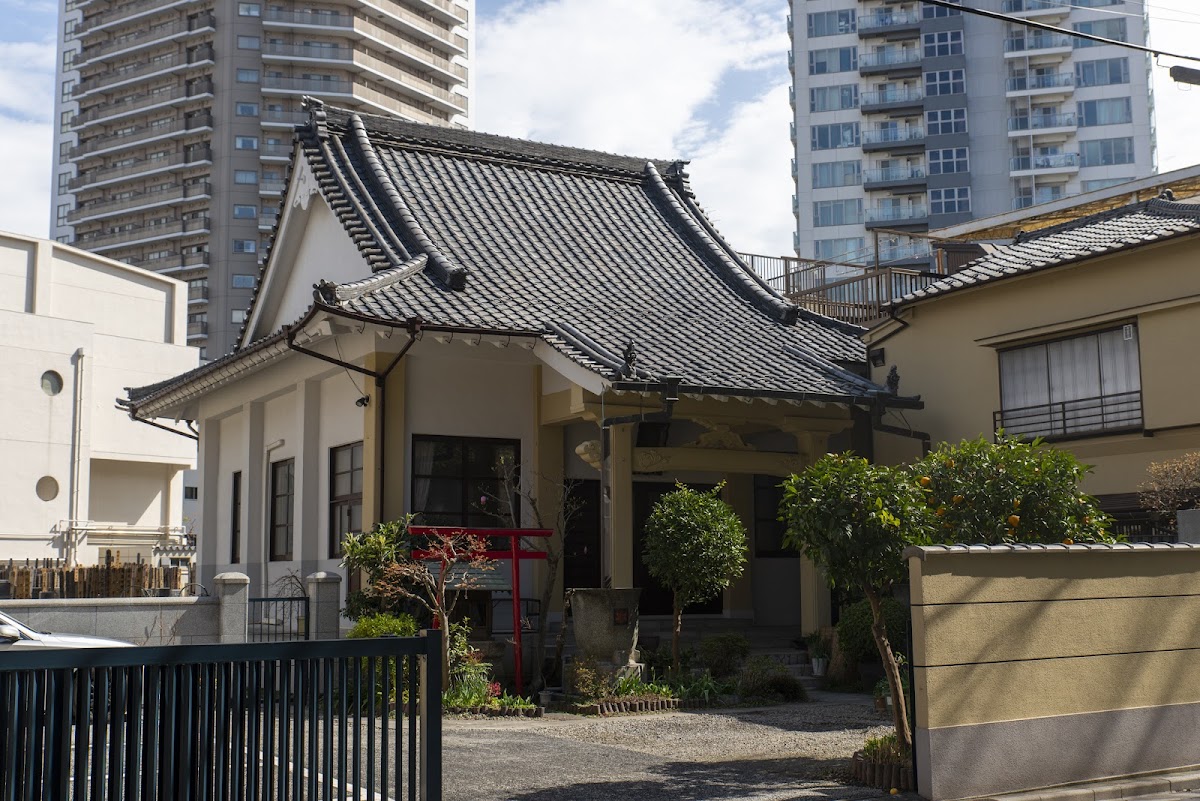
Dairakuji Temple, located in Shin-Kamata, Ota Ward, Tokyo, is a temple belonging to the Shingon Chizan sect and is said to have been founded in 1019. With a history of over 1,000 years, it is affectionately known as Kamata Fudōson by local residents.
During the Kamakura period, it was known as Gokuraku-ji Temple and flourished as a magnificent temple complex with seven main halls. The foundation stones of the gate were unearthed approximately 200 meters south of the current location, attesting to its immense size at the time.
A “Large and Fun Temple” Associated with Tokugawa Hidetada, the Second Shogun
A major characteristic of Dairaku-ji Temple is its connection to Tokugawa Hidetada, the second shogun. It is permitted to use the Aoi crest as its temple emblem, demonstrating its deep relationship with the Tokugawa family.
The catchphrase “A Large and Fun Temple” is a modern interpretation of the temple’s name, “Dairaku,” expressing its approachable and open nature. It continues to play an important role as a temple easily accessible to local residents.
Faith as Kamata Fudo-son
Dairaku-ji Temple is known as “Kamata Fudo-son,” a center of faith with Fudo Myoo (Acala) as its principal deity. Fudo Myoo (Acala) is believed to possess the power to sever worldly desires and ward off evil, attracting many worshippers seeking protection from misfortune and the fulfillment of their wishes.
Monthly temple festivals and year-round religious services are held, drawing the faith of the local community. The Goma (fire ritual) in particular, a traditional practice of Shingon Esoteric Buddhism, is highly regarded by many believers.
Location and Access
Location: Shin-Kamata, Ota-ku, Tokyo
Access:
- Within walking distance of Kamata Station on the JR Keihin-Tohoku Line, Tokyu Tamagawa Line, and Ikegami Line
- Also accessible from Keikyu Kamata Station
Despite being located in the heart of Tokyo near Kamata Station, the temple grounds maintain a tranquil atmosphere, offering a peaceful oasis for visitors.
Dairakuji Temple, Kawasaki City, Kanagawa Prefecture: Kizukizan Henjoin
Located at 4-22-32 Kizuki, Nakahara-ku, Kawasaki City, Kanagawa Prefecture, Dairakuji Temple is a Shingon-shu Chizan-ha temple, officially known as Kizukizan Henjoin Dairakuji.
Community-Based Temple Activities
Dairakuji Temple is a temple deeply rooted in the local community, conducting religious activities such as funerals, memorial services, and ancestral worship. It also has an attached funeral hall, providing comprehensive services from funerals to memorial services.
Operation of Sakurahato Gakuen Dairaku Kindergarten
A distinctive activity of Dairakuji Temple is the operation of Sakurahato Gakuen Dairaku Kindergarten. It practices early childhood education based on Buddhist principles, contributing to community childcare support. This integrated activity between the temple and an educational institution is a good example of the social role of temples in modern times.
Access
Location: 4-22-32 Kizuki, Nakahara-ku, Kawasaki City, Kanagawa Prefecture
Access:
- Within walking distance from Motosumiyoshi Station on the Tokyu Toyoko Line
- Also accessible from Musashi-Kosugi Station on the Tokyu Toyoko Line
Dairakuji Temple in Hikari City, Yamaguchi Prefecture: A Soto Zen Buddhist Temple on Tokumanzan Mountain
Dairakuji Temple, located at 299 Asae, Hikari City, Yamaguchi Prefecture, is a Zen Buddhist temple belonging to the Soto school. It has the mountain name and temple name Tokumanzan Dairakuji and functions as a Zen training dojo.
Teachings and Practice of the Soto School
The Soto school is a Zen school based on Shikantaza (simply sitting in meditation). Dairakuji Temple in Hikari City engages in activities to spread the teachings of Zen to the general public through Zen meditation sessions and sutra copying sessions.
Access
Location: 299 Asae, Hikari City, Yamaguchi Prefecture
Access:
- Approximately 10 minutes by car from JR Sanyo Main Line “Hikari Station”
- Approximately 15 minutes by car from Sanyo Expressway “Kumage IC”
Daigakuji Temple, Joso City, Ibaraki Prefecture: An ancient temple founded in the late Heian period
Dairakuji Temple, located in Mizukaido Hashimoto-cho, Joso City, Ibaraki Prefecture, is a Jodo sect temple whose official name is Rendaizan Ryochiin Daigakuji.
Over 860 Years of History
Founded in the late Heian period, it is an ancient temple with a history of over 860 years. Based on the teachings of the Jodo sect, it preaches rebirth in paradise through chanting the Buddha’s name and has attracted the faith of the local community.
Operation of Mitsukaido Certified Children’s Center
As the school corporation Daigakuji Gakuen, we operate the Mitsukaido Certified Children’s Center. Through education based on Buddhist principles, we contribute to local childcare support and the development of the next generation.
Access
Location: Hashimoto-cho, Mizukaido, Joso City, Ibaraki Prefecture
Access:
- Within walking distance from Mizukaido Station on the Kanto Railway Joso Line
Dairaku-ji Temple in Toyama Prefecture: A History of Imperial Establishment by Emperor Kazan
Dairaku-ji Temple, located in Toyama Prefecture, has a history dating back to its founding in the Heian period at the behest of Emperor Kazan.
Establishment as an Imperial Temple for National Peace and Security
During the Heian period, due to the frequent occurrence of disasters and epidemics throughout the country, Emperor Kazan prayed for national peace and security and established this temple as an imperial temple bearing the era name. Its predecessor was the Tendai sect’s Chotoku-ji Temple, built as a magnificent temple.
The history of its founding by imperial decree demonstrates the high status of this temple, and it has played a role as a religious and cultural center in the region.
Manners and Worship Procedures When Visiting Dairakuji Temple
Basic Worship Manners
When visiting a temple, please observe the following basic manners:
- Bow at the Temple Gate: Bow at the temple gate before entering the temple grounds.
- Purification at the Water Basin: Purify your hands and mouth before praying.
- Remain Quiet: Walk quietly within the temple grounds and refrain from loud conversations.
- Consideration for Photography: Refrain from taking photos in areas where photography is prohibited, and be considerate even in permitted areas.
- Worship at the Main Hall: Join your hands in prayer and pray quietly.
Regarding Prayer and Use of the Columbarium
If you wish to receive prayers for protection against misfortune or use the columbarium, it is recommended that you contact the temple in advance to make a reservation or consultation. Each temple will provide you with detailed guidance.
Annual Events at Various Daigakuji Temples
Each Daigakuji temple holds various Buddhist services and events throughout the year:
- New Year: First shrine visit of the year, Shusho-e (New Year’s service)
- Spring: Spring equinox service, Hana Matsuri (Buddha’s birthday celebration)
- Summer: Obon festival, Segaki service
- Autumn: Autumn equinox service
- Winter: New Year’s Eve bell ringing
In addition, monthly temple fairs and regular services are held at each temple. Details can be found on each temple’s official website or by contacting them directly.
Cultural Assets and Highlights of Daigakuji Temples
Architectural Style Characteristics
Each Daigakuji temple reflects the architectural style of its respective era and region. You can see the layout of temple buildings and construction techniques from the medieval to early modern periods, making them valuable from an architectural history perspective.
Buddhist Statues, Paintings, and Other Art Objects
In particular, Dairakuji Temple in Usa City preserves valuable Buddhist art objects, including those designated as National Important Cultural Properties. These are important resources for understanding medieval Buddhist art.
Ancient Documents and Records
Each temple preserves ancient documents and records documenting its history since its founding. These are valuable historical materials for regional history research.
The Role of Dairakuji Temple in Modern Times
As a Center of the Local Community
Even in modern times, Dairakuji Temple plays a role as a spiritual pillar of the local community. It functions not only as a place for ancestral worship through funerals and memorial services, but also as a gathering place for local people.
Educational and Welfare Activities
Several Dairakuji Temples operate kindergartens and children’s centers, practicing education based on Buddhist principles. This is an important aspect of the temple’s social contribution activities.
Protection and Inheritance of Cultural Properties
Preserving valuable cultural properties and passing them on to future generations is also an important mission of Dairakuji Temple. Through regular restoration and preservation activities, the temple continues to protect its historical heritage. ## Summary: Diversity and Commonalities of Dairakuji Temples
Dairakuji temples, located throughout Japan, each possess their own unique history and characteristics, yet they all fulfill a common mission as Buddhist temples.
Common Characteristics:
- Role as a center of local faith
- Prayers for ancestral veneration and worldly benefits
- Protection and preservation of cultural properties
- Contribution to the local community
Individuality of Each Temple:
- Usa City: An ancient temple of Hachiman faith possessing a nationally important cultural property
- Ota Ward: An urban temple affectionately known as Kamata Fudōson
- Kawasaki City: A temple that focuses on educational activities, including kindergarten operation
- Hikari City: A Soto Zen temple with the characteristics of a Zen training dojo
- Jōsō City: An ancient temple that transmits the Nembutsu faith as a Jōdo sect temple
- Toyama Prefecture: A prestigious temple with a history of being established by imperial decree
The name Dairakuji embodies the desire of people seeking “great peace and comfort” in Buddhism. Visiting various Daigakuji temples throughout Japan will allow you to experience the diversity and richness of Japanese Buddhist culture.
Those wishing to visit are advised to check the latest information through each temple’s official website or by telephone. Each Daigakuji temple continues to offer peace of mind and spiritual support to its visitors.