Complete Guide to Enichiji Temple | Exploring the National Historic Site and the Footsteps of Tokuichi Daishi in Bandai Town, Fukushima Prefecture
Located in Bandai Town, Yama District, Fukushima Prefecture, Enichiji Temple is a representative ancient temple of the Tohoku region, founded in 807 AD (Daido 2) by the renowned monk Tokuichi Daishi. Formerly known as “Eijiji,” it flourished as a center of Aizu Buddhist culture, but was temporarily abandoned during the anti-Buddhist movement of the Meiji era. Currently, it has been restored as a temple of the Buzan branch of the Shingon sect, and the temple remains from the Heian period are designated as a national historic site, “Eijiji Temple Ruins.”
This article comprehensively introduces information you should know before visiting Enichiji Temple, including its history, highlights, cultural properties, and transportation access.
The History of Enichi-ji Temple and Tokuichi Daishi
Founded in the Early Heian Period
Enichi-ji Temple was founded in the early Heian period, in 807 (Daido 2), by Tokuichi Daishi, a high-ranking priest from Nanto (Nara). Tokuichi was known as a scholar of the Hossō sect and a central figure in the propagation of Buddhism in the eastern provinces (Kanto and Tohoku).
Tokuichi Daishi established many temples in the Aizu region, but Enichi-ji Temple developed into the largest of them all. It flourished as a center of Buddhist culture in the Aizu region, linked to mountain worship with Mount Bandai as a sacred mountain.
Debates Between Tokuichi Daishi and Saichō/Kūkai
Tokuichi Daishi is known for his fierce doctrinal debates with Saichō of the Tendai sect and Kūkai of the Shingon sect, from the standpoint of the Hossō sect. In particular, the “San’ichi Gonjitsu Sōron” (Debate on the Three Vehicles and the True Reality) exchanged between Tokuitsu and Saichō is recorded as an important debate in the history of Japanese Buddhism.
In this debate, the “Three Vehicles True Theory” of the Hossō school and the “One Vehicle True Theory” of the Tendai school clashed. Tokuitsu asserted his theory through works such as “Busshōshō” and “Chūhen Gikyō,” while Saichō countered with works such as “Shugo Kokkai Shō.” This intellectual debate greatly contributed to the development of Buddhist teachings in the Heian period.
The Thriving Period in the Middle Ages
From the Heian period to the Kamakura period, Enichi-ji Temple continued to develop as the largest temple in the Aizu region. At its peak, it is said to have had 300 monks, several thousand warrior monks, 180,000 koku of temple land, and 3,800 sub-temples.
The temple grounds extended 2 kilometers east to west and 1.5 kilometers north to south, and in addition to the main buildings such as the main hall, lecture hall, middle gate, and south gate, numerous other halls and pagodas stood there. It is believed to have formed a magnificent temple landscape with Mount Bandai as a backdrop.
Decline and Restoration during the Sengoku Period
During the Sengoku period (Warring States period), Enichiji Temple was caught up in the conflicts of the Aizu region and gradually declined. Many of its halls and pagodas were destroyed by repeated fires, including the Battle of Suriagehara in 1589.
During the Edo period, it was partially restored under the patronage of Aizu domain lord Hoshina Masayuki and the Matsudaira family, but it was never able to regain its former prosperity.
Anti-Buddhist Movement in the Meiji Era and Modern Restoration
Due to the anti-Buddhist movement in the early Meiji period, Enichiji Temple was abolished in 1873. Many temple buildings were destroyed, Buddhist statues and artifacts were scattered, and the temple’s history, which had lasted for nearly 1200 years, was temporarily interrupted.
However, in 1904 (Meiji 37), thanks to the efforts of local volunteers, it was restored as “Eiji-ji Temple.” At this time, the sect was changed to the Shingon-shu Buzan-ha, and the temple name was also changed from “Eiji-ji” to “Eiji-ji.” The current Eiji-ji Temple is a small temple built on the site of the former main hall, but it carries on the traditions of Eiji-ji Temple.
Remains of the National Historic Site, Eiji-ji Temple Site
History of Historic Site Designation
The temple remains dating back to the Heian period were designated as a national historic site in 1970 (Showa 45) as “Eiji-ji Temple Site.” Later, in 2007 (Heisei 19), an additional designation was made, and the historic site area now covers approximately 15 hectares.
Since 1987, Bandai Town has continuously conducted archaeological excavations, revealing the locations and scales of major temple buildings such as the main hall (Kondo), middle gate (Chumon), and lecture hall (Kodo). Based on these findings, development as a historical park is underway.
Main Hall Site and Reconstructed Building
The main hall (Kondo) was the central building of Enichi-ji Temple, housing the principal image of worship. Archaeological excavations revealed it was a foundation stone building approximately 22 meters east-west and 15 meters north-south.
In 2008, the main hall was reconstructed to commemorate the 1200th anniversary of the temple’s founding. The reconstructed building was designed based on the findings of the excavations and Heian period architectural styles, resulting in a magnificent structure that evokes the temple’s original appearance. A seated statue of Yakushi Nyorai (Medicine Buddha) is enshrined inside.
Middle Gate and Niomon Gate
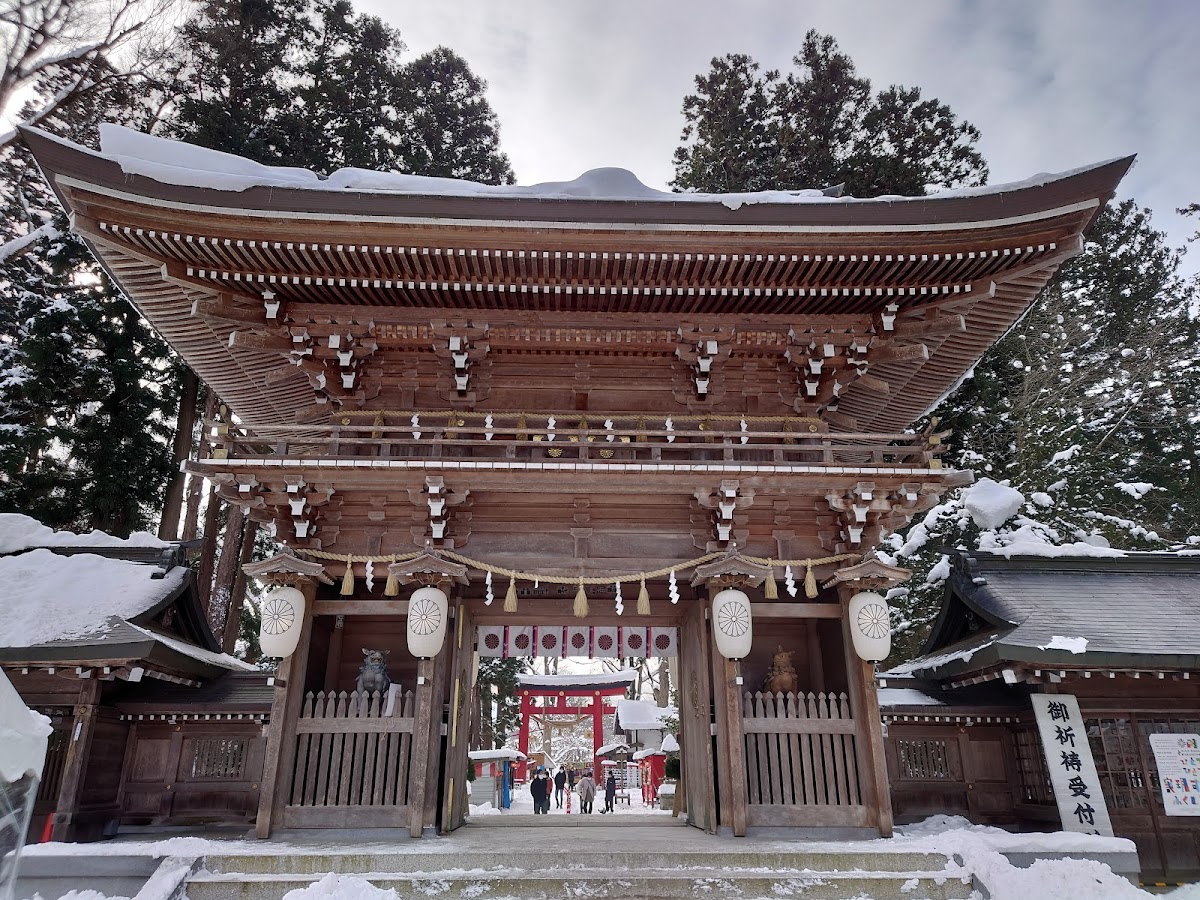
To the south of the main hall are the remains of the middle gate (Chumon), and further south, the remains of the South Gate (Nandaimon) have been identified. In 2013 (Heisei 25), the main gate was restored and the Nio statues were enshrined.
The Nio statues, created during the Edo period, were originally located at Enichi-ji Temple and are now housed in the restored building. Their powerful forms recreate their original appearance as guardian deities welcoming worshippers.
Lecture Hall Ruins and Temple Grounds Remains
The remains of the lecture hall have been confirmed north of the main hall. The lecture hall was a building where monks studied scriptures, and it was a large structure measuring approximately 30 meters east-west and 15 meters north-south.
In addition, the remains of the bell tower, sutra repository, and refectory have been confirmed through archaeological excavations, providing valuable information for understanding the layout of a large-scale temple complex from the Heian period.
Stone Paving Remains and Garden Remains
Stone paving remains and pond remains have also been discovered within the temple grounds, indicating that the temple possessed garden-like elements that formed part of its landscape. In particular, the stone paving around the main hall is thought to have been used as a path and ceremonial space.
Mount Bandai and Mountain Worship
Sacred Mountain Worship of Mount Bandai
Eiji-ji Temple (Keinichi-ji) is located at the southern foot of Mount Bandai and was deeply connected to mountain worship that regarded Mount Bandai as a sacred mountain. Mount Bandai has long been revered as a mountain where gods reside and was also considered an important training ground for Shugendo practitioners.
It is said that Tokuichi Daishi positioned Mount Bandai as “Aizu Bandai-san” in a Buddhist context and conducted mountain asceticism using Keiji-ji Temple as his base. Bandai Myojin was enshrined at the summit of Mount Bandai, forming a syncretic form of Shinto-Buddhist belief.
Mountain Buddhism in Aizu
The mountain Buddhism of Aizu, centered around Keiji-ji Temple, represents a distinctive feature of Buddhist culture in the Tohoku region. It formed a broad sphere of influence encompassing sacred mountains such as Mount Bandai, Mount Iide, and Mount Azuma, attracting many Shugendo practitioners and pilgrims.
This mountain worship later led to the establishment of the Aizu Thirty-Three Kannon Pilgrimage, and even today, Enichiji Temple remains a pilgrimage site as an extra temple.
Cultural Properties of Enichiji Temple
Important Cultural Properties
The following items are designated as important cultural properties related to Enichiji Temple and the Enichiji Temple ruins:
White Bronze Three-Pronged Vajra: A Buddhist ritual implement made during the Heian period, said to be associated with Tokuichi Daishi. Its exquisite craftsmanship demonstrates the high level of metalworking technology of the time.
Ink-Written Rice Planting Song: A valuable document concerning agricultural rituals of the medieval period.
Colored Silk Painting of Enichiji Temple: A complete map of the temple drawn during the Edo period, an important document for understanding the layout of the temple complex at the time.
Prefectural and Town Designated Cultural Properties
Numerous Buddhist statues, ancient documents, and archaeological materials are preserved as designated cultural properties of Fukushima Prefecture and Bandai Town. These are exhibited and stored at the Bandai-san Enichi-ji Temple Museum and are open to the public.
Bandai-san Enichi-ji Temple Museum
Museum Overview
The Bandai-san Enichi-ji Temple Museum is a museum facility that opened in 1987. It exhibits the history and cultural properties of Enichi-ji Temple and displays the results of archaeological excavations.
The museum is located within the historical park and, along with the reconstructed main hall and middle gate, is a facility where visitors can experience the history of Enichi-ji Temple. In the exhibition rooms, Buddhist statues, Buddhist implements, ancient documents, and excavated artifacts are displayed in chronological order, providing an easy-to-understand explanation of the 1200-year history of Enichi-ji Temple.
Main Exhibits
Permanent Exhibition: This exhibition traces the history of Enichi-ji Temple, from the founding of Tokuichi Daishi and Enichi-ji Temple, through its prosperity in the Heian and medieval periods, its decline during the Sengoku period, the anti-Buddhist movement of the Meiji era, and its modern revival.
Archaeological Materials: This exhibit displays roof tiles, pottery, and metal artifacts unearthed during archaeological excavations, explaining temple life and architectural techniques of the time. The round and flat roof tiles, in particular, are valuable resources for understanding Heian period roof tile production techniques.
Buddhist Art: This exhibit displays religious art objects such as Buddhist statues, paintings, and implements. These are important works that demonstrate the level of faith and art at Enichi-ji Temple.
Experiential Programs
The museum also offers experiential programs such as sutra copying and Zen meditation (reservations required). These programs allow for a deeper understanding of Buddhist culture.
Highlights and Recommended Itinerary of Enichiji Temple
Highlights of Visiting the Temple
Restored Main Hall: A magnificent building that recreates the architectural style of the Heian period, housing a seated statue of Yakushi Nyorai (Medicine Buddha). The contrast between the vermilion pillars and white walls is beautiful, making it a popular photo spot.
Niomon Gate: The main gate, adorned with powerful Nio statues, welcomes visitors.
Historical Site Park: The vast temple grounds feature a map of the original temple layout, allowing visitors to imagine the magnificent temple landscape of the past.
View of Mount Bandai: The view of Mount Bandai from the temple grounds is breathtaking, giving a real sense of its history as a sacred site for mountain worship.
Recommended Model Itinerary (Estimated Time: Approximately 2 Hours)
- Bandai-san Enichiji Temple Museum (40 minutes): First, learn about the history of Enichiji Temple and view the exhibits at the museum.
- Restored Main Hall and Niomon Gate (30 minutes): Visit the restored buildings and imagine their former appearance.
- Stroll through the Historical Park (40 minutes): Explore the temple grounds and visit the remains of the lecture hall, the South Gate, and other sites.
- Visit to the Current Enichi-ji Temple (10 minutes): Visit the reconstructed Enichi-ji Temple.
Nearby Tourist Attractions
Around Enichi-ji Temple are attractions such as the Bandai-san Gold Line, Lake Inawashiro, Goshikinuma, and various tourist spots in Aizu-Wakamatsu City, which can be combined for visits. A pilgrimage course visiting other temples of the Aizu Thirty-Three Kannon Pilgrimage is also recommended.
Annual Events and Special Openings
Main Annual Events
Spring Grand Festival (May): A memorial service is held to commemorate the virtues of Tokuichi Daishi.
Autumn Grand Festival (October): A memorial service is held to give thanks for the harvest.
Founding Anniversary Events: Since the 1200th anniversary of the temple’s founding (2007), special commemorative events have been held in milestone years.
Special Openings
The museum regularly holds special and themed exhibitions, sometimes displaying cultural artifacts not normally on public display. It is recommended to check official information before visiting.
Transportation Access and Visiting Information
Access by Train and Bus
JR Ban’etsu West Line: Get off at Bandai-machi Station, approximately 6 minutes by taxi or bus, or approximately 25 minutes on foot.
Aizu Bus: Get off at the “Keinichiji” bus stop from Bandai-machi Station, short walk (buses are infrequent, so advance confirmation is necessary).
Access by Car
Ban’etsu Expressway: Approximately 10 minutes from Bandai-Kawahigashi IC, approximately 15 minutes from Bandai-san IC.
Parking: Free parking available (approximately 50 regular cars).
Opening Hours and Admission Fee
Bandai-san Keinichiji Museum
- Opening Hours: 9:00 AM – 5:00 PM (Last entry at 4:30 PM)
- Closed: Mondays (or the following day if Monday is a public holiday), New Year holidays
- Admission Fee: General 500 yen, High school students 400 yen, Elementary and junior high school students 300 yen (Group discounts available)
Historical Site Park: Open all year round, free to visit (Strolling is possible even on days when the museum is closed)
Current Enichiji Temple: Free to visit
Notes on Visiting
- Smoking is prohibited in the historical site park.
- Pets are not allowed (except for guide dogs, etc.)
- Photography inside the restored buildings may require permission.
- Due to snow in winter, please wear appropriate clothing and footwear.
Frequently Asked Questions about Enichiji Temple
Q1: What is the difference between Enichiji and Keijiji?
A1: “Kejiji” was the original temple name used from the Heian period to the Meiji period. It was abolished in 1873 (Meiji 6) due to the anti-Buddhist movement. Later, when it was rebuilt in 1904 (Meiji 37), the temple name was changed to “Enichiji”. Currently, the ruins from the Heian period are designated as a National Historic Site as “Eijiji Temple Ruins,” and the reconstructed temple is called “Eijiji Temple.”
Q2: Can I get a Goshuin (temple stamp)?
A2: Yes, you can get a Goshuin at the current Eijiji Temple. There is also a Goshuin for the Aizu Thirty-Three Kannon Pilgrimage, which is an extra temple on the pilgrimage route. However, staff may be absent, so it is recommended to check in advance.
Q3: How long does it take?
A3: Including a visit to the museum and a stroll through the historical park, approximately 1.5 to 2 hours is standard. If you want to take your time, it is best to allow 2.5 to 3 hours.
Q4: Can I visit in winter?
A4: The historical park is accessible year-round, but there is snow in winter. The museum is open as usual, but it is closed on Mondays and during the New Year holidays. When visiting in winter, please bring warm clothing and non-slip shoes.
Q5: Are there any restaurants nearby?
A5: There are few restaurants around Enichiji Temple, so we recommend eating in central Bandai Town, Inawashiro Town, or Aizuwakamatsu City. There is no cafe or restaurant at the museum, so it’s a good idea to bring your own drinks and snacks if needed.
Q6: Is group visit possible?
A6: Yes, it is possible. Group discounts are available. For groups of 20 or more, please contact the museum in advance. Guided tours by a commentator can also be requested (reservations required).
Q7: Is it wheelchair accessible?
A7: The museum is wheelchair accessible. However, some areas within the historical park are unpaved, making wheelchair access difficult. Please inquire in advance for details.
Summary
Enichiji Temple (Enichiji Temple Ruins) in Bandai Town, Fukushima Prefecture, is the site of a representative ancient temple in the Tohoku region, founded in the early Heian period by Tokuichi Daishi. The vast grounds, designated a national historical site, feature restored main halls and Niomon gates that recreate their former appearance. The Bandai-san Enichiji Temple Museum allows visitors to view valuable cultural artifacts and the results of archaeological excavations.
The history of Enichiji Temple, which flourished as the center of Aizu Buddhist culture, occupies an important position in the history of Japanese Buddhism. Its history, including the doctrinal disputes between Tokuichi Daishi and Saicho and Kukai, the mountain worship of Mount Bandai as a sacred mountain, and its revival in modern times after the anti-Buddhist movement of the Meiji era, tells the story of the transformation of Japanese religious culture.
Visiting Enichiji Temple, with its history of over 1200 years set against the backdrop of the magnificent scenery of Mount Bandai, will allow you to gain a deep understanding of Aizu’s history and culture. Why not reflect on the Buddhist culture of the Heian period through a stroll through historical sites, a visit to a museum, and a quiet prayer?