Complete Guide to Hotaka Shrine | History, Deities, Three Shrine Pilgrimage, and Goshuin Information for the Guardian Shrine of the Japanese Alps
Hotaka Shrine, located in Hotaka, Azumino City, Nagano Prefecture, is a venerable shrine known as the “guardian shrine of the Japanese Alps.” It has a unique structure with three shrine buildings: the main shrine in Hotaka, Azumino City; the inner shrine on the shore of Myojin Pond in Kamikochi; and the mountain shrine on the summit of Mt. Okuhotaka, the main peak of the Northern Alps.
This article comprehensively introduces information useful for visiting Hotaka Shrine, including its historical background, enshrined deities, highlights of the grounds, annual events, goshuin information, and access guide.
What is Hotaka Shrine? | Overview of the Guardian Shrine of the Japanese Alps
Hotaka Shrine is a Shikinaisha (Myojin Taisha) listed in the Engishiki Jinmyocho (a list of shrines compiled in the Heian period), and has been revered since ancient times as the third shrine of Shinano Province. Its former shrine rank was Kokuhei Shosha (a minor national shrine), and it is currently designated as a Beppyo Jinja (a special shrine) by the Association of Shinto Shrines.
Three Shrines: The Arrangement of the Main Shrine, Inner Shrine, and Peak Shrine
The most distinctive feature of Hotaka Shrine is that it has three shrines.
The Main Shrine (Village Shrine) is located in Hotaka, Azumino City, and is what is generally referred to when people say “Hotaka Shrine.” It is within walking distance of JR Hotaka Station and attracts many visitors throughout the year.
The Inner Shrine is enshrined on the shore of Myojin Pond in Kamikochi, Azumino, Matsumoto City. It is located about 3.5 km upstream along the Azusa River from Kappa Bridge and is a popular power spot.
The Peak Shrine is enshrined at the summit of Mt. Oku-Hotaka (elevation 3,190m), the main peak of the Northern Alps, and watches over the safety of climbers.
Due to the arrangement of these three shrines, Hotaka Shrine is affectionately known as the “guardian shrine of the Japanese Alps.”
Deities Enshrined | The Relationship Between Hotakami-no-Mikoto and the Sea God Clan (Azumi Clan)
Hotaka Shrine enshrines Hotakami-no-Mikoto as its principal deity, with Watatsumi-no-Mikoto and Ninigi-no-Mikoto enshrined as secondary deities.
Legends of Hotakami-no-Mikoto and the Sea God Clan
Hotakami-no-Mikoto is considered the ancestral deity of the sea god clan and is said to be the son of Watatsumi-no-Mikoto. It is believed that Hotaka Shrine originated when the Azumi clan, a seafaring clan that flourished in ancient northern Kyushu, migrated to Azumino in Shinshu around the 6th century and enshrined their ancestral deity, the god of Hotaka.
The existence of a shrine dedicated to a sea god in Shinshu, far from the sea and inland, is intriguing and speaks to the history of the Azumi clan’s migration and development. The Azumi clan possessed excellent navigation and water management skills and is thought to have greatly contributed to the development of Azumino.
God of Traffic Safety and Industrial Protection
Hotakami-no-Mikoto has been worshipped as the guardian deity of maritime traffic, but in modern times, he is also revered as the god of safe land traffic, and is known by the catchphrase, “When you buy a car, go to Hotaka Shrine.” He is also believed to have a wide range of divine blessings, including industrial development, good fortune, and matchmaking.
History of Hotaka Shrine | From the Engishiki Jinmyocho to the Present
The exact founding date of Hotaka Shrine is unclear, but it is listed as “Hotakami Shrine, Azumi District, Shinano Province, Myojin Taisha” in the Engishiki Jinmyocho (compiled in 927), confirming that it is an ancient shrine with a history of at least 1000 years.
Status as a Myojin Taisha
Being listed as a “Myojin Taisha” in the Engishiki Jinmyocho indicates that Hotaka Shrine was considered particularly important by the imperial court from ancient times. There are only about 300 Myojin Taisha shrines nationwide, and only a few in Shinano Province, making it a highly prestigious shrine. ### Status as the Third Shrine of Shinano Province
Hodaka Shrine held the status of the third shrine of Shinano Province, ranking after Suwa Grand Shrine (the first shrine) and Ono Shrine (the second shrine). This status speaks to the importance of Hodaka Shrine in the Azumino region.
Development in Modern Times
Under the Meiji era’s shrine ranking system, it was ranked as a National Shrine of the Lower Rank, and in the Showa period, it was designated as a Special Shrine. Even today, it remains a central shrine in the region and is a popular tourist spot.
Shrine Grounds Guide | Highlights of the Main Shrine and Subsidiary Shrines
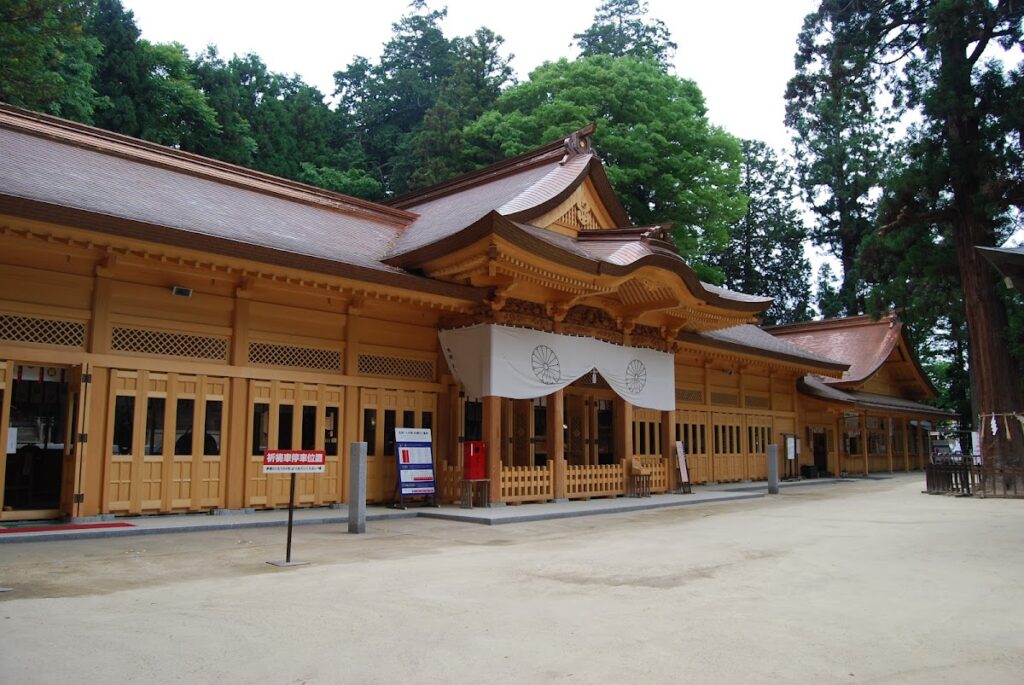
The grounds of Hodaka Shrine’s main shrine have many points of interest, including the main hall and worship hall.
Main Hall and Worship Hall
The main hall is a magnificent shrine built in the nagare-zukuri style, and together with the worship hall, it exudes a solemn atmosphere. Stepping onto the grounds, you are enveloped in a cool, sacred air.
Mifune Kaikan (Mifune Hall)
The Mifune Kaikan, located within the shrine grounds, is a facility exhibiting valuable materials related to the history of Hotaka Shrine and the Azumi clan. In particular, it houses the basic framework of the boat-shaped float used in the “Ofune Matsuri” (Ofune Festival), held annually on September 26th and 27th, allowing visitors to experience the festival’s power firsthand.
Subsidiary Shrines
Several subsidiary shrines are located within the grounds, each with its own unique divine blessings. Visiting these shrines after paying respects at the main shrine will provide a more fulfilling pilgrimage experience.
Kagura-den (Sacred Dance Hall) and Shrine Office
Various Shinto rituals are performed in the Kagura-den throughout the year. The shrine office offers Goshuin (shrine stamps) and accepts various prayer requests; friendly Shinto priests will assist you.
Okumiya (Inner Shrine) | Power Spot at Myojin Pond, Kamikochi
The Okumiya (Inner Shrine) of Hotaka Shrine is located on the shore of Myojin Pond in Kamikochi. Located about an hour’s walk upstream along the promenade on the right bank of the Azusa River from Kappa Bridge, it is a popular power spot filled with a mystical atmosphere.
Myojin Pond and Sacred Area
Myojin Pond is a highly transparent pond consisting of Ichinoike and Ninoike, and is considered the sacred area of the Okumiya (inner shrine) of Hotaka Shrine. A shrine building stands on the pond’s edge, creating a sacred space surrounded by a tranquil forest.
Opening Ceremony and Okumiya Grand Festival
Every year, the opening ceremony is held at the Okumiya to coincide with the opening of the mountain climbing season in Kamikochi. Also, on October 8th, the Okumiya Grand Festival is held, and the Mifune Shinto ritual takes place on Myojin Pond. During this ritual, a boat circles the pond accompanied by gagaku (ancient Japanese court music), creating a solemn atmosphere.
Minemiya | Sacred Area at the Summit of Mt. Okuhotaka
Hotaka Shrine Minemiya is enshrined at the summit of Mt. Okuhotaka (elevation 3,190m), the highest peak in the Northern Alps. Many climbers visit the shrine to pray to the guardian deity who watches over the safety of climbers.
Climbing and Faith
Visiting the Minemiya shrine requires a serious climb, but it is a valuable opportunity to experience the spirituality of mountain worship along with the magnificent view from the summit. During the climbing season, many climbers visit the Minemiya shrine to pray for safe climbs.
Festivals and Annual Events | Ofune Festival and Major Festivals
Hodaka Shrine holds various festivals and events throughout the year.
Ofune Festival (September 26th and 27th)
The largest festival at Hodaka Shrine is the “Ofune Festival,” held annually on September 26th and 27th. This festival is an important event that conveys the traditions of the Azumi clan, a seafaring people, and features a boat-shaped float parading through the town.
The large boat-shaped float, adorned with dolls, is approximately 6 meters tall and weighs about 5 tons, and is pulled by young people. The “Departure of the Boat” on the 26th and the “Return of the Boat” on the 27th take place over two days, becoming a quintessential autumn spectacle in Azumino.
Other Major Festivals
- New Year’s Day Festival (January 1st): A festival celebrating the New Year
- Setsubun Festival (February 3rd): Includes bean-throwing and other rituals
- Annual Grand Festival (September 27th): Held concurrently with the Boat Festival
- Niiname-sai Festival (November 23rd): A festival expressing gratitude for the harvest
Festivals at the Inner Shrine
- Opening Ceremony (Late April – Early May): Held in conjunction with the opening of Kamikochi Mountain
- Inner Shrine Annual Grand Festival (October 8th): Boat ritual at Myojin Pond
Goshuin Information | Goshuin and Issuance Hours for the Three Shrines
Hotaka Shrine offers goshuin (stamps) at the Main Shrine, Inner Shrine, and Peak Shrine.
Goshuin (Seal) of the Main Shrine
At the main shrine’s office, in addition to the regular goshuin, seasonal special goshuin are sometimes available. The hours for receiving goshuin are generally from 9:00 AM to around 5:00 PM, but these may change due to festivals or other events.
Goshuin of the Inner Shrine
At the inner shrine, goshuin are available during the Kamikochi mountain opening season (late April to mid-November). Be sure to get an inner shrine goshuin as a memento of your visit to Myojin Pond.
Goshuin of the Peak Shrine
The peak shrine goshuin is available at the main shrine’s office. This is a special goshuin for those who have actually climbed Mount Okuhotaka.
Prayers and Amulets | From Traffic Safety to Matchmaking
Hotaka Shrine accepts various prayers.
Prayer for Traffic Safety
As the slogan “Hotaka Shrine when you buy a car” suggests, prayers for traffic safety are a representative prayer at Hotaka Shrine. Many people visit the shrine to pray when purchasing a new car or obtaining a driver’s license. Car blessings are also offered and performed in the shrine’s parking lot.
Other Prayers
- Protection from misfortune and evil influences
- Family safety and business prosperity
- Matchmaking and safe childbirth
- Academic success and passing exams
- Recovery from illness and good health
Amulets and Items
The shrine office offers various amulets, talismans, and fortune slips. Traffic safety amulets are particularly popular, but amulets for various wishes, such as matchmaking and academic success, are available.
Access and Visiting Information | Access to the Main Shrine and Parking
Access to the Main Shrine
Access by Train
- Approximately 3 minutes on foot from JR Oito Line “Hotaka Station”
- Approximately 10 minutes by car from Nagano Expressway “Azumino IC”
Access by Car
- Approximately 10 minutes via National Route 147 from Nagano Expressway “Azumino IC”
- Parking: Free parking available on the shrine grounds (approximately 100 spaces)
Visiting Hours and Shrine Office Hours
- Shrine Grounds Visiting: Open all day
- Shrine Office Reception: Approximately 9:00 AM to 5:00 PM (may vary depending on the season)
- Prayer Request Reception: Approximately 9:00 AM to 4:00 PM
Access to the Inner Shrine
Private cars are not permitted in Kamikochi due to restrictions.
- Take a shuttle bus or taxi from the parking lot at Sawando or Hirayu.
- Approximately 1 hour walk from Kamikochi Bus Terminal via Kappa Bridge.
- Opening period: Late April to mid-November
Nearby Tourist Spots | Azumino Highlights
When visiting Hotaka Shrine, be sure to explore the surrounding tourist spots as well.
Water Tour of Azumino
Azumino is a region blessed with abundant spring water from the Northern Alps. Enjoy the scenery created by the pure water at places like Daio Wasabi Farm and the Azumino Wasabi Field Spring Water Group.
Art Museums and Museums
There are numerous facilities where you can experience art, such as the Azumino Chihiro Art Museum and the Azumino Takahashi Setsuro Memorial Museum.
Roadside Stations and Gourmet Food
At roadside stations such as “Azumino Matsukawa” and “Horigane no Sato,” you can enjoy fresh local produce and gourmet food. Azumino-grown soba noodles, wasabi, and apples are specialties. ## The Charm of Hodaka Shrine | Its Reputation as a Power Spot
Hodaka Shrine attracts many visitors due to its historical value, sacred atmosphere, and unique form of worship woven from its three shrine buildings.
A Sacred Atmosphere
Stepping onto the shrine grounds, one is enveloped in a sacred atmosphere unlike everyday life. The centuries-old sacred trees, the tranquil shrine buildings, and the pure air purify the hearts of visitors.
The Joy of Visiting the Three Shrines
By visiting the three shrines—Honmiya, Okumiya, and Minemiya—one can experience the vastness of Hodaka Shrine, from the plains to the mountains. Each of the three shrines, situated in different environments, possesses a distinct charm, offering visitors a diverse experience.
Connections to the Community
Hodaka Shrine is not merely a tourist spot; it continues to function as a center of faith for the local residents. Many local residents participate in annual events, including the Ofune Festival, preserving tradition.
Summary | Points to Note When Visiting Hotaka Shrine
Hotaka Shrine is an ancient shrine with a unique form of worship, consisting of three shrines: the main shrine (Honmiya), the inner shrine (Okumiya), and the mountain shrine (Minemiya), serving as the guardian shrine of the Japanese Alps. Its history begins with the worship of the ancestral deity by the Azumi clan, a seafaring people. Its appeal lies in its wide range of divine blessings, including traffic safety, traditional events such as the Ofune Festival, and its sacred atmosphere.
The main shrine in Hotaka, Azumino City, is easily accessible on foot from the station, while the inner shrine in Kamikochi can be visited in conjunction with a mountain resort. Visiting the mountain shrine (Minemiya) requires a more serious mountain climb, but by visiting all three shrines, you can experience the profound charm of Hotaka Shrine.
When visiting Shinshu/Azumino, be sure to visit Hotaka Shrine and feel the spirit of the gods of the Japanese Alps.