Complete Guide to Izusan Shrine | History and Highlights of the Power Spot for the Love Story of Minamoto no Yoritomo and Hojo Masako
Izusan Shrine, nestled on the hillside of a small mountain in Atami City, Shizuoka Prefecture, is an ancient shrine boasting a history of over 2,000 years. Considered the birthplace of the place name “Izu,” it is a sacred site for matchmaking, known for the love story of Minamoto no Yoritomo and Hojo Masako, and attracts many worshippers as a god of good fortune, protection, and harmony.
This article will introduce the charm of Izusan Shrine in its entirety, from its historical background and enshrined deities to its highlights and access methods.
What is Izusan Shrine?
Izusan Shrine is a venerable shrine positioned as the head shrine of numerous Izusan Shrines, Izu Shrines, and Hashiriyu Shrines scattered throughout Japan. Historically known by various names such as “Izusan Daigongen,” “Hashiriyu Daigongen,” and “Izu Omiya,” it was revered as one of the “Two Gongen Shrines” alongside Hakone Shrine.
The shrine grounds cover a vast area of approximately 132,000 square meters, with the main hall standing in a location offering a spectacular view overlooking Sagami Bay. During the Heian period, it gained renown as a sacred site for mountain asceticism and was counted as one of the “Four Sacred Places,” demonstrating its long-standing reputation as a powerful and efficacious sacred site.
Origin of the Place Name “Izu”
Izusan Shrine is considered the origin of the place name “Izu.” The prevailing theory is that this shrine, formerly called “Izu Omiya,” became the origin of the name of the entire Izu Province. The shrine grounds are part of the “Kogoi no Mori” forest, which was also a place of poetic significance, and it has been recognized as a culturally important location since ancient times.
History of Izusan Shrine
Founding and Changes
The exact founding date of Izusan Shrine is unknown, but according to the “Zushū Shikō” (a historical document from the late Edo period), it was originally located on Mount Higane (Higane Peak), and in 836 (Jōwa 3), the shrine was relocated to its current location with the construction of the shrine building. It is said to have a history of over 2,000 years since its founding, and is an ancient shrine whose name is mentioned in the “Engishiki” (a compilation of laws and regulations from the Heian period).
Minamoto no Yoritomo and Izusan Shrine
An essential part of understanding the history of Izusan Shrine is its deep connection with Minamoto no Yoritomo. While exiled to Izu Province, Yoritomo prayed at this shrine for the restoration of the Minamoto clan. Later, Yoritomo destroyed the Taira clan, established the Kamakura Shogunate, and became the first shogun.
Having achieved his long-cherished wish, Yoritomo, grateful for the divine favor, revered Izusan Shrine as the “Chief Guardian of the Eight Provinces of Kanto”. The Eight Provinces of Kanto refer to the eight provinces of Sagami, Musashi, Kozuke, Shimotsuke, Kazusa, Shimosa, Awa, and Hitachi, thus granting the shrine the status of a guardian deity of the entire Kanto region. This title led to Izusan Shrine receiving deep reverence from the samurai class as the guardian deity of the Minamoto clan.
Reverence of Tokugawa Ieyasu
In the Edo period, Tokugawa Ieyasu, who deeply admired Yoritomo, also held Izusan Shrine in high regard. Following Yoritomo’s example, Ieyasu deeply revered Izusan Shrine as the “God of Good Fortune” who would rule the country, and he personally visited the shrine. During this period, when it was known as Izusan Daigongen, the shrine received generous protection from the Tokugawa shogunate, maintaining its authority.
Changes Since the Meiji Era
Due to the anti-Buddhist movement of the Meiji era, the shrine was transformed from a syncretic Shinto-Buddhist structure to a purely Shinto shrine. What had previously been called “Izusan Gongen” and “Hashiriyu Gongen” was unified under the name “Izusan Shrine,” which it remains to this day. The history of worshipping a deity as a syncretic Shinto-Buddhist entity, a fusion of mountain worship and Shugendo (mountain asceticism), still leaves traces throughout the shrine grounds.
Deities and Divine Virtues
Main Deities
The main deities of Izusan Shrine are the following three:
- Homusubi-no-Mikoto: God of Fire
- Izanagi-no-Mikoto: Male God of Creation
- Izanami-no-Mikoto: Goddess of Creation
Izanagi-no-Mikoto and Izanami-no-Mikoto are the first divine couple in Japanese mythology, and the fact that these two deities are enshrined here is a major reason why Izusan Shrine is worshipped as a shrine for matchmaking.
Divine Virtues
Izusan Shrine is said to possess a variety of divine virtues.
- Good Fortune Protection: Based on the story of Minamoto no Yoritomo and Tokugawa Ieyasu’s rise to power, it bestows good fortune in competitions and career advancement.
- Matchmaking: As the place where Minamoto no Yoritomo and Hojo Masako’s love blossomed, it grants good relationships and successful romances.
- Harmony and Good Fortune: For a harmonious marriage and family life.
- Business Prosperity: For business success and increased wealth.
Due to these divine blessings, worshippers with various wishes visit from all over Japan.
The Love Story of Minamoto no Yoritomo and Hojo Masako
Origin as a Power Spot for Matchmaking
The reason why Izusan Shrine has become known nationwide as a “power spot for matchmaking” lies in the love story of Minamoto no Yoritomo and Hojo Masako.
Yoritomo, who was exiled to Izu, met Masako, the daughter of Hojo Tokimasa, while visiting Izusan Shrine. The two secretly met at this shrine and eventually became bound by deep love. Masako’s father, Tokimasa, was a supervisor for the Taira clan, so initially, this love was not permitted.
However, their love was strong, and it is said that Masako fled to Yoritomo and was given refuge at Izusan Shrine. The love between the two, forged at this shrine, eventually led to Yoritomo’s rise to power, and Masako became one of the most influential women in Japanese history.
The Legend of “Hashiriyu”
Izusan Shrine was also known as “Hashiriyu Gongen,” a name derived from the hot spring “Hashiriyu” that gushes forth near the shrine grounds. Hashiriyu is considered one of Japan’s three oldest hot springs, and its name comes from the fact that the hot spring water gushes from the mountains and flows “runningly” down to the coast. Yoritomo and Masako are said to have benefited from this sacred spring, and it is associated with the blessings of matchmaking.
Highlights of the Shrine Grounds
Stone Steps of the Approach
The first thing visitors to Izusan Shrine encounter is the long stone steps of the approach. The stone steps leading from Izusan Beach to the main shrine are adorned with magnificent double cherry blossoms in spring, delighting visitors.
Including the steps leading to the main shrine, there are several hundred steps in total, and it is believed that climbing to the top purifies the mind and body. There are rest areas along the way where visitors can take a break while enjoying the beautiful view of Sagami Bay.
Main Shrine
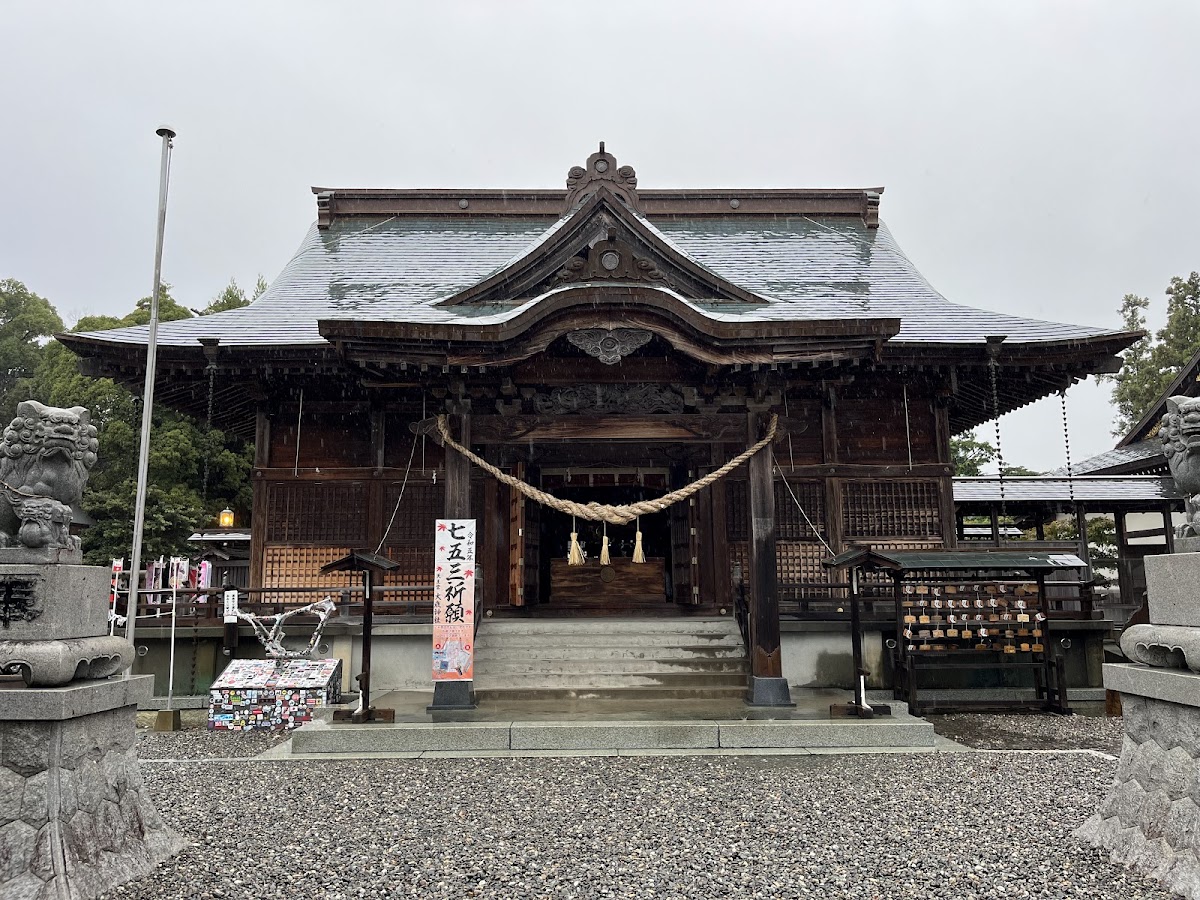
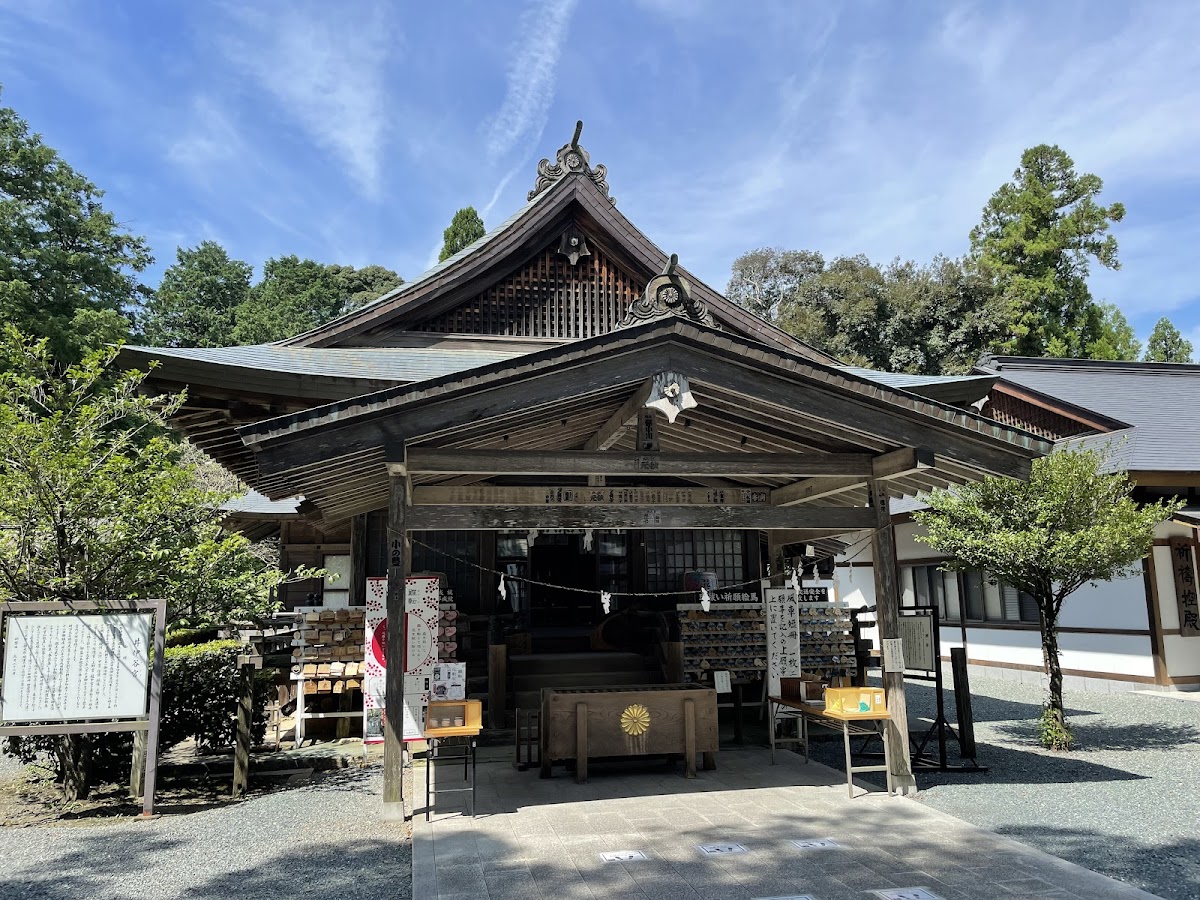
After climbing the long stone steps, you arrive at the main shrine, the heart of the grounds. From the main shrine, you can enjoy a panoramic view of Atami city and Sagami Bay, a breathtaking sight that deeply moves visitors. The main shrine exudes a solemn atmosphere, conveying the weight of history dating back to Minamoto no Yoritomo.
Musubu Myojin Honsha (Main Shrine of the Matchmaking Deity)
Within the grounds is the “Musubu Myojin Honsha,” a shrine dedicated to the god of matchmaking. This is a particularly popular spot for those praying for good fortune in love, attracting many young women seeking a partner and couples hoping for a harmonious marriage. The striking red torii gate and shrine building make it a popular photo spot.
Hakusan Shrine
Hakusan Shrine, one of the shrines within the grounds, enshrines the deity of Hakusan worship. It is an important historical site demonstrating that Izusan Shrine was a center of mountain worship, and it preserves the history of Shugendo (mountain asceticism).
Hongu Shrine (Inner Sanctuary)
Approximately one hour’s climb up the mountain path from the main shrine, at an altitude of about 400 meters, lies Hongu Shrine. This is a sacred site that can be considered the inner sanctuary of Izusan Shrine, and is believed to preserve the ancient form of the shrine that once stood on Mt. Higane.
The mountain path to Hongu Shrine is steep and requires hiking equipment, but the tranquility and spiritual atmosphere of the sacred area make it a worthwhile experience. Devoted worshippers and Shugendo practitioners still visit this site.
Hashiriyu Shrine
Located outside the main shrine grounds, near the coast, is the Hashiriyu Shrine. Adjacent to the aforementioned Hashiriyu hot spring, it enshrines the guardian deity of the spring. The hot spring, which gushes from a cave, is still open to visitors, allowing them to feel the power of this ancient sacred spring.
Annual Events and Festivals
Grand Festival
The most important festival at Izusan Shrine is the Grand Festival. Held annually from April 14th to 16th, it features traditional Shinto rituals such as a portable shrine procession and Kagura (sacred dance) performances. It’s a grand festival attracting many worshippers not only from the local area but also from all over Japan.
Setsubun Festival
The Setsubun Festival, held annually on February 3rd, is another important event at Izusan Shrine. Bean-throwing and exorcism rituals are performed, praying for good health throughout the year. Many worshippers from both within and outside Atami visit, creating a lively atmosphere.
Other Events
- Hatsumode: The shrine is bustling with many visitors during the first three days of the New Year.
- Natsukoshi no Oharae: A Shinto ritual held on June 30th to purify oneself of sins and impurities accumulated over the past six months.
- Tsukimisai: Regular festivals held on the 1st and 15th of each month.
Etiquette and Manners for Worship
Basic Worship Method
- Bow before passing through the torii gate: As a sign of respect before entering the sacred area.
- Purify yourself at the water basin: Purify your left hand, right hand, and mouth in that order.
- Avoid walking in the center of the path: The center is considered the path of the gods.
- Worship at the main shrine: Follow the ritual of two bows, two claps, and one bow.
Goshuin and Amulets
Izusan Shrine offers goshuin (stamps) as a memento of your visit. Furthermore, various amulets offering different blessings, such as those for matchmaking and good fortune, are available. The matchmaking amulets, in particular, are very popular and well-received by couples and those seeking good relationships.
Access and Transportation Information
Access by Public Transportation
From JR Atami Station
- Approximately 10 minutes by Tokai Bus bound for “Izusan Shrine,” get off at “Izusan Shrine,” and walk for approximately 5 minutes.
- Approximately 10 minutes by taxi.
- Approximately 30 minutes on foot (uphill).
The path from the bus stop to the entrance of the stone steps is flat, but you will need to climb stone steps to reach the main shrine. We recommend wearing comfortable shoes.
Access by Car
- Approximately 1 hour from Atsugi IC on the Tomei Expressway
- Approximately 40 minutes from Numazu IC on the Tomei Expressway
- Approximately 10 minutes from Atami city center via National Route 135
The shrine has a parking lot for visitors, but spaces are limited, so using public transportation is recommended during busy times.
Nearby Tourist Attractions
The following tourist attractions are located near Izusan Shrine:
- Hashiriyu: One of Japan’s three oldest hot springs, a cave hot spring
- Atami Onsen Town: Numerous hot spring inns and tourist facilities
- Atami Sun Beach: A beautiful sandy beach
- MOA Museum of Art: A museum focusing on Oriental art
- Hatsushima Island: An island approximately 30 minutes by boat from Atami Port
A popular sightseeing plan combines a visit to Izusan Shrine with visits to these spots.
Visiting Information
Basic Information
- Address: 708-1 Izusan, Atami City, Shizuoka Prefecture
- Phone: 0557-80-3164
- Visiting Hours: Open to visitors at any time (Shrine office usually open from 9:00 to 16:00)
- Closed Days: Open all year round
- Admission Fee: Free
Best Time to Visit
Izusan Shrine can be visited throughout the year, but the following times are especially recommended:
- Spring (March-May): Beautiful double cherry blossoms and mild weather
- Autumn (October-November): Autumn leaves are at their peak and temperatures are pleasant
- New Year’s: Experience a special atmosphere for the first shrine visit of the year
Please prepare your clothing and equipment accordingly, considering the heat in summer and the difficulty of climbing the stone steps, and the cold sea breeze in winter.
A Summary of the Charms of Izusan Shrine
Izusan Shrine, with its history spanning over 2,000 years, continues to fascinate many people as an ancient shrine and a sacred place for matchmaking where the love between Minamoto no Yoritomo and Hojo Masako was fulfilled.
Its history as the guardian deity of the Minamoto clan as the guardian of the eight provinces of Kanto, and its reverence by Tokugawa Ieyasu as the “god of good fortune,” speaks to the fact that this shrine is not merely a tourist spot, but a truly sacred place with profound spiritual power.
Climbing the long stone steps and overlooking Sagami Bay from the main hall brings deep emotion and peace of mind to worshippers. Today, worshippers from all over Japan visit the shrine seeking various divine blessings such as matchmaking, good fortune, and harmony of happiness and virtue.
When visiting Atami, be sure to visit Izusan Shrine and experience its history and spiritual energy. It will surely be a memorable pilgrimage experience.