Complete Guide to Komagata Shrines: A Thorough Explanation of the History, Benefits, and Visiting Information of Komagata Shrines Nationwide
Komagata shrines are historical shrines located throughout Japan, many of which have deep connections to mountain worship, particularly horses and Mount Komagatake. This article focuses on the Komagata Shrine in Iwate Prefecture, known as the Ichinomiya (first-ranked shrine) of Mutsu Province, but also provides detailed explanations of Komagata shrines throughout Japan, including those in Maebashi City, Gunma Prefecture, and Hakone, Kanagawa Prefecture, covering their history, enshrined deities, benefits, cultural properties, and visiting information.
Table of Contents
- What is Komagata Shrine?
- Komagata Shrine, Ichinomiya of Mutsu Province (Oshu City, Iwate Prefecture)
- Komagata Shrine, Kōzuke Province (Maebashi City, Gunma Prefecture)
- Hakone Komagata Shrine (Kanagawa Prefecture)
- Other Komagata Shrines
- Benefits and Faith of Komagata Shrine
- Etiquette and Manners for Visiting a Shrine
- Summary
What is Komagata Shrine?
Komagata Shrine is a group of shrines located throughout Japan, and its name originates from “Koma” (horse). Many Komagata Shrines have been revered since ancient times as guardian deities of horses and as objects of mountain worship. They are particularly numerous in the Tohoku and Kanto regions, each developing its own unique history and beliefs.
The name “Komagata” is often found in areas that flourished as horse breeding regions, or because the shape of mountains such as Komagatake resembles a horse’s back. In ancient Japan, horses were extremely important in military affairs, transportation, and agriculture, and beliefs praying for the health and safety of horses developed throughout the country.
Komagata Shrine, Ichinomiya of Mutsu Province (Oshu City, Iwate Prefecture)
Overview and History
Komagata Shrine, located in Nakagami-cho, Mizusawa-ku, Oshu City, Iwate Prefecture, is a prestigious shrine representing the Tohoku region as the Ichinomiya (first-ranked shrine) of Mutsu Province (present-day Iwate Prefecture). It is a Shikinaisha (shrine listed in the Engishiki Jinmyocho), formerly a Kokuhei Shosha (national shrine of the lower rank), and is currently designated as a Beppyo Jinja (special shrine) by the Association of Shinto Shrines.
The founding of Komagata Shrine is ancient, and its origins are unclear, but records show that it was already highly regarded by the imperial court during the Heian period. During the time of the Oshu Fujiwara clan, it received deep reverence from three generations of Fujiwara no Kiyohira, Motohira, and Hidehira, who built the splendor of Hiraizumi. The Fujiwara clan highly regarded Komagata Shrine as the guardian deity of Mutsu Province, and contributed to the construction of the shrine buildings and the donation of sacred land.
Unique Three-Shrine Structure
Komagata Shrine in Iwate Prefecture has a unique structure consisting of the following three shrine buildings:
Main Shrine (Satomiya)
The main shrine, located within Mizusawa Park in Nakagami-cho, Mizusawa-ku, Oshu City, is the central shrine visited by general worshippers. Its address is 1-83 Nakagami-cho, Mizusawa-ku, Oshu City, Iwate Prefecture, approximately a 10-minute walk from Mizusawa Station. The shrine grounds are integrated with Mizusawa Park and are also known as a famous cherry blossom viewing spot.
Inner Shrine
The inner shrine, located on the summit of Mt. Komagatake (elevation 1,129m) in Nishine, Kanegasaki-cho, Isawa-gun, has been revered since ancient times as a sacred site of mountain worship. Mount Komagatake is a peak in the Ou Mountains, and its shape resembles a horse’s back, leading to its belief that it is a sacred mountain where Komagata-no-Okami descended. Pilgrimages to the inner shrine have also been performed as a form of Shugendo (mountain asceticism).
Satomiya
Located in Nishine Hinakozawa, Kanegasaki-cho, Isawa-gun, the Satomiya (lower shrine) has served as a place of worship for the inner shrine. Situated at the foot of the mountain, it is considered important as a place of worship even when climbing to the inner shrine is difficult.
Deity
The main deity of Komagata Shrine is Komagata-no-Okami. Komagata-Ōkami is considered a collective name for six deities: Amaterasu Ōmikami, Amenotokotachi-no-Mikoto, Kuni-no-Satsuchi-no-Mikoto, Akatsu-no-Mikoto, Okise-no-Mikoto, and Hikohodemi-no-Mikoto.
These deities play extremely important roles in Japanese mythology, including the creation of heaven and earth, the formation of the land, and the ancestral deities of the Imperial family. By being enshrined together as Komagata-Ōkami, they are believed to possess comprehensive divine virtues such as national peace and security, abundant harvests, and lasting military fortune.
Shrine Grounds and Highlights
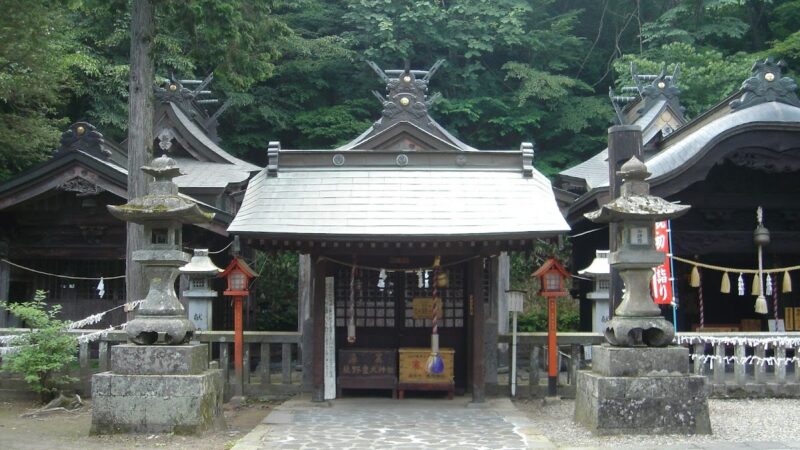
The shrine grounds are located within Mizusawa Park, surrounded by abundant nature. As you proceed along the approach, a magnificent stone torii gate welcomes visitors. After purifying yourself at the water basin, you proceed to the main hall.
The worship hall is a magnificent building with a hipped roof, while the main sanctuary is in the nagare-zukuri style. Several subsidiary shrines are also located within the grounds, each possessing its own unique divine virtues.
In spring, the cherry blossoms on the grounds bloom beautifully, attracting many visitors. Mizusawa Park as a whole is known as a famous cherry blossom viewing spot, allowing visitors to enjoy the blossoms in conjunction with a visit to Komagata Shrine.
Subsidiary Shrines
Several subsidiary shrines are located within the grounds of Komagata Shrine. Each of these shrines possesses a specific divine virtue, fulfilling the diverse wishes of worshippers. Major subsidiary shrines enshrine deities such as the god of business prosperity, the god of learning, and the god of matchmaking, and visiting them in conjunction with a visit to the main sanctuary is recommended.
Festivals and Annual Events
Komagata Shrine holds various festivals throughout the year.
Grand Festival
The Grand Festival, held annually on September 19th, is the most important festival at Komagata Shrine. The festival features a portable shrine procession and dedication ceremonies, attracting many worshippers. Local residents participate wholeheartedly to enliven the festival, and traditional performing arts are also offered.
New Year’s Visit
During the first three days of the New Year, many worshippers visit to pray for good health and safety for their families. It is known as one of the most popular New Year’s visit spots in Iwate Prefecture.
Monthly Festival
Monthly festivals are held on the 1st and 15th of each month, offering prayers for daily gratitude and peace.
Summer Purification Ceremony
On June 30th, the Summer Purification Ceremony is held to cleanse away the sins and impurities accumulated over the past six months. A ritual of passing through a ring of reeds is performed, praying for good health and protection from illness.
Cultural Assets
Komagata Shrine possesses numerous valuable cultural assets that have been donated throughout its long history. The site preserves cultural artifacts from the time of the Oshu Fujiwara clan to the Edo period, including ancient documents, swords, portable shrines, and votive paintings. Some of these are designated cultural properties of Iwate Prefecture and Oshu City.
Of particular note are the ancient documents believed to have been dedicated by the Oshu Fujiwara clan, which are invaluable historical materials for understanding the religious practices and social conditions of the time.
Access and Local Information
Address
1-83 Nakagami-cho, Mizusawa-ku, Oshu City, Iwate Prefecture 023-0827 (within Mizusawa Park)
Phone
0197-23-2851
Access
- Train: Approximately 10 minutes on foot from Mizusawa Station on the JR Tohoku Main Line, approximately 15 minutes by car from Mizusawa-Esashi Station on the JR Tohoku Shinkansen
- Car: Approximately 12 minutes by car from Mizusawa Interchange on the Tohoku Expressway, approximately 7 minutes by car from Oshu Smart Interchange on the Tohoku Expressway
- Parking: Parking is available at Mizusawa Park (free)
Visiting Hours
Grounds are open freely (Shrine office is usually open from 9:00 to 17:00)
Goshuin (Shrine Seal)
Available at the shrine office (Donation: approximately 300 yen)
Komagata Shrine, Ueno Province (Maebashi City, Gunma Prefecture)
Overview and History
Komagata Shrine, located in Komagata-cho, Maebashi City, Gunma Prefecture, is the center of Komagata worship in Kōzuke Province (present-day Gunma Prefecture). Its address is 710 Komagata-cho, Maebashi City, Gunma Prefecture, and it has been revered as the local tutelary shrine since ancient times.
Gunma Prefecture has been known as a horse-breeding region since ancient times, and the presentation of horses to the imperial court was frequent. Komagata Shrine developed as a shrine deeply connected to this horse-breeding culture. Kōzuke Province was also called the “Land of Horses,” and Komagata Shrine has played an important role as the guardian deity of horses and as the general guardian shrine of the region.
Deities and Benefits
The main deity enshrined at Komagata Shrine in Kōzuke Province is Ōnamuchi-no-mikoto, with Toyokiirihiko-no-mikoto enshrined in the auxiliary shrine.
Ōnamuchi-no-Mikoto is another name for Ōkuninushi-no-Mikoto and is widely worshipped as the god of nation-building, agriculture, and commerce. Toyokiirihiko-no-Mikoto was a son of Emperor Sujin and is credited with pacifying the eastern provinces; he is considered the ancestral deity of Kōzuke Province.
The blessings offered include family safety, business prosperity, abundant harvests, traffic safety, and protection from evil. In particular, the shrine is known for its blessings related to horses, attracting many horse racing professionals and fans.
Shrine Grounds and Festivals
The shrine grounds include the main hall, worship hall, and shrine office, as well as several smaller shrines. As a shrine deeply rooted in the community, it serves as a place of daily worship for local residents.
Various festivals are held throughout the year, with the annual grand festival featuring a portable shrine procession and dedication ceremonies. Many people visit the shrine for important life events such as New Year’s prayers, Shichi-Go-San (a traditional rite of passage for children), and for protection against evil, making it a central hub for the local community.
Access Information
Address
710 Komagata-cho, Maebashi City, Gunma Prefecture 379-2122
Telephone/Fax
027-266-3858
Access
- For access by public transport or car, we recommend checking the latest information on the official website (https://www.komagata-jinja.net/).
Hakone Komagata Shrine (Kanagawa Prefecture)
Overview and History
Komagata Shrine, located in Hakone-machi, Ashigarashimo-gun, Kanagawa Prefecture, sits on the southern shore of Lake Ashi, in a scenic location overlooking Mount Komagatake. It is an ancient shrine dedicated to Komagata-no-Okami, the guardian deity of Mount Komagatake (elevation 1,357m).
Formerly known as “Komagata Gongen” and “Arayu Komagata Gongen,” its origins date back to ancient times. It is closely associated with the mountain worship of Mount Hakone and has been considered an important sacred site for Shugendo (mountain asceticism).
Hakone has long been known as a key point on the Tokaido road, and many travelers visited Komagata Shrine to pray for safe passage over Hakone. During the Edo period, it was also revered as the guardian deity of Moto-Hakone Onsen, one of the seven hot springs of Hakone.
Deity and Beliefs
The enshrined deity of Hakone Komagata Shrine is Komagata Okami, who embodies both mountain worship and the characteristics of a guardian deity of horses. Mount Hakone Komagatake has been revered as a sacred mountain since ancient times, and an inner shrine is located at its summit.
Mount Komagatake’s summit can be accessed by ropeway, offering breathtaking panoramic views of Mount Fuji, Lake Ashi, and Sagami Bay. The inner shrine at the summit, along with the inner shrine of Hakone Shrine, is a sacred site of mountain worship.
Local Information
Hakone Komagata Shrine can be visited as part of a Hakone sightseeing trip. Located along a walking trail around Lake Ashi, many people visit it along with Hakone Shrine and Kuzuryu Shrine.
Detailed information can be found on the official website (http://komagata-jinja.jp/).
Other Komagata Shrines
Komagata Ooshige Shrine (Gose City, Nara Prefecture)
Komagata Ooshige Shrine is located in Gose City, Nara Prefecture. This shrine is a Shikinaisha (a shrine listed in the Engishiki), compiled by Fujiwara no Tokihira in the early 10th century by imperial decree of Emperor Daigo.
Komagata Shrine and Ooshige Shrine were once worshipped separately, but in 1907 (Meiji 40), they were merged to form the current Komagata Ooshige Shrine. It is a valuable shrine that shows traces of Komagata worship in Yamato Province.
Komagata Shrine (Omaezaki City, Shizuoka Prefecture)
A Komagata Shrine is also located in Omaezaki City, Shizuoka Prefecture. It is registered with the Shizuoka Prefectural Shrine Association and is revered as the local tutelary deity. It is thought to be related to the horse breeding culture of Tōtōmi Province.
Other Komagata Shrines
Besides the above, there are several other Komagata Shrines throughout Japan, mainly in the Tohoku and Kanto regions. Each has cultivated its own unique history and beliefs, making them important for understanding local culture.
Benefits and Beliefs of Komagata Shrine
Belief as a Guardian Deity of Horses
The most fundamental characteristic of Komagata Shrine is its worship as a guardian deity of horses. In ancient Japan, horses were indispensable for military affairs, transportation, and agriculture, and beliefs praying for the health and safety of horses developed in various regions.
Even today, people involved in horse racing, horse riding enthusiasts, and equestrian competitors visit Komagata Shrine to pray for the safety of their horses and success in competitions. Furthermore, for those born in the Year of the Horse (Uma), the shrine holds special significance as their guardian deity.
Benefits for Traffic Safety
Because horses were a primary means of transportation in ancient times, Komagata Shrine is also worshipped as a god of traffic safety. Even in the modern age of automobiles, many visitors come to pray for traffic safety and have their cars blessed.
Long-lasting Military Fortune and Good Luck in Competitions
Because horses played a crucial role in ancient warfare, Komagata Shrine has also been revered as a god of long-lasting military fortune and good luck in competitions. It received deep reverence from the samurai class, particularly from powerful warrior families such as the Oshu Fujiwara, Minamoto, and Tokugawa clans.
Even today, athletes, students, and business people visit the shrine to pray for improved luck in competitions.
Abundant Harvests and Industrial Development
Because horses played a crucial role in agriculture, Komagata Shrine is also worshipped as a deity of abundant harvests and industrial development. It has been particularly important in agricultural regions as a place of prayer for a bountiful harvest.
Aspects of Mountain Worship
Many Komagata Shrines are associated with mountains such as Mount Komagatake, making them important objects of mountain worship. Mountains are considered sacred places where gods descend, and have been deeply connected to Shugendo (mountain asceticism) as places of mountain training.
Etiquette and Manners for Worship
Basic Worship Etiquette
When visiting Komagata Shrine, please observe the following basic etiquette:
- Bow before passing through the torii gate: The torii gate is the entrance to the sacred area. Bow before passing through to show respect.
- Walking along the approach: The center of the approach is considered the path of the gods, so it is polite to walk along the sides.
- Purifying yourself at the water basin: Purify your hands and mouth at the water basin. Hold the ladle in your right hand and purify your left hand, then switch to your left hand and purify your right hand, switch back to your right hand, receive water in your left hand, rinse your mouth, and finally hold the ladle upright to purify the handle.
- Worship at the main hall: The basic procedure is two bows, two claps, and one bow. Place your offering, ring the bell, bow deeply twice, clap twice, offer your prayer, and finally bow deeply once more.
- Upon leaving: After exiting the torii gate, turn around and bow once.
About Goshuin (Shrine Seals):
Goshuin can be obtained at the shrine office as proof of your visit. Bring your goshuincho (seal book) and register at the shrine office after your visit. The offering fee is usually around 300 to 500 yen.
A Goshuin (temple/shrine stamp) is not merely a commemorative stamp, but a symbol of a connection with the deity, so please handle it with respect.
Amulets and Souvenirs
Komagata Shrine offers a variety of amulets and souvenirs. There are amulets for various wishes, such as traffic safety, academic success, protection from evil, and good fortune.
In particular, Komagata Shrine, the Ichinomiya (first-ranked shrine) of Rikuchu Province, offers a comprehensive amulet featuring the shrine building, believed to protect both body and mind. For those unable to visit in person, mail-order service is available.
Photography Etiquette
Photography is generally permitted on the shrine grounds, but may be prohibited inside the main hall or during religious ceremonies. Please check before taking photos and be considerate of other visitors.
Dress Code
For special prayers, formal attire or equivalent is desirable, but for regular visits, everyday clothing is acceptable. However, overly casual or revealing clothing should be avoided.
## Summary
Komagata Shrines are historical shrines located throughout Japan, attracting diverse devotions as guardians of horses, mountain worship sites, and regional tutelary shrines.
The Komagata Shrine in Mutsu Province (Oshu City, Iwate Prefecture), the Ichinomiya (first-ranked shrine) of the province, is a prestigious shrine revered by the Oshu Fujiwara clan and has a unique structure consisting of three shrines: the main shrine, the inner shrine, and the lower shrine. The Komagata Shrine in Kōzuke Province (Maebashi City, Gunma Prefecture) preserves the history of Kōzuke Province as a horse-breeding region, while the Komagata Shrine in Hakone (Kanagawa Prefecture) is a highly revered shrine linked to the mountain worship of Mount Hakone.
Each Komagata Shrine is deeply connected to the history and culture of its region, and continues to attract many worshippers today, offering various blessings such as traffic safety, good fortune in competitions, and abundant harvests.
When visiting a Komagata Shrine, reflect on its history and faith, and offer your prayers with sincerity and proper etiquette. You can discover the unique charm of each Komagata Shrine and experience the profound depth of Japanese traditional culture and faith.
Komagata Shrines throughout Japan are precious cultural heritage sites that convey the faith of the Japanese people, which has continued from ancient times to the present day, and their reverence for horses and nature. If you have the opportunity, please visit Komagata Shrines in various locations and experience their history and divine blessings.