Complete Guide to Koyasu Shrine | History and Benefits of Hachioji’s Oldest Shrine for Safe Childbirth and Fertility
Koyasu Shrine, located in Myojin-cho, Hachioji City, Tokyo, is the oldest shrine in Hachioji, boasting a history of approximately 1250 years. This shrine, visited by many worshippers from all over Japan as a deity of safe childbirth, fertility, and child-rearing, provides a detailed introduction to its history, benefits, and how to worship.
What is Koyasu Shrine?
Koyasu Shrine was founded in 759 AD (Tenpyo Hoji 3) and enshrines the deities of safe childbirth, fertility, and child-rearing. It is said to have been founded by Tachibana no Ukyo no Shosuke for the safe childbirth of the Empress of the then Emperor, and has attracted the faith of people for over 1200 years.
As the name “Koyasu” suggests, it is a shrine where many pregnant women and families raising children visit to pray for the safe delivery and healthy upbringing of their children.
Koyasu Shrine is a shrine dedicated to safe childbirth, fertility, and healthy child-rearing. ### About the Main Deity
The main deity enshrined at Koyasu Shrine is Konohanasakuya-hime no Mikoto. This deity is also known as the goddess of Mount Fuji in Japanese mythology and is considered a symbol of beauty and safe childbirth.
According to the Kojiki (Records of Ancient Matters), when Konohanasakuya-hime no Mikoto’s husband, Ninigi no Mikoto, doubted whether the child was truly his, she set fire to the birthing hut herself and safely gave birth to three children amidst the raging flames. From this myth, she came to be worshipped as a goddess with the power to escape fire and ensure safe childbirth.
The following deities are also enshrined in the auxiliary shrine:
- Ōyamakui-no-Mikoto: God of mountains, guardian deity of the land
- Susanoo-no-Mikoto: God of protection against misfortune
- Amaterasu-Ōkami: Ancestral deity of the Imperial family
- Kushiinadahime-no-Mikoto: Wife of Susanoo-no-Mikoto, goddess of matchmaking
History and Origins of Koyasu Shrine
Founding History
Koyasu Shrine was founded in 759 AD (Tenpyō Hōji 3), during the Nara period. It is said to have begun when a man named Tachibana no Ukyō no Shōyū built a shrine in Yokoyama-shō, Tama-gun, Musashi Province (present-day Hachioji City) to pray for the safe delivery of the Empress of the then Emperor (Empress Kōken or Emperor Junnin) who was pregnant.
Koyasu Shrine was founded in 759 AD (Tenpyō Hōji 3), during the Nara period. Because it was founded with deep ties to the Imperial Family, it also holds the title of “Iwata-obi Imperial Family Presentation Shrine,” preserving its connection to the Imperial Family to this day.
Hachioji’s Oldest Shrine
Koyasu Shrine is known as the oldest shrine in Hachioji City. It is believed to have existed even before Hachioji Gongen (the eight princes of Gozu Tenno), from which the name Hachioji originates, and has a long history as a center of faith in the region.
During the Edo period, in Hachioji, which flourished as a post town on the Koshu Kaido road, it attracted the faith of travelers and local residents, and became widely known as a shrine for prayers for safe childbirth.
A Faith That Continues Today
Even after the Meiji era, Koyasu Shrine has been revered by many people as a guardian deity of the region and as a god of safe childbirth and fertility. Currently, it is a famous shrine for prayers for safe childbirth, attracting worshippers not only from Tokyo but from all over the Kanto region.
Benefits of Koyasu Shrine
Prayer for Safe Childbirth
The most famous benefit of Koyasu Shrine is prayer for safe childbirth. Based on the myth of Konohanasakuya-hime giving birth safely amidst fire, the prayer embodies the wish for a healthy delivery for both mother and child, even in difficult circumstances.
While it is common to receive a prayer for safe childbirth on the Day of the Dog in the fifth month of pregnancy, bringing a maternity belt, Koyasu Shrine accepts prayers at any time, not just on the Day of the Dog.
Prayer for Conception
Prayer for Conception for couples wishing to have children is also an important benefit of Koyasu Shrine. There is a myth that Konohanasakuya-hime conceived overnight, and she is worshipped as a goddess who grants fertility.
Prayer for Child Rearing
Prayer for Child Rearing is also offered, wishing for the healthy growth of children after their safe birth. Many families visit this shrine to celebrate milestones in their children’s growth, such as their first shrine visit (Omiyamairi), first shrine visit (Hatsumiyamori), and Shichi-Go-San (a traditional rite of passage for children).
Other Benefits
- Protection from Evil: As the shrine enshrines Susanoo-no-Mikoto, it also offers protection from evil.
- Matchmaking: The shrine prays for successful relationships through Kushinadahime-no-Mikoto.
- Family Safety: Prayers are offered for the health and happiness of all family members.
Information on Prayer Services
Prayer Service Hours
Prayers at Koyasu Shrine are accepted at any time without prior reservation.
Prayer Reception Hours:
- 10:00 AM to 12:00 PM
- 1:00 PM to 4:00 PM
*The shrine is closed from 12:00 PM to 1:00 PM.
*Shrine hours may vary, so please check the official website in advance.
Main Types of Prayers
- Prayer for Safe Childbirth
- Prayer for Conception
- First Shrine Visit (Omiyamairi)
- Shichi-Go-San Ceremony
- Prayer for Protection from Evil
- Family Safety
- Traffic Safety
Offering Fee
The offering fee varies depending on the type of prayer. Please inquire at the shrine office for details. For prayers for safe childbirth, please bring your maternity belt.
On-Site Ceremonies
We also offer on-site ceremonies such as ground-breaking ceremonies and house purification ceremonies. Please consult the shrine office in advance for dates and details.
About Goshuin (Shrine Seals)
Koyasu Shrine offers beautiful Goshuin. In recent years, monthly changing Goshuin (temple/shrine stamps) have become popular, with designs featuring seasonal flowers and events changing every month.
Goshuin Reception Hours
9:00 AM to 4:45 PM
Both handwritten and pre-printed Goshuin are available, and the availability may vary depending on the crowd. It is especially crowded on the Day of the Dog and weekends, so we recommend visiting with plenty of time to spare.
Limited Edition Goshuin
Various limited edition Goshuin are offered throughout the year:
- New Year’s Limited Edition Goshuin
- Setsubun Festival Limited Edition Goshuin
- Yudate Festival Limited Edition Goshuin
- Monthly Changing Goshuin
Annual Events
Various festivals and events are held at Koyasu Shrine throughout the year.
Main Annual Events
January
- New Year’s Day Festival (January 1st)
- New Year’s Prayer Ceremony (January 1st – 7th)
February
- Setsubun Festival (Setsubun Day in February): Includes bean-throwing and serving of amazake (sweet rice wine).
March
- Spring Grand Festival
July
- Yudate Festival: A Shinto ritual where water is boiled in front of the shrine and used for purification.
September
- Autumn Grand Festival
November
- Shichi-Go-San Festival (Late October – November)
December
- Year-End Grand Purification Ceremony
Please note that the detailed dates of these festivals may change every year. Please check the official website or contact the shrine office for the latest information.
Highlights of the Shrine Grounds
Main Hall
The current main hall is a valuable building that preserves the architectural style of the late Edo period. Five deities are enshrined here, centered around Konohanasakuya-hime no Mikoto. ### Ladles for Safe Childbirth
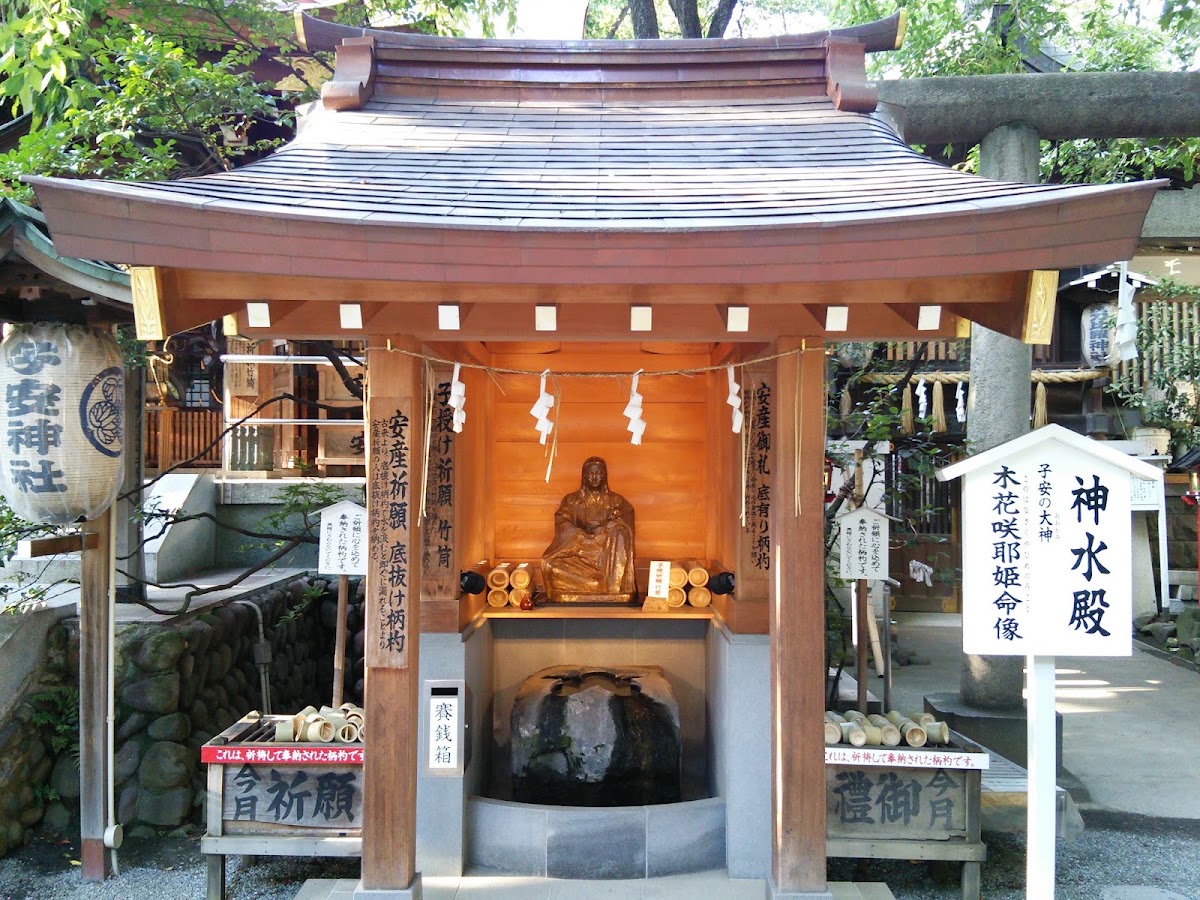
Koyasu Shrine has a unique custom called “ladles for safe childbirth.” This custom involves offering ladles with the bottoms removed, symbolizing a wish for a safe and easy delivery. Many such ladles can be seen on the shrine grounds.
Water Basin
A water basin is also provided for purifying the body and mind before worship. Please follow the proper etiquette and purify your hands and mouth before praying.
Shrine Office
The shrine office offers services such as granting Goshuin (shrine stamps), accepting prayer requests, and distributing amulets. Various types of amulets are available, including those for safe childbirth and fertility.
Access Information
Location
4-10-3 Myojincho, Hachioji City, Tokyo 192-0046
Access by Train
Approximately 5 minutes on foot from the North Exit of Hachioji Station on the JR Chuo Line
Exit the North Exit of Hachioji Station and head towards Koshu Kaido. Turn left at the Koyasu-cho intersection and continue straight; you will see Koyasu Shrine on your right. It’s very conveniently located near the station.
Approximately 10 minutes on foot from Keio Hachioji Station on the Keio Line
It’s also within walking distance from Keio Hachioji Station.
Access by Car
Approximately 15 minutes from the Hachioji Interchange on the Chuo Expressway
*There are a few parking spaces, but it can get crowded on the Day of the Dog and on weekends. We recommend using public transportation.
Parking
There is a parking lot for visitors on the shrine grounds, but spaces are limited. If it’s full, please use a nearby coin-operated parking lot.
Manners and Etiquette for Visiting a Shrine
Basic Visiting Etiquette
- Bow before passing through the torii gate: Show respect for entering the sacred area.
- Purify yourself at the water basin: Purify your left hand, right hand, and mouth in that order.
- Pray in front of the main shrine: Two bows, two claps, and one bow is the basic ritual.
- Offer your prayers quietly: Convey your wishes with sincerity.
For Prayers for Safe Childbirth
If you are visiting for prayers for safe childbirth, please prepare the following:
- Maternity belt: Bring a maternity belt to be blessed.
- Offering: Prepare it in a ceremonial envelope.
- Maternal and Child Health Handbook: Some people receive a commemorative stamp (Goshuin) from this handbook.
While the Day of the Dog in the fifth month of pregnancy is common, it is acceptable to visit on a different day depending on your physical condition and circumstances.
Nearby Attractions
There are other attractions around Hachioji Station, where Koyasu Shrine is located.
Around Hachioji Station
- Hachioji Castle Ruins: The site of the Hojo clan’s castle, popular with history buffs
- Mount Takao: A popular hiking spot close to central Tokyo
- Silk Road Museum: Learn about the history of Hachioji’s silk industry
Enjoying Hachioji’s history and nature before or after your visit to the shrine is highly recommended.
Items Offered at Koyasu Shrine
Amulets
Koyasu Shrine offers a variety of amulets:
- Safe Childbirth Amulet: An amulet for safe childbirth
- Childbearing Amulet: An amulet for being blessed with children
- Exorcism Amulet: An amulet to ward off evil
- Traffic Safety Amulet: An amulet for safe traffic safety
- Academic Success Amulet: An amulet for academic success
Ema (Votive Tablets)
Ema (votive tablets) are also available for offering, where you can write your wishes. Many people offer them with wishes for safe childbirth and childbearing.
Amulets
We also offer amulets for enshrining in your home’s household shrine.
Precautions When Visiting
Checking Shrine Office Hours
The shrine office hours are as follows, but may change due to festivals and events:
- 10:00 AM to 12:00 PM
- 1:00 PM to 4:00 PM
Please note that the office is closed from 12:00 PM to 1:00 PM.
Days When Prayer Services Are Suspended
Prayer services may be suspended during the New Year period and on days with special festivals. We recommend checking the “Notice of Prayer Service Suspension” on the official website in advance.
Busy Periods
The following periods are particularly busy:
- Days of the Dog (especially Saturdays, Sundays, and public holidays)
- The first three days of the New Year
- Shichi-Go-San season (late October to November)
- Festival days such as Setsubun Festival and Yudate Festival
If you wish to avoid crowds, weekday mornings are recommended.
Frequently Asked Questions
Is a reservation necessary?
No reservation is required for prayers. Please come directly to the shrine office during reception hours. However, if you wish to request an off-site ceremony or special prayer, please inquire in advance.
Can I pray for a safe delivery on days other than the Day of the Dog?
Yes, you can. While the Day of the Dog is considered auspicious, it is perfectly fine to visit on a different day to suit the pregnant woman’s health and schedule.
Can I purchase a maternity belt at the shrine?
Maternity belts are available at the shrine, but you are also welcome to bring your own.
Is photography allowed?
Photography is permitted on the shrine grounds, but please refrain from taking photos during prayers. Please also be considerate of other visitors.
Summary
Koyasu Shrine is the oldest shrine in Hachioji, with a history of approximately 1250 years. This shrine, dedicated to Konohanasakuya-hime no Mikoto, has long been revered as a goddess of safe childbirth, fertility, and child-rearing.
Located in Myojin-cho, Hachioji City, Tokyo, it boasts excellent accessibility, being just a 5-minute walk from JR Hachioji Station. Prayers are accepted without reservation from 10:00 AM to 12:00 PM and from 1:00 PM to 4:00 PM, and the monthly changing goshuin (shrine stamps) are also popular.
It’s a shrine you’ll want to visit for various milestones in life, including prayers for safe childbirth and fertility, as well as for baby blessings, Shichi-Go-San (a traditional rite of passage for children), and protection against misfortune. It also has deep ties to the Imperial Family and maintains its prestigious status as the “Shrine of Imperial Presentation of the Imperial Belt.”
When you visit Hachioji, why not pay a visit to this historic Koyasu Shrine?