Complete Guide to Miwa Shrines | History, Deities, Cultural Properties, and Access Information for Miwa Shrines Nationwide
Miwa shrines are historical shrines located throughout Japan, all of which have a history of being established by inviting deities from Omiwa Shrine in Sakurai City, Nara Prefecture. This article provides a detailed explanation of major Miwa shrines, including the Kai Province Ninomiya in Fuefuki City, Yamanashi Prefecture, the Shikinaisha in Setouchi City, Okayama Prefecture, and the Shikinaisha in Nagano City, Nagano Prefecture, covering their history, deities, cultural properties, points of interest, festivals and events, and access information.
What are Miwa Shrines?
Miwa shrines are shrines established in various locations by inviting the deity Omononushi-no-kami from Omiwa Shrine, one of the oldest shrines in Japan, located in Yamato Province (present-day Nara Prefecture). Ōmononushi-no-Mikoto is considered the gentle spirit (nigimitama) of Ōkuninushi-no-Mikoto and is widely worshipped as the god of nation-building, agriculture, commerce, and medicine.
Miwa Shrines throughout Japan are believed to have deep connections to the expansion of the Yamato court’s power and local governance in ancient times, as well as to the migration of immigrant clans possessing technologies such as Sue ware pottery. They have served as important centers of worship in their respective regions.
Miwa Shrine in Fuefuki City, Yamanashi Prefecture (Second Shrine of Kai Province)
Basic Information
Location: 1450 Ninomiya, Misaka-cho, Fuefuki City, Yamanashi Prefecture
Deity Enshrined: Ōmononushi-no-Mikoto
Shrine Rank: Former Prefectural Shrine, Second Shrine of Kai Province
Founded: 40th year of Emperor Keikō’s reign (tradition)
History
Miwa Shrine, located in Fuefuki City, Yamanashi Prefecture, is an ancient shrine that has long been revered as the Second Shrine of Kai Province. According to shrine records, the shrine’s origins date back to the reign of Emperor Keiko, when Yamato Takeru no Mikoto’s eastern expedition was initiated by Shiomi no Sukune, the provincial governor of Kai Province, who invited the deity from the Omiwa Myojin Shrine in Yamato.
During the reign of Emperor Ichijo, it was granted the title of Kai Province’s Second Shrine, and together with the First Shrine, Asama Shrine (Ichinomiya-cho), and the Third Shrine, Tamamoro Shrine, it played a crucial role as one of the three major shrines of Kai Province, particularly in performing rituals for flood control. The shrine was deeply revered by the imperial court, receiving the titles of Senior First Rank and First Class Order of Merit during the reigns of Emperor Go-Uda and Emperor Go-Komatsu, respectively.
Cultural Properties
Miwa Shrine in Fuefuki City, Yamanashi Prefecture, houses numerous valuable cultural properties.
Wooden Standing Statue of Ōmononushi-no-Mikoto (Nationally Designated Important Cultural Property)
This is a valuable statue of Ōmononushi-no-Mikoto, the enshrined deity, believed to be a work from the Heian period. It is rare among shrine statues nationwide and possesses high artistic and historical value.
Vermilion-laced, red-threaded, plain-laced cuirass with thigh guards
This is armor believed to have been worn by Takeda Shingen during his coming-of-age ceremony. It is a valuable historical artifact of Sengoku period armor and a shrine treasure demonstrating the deep connection between the Takeda clan and Miwa Shrine.
White-laced, tassel-adorned armor
This armor dates from the Muromachi to Sengoku periods and is characterized by its exquisite craftsmanship and beautiful decorations.
These cultural properties demonstrate that Miwa Shrine plays an important role not only as a place of worship but also in conveying the history and culture of the region to the present day.
Highlights
The grounds of Miwa Shrine in Fuefuki City, Yamanashi Prefecture, offer many historical sights.
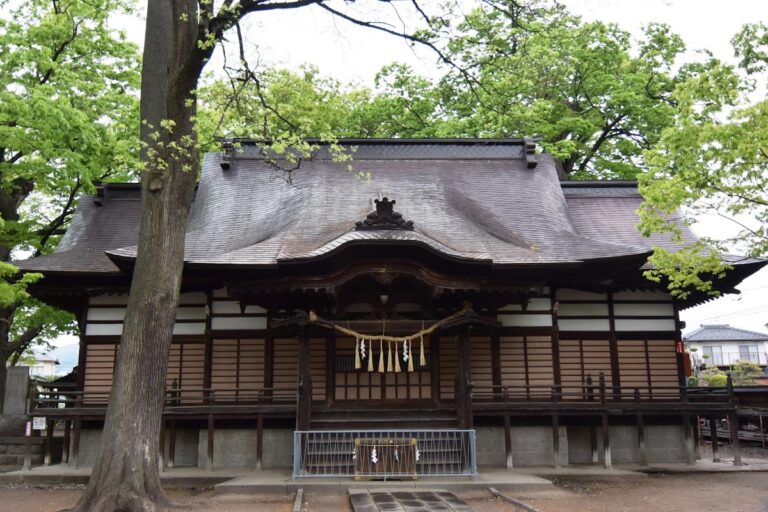
Main Hall and Worship Hall
The majestic shrine buildings, while having undergone several renovations throughout its long history, still preserve the traditional style of shrine architecture.
Atmosphere of the Grounds
The tranquil grounds offer peace of mind to visitors. It becomes especially lively with many worshippers during the annual festival.
Festivals and Events
Annual Grand Festival
The grand annual festival features a procession of portable shrines through the grounds, with local residents joining together to create a vibrant atmosphere. Traditional Kagura (sacred dance and music) performances are also held, creating an atmosphere of ancient tradition.
Prayer Festival
Held in spring, the Prayer Festival prays for a bountiful harvest. In this agriculturally-oriented region, it remains an important festival.
Yudate Festival
This is a Shinto ritual where water is boiled in front of the shrine, and Shinto priests sprinkle the water on worshippers using bamboo leaves. It is believed to bring good health and protection from evil, attracting many worshippers.
Access
Access by Train
Approximately 10 minutes by car from JR Chuo Main Line “Isawa Onsen Station”
Access by Car
Approximately 5 minutes from Chuo Expressway “Ichinomiya Misaka IC”
Parking available
Inquiries
Please contact the Yamanashi Prefectural Shrine Association or the Fuefuki City Tourism Association.
Miwa Shrine (Shikinaisha) in Setouchi City, Okayama Prefecture
Basic Information
Location: Higashi-Sue, Osafune-cho, Setouchi City, Okayama Prefecture
Deity Enshrined: Ōmononushi-no-kami
Shrine Rank: Shikinaisha (Listed in the Engishiki Jinmyōchō)
Location: Summit of Hirotakayama Mountain (Elevation 166 meters)
History
Miwa Shrine, located in Setouchi City, Okayama Prefecture, is an ancient shrine listed in the Engishiki Jinmyōchō (927 AD). It is said that the shrine was established by inviting a deity from Ōmiwa Shrine in Sakurai City, Nara Prefecture.
The exact date of its establishment is unclear, but it is believed to have a deep connection with a group of Sue ware potters who migrated to this area, and is estimated to be around the 7th century. Sue ware is a type of pottery produced from the Kofun period to the Heian period, fired at high temperatures, and was made by artisans with techniques introduced from the Korean Peninsula.
The shrine is located on the summit of Mt. Hirotaka, at an altitude of 166 meters, and is a valuable shrine that preserves the ancient form of Iwakura (rock formation) worship. From the summit, you can enjoy a panoramic view of the Seto Inland Sea, and it is believed that in ancient times, it was a place of worship where people prayed for safe voyages.
Highlights
Iwakura on the Summit Around the main shrine located on the summit of Mt. Hirotaka, there are numerous large rocks that evoke the ancient Iwakura worship. These rocks are revered as sacred objects and are valuable relics that convey a primitive form of worship to the present day.
View From the 166-meter-high summit, you can enjoy a beautiful view of the Seto Inland Sea, and on clear days, you can even see the mountains of Shikoku in the distance.
Festivals and Events
At Miwa Shrine in Okayama Prefecture, various festivals are held throughout the year, including the spring Kinensai (harvest festival) and the autumn Reitaisai (grand festival). This is a traditional event carefully preserved and passed down by the local parishioners.
Access
Access by Car
Approximately 20 minutes from the Sanyo Expressway “Bizen IC”
*The path to the mountaintop is a hike.
Contact Information
Okayama Prefectural Shrine Association (Please check the official website for phone numbers, etc.)
Miwa Shrine (Shikinaisha) in Nagano City, Nagano Prefecture
Basic Information
Location: Nagano City, Nagano Prefecture
Deity Enshrined: Ōmononushi-no-kami
Shrine Rank: Shikinaisha (Miwa Shrine, Minochi District, Shinano Province)
History
Miwa Shrine, located in Nagano City, Nagano Prefecture, is also an ancient shrine identified as the Shikinaisha Miwa Shrine. While the exact founding date is unknown, its inclusion in the Engishiki Jinmyōchō (a list of shrines compiled in the Heian period) confirms its existence as a historically significant shrine predating the Heian period.
Located west of Nagano Electric Railway’s Hongō Station, with its south-facing grounds and situated next to Miwa Elementary School, this shrine, though situated in the heart of the city, exudes a serene atmosphere.
Highlights
Miwa Torii Gate A distinctive Miwa Torii gate stands at the entrance to the shrine grounds. This unique gate, originating from Ōmiwa Shrine, is a structure where three torii gates—one on each side and two smaller torii gates (wakitorii)—are integrated into a single structure. This type of torii gate is rare nationwide and holds significant meaning as evidence that Miwa Shrine was established through the enshrinement of a deity from Ōmiwa Shrine.
Giant Trees on the Grounds To the right of the torii gate stands a giant tree, estimated to be several hundred years old, telling the story of the shrine’s long history.
Worship Hall The large worship hall at the front of the shrine beautifully preserves the traditional architecture of Shinto shrines.
Access
Access by Train Approximately 5 minutes on foot from Hongō Station on the Nagano Electric Railway.
Inquiries Please contact the Nagano Prefectural Shrine Association.
About Ōmononushi-no-Kami, the Deity of Miwa Shrine
Ōmononushi-no-Kami, the deity enshrined at Miwa Shrine, plays an important role in Japanese mythology. According to the Kojiki and Nihon Shoki, Ōmononushi-no-Kami is considered the gentle spirit (nigimitama) of Ōkuninushi-no-Mikoto and is depicted as a god who assisted Ōkuninushi-no-Mikoto in nation-building.
Ōmononushi-no-Kami also has characteristics of a snake god and is the object of primitive Kannabi (sacred mountain) worship, with Mount Miwa itself being the sacred object. It is worshipped as a guardian deity in a wide range of fields, including agriculture, commerce, medicine, and sake brewing, and is particularly known for its blessings of abundant harvests and business prosperity.
The Relationship Between Miwa Shrine and Omiwa Shrine
All Miwa Shrines throughout Japan were established by inviting the deity from Omiwa Shrine in Sakurai City, Nara Prefecture. Omiwa Shrine is considered one of the oldest shrines in Japan, and it preserves a primitive form of worship that does not have a main hall, instead considering Mount Miwa itself as the sacred object of worship.
In ancient times, as the power of the Yamato court expanded, the deity Omononushi-no-kami, the principal deity of Omiwa Shrine, was invited to various locations. It is also believed that in some cases, Miwa Shrines were founded by immigrant clans who possessed technologies such as Sue ware pottery, bringing their homeland’s beliefs with them when they migrated to various regions.
The name Miwa Shrine originates from “Miwa,” inheriting the name of Mount Miwa where Omiwa Shrine is located. Miwa Shrines throughout the country have functioned as important centers of worship, enshrining a divided spirit of Omiwa Shrine in their respective regions.
Significance and Benefits of Visiting Miwa Shrine
By visiting Miwa Shrine, you can receive the following benefits:
Abundant Harvest and Agricultural Prosperity
Ōmononushi-no-kami has been worshipped since ancient times as the god of agriculture and has been deeply revered by farmers praying for a bountiful harvest.
Business Prosperity and Development
Due to his role as a god of nation-building, many visitors come to pray for business prosperity and development.
Healing from Illness and Longevity
He also has an aspect as a god of medicine, and is believed to grant blessings for healing from illness and longevity.
Protection from Misfortune and Good Fortune
With the powerful divine protection of Ōmononushi-no-kami, you can also expect blessings for protection from misfortune and good fortune.
Cultural Value of Miwa Shrine
Miwa Shrine is not merely a place of worship, but also an important site for studying ancient Japanese history and cultural history.
The Miwa Shrine, listed as a Shikinaisha (a shrine listed in the Engishiki Jinmyocho, an ancient Japanese legal code), indicates that it was a prestigious shrine recognized by the state even before the Heian period. Furthermore, the Miwa Shrine in Okayama Prefecture, which has been linked to a group of Sue ware potters, provides valuable clues for understanding the transmission of technology and the movement of people in ancient times.
The cultural artifacts housed at the Miwa Shrine in Yamanashi Prefecture, such as the wooden standing statue of Omononushi-no-kami, are important materials that convey the reality and artistic expression of faith from ancient to medieval times.
A Recommendation for Visiting Miwa Shrines
By visiting the Miwa Shrines scattered throughout Japan, you can experience the spread of faith in ancient Japan and the unique characteristics of each region.
At Miwa Shrine in Fuefuki City, Yamanashi Prefecture, you can experience the prestige of being the second-ranked shrine of Kai Province and cultural artifacts associated with the Takeda clan. At Miwa Shrine in Setouchi City, Okayama Prefecture, you can experience mountaintop rock worship and views of the Seto Inland Sea. At Miwa Shrine in Nagano City, Nagano Prefecture, you can experience the pristine grounds and distinctive Miwa torii gate despite its urban location.
While all Miwa Shrines across Japan enshrine Ōmononushi-no-kami, they have developed uniquely, intertwined with the history and culture of each region. Experiencing this diversity and commonality is the true charm of visiting Miwa Shrines.
Summary
Miwa Shrines, dedicated to Ōmononushi-no-kami who was invited from Ōmiwa Shrine in Sakurai City, Nara Prefecture, are located throughout Japan. From the second-ranked shrine of Kai Province in Fuefuki City, Yamanashi Prefecture, to the Shikinaisha shrines in Setouchi City, Okayama Prefecture, and Nagano City, Nagano Prefecture, each possesses a long history and unique culture, and continues to be revered as centers of local faith. Miwa Shrine, with its status as an ancient shrine listed in the Engishiki Jinmyocho (a historical record of shrines), its possession of valuable cultural artifacts, and the continuation of traditional festivals, is an important presence that conveys the history and culture of Japan to the present day. Many worshippers visit seeking various blessings, such as abundant harvests, business prosperity, and recovery from illness.
By visiting Miwa Shrines throughout Japan, you can experience the forms of Japanese faith that have continued since ancient times and learn about the differences in history and culture of each region. Why not visit a Miwa Shrine near you, or one you encounter while traveling?