Complete Guide to Nyohōji Temple | A Thorough Explanation of Famous Temples in Ehime, Fukushima, and Nagano: History, Cultural Assets, and Access
There are several temples named “Nyohōji” throughout Japan. Each belongs to a different sect and possesses its own unique history and cultural assets. This article focuses on the particularly famous Nyohōji temples in Ōzu City, Ehime Prefecture, Nishiaizu Town, Fukushima Prefecture, and Nakano City, Nagano Prefecture, providing a thorough explanation of the characteristics and highlights of each temple.
Table of Contents
- What is Nyohōji Temple? – Famous Temples Scattered Across Japan
- Nyohōji Temple in Ōzu City, Ehime Prefecture – One of Bankei Eitaku’s Three Great Training Grounds
- Nyohōji Temple in Nishiaizu Town, Fukushima Prefecture – Tori-oi Kannon and Aizu Korori Three Kannon
- Nyohōji Temple in Nakano City, Nagano Prefecture – The Architectural Beauty of the Daihikaku Kannon Hall
- Other Nyohōji Temples – Buzen City, Fukuoka Prefecture, etc.
- How to Enjoy Visiting Nyohōji Temples
- Summary
What is Nyohōji Temple? – Famous Temples Scattered Across Japan
The temple name Nyohōji originates from the Buddhist term “Nyohō.” “Nyohō” means “according to the Dharma (Buddhist Law),” and refers to correct practice and training in accordance with Buddhist teachings. Temples bearing this name belong to various sects, including Shingon, Rinzai, and Obaku, and each has played an important role as a center of faith in its region.
There are several temples named “Nyohōji” throughout Japan, the main ones being:
- Nyohōji Temple in Ōzu City, Ehime Prefecture (Rinzai sect, Myōshinji branch)
- Nyohōji Temple in Nishiaizu Town, Fukushima Prefecture (Shingon sect, Murōji branch)
- Nyohōji Temple in Nakano City, Nagano Prefecture (Shingon sect, Chizan branch)
- Nyohōji Temple in Buzen City, Fukuoka Prefecture (Obaku sect)
- Nyohōji Temple in Kōriyama City, Fukushima Prefecture (Same pronunciation, “Nyohōji”)
Each temple possesses its own unique history and cultural assets, and is cherished by the people of its region.
Nyohōji Temple, Ōzu City, Ehime Prefecture – One of Bankei Yōtaku’s Three Great Dojos
History and Overview
Located in Yunoki, Ōzu City, Ehime Prefecture, Nyohōji Temple is a temple of the Myōshinji branch of the Rinzai school of Zen Buddhism. Its mountain name is Tomisuyama, and its principal image is Shakyamuni Buddha. This temple was founded in 1669 (Kanbun 9) by Katō Yasuoki, the second lord of the Ōzu domain, and established by Bankei Yōtaku, a leading Zen monk of the Edo period.
Bankei Yōtaku is known as the proponent of “Fushō Zen” (non-birth Zen), and Nyohōji Temple is considered one of “Bankei’s Three Great Dojos,” alongside Ryūmonji Temple in Harima and Kōrinji Temple in Edo. Since its founding, Nyohōji Temple has served as the family temple of the lords of the Ōzu Domain and as a training ground for many Zen monks. During the Edo period, it had numerous branch temples and was a central figure in the Zen sect of the region.
Temple Grounds and Buildings
Nyohōji Temple is located on the slopes of Mount Fuji and boasts a vast area of over 3,000 tsubo (approximately 10,000 square meters). The following main buildings are located within the grounds:
- Buddha Hall (National Important Cultural Property)
- Abbot’s Quarters
- Priest’s Quarters
- Sutra Hall
- Treasure House
- Bell Tower
- Main Gate
The temple grounds are blessed with beautiful nature throughout the seasons, and many visitors come, especially during the autumn foliage season. Its location on the slopes of Mount Fuji offers magnificent views overlooking the city of Ōzu, providing an ideal environment for a peaceful Zen retreat.
Cultural Property – The Buddha Hall, a Nationally Designated Important Cultural Property
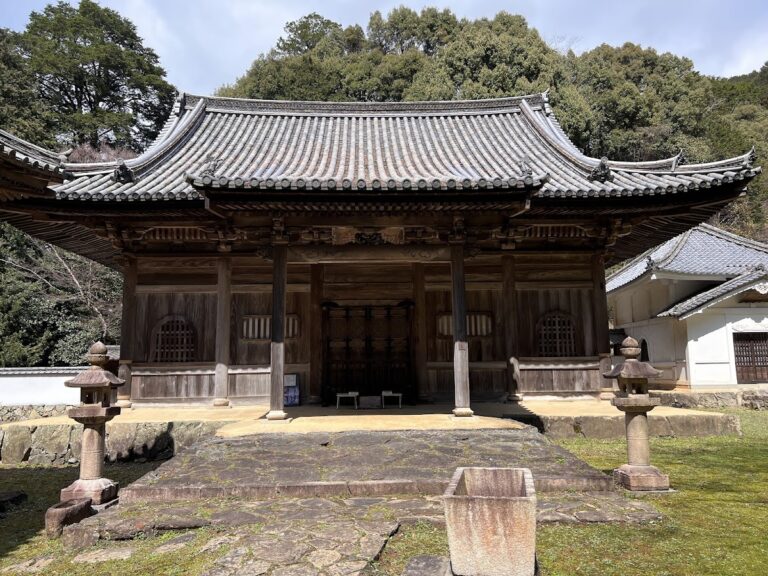
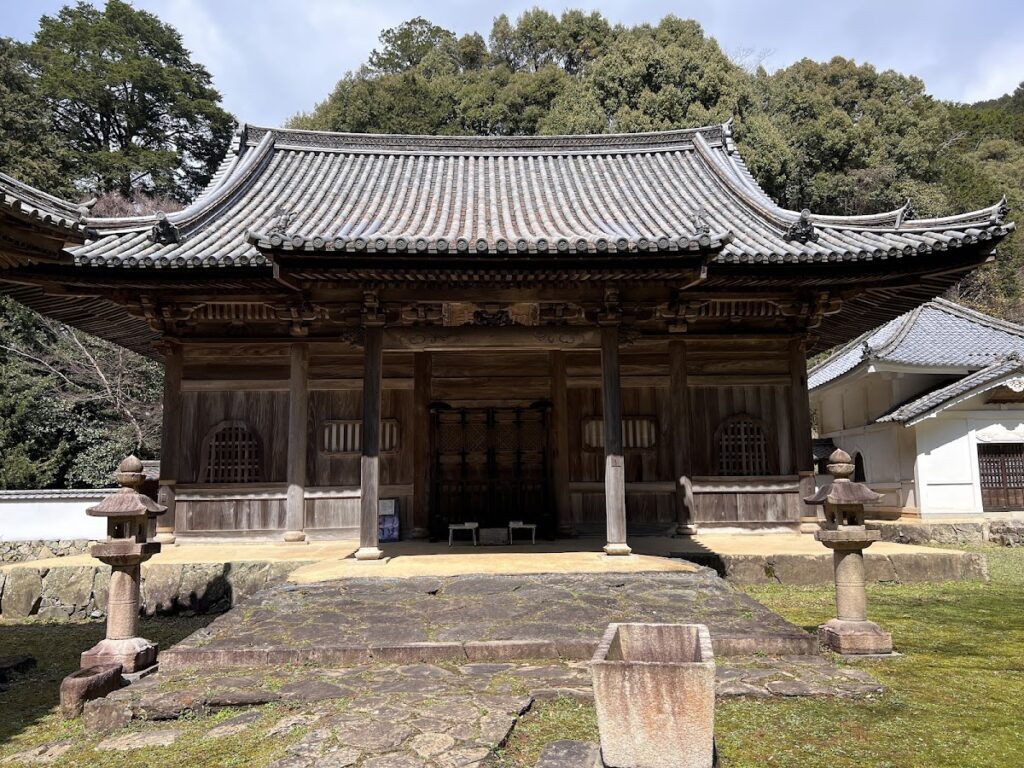
The greatest highlight of Nyohōji Temple is the Nyohōji Buddha Hall, designated a National Important Cultural Property in 1992 (Heisei 4). This building is a valuable historical structure that strongly retains the characteristics of early Edo period Zen Buddhist architecture and also functions as a Zen meditation hall.
The Buddha Hall’s roof had suffered severe damage from years of exposure to the elements, with the tiles on the verge of collapse. However, large-scale repair work, utilizing national subsidies, was carried out from November 2010 (Heisei 22) and completed in December 2014. This restoration revived the magnificent appearance of the building at the time of its construction, and it is now preserved in a beautiful state.
In 2018, the Nara National Museum conducted an investigation, and it has received high academic acclaim. The interior of the Buddha Hall is designed as a space for Zen training, and while simple, it exudes a dignified atmosphere.
Nyohōji Nature Conservation Project
At Nyohōji Temple, the “Nyohōji Nature Conservation Project” is underway to protect the rich natural environment within the temple grounds. With the cooperation of local residents and volunteers, the temple’s forests are preserved and vegetation is maintained, making it a noteworthy temple that coexists with nature. This project is spearheaded by a citizens’ group called “The ZEN Nyohōji Moriage-tai” (The ZEN Nyohōji Revitalization Team), which regularly holds cleaning activities and environmental conservation events.
Access
- Location: Yunoki, Ozu City, Ehime Prefecture
- Train: Approximately 10 minutes by car from JR Yosan Line “Iyo-Ozu Station”
- Car: Approximately 15 minutes from Matsuyama Expressway “Ozu IC”
- Parking: Free parking available (usable under certain conditions)
- Admission Fee: Free entry to the temple grounds (please check for entry to the main hall)
Ozu City is known as “Little Kyoto of Iyo,” and historical tourist spots such as Ozu Castle and Garyu Sanso are scattered around Nyohōji Temple. Visiting these together will allow you to enjoy a more fulfilling sightseeing experience.
Nyohōji Temple in Nishiaizu Town, Fukushima Prefecture – Tori-oi Kannon and Aizu Korori Three Kannon
History and Overview
Nyohōji Temple, located in Nozawa, Nishiaizu Town, Yama District, Fukushima Prefecture, is a temple of the Shingon sect, Murōji branch. The temple’s mountain name is Kongōzan, and its principal image is the Holy Kannon Bodhisattva. It is said that this temple was founded in 807 (Daido 2) by Tokuitsu.
Tokuitsu was a high-ranking priest of the Hossō sect who was active from the Nara period to the early Heian period, and a central figure in the propagation of Buddhism in the Tohoku region. Nyohōji Temple has been destroyed by fire several times since, but each time it has been rebuilt thanks to the fervent faith of the local people.
Origin and Belief of Tori-oi Kannon
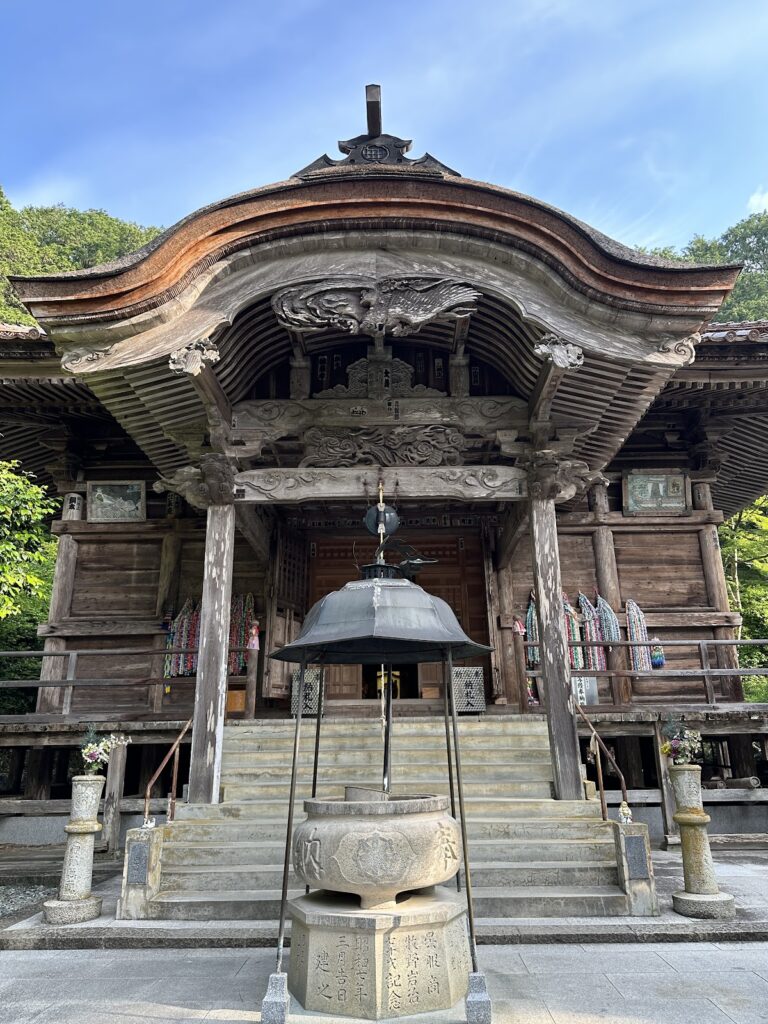
The Kannon Hall on the temple grounds is widely known as “Tori-oi Kannon“. There are several theories about the origin of this name, but the most likely explanation is that it was named because it was believed to have the power to drive away birds that damaged crops.
Nyohōji Temple is counted as one of the “Aizu Korori Three Kannon“. The Aizu Korori Three Kannon refers to the three Kannon pilgrimage sites in the Aizu region (Nyohōji Temple, Nakata Kannon, and Tachiki Kannon). It is believed that visiting these sites will grant one a peaceful and swift death. “Korori” means a peaceful and painless death, and the site is particularly popular among the elderly.
Architectural Features – A Unique East-West Structure
A major architectural feature of the Nyohōji Kannon Hall is its unusual design, where one enters from the east and exits from the west. This embodies the Buddhist concept of the “Western Pure Land,” symbolizing a journey from east to west towards the Western Pure Land, the Pure Land of Amida Buddha. This structure is believed to grant worshippers the benefit of a peaceful and swift death.
The Legend of Hidari Jingoro’s “Hidden Three Monkeys”
Hidden within the Kannon Hall are the “Hidden Three Monkeys,” said to be the work of Hidari Jingoro, a legendary sculptor from the Edo period. Unlike the “See No Evil, Speak No Evil, Hear No Evil” monkeys of Nikko Toshogu Shrine, these three monkeys are said to have the following meanings:
- Hide from Misfortune – To hide oneself from disaster
- Escape from Misfortune – To escape disaster
- Live in Peace and Comfort – To live in peace and comfort
There is a legend that finding these three monkeys will bring “increased good fortune,” and many visitors enjoy searching for them within the temple grounds.
Cultural Properties
Nyohōji Temple houses valuable cultural properties:
- Wooden seated statue of Shō Kannon Bodhisattva and 22 standing statues of the 33 manifestations (Sculpture) – Scheduled to be designated as a cultural property on March 31, 2026 (Reiwa 8)
These Buddhist statues are believed to have been created between the Heian and Kamakura periods and are important artifacts in the history of Buddhist art in the Aizu region.
Access
- Location: Nyohōji, Nozawa, Nishiaizu-machi, Yama-gun, Fukushima Prefecture
- Train: Approximately 15 minutes on foot from Nozawa Station on the JR Ban’etsu West Line
- Car: Approximately 10 minutes from Nishiaizu IC on the Ban’etsu Expressway
- Parking: Available (Free)
Nyohōji Temple in Nakano City, Nagano Prefecture – The Architectural Beauty of the Daihikaku Kannon Hall
History and Overview
Nyohōji Temple, located in Nakano City, Nagano Prefecture, is a temple of the Shingon Chizan sect. It is situated on a gentle westward slope at the foot of Mt. Kamogatake, within Higashiyama Park. There is a tradition that this temple was founded in 826 (Tenchō 3) by Kūkai (Kōbō Daishi), who dispatched Prince Shinnyo.
Later, the temple fell into disrepair, but in 1412 (Oei 19), Takanashi Norimasa, the lord of Nakano Castle, repaired and restored the temple buildings. Therefore, Takanashi Norimasa is considered the founder of the temple from this point onward. Since then, the temple buildings have been repeatedly destroyed and rebuilt due to war and other factors.
Architectural Features of the Daihikaku Kannon-do
The current Daihikaku Kannon-do is built on a hill reached by climbing the stone steps at the back of the approach to the temple. The most distinctive feature of this building is its hip-and-gable roof with tiled roofing, the gable ornament facing the back of the front, and a stage-like appearance where part of the front section extends from the slope.
The floor plan is five bays wide and three bays deep, with the two bays of the front section projecting from the slope in a stage-like style. This structure is elegant and reminiscent of Kiyomizu-dera Temple in Kyoto, and clearly represents the characteristics of mountain temple architecture in Shinshu.
Access
- Location: Nakano City, Nagano Prefecture (within Higashiyama Park)
- Train: Approximately 20 minutes on foot from Shinshu-Nakano Station on the Nagano Electric Railway Nagano Line
- Car: Approximately 10 minutes from Shinshu-Nakano IC on the Joshinetsu Expressway
- Parking: Higashiyama Park parking available
Other Nyohōji Temples – Buzen City, Fukuoka Prefecture, etc.
Nyohōji Temple in Buzen City, Fukuoka Prefecture
In Buzen City, Fukuoka Prefecture, there is Nyohōji Temple of the Ōbaku sect. Its mountain name is Jōzaizan, and its principal image is Nyoirin Kannon. It is counted as one of the six peaks of Mount Kubote, and is located approximately 8 kilometers northeast of Mount Kubote.
Regarding its founding, the “Nyohōji Engi” (Nyohōji Temple Chronicle) attributes it to Gyōki, while the “Kubote-san Engi” (Mount Kubote Chronicle) attributes it to Gyōzen. A national treasure, a copper plate of the Lotus Sutra (owned by the Kyushu Historical Museum), unearthed from the Fugen Cave on Mount Kubotei and bearing the inscription “Written by the monk Genzon,” is mentioned. Genzon is the same person mentioned in historical documents from 1213 as “Enjōbō Genzon, the resident monk of Nyohōji Temple.”
This inscription indicates that Nyohōji Temple, in the late Heian period, functioned as a sutra copying center for Mount Kubotei. The temple is said to have been founded (or rebuilt) by Utsunomiya Nobufusa.
Nyohōji Temple, Koriyama City, Fukushima Prefecture
In Koriyama City, Fukushima Prefecture, there is a temple called “Nyohōji.” Its mountain name is Takatakeyama, and it is located on a hill in the center of Koriyama City. This temple is known as a treasure trove of history and culture, offering beautiful scenery throughout the seasons, splendid events, and solemn Buddhist ceremonies.
As part of its annual events, the temple holds the Buddha’s Birthday Flower Festival, Setsubun prayers, and Nanokado pilgrimage, making it a center of local faith. The Buddhist architecture, centered around the main hall, is impressive and is also attracting attention as a power spot.
How to Enjoy Visiting Nyohōji Temples
Understanding the Differences in Sects
Nyohōji temples throughout Japan belong to different sects:
- Rinzai Sect (Ōzu City, Ehime Prefecture) – A branch of Zen Buddhism that emphasizes enlightenment through seated meditation
- Shingon Sect (Nishiaizu Town, Fukushima Prefecture; Nakano City, Nagano Prefecture) – Based on esoteric Buddhism, it preaches attaining Buddhahood in this lifetime
- Ōbaku Sect (Buzen City, Fukuoka Prefecture) – A branch of Zen Buddhism characterized by its Ming Dynasty style
Visiting each temple allows you to experience the diversity of Japanese Buddhism.
Seasonal Highlights
Many Nyohōji temples are located in areas rich in nature, offering different scenery with each season:
- Spring: Cherry blossoms and fresh greenery adorn the temple grounds
- Summer: Enjoy the coolness amidst the deep greenery
- Autumn: Autumn leaves paint the temple grounds in vibrant colors
- Winter: A tranquil atmosphere amidst a snowy landscape
In particular, Nyohōji Temple in Ōzu City, Ehime Prefecture, is known as a famous spot for autumn foliage, while Nyohōji Temple in Nishiaizu Town, Fukushima Prefecture, is famous for its beautiful snowscapes.
Combining with Nearby Sightseeing
When visiting Nyohōji Temple, you can enjoy a more fulfilling trip by combining it with nearby sightseeing spots:
- Ōzu City, Ehime Prefecture: Ōzu Castle, Garyū Sansō, Ohanahan Street, etc.
- Nishiaizu Town, Fukushima Prefecture: Aizu Korori Three Kannon Pilgrimage, Nozawa Onsenkyo, etc.
- Nakano City, Nagano Prefecture: Issa Memorial Museum, Nakano Jinya/Prefectural Government Memorial Museum, etc.
By gaining a deeper understanding of the local history and culture, you will be able to appreciate the value of Nyohōji Temple even more.
Collecting Goshuin (Temple Stamps)
In recent years, collecting Goshuin has become popular, and you can also receive them at Nyohōji Temple. Each temple offers its own unique Goshuin design, and many people collect them as a memento of their visit. In particular, the Goshuin for the Aizu Korori Three Kannon is said to bring special blessings when all three temples are visited.
Summary
Temples bearing the name “Nyohōji” are scattered throughout Japan, each possessing its own unique history and cultural assets. Nyohōji in Ōzu City, Ehime Prefecture, is one of Bankei Eitaku’s three major Zen training grounds, and its main attraction is the Buddha Hall, a nationally designated Important Cultural Property. Nyohōji in Nishiaizu Town, Fukushima Prefecture, is known as Tori-oi Kannon and is revered as one of the three Aizu Korori Kannon temples. Nyohōji in Nakano City, Nagano Prefecture, is characterized by the stage-like structure of its Daihikaku Kannon Hall.
Visiting these temples allows you to experience the diversity and richness of Japanese Buddhist culture. Enjoying Nyohōji from multiple perspectives—history, architecture, nature, and faith—can cultivate inner richness. Please visit Nyohōji temples throughout Japan and experience their unique charms.