Complete Guide to Okunitama Shrine: Everything You Need to Know About the 1900-Year-Old Grand Shrine of Musashi Province
Located in Fuchu City, Tokyo, Okunitama Shrine is an ancient shrine with a history of approximately 1900 years, said to have been founded in the 41st year of Emperor Keiko’s reign (111 AD). As the grand shrine of Musashi Province and one of the five major shrines of Tokyo, it is beloved by many worshippers. This article provides a detailed explanation of Okunitama Shrine, including its history, blessings, worship methods, annual events, and access information.
What is Okunitama Shrine?: The Origins and History of the Grand Shrine of Musashi Province
Origins of its Founding and Okunitama-no-Okami
The founding of Okunitama Shrine dates back to the 41st year of Emperor Keiko’s reign (111 AD), during the Yayoi period. The principal deity, Okunitama-no-Okami, is considered the same deity as Okuninushi-no-Kami of Izumo Province. He is revered as the god who pioneered Musashi Province, taught people the ways of clothing, food, and shelter, and bestowed upon them medical practices and magical arts.
This shrine, said to have been founded by a divine revelation from Okunitama-no-Okami, has been the guardian deity of Musashi Province and a center of faith for the local people since ancient times. Widely known as a god of good fortune, matchmaking, and protection against evil, it continues to attract many worshippers today.
History as the Musashi Province’s Grand Shrine, “Rokushogu”
In 645 AD, following the Taika Reforms, the provincial capital was established in Musashi Province, and Okunitama Shrine assumed the role of the Grand Shrine of Musashi Province. A Grand Shrine is a shrine that enshrines the deities of major shrines within a province in one place.
Okunitama Shrine enshrines the deities of six prominent shrines (from Ichinomiya to Rokunomiya) within Musashi Province, and is also known as “Musashi Sōsha Rokushō-gū” (Musashi’s Grand Shrine of Six Shrines). Therefore, it has been believed that visiting Okunitama Shrine grants the same blessings as visiting all the major shrines in Musashi Province.
The six enshrined shrines are as follows:
- Ichinomiya: Ono Shrine (Tama City)
- Ninomiya: Ogawa Shrine (Akiruno City)
- Sannomiya: Hikawa Shrine (Saitama City)
- Yonnomiya: Chichibu Shrine (Chichibu City)
- Gonomiya: Kanasana Shrine (Kodama District)
- Rokunomiya: Sugiyama Shrine (Yokohama City)
Due to this unique form of worship, Okunitama Shrine has played a crucial role as a center of faith in Musashi Province throughout its long history.
Prestige as one of the Five Great Shrines of Tokyo
Okunitama Shrine is counted as one of the “Five Great Shrines of Tokyo,” alongside Meiji Jingu, Yasukuni Shrine, Hie Shrine, and Tokyo Daijingu. The Five Great Shrines of Tokyo are a collective term for prestigious shrines representing Tokyo, each with its own unique history and tradition, revered by many worshippers.
Benefits and Faith of Okunitama Shrine
Main Benefits
Okunitama Shrine is known for its wide range of benefits:
Protection from Misfortune: Okunitama Shrine is particularly famous as a shrine for protection from misfortune. People in their unlucky years (main year, year before unlucky year, and year after unlucky year) visit from all over Japan for prayers for protection from misfortune.
Matchmaking: Okunitama-no-Okami, who is the same deity as Okuninushi-no-Kami, is also widely worshipped as a god of matchmaking. People seeking good relationships and those about to get married visit the shrine.
Good Fortune and Prosperity: Ōkunitama-no-Ōkami, possessing characteristics of a god of fortune, is known for bringing good fortune and prosperity in business.
Protection from All Directions: You can also receive the benefit of protection from all directions.
Family Safety and Traffic Safety: Many visitors come to pray for safety in their daily lives.
About Prayers
Ōkunitama Shrine accepts various prayers. Prayers are offered for various life milestones and everyday wishes, including protection from misfortune, protection from negative directions, family safety, business prosperity, traffic safety, success in exams, and safe childbirth.
No reservation is required for prayers; you can apply directly at the shrine office during reception hours. Prayer fees vary depending on the content of the prayer, but generally start from 5,000 yen. After the prayer, you will receive a talisman or amulet.
Kurayami Festival: The Annual Grand Festival of Okunitama Shrine
History and Origin of the Kurayami Festival
The Kurayami Festival, the annual grand festival of Okunitama Shrine, is one of Tokyo’s representative festivals, held annually from May 3rd to 6th. The name “Kurayami Festival” (Darkness Festival) originates from the fact that the festival was once held in the darkness of night.
In ancient festivals, the procession of the portable shrines took place in darkness to prevent the sacred rituals from being seen by the public. Although it is now held under illumination, the traditional name is still preserved.
Festival Highlights
Portable Shrine Procession: The biggest highlight of the Kurayami Festival is the procession of eight portable shrines on the night of May 5th. The sight of the shrines parading through the town accompanied by the sound of large drums and energetic shouts is breathtaking.
Large Drum: The festival is also famous for featuring Japan’s largest drum. The powerful sound further enhances the festive atmosphere.
Horse Racing Ceremony (Komakurabe): On May 3rd, a horse racing ceremony is held according to ancient customs. This is a traditional event performed as a Shinto ritual, allowing you to feel the weight of history.
Plant Market and Stalls: During the festival, numerous stalls line the shrine grounds and approach, and a plant market is also held. It is bustling with many people every year, allowing you to feel the lively atmosphere of the festival.
Precautions for Visiting the Shrine
Significant crowds are expected during the Kurayami Festival. The shrine may implement restrictions on visits for safety reasons. Also, in case of severe weather such as strong winds, some events may be canceled or changed for safety reasons. It is recommended to check the shrine’s official website for the latest information.
Shrine Grounds Highlights and Facilities
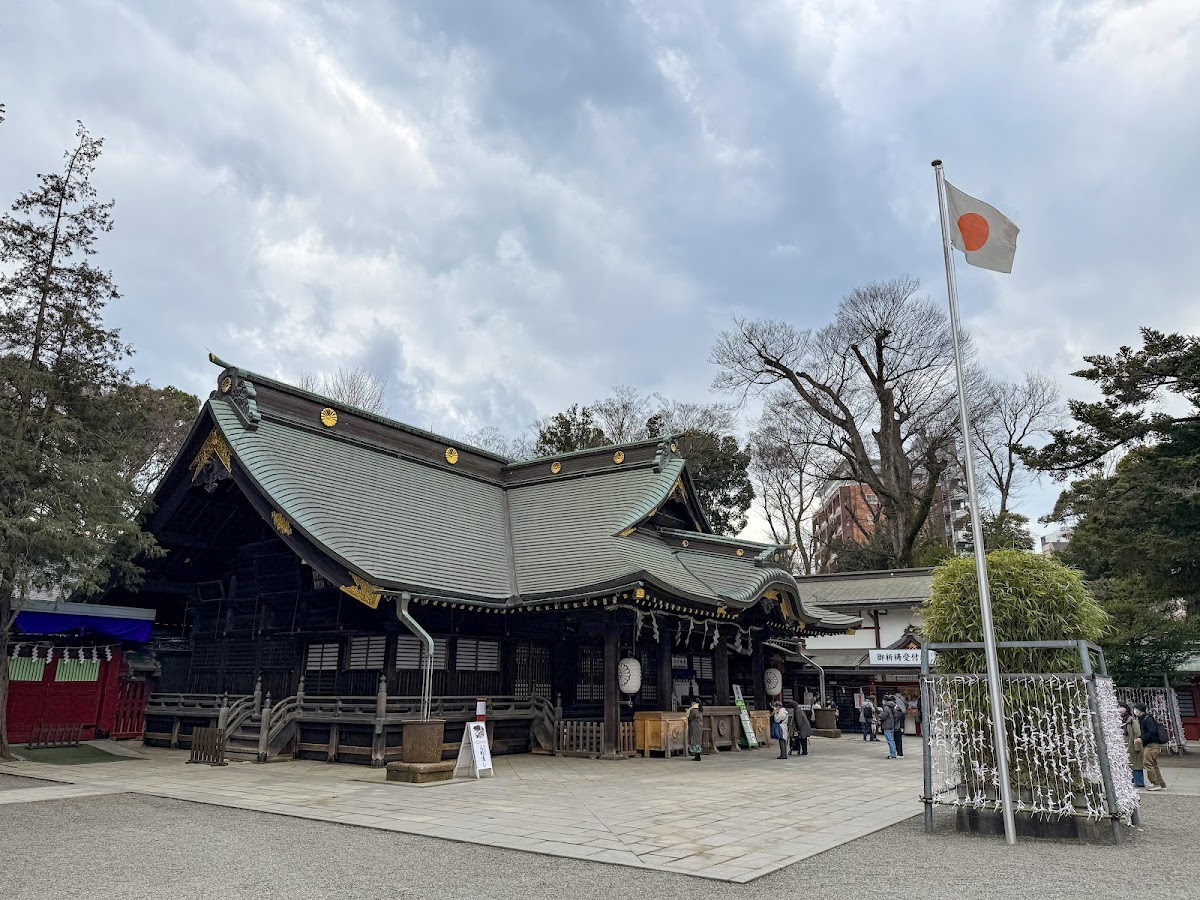
Main Hall and Worship Hall
The main hall of Okunitama Shrine is a magnificent structure that preserves the architectural style of the Edo period. The current main shrine building was constructed in 1667 and is designated as a tangible cultural property of Tokyo. The worship hall is also splendidly built, instilling a sense of solemnity in worshippers.
Zuishinmon Gate and Chujakumon Gate
Upon entering the shrine grounds, the first thing you see is the magnificent Zuishinmon Gate. Passing through this gate and proceeding along the approach, you will find the Chujakumon Gate. These gates serve as entrances to the sacred area, guiding worshippers into a holy space.
Treasure Hall
Okunitama Shrine has a treasure hall, which houses valuable cultural artifacts and historical materials passed down through the shrine. It is sometimes opened to the public on special occasions, allowing visitors to see items that tell the story of the shrine’s long history.
Shrine Precincts
Several shrine precincts are enshrined around the main shrine building. Each enshrines a different deity, and people visit them seeking various blessings.
Kagura Hall and Assembly Hall
Kagura dances are performed in the Kagura Hall during festivals. The Assembly Hall is a facility used for weddings and various other events, and traditional Shinto wedding ceremonies can be held there.
How to Worship and Manners
Basic Worship Etiquette
Worship at Okunitama Shrine follows the general etiquette for visiting shrines:
- Bow before passing through the torii gate: This shows respect before entering the sacred area.
- Purify yourself at the water basin: Purify your left hand, then your right hand, and rinse your mouth.
- Walk along the edge of the path: The center is considered the path for the gods.
- Bow twice, clap twice, and bow once in front of the main hall: Bow deeply twice, clap twice, and finally bow once.
About Goshuin (Shrine Seals)
Okunitama Shrine offers Goshuin as proof of worship. Goshuin are available at the shrine office, and the offering fee is usually around 300 yen. You can bring your own goshuincho (stamp book) or purchase one at the shrine.
The goshuin (stamp) of Okunitama Shrine is characterized by its simple yet powerful calligraphy and is popular among collectors. Limited edition goshuin are also sometimes given out during special festivals.
Amulets and Souvenirs
The shrine office offers a variety of amulets and souvenirs. You can choose an amulet according to your wishes, such as an amulet for warding off evil, amulet for finding love, amulet for traffic safety, or amulet for academic success.
Particularly popular is the Okunitama Shrine’s original amulet for warding off evil, which is sought after by many visitors. The amulet for finding love is also popular among those hoping for a good relationship.
Annual Events and Festivals
Okunitama Shrine holds various festivals and events throughout the year.
Main Annual Events
January: New Year’s Day Festival (January 1st), Beginning of the Year Festival (January 3rd)
February: Setsubun Festival (around February 3rd), Prayer Festival
April: Flower-Soothing Festival
May: Darkness Festival (Grand Festival, May 3rd-6th)
July: Plum Festival (July 20th)
September: Harvest Festival
November: Harvest Festival, Tori-no-ichi Market
December: Great Purification Ceremony (December 31st)
Plum Festival
The “Plum Festival,” held on July 20th, is also an important event at Okunitama Shrine. On this day, a plum market is held on the shrine grounds, attracting many worshippers. Plums are considered a fruit that wards off evil, and it is customary to buy plums on this day.
Access and Transportation Information
Access by Train
Public transportation is the most convenient way to access Okunitama Shrine.
Keio Line: 5-minute walk from Fuchu Station South Exit
JR Musashino Line/Nambu Line: 5-minute walk from Fuchu-Honmachi Station
Fuchu Station is a major station where Keio Line express trains also stop, and it’s approximately 20 minutes from Shinjuku. From the station to the shrine, you won’t get lost if you follow the signs.
Access by Car
Chuo Expressway: Approximately 10 minutes from Inagi IC or Kunitachi-Fuchu IC
Koshu Kaido (National Route 20): Approximately 5 minutes from Fuchu-Honmachi Intersection
There are several paid parking lots around the shrine, but congestion is expected during festivals and on weekends, so we recommend using public transportation.
Location
3-1 Miyacho, Fuchu City, Tokyo 183-0023
Nearby Tourist Attractions
Fuchu City Local History Museum
Located about a 10-minute drive from Okunitama Shrine, this museum offers a chance to learn about the history and culture of Fuchu City. It features restored old houses and a planetarium, making it a popular spot for families.
Musashi Provincial Government Site
The ruins of the former Musashi Provincial Government are scattered around Okunitama Shrine. Those interested in history can stroll through the area and reflect on the ancient Musashi Province.
Zelkova Tree-lined Avenue
The zelkova tree-lined avenue at Baba-Daimon, stretching from Okunitama Shrine to Fuchu Station, is designated a national natural monument. The sight of approximately 150 zelkova trees is breathtaking, and you can enjoy its beauty throughout the seasons.
About the Okunitama Shrine Supporters’ Association
The Okunitama Shrine Supporters’ Association is an organization dedicated to fostering camaraderie among its members who revere the shrine, and to contributing to the shrine’s development and the local community. Becoming a member provides opportunities to participate in shrine events and activities, fostering a deeper connection with the shrine.
The association engages in activities such as supporting shrine construction projects, cultural property preservation, and the transmission of local traditional culture. Through interaction among members, it also contributes to the revitalization of the local community.
Cultural Activities such as the Okunitama Rakugo Performance
Okunitama Shrine hosts various cultural activities aimed at preserving traditional culture and promoting local culture. One such activity is the “Okunitama Rakugo Performance.”
The performance regularly features renowned rakugo storytellers, attracting many rakugo fans. Enjoying rakugo in the traditional setting of a shrine offers a special experience. Dates, times, and performers are announced on the shrine’s official website.
Through these cultural activities, Okunitama Shrine serves not only as a place of worship but also as a cultural hub for the region.
Precautions When Visiting
Visiting on Windy Days
At Okunitama Shrine, the safety of visitors is our top priority. On windy days, there is a risk of branches falling from the trees on the shrine grounds, so please exercise caution when visiting.
Especially on days when strong winds are expected, such as when a typhoon is approaching or the first strong spring wind, we recommend checking the shrine’s announcements before visiting. In some cases, entry to the shrine grounds may be restricted for safety reasons.
Visiting During the Kurayami Festival
During the Kurayami Festival, hundreds of thousands of visitors come every year, so extreme congestion is expected. The shrine may take the following measures to ensure the safety of visitors:
- Suspension of worship during specific time periods
- Restrictions on entry to the shrine grounds
- One-way traffic and other traffic flow restrictions
These measures are important to protect the safety of visitors. Those planning to visit during the festival period should check the latest information on the shrine’s official website beforehand and follow the instructions of the shrine staff.
Summary: The Charms of Okunitama Shrine
Okunitama Shrine boasts a long history of approximately 1900 years and has attracted the faith of many people as the principal shrine of Musashi Province. It is a shrine with many attractions, including a wide range of blessings such as protection from evil, matchmaking, and good fortune, a magnificent Kurayami Festival, solemn shrine architecture, and cultural activities rooted in the local community.
Despite its convenient location in Fuchu City, Tokyo, easily accessible from the city center, stepping onto the shrine grounds reveals a tranquil sacred space. It continues to be cherished by many as a place where one can feel history and tradition while praying in peace.
As a place to visit for life’s milestones such as New Year’s visits, protection from evil, Shichi-Go-San (a traditional rite of passage for children), and weddings, and as a place to seek peace of mind in daily life, Okunitama Shrine will undoubtedly continue to be loved by many people in the future. When you visit Fuchu, be sure to stop by this historic shrine.